

Insulation Installation Cost in Orange, CA
Transparent Insulation Installation Cost Pricing for Orange, CA Homeowners — Free Estimates
Get transparent insulation installation cost in Orange, CA. Next Level Insulation serves all Orange neighborhoods. Call (714) 266-2070 for a free estimate.
- Licensed & Insured
- Locally Owned & Operated
- Free Inspection & Estimate
Request Your
Free EstimateUnderstanding insulation installation cost in Orange, CA is the first step toward a more energy-efficient, comfortable home or business. Insulation installation refers to the professional process of selecting, placing, and securing thermal and acoustic barrier materials within walls, attics, crawl spaces, and floors to regulate indoor temperature and reduce energy loss.
In Orange, CA, local factors such as the inland Southern California Mediterranean climate, aging mid-century housing stock, and strict Title 24 energy compliance requirements all influence what you’ll pay for quality insulation work. Homes in this region experience wide temperature swings between hot summers that routinely exceed 95°F and cooler winter nights, making properly installed insulation not a luxury—but a necessity.
At Next Level Insulation of Orange, our experienced team delivers transparent, itemized pricing alongside expert installation across every insulation type and building configuration. Call us today at (714) 266-2070 to schedule a free on-site estimate.
Understanding Insulation Installation Cost in Orange
Insulation installation cost covers far more than just the material itself. It encompasses labor, preparation, removal of old or damaged insulation, air sealing, and any specialized equipment needed to access tight spaces like crawl areas or cathedral ceilings. Breaking down these line items helps Orange homeowners make informed decisions rather than comparing apples to oranges when evaluating quotes.
Insulation as a building science concept dates to early 20th-century construction, when builders began recognizing that trapped air could dramatically reduce heat transfer. By the postwar boom of the 1940s and 1950s—precisely when many of Orange’s residential neighborhoods were originally constructed—fiberglass batts became the standard. Those same original batts, now 60–70 years old, are often what our crews find when they open up attic hatches in historic districts like Old Towne Orange.
Today, insulation installation has evolved into a multi-material discipline. Spray foam, blown-in cellulose, mineral wool, and rigid foam boards each carry distinct cost profiles, R-value characteristics, and ideal use cases. The total cost of a project depends on:
- Square footage of the area being insulated
- Current insulation condition and whether removal is required
- Target R-value per California’s Title 24 energy code (R-38 minimum in attics for Climate Zone 8, which includes Orange)
- Material type selected (spray foam carries a higher unit cost than blown-in cellulose)
- Accessibility of the installation area
- Local labor market rates in Orange County
Orange, CA sits in a dense suburban environment within Orange County where single-family homes built between 1950 and 1980 dominate the residential landscape. These properties frequently have inadequate attic insulation depths—often as little as 3–4 inches of compressed fiberglass—well below today’s code requirements. Newer developments near the Village at Orange and East Orange planned communities, by contrast, tend to meet or exceed current standards but may still benefit from targeted air sealing and crawl space upgrades.
Understanding these cost drivers in the specific context of Orange’s building inventory ensures you receive a quote that reflects real-world conditions—not a generic national average.
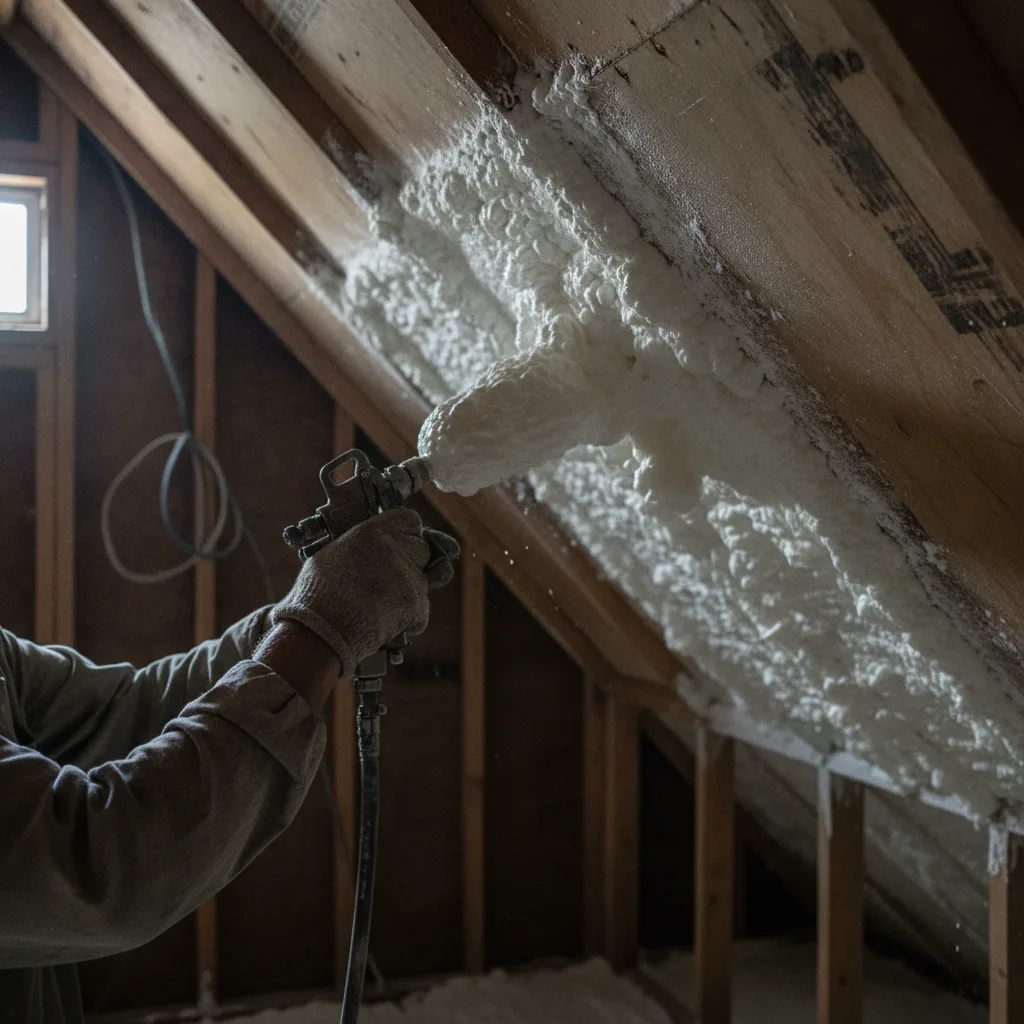
Our team in action — insulation professionals serving Orange
Why Insulation Installation Is Needed in Orange, CA
Southern California’s Mediterranean Climate Extremes
Orange sits inland from the Pacific coast in a transitional zone that experiences what meteorologists classify as a hot-summer Mediterranean climate (Köppen BSk/Csa boundary). Summer daytime highs regularly climb to 95–102°F between June and September, while winter nights can drop to 38–42°F. The result is an unusually wide diurnal temperature range—sometimes 30°F or more within a single 24-hour period—that places constant thermal stress on building envelopes. Without adequate insulation, HVAC systems in Orange homes work overtime, and utility bills from Southern California Edison reflect it clearly.
The Santa Ana Wind Effect
One of the most underappreciated insulation challenges in Orange is the Santa Ana wind season, which typically runs from October through February. These hot, dry offshore winds—recorded at speeds exceeding 60 mph in the Anaheim Hills and Orange foothill corridors during events like the November 2017 Canyon Fire 2 and the October 2020 Silverado Fire—drive rapid indoor air temperature and humidity fluctuations. Poor attic insulation and unsealed penetrations allow this extreme outdoor air to infiltrate living spaces directly, spiking cooling and heating demands simultaneously.
Aging Housing Stock in Core Neighborhoods
The majority of homes in central Orange—particularly those built between 1945 and 1975 in neighborhoods like Eichler tract communities near Batavia Street, ranch-style homes along Palmyra Avenue, and the postwar subdivisions surrounding Hart Park—were constructed before modern energy codes existed. Original fiberglass batts installed in these homes have compressed over decades, losing effective R-value. Many also contain no crawl space vapor barrier, allowing ground moisture to degrade both the structural subfloor and any insulation present.
Title 24 Compliance Requirements
California’s Title 24 Building Energy Efficiency Standards are among the strictest in the nation. Orange falls within Climate Zone 8, which mandates a minimum R-38 attic insulation value and R-13 wall insulation for new construction and significant renovations. Homeowners pulling permits for remodels, room additions, or HVAC replacements in Orange are often required to bring insulation levels into compliance—making professional installation both a code obligation and a resale value enhancer.
Crawl Space Moisture Challenges in East Orange
Homes in East Orange and areas near Santiago Creek corridor deal with elevated soil moisture conditions following winter rains, particularly during La Niña and El Niño precipitation cycles. Crawl spaces without proper encapsulation routinely show relative humidity levels of 70–80%, leading to mold growth on subfloor joists, pest harborage, and deterioration of any floor insulation installed above. Crawl space encapsulation paired with new insulation is a targeted solution that addresses both moisture and thermal performance simultaneously.
Signs You Need Insulation Installation in Orange
Energy Bill Indicators
- Southern California Edison bills exceeding $250–$350/month during summer despite normal thermostat settings
- Dramatic spikes in gas usage from SoCalGas during December–February heating periods
- HVAC system running continuously without reaching set temperature
Physical Comfort Symptoms
- Rooms that feel significantly hotter or colder than the thermostat reading
- Noticeable drafts near electrical outlets, recessed lights, or attic access hatches
- Floors above crawl spaces that feel cold or damp underfoot during winter months
- Uneven temperatures between first and second floors in two-story homes
Visual and Structural Observations
- Attic insulation depth below 10 inches (indicating R-value below code minimum of R-38)
- Visible fiberglass batts that appear yellow, gray, or matted rather than fluffy
- Water staining or discoloration on attic insulation following winter rains
- Condensation on interior window frames or walls during Santa Ana wind events
Urgency Indicators
- Presence of vermiculite (potential asbestos-containing material in pre-1980 homes)
- Evidence of rodent harborage or pest damage within existing insulation material
- Mold or musty odors emanating from crawl spaces or attic spaces
Insulation Methods and Approaches We Use in Orange
Spray Foam Insulation
Both open-cell and closed-cell spray foam are ideal for sealing irregular gaps, rim joists, and hard-to-reach cavities common in Orange’s older ranch-style and split-level homes. Closed-cell foam (R-6.5 per inch) also functions as a vapor barrier—critical in crawl spaces near wet soil zones in the Santiago Creek watershed. Cost is higher per square foot but delivers the best air-sealing performance.
Learn more about our spray foam insulation services
Blown-In (Loose-Fill) Insulation
Blown-in cellulose or fiberglass is the most cost-effective solution for adding R-value to existing Orange attics without full tear-out. It conforms to irregular joist bays, covers existing framing obstructions, and can achieve R-38 to R-60 in a single installation day. This is our most frequently recommended approach for the mid-century tract homes that dominate Orange’s residential core.
Explore our blown-in insulation options
Attic Insulation
Dedicated attic insulation services address Orange’s single largest source of residential heat gain. During summer, uninsulated attics can reach 150°F, transferring heat directly into living spaces below. We install radiant barriers alongside blown-in material for maximum performance in Orange’s intense summer sun exposure.
See our attic insulation services
Crawl Space Insulation and Encapsulation
For the many pier-and-beam and raised-foundation homes throughout Orange—particularly in the neighborhoods near Glassel Street and the historic Chapman Avenue corridor—crawl space insulation combined with full encapsulation eliminates moisture infiltration, pest entry points, and floor-level cold zones simultaneously.
Learn about crawl space encapsulation
Insulation Removal and Replacement
When existing insulation has been damaged by water, pests, or age, removal before replacement is essential to avoid trapping contaminants. We offer complete insulation removal services as a standalone service or as part of a full replacement project.
Ready for Insulation Installation Cost? Get Your Free Estimate Today.
Next Level Insulation of Orange serves Orange and the surrounding area — we’ll be on-site within 24 hours.
📞 Call (714) 266-2070Insulation Installation Cost in Orange, CA – What to Expect
Insulation installation cost in Orange typically falls within the following ranges based on project type and scope:
- Attic blown-in insulation (1,000–1,500 sq ft attic): $1,200–$2,800 depending on current insulation depth, R-value target, and whether air sealing is included
- Spray foam insulation (crawl space or walls): $1.50–$3.50 per board foot for open-cell; $3.00–$7.00 per board foot for closed-cell
- Crawl space insulation only (average 800 sq ft): $1,800–$3,500
- Full crawl space encapsulation with insulation: $4,500–$8,500 depending on linear footage and vapor barrier thickness
- Insulation removal (attic, per 1,000 sq ft): $500–$1,200
- Complete attic removal and replacement: $2,500–$5,500 for a typical 1,400 sq ft Orange home
Cost Factors Specific to Orange, CA
Orange County labor rates run approximately 15–25% higher than California’s inland valleys due to cost of living and contractor demand. Permit fees through the City of Orange Building Division for insulation work typically range from $150–$350 when required. Homes in Orange’s historic district may require additional coordination for permit approvals.
Southern California Edison and SoCalGas both offer rebates of $0.10–$0.15 per square foot for qualifying attic insulation upgrades under the Energy Upgrade California program, which can offset $150–$400 of your total project cost.
View all our insulation installation services for a full overview of what’s included in every project.
Neighborhoods We Serve in Orange, CA
Old Towne Orange
The historic quarter surrounding the Orange Traffic Circle features homes predominantly built between 1905 and 1940, many of which have original plaster walls with no cavity insulation whatsoever. Our team has extensive experience navigating historic district requirements while delivering meaningful energy improvements through interior-side spray foam and blown-in attic upgrades.
East Orange and Serrano Heights
This area of newer construction (1990s–2010s) sits at higher elevations with greater exposure to Santa Ana wind events. While insulation levels are generally better than older stock, crawl space moisture from seasonal creek drainage and substandard vapor barriers are recurring issues we address regularly.
Villa Park Adjacent / Chapman Hills
Large custom homes from the 1970s–1990s in this corridor often have vaulted ceilings, complex roof geometries, and inaccessible wall cavities that require spray foam expertise. Higher square footage also means more cost but proportionally larger energy savings.
Friendly Hills and Parkridge
Classic 1960s–1970s tract development with 3/2 ranch-style homes. Original fiberglass batts are almost universally present but compressed to ineffective levels. Blown-in attic upgrades in this submarket deliver some of the best ROI we see across all of Orange.
Insulation Maintenance Tips for Orange Homeowners
- Inspect attic insulation depth annually – Use a ruler or insulation depth gauge each fall before heating season. Target a minimum of 10.5 inches of blown-in cellulose or 12 inches of blown fiberglass to maintain R-38.
- Check for moisture intrusion after winter rains – Orange’s rainy season (December–March) can introduce water through roof penetrations. Wet insulation loses R-value rapidly and must be replaced.
- Seal new electrical or HVAC penetrations immediately – Every new recessed light, cable run, or HVAC boot creates an air bypass. Use fire-rated caulk or foam to reseal within 30 days of any work.
- Inspect crawl space vapor barriers after Santa Ana wind events – High winds can displace lightweight vapor barriers. Re-secure and reseal edges at least once per year.
- Monitor energy bills seasonally – A sudden 15–20% increase in your Southern California Edison bill during comparable weather periods is an early warning sign of insulation degradation.
- Control attic ventilation – Ensure soffit and ridge vents remain unobstructed. Blocked ventilation causes moisture buildup that destroys insulation from above even when installation was correct.
- Schedule a professional inspection every 7–10 years – Even well-installed insulation settles and shifts over time. A professional re-evaluation ensures continued Title 24 compliance and peak performance.
Why Choose Next Level Insulation of Orange
When it comes to insulation installation cost in Orange, CA, the lowest quote is rarely the best value. What distinguishes Next Level Insulation of Orange is our deep familiarity with the specific building conditions, climate challenges, and energy code requirements that define the Orange market. We don’t apply one-size-fits-all solutions—we assess each property’s unique configuration and deliver a scope of work calibrated to actual conditions.
Our team has worked across all of Orange’s distinct housing eras and neighborhood types, from the historic craftsman bungalows of Old Towne to the custom estates of Chapman Hills. We understand how original construction methods, soil conditions near Santiago Creek, and exposure to Santa Ana winds affect insulation performance over time.
Every project includes transparent, itemized pricing with no hidden fees. We provide written documentation suitable for permit submittals, utility rebate applications, and home sale disclosures. Our installation quality meets or exceeds California Title 24 Climate Zone 8 standards.
Call (714) 266-2070 to speak directly with a local insulation specialist—not a call center—and schedule your free on-site assessment today.
Frequently Asked Questions About Insulation Installation Cost in Orange, CA
How much does attic insulation installation cost in Orange, CA?
For a typical Orange home with a 1,200–1,500 sq ft attic, blown-in attic insulation costs between $1,200 and $2,800. This range accounts for preparation, air sealing, and bringing insulation to the California Title 24 minimum of R-38 for Climate Zone 8. Homes requiring prior insulation removal will see costs at the higher end of this range.
Does Orange, CA require permits for insulation installation?
A permit is generally required when insulation work is part of a larger renovation, room addition, or HVAC replacement project in the City of Orange. Standalone insulation upgrades often do not require a permit, but we recommend confirming with the Orange Building Division at 300 E. Chapman Ave. We provide all documentation needed for compliance.
How long does insulation installation take for an average Orange home?
A standard attic blown-in insulation project for a 1,400 sq ft Orange home can be completed in a single day—typically 3–5 hours including air sealing. Crawl space encapsulation projects typically require 1–2 days. Full insulation removal and replacement projects may span 2–3 days depending on scope.
What R-value do I need for my Orange, CA home?
Orange falls in California’s Climate Zone 8. Title 24 requires a minimum R-38 for attic insulation and R-13 for exterior walls in this zone. We recommend R-49 to R-60 for attics in homes with direct south or west exposure in areas like Chapman Hills and East Orange to account for intense summer solar gain.
Is spray foam insulation worth the higher cost in Orange?
For specific applications—particularly crawl spaces near moisture-prone areas like the Santiago Creek corridor, rim joists, and irregular cavities in older homes—closed-cell spray foam’s superior R-value per inch (R-6.5 vs. R-3.2 for fiberglass) and moisture resistance make it worth the premium. For open attic spaces, blown-in cellulose or fiberglass typically delivers better cost-per-R-value performance.
Can I get rebates on insulation installation in Orange, CA?
Yes. Southern California Edison and SoCalGas offer rebates through the Energy Upgrade California program for qualifying attic insulation upgrades in Orange. Rebates typically range from $0.10 to $0.15 per square foot. Additionally, federal energy efficiency tax credits under the Inflation Reduction Act allow a 30% credit (up to $1,200/year) for qualifying insulation improvements. We provide the documentation required to claim both.
What happens if my existing insulation has rodent damage or mold?
Contaminated insulation must be fully removed before new material is installed. Attempting to insulate over damaged material traps contaminants, reduces performance, and can create indoor air quality issues. We offer complete insulation removal as a standalone or bundled service. All removed material is bagged and disposed of per Orange County environmental health regulations.
How do Santa Ana winds affect my insulation in Orange?
Santa Ana wind events—particularly the high-velocity events recorded in the Anaheim Hills and Orange foothills during major wind events—can pressurize building envelopes and force hot, dry outdoor air through any unsealed gaps in the insulation system. This is why we always include comprehensive air sealing as part of every attic insulation project in Orange, not as an optional add-on.
Get Your Free Insulation Installation Cost Estimate in Orange, CA
Stop overpaying on energy bills and start experiencing year-round comfort in your Orange home. Whether you need blown-in attic insulation, spray foam, crawl space encapsulation, or complete insulation removal and replacement, Next Level Insulation of Orange delivers expert service with transparent, location-specific pricing.
Our team is ready to assess your property, identify your greatest energy loss points, and provide a detailed written estimate—completely free of charge.
Call us now at (714) 266-2070 to schedule your on-site assessment. We serve all neighborhoods across Orange, CA, and respond promptly to all inquiries. Energy efficiency and home comfort start with one call.
Schedule your free estimate online