

Insulation Installation in Orange, CA
Expert Insulation Installation in Orange, CA for Orange, CA Homes & Businesses
Need insulation installation in Orange, CA? Next Level Insulation of Orange offers attic, spray foam & blown-in insulation. Call 714-266-2070 for a free estimate.
- Licensed & Insured
- Locally Owned & Operated
- 24/7 Emergency Service
- Financing Available
- Free Inspection & Estimate
Request Your
Free EstimateInsulation installation is the process of fitting thermal and acoustic barrier materials throughout your home or commercial building to regulate indoor temperatures, reduce energy consumption, and improve overall comfort. In Orange, CA — where summer temperatures regularly climb past 100°F and Santa Ana wind events create extreme thermal swings — proper insulation is not a luxury, it is a necessity for sustainable living and smart property ownership.
At Next Level Insulation of Orange, we specialize in delivering professional insulation installation services tailored specifically to the architectural styles, climate conditions, and building codes unique to Orange and the surrounding areas of Orange County. Whether you own a mid-century ranch-style home in Old Towne or a newer construction property near Chapman University, our trained installation technicians assess every structure individually and recommend the most effective insulation solution for your specific situation. From initial inspection through final air-sealing, our team brings precision, care, and local expertise to every project we touch in Orange, CA.
Call us today at 714-266-2070 for a free estimate.
Understanding Insulation Installation in Orange, CA
Insulation installation refers to the systematic application of thermally resistant materials within a building’s walls, attic, floors, crawl spaces, and other cavities to slow the transfer of heat between the interior and exterior environments. The science behind insulation is straightforward: heat naturally flows from warmer spaces to cooler ones, and insulation materials — rated by their R-value, or resistance to heat flow — act as barriers that slow this process, keeping conditioned air where it belongs.
The history of residential insulation in Southern California traces back to the post-World War II housing boom, when Orange County experienced explosive development. Tens of thousands of homes were built rapidly during the 1950s and 1960s to accommodate returning veterans and growing families. Many of these homes in Orange were constructed with minimal insulation standards compared to today’s Title 24 California Energy Code requirements. In fact, pre-1980 homes throughout the city — particularly in established neighborhoods like Eichler tracts and older subdivisions near Lincoln Avenue — may still be operating with original fiberglass batts that have degraded significantly over six decades of use.
In Orange, the building stock is notably diverse. You will find single-family residences from the 1950s through the 2020s, multi-family apartment complexes, commercial strip malls along Katella Avenue and Chapman Avenue, and historic structures within the Old Towne Orange Historic District. Each building type and era presents unique insulation challenges. Older homes often have inadequate attic insulation, sometimes measuring just R-7 or R-11 — far below the R-38 to R-60 recommended for Southern California attics by the Department of Energy. Newer construction may have adequate wall insulation but suffer from thermal bridging, compressed batts, or gaps around penetrations that undermine overall thermal performance.
Insulation installation today is far more sophisticated than simply stuffing fiberglass batts between studs. Modern approaches include spray polyurethane foam for air-sealing complex cavities, blown-in cellulose or fiberglass for retrofitting existing walls without demolition, and rigid foam board systems for foundation walls and crawl spaces. Understanding which method fits which application — and which fits Orange’s specific climate zone (IECC Climate Zone 3B) — is the foundation of every project our team undertakes.
Learn more about our full range of services: View All Insulation Services
Why Insulation Installation Is Needed in Orange, CA
Extreme Heat and the Santa Ana Wind Effect
Orange experiences a semi-arid Mediterranean climate characterized by long, hot summers and mild, dry winters. The city recorded temperatures of 108°F during the September 2022 heat dome event that swept across Southern California — one of the most severe in recorded Orange County history. During such events, attic spaces in uninsulated or under-insulated homes can reach temperatures of 150°F to 160°F, dramatically increasing the load on air conditioning systems and driving energy bills well above $400–$600 per month for an average-sized home.
Compounding this heat challenge are the notorious Santa Ana winds, which typically arrive between October and March. These dry, hot, offshore winds can raise outdoor temperatures by 20°F or more within hours while simultaneously reducing humidity to single-digit percentages. The thermal cycling caused by Santa Ana events — rapid heating followed by sharp overnight cooling — stresses building envelopes and accelerates the degradation of existing insulation materials, particularly older fiberglass batts that can shift, compress, and separate at seams over time.
Orange County’s Wildfire Smoke and Air Quality
Following major wildfire events — including the 2020 Silverado Fire that erupted less than 10 miles from central Orange in November 2020 — many Orange residents discovered that their homes were poorly sealed against smoke infiltration. Inadequate insulation and air-sealing around attic bypasses, recessed lighting, and plumbing penetrations allowed fine particulate matter to infiltrate living spaces. Proper insulation installation, combined with air-sealing, directly reduces this vulnerability.
Aging Housing Stock in Key Neighborhoods
The Old Towne Orange Historic District, centered around the landmark Orange Plaza traffic circle, contains hundreds of homes built between 1905 and 1950. These properties frequently have uninsulated or minimally insulated attic spaces and walls. Similarly, the residential neighborhoods east of Glassell Street — many developed in the 1960s and early 1970s — commonly have original R-11 batt insulation that has settled to an effective R-6 or R-7 over 50+ years of use.
Crawl Space Moisture and Pest Pressure
Many older homes in Orange, particularly in the areas surrounding Hart Park and south of Chapman Avenue, are built on raised foundations with crawl spaces. Orange County’s occasional periods of elevated groundwater — particularly following significant El Niño rainfall events like those recorded in the winters of 2016–2017 and 2022–2023 — can introduce moisture into crawl spaces, degrading insulation and creating conditions favorable to mold growth and pest activity. Rats, mice, and other rodents common in the Santiago Hills interface area frequently nest in degraded crawl space insulation, compressing and contaminating the material.
Energy Code Compliance Requirements
California’s Title 24 Building Energy Efficiency Standards, updated most recently in 2022 and effective January 1, 2023, impose strict minimum R-value requirements for new construction and significant renovations in Orange County. Homeowners planning additions, room conversions, or HVAC replacements may be required to upgrade existing insulation to meet current code. Failing to comply can delay permits and increase project costs substantially.
Explore our crawl space solutions: Crawl Space Insulation Services
Signs You Need Insulation Installation in Orange, CA
Energy and Comfort Indicators
- Monthly electricity bills exceeding $250–$350 during summer months for a standard 1,500–2,000 sq. ft. home
- Rooms that cannot maintain consistent temperatures, with differences of 5°F or more between floors or between adjacent rooms
- Air conditioning running continuously during Orange summer days without reaching the thermostat setpoint
- Noticeable drafts near outlets, windows, or interior walls during Santa Ana wind events
Physical and Structural Warning Signs
- Visible attic insulation that appears gray, flattened, or less than 10 inches deep (below recommended R-38 threshold)
- Moisture stains, mold, or mildew odors in attic, basement, or crawl space areas
- Frost or condensation forming on interior walls or ceilings during cooler months
- Pest droppings, nesting material, or evidence of rodent activity in attic or crawl space insulation
Age-Based Urgency Indicators
- Home built before 1980 with no record of insulation upgrades — these properties almost certainly fall short of current R-value standards
- Insulation materials that appear yellow or contain visible vermiculite (potential asbestos concern in pre-1980 properties)
- Recent HVAC replacement without corresponding insulation inspection — a new system in a poorly insulated home will not deliver expected efficiency gains
If you recognize two or more of these signs, contact us immediately: Schedule a Free Insulation Inspection
Our Insulation Installation Process in Orange, CA
Every insulation installation project in Orange follows a consistent, proven process designed to maximize performance, ensure code compliance, and minimize disruption to your property and daily routine.
Comprehensive On-Site Assessment (1–2 Hours)
Our certified technician visits your Orange property to conduct a thorough inspection of all insulated and uninsulated areas — attic, walls, crawl space, garage ceiling, and any conditioned areas adjoining unconditioned spaces. We measure existing insulation depth and estimate current R-values, check for air leakage points, and document any existing damage from moisture, pests, or fire. We also assess your home’s age, construction type, and current HVAC configuration to inform our recommendations. For homes in the Old Towne Historic District, we account for any preservation requirements that may affect installation methods.
Customized Proposal and Material Selection (1–2 Business Days)
Based on our assessment, we prepare a detailed written proposal specifying the recommended insulation type, target R-values, installation zones, and total project cost. We explain the rationale for each recommendation in terms of Orange’s Climate Zone 3B requirements and California Title 24 standards. We present multiple material options where applicable, with clear explanations of performance, cost, and longevity tradeoffs.
Pre-Installation Preparation (2–4 Hours on Installation Day)
Before any insulation is installed, our crew performs critical preparatory work: sealing attic bypasses around plumbing, electrical, and HVAC penetrations with fire-rated caulk and foam; installing baffles at eave vents to maintain proper attic ventilation per California code; and, where necessary, removing and disposing of degraded or contaminated existing insulation. Proper preparation is what separates a truly effective installation from a superficially adequate one.
Insulation Installation (4–8 Hours Depending on Scope)
Our installation technicians apply the specified insulation material with precision and care. Blown-in applications are measured by depth gauges installed throughout the attic floor to ensure consistent coverage. Spray foam applications are applied in multiple passes to achieve proper thickness and adhesion. All work is performed in accordance with manufacturer specifications and California Building Code requirements.
Air-Sealing and Finishing (1–2 Hours)
Following primary insulation installation, we complete the air-sealing process at all identified leakage points. This step is critical in Orange’s climate because even small air gaps can allow significant heat infiltration during summer and Santa Ana wind periods.
Quality Inspection and Documentation (30–60 Minutes)
A senior technician conducts a final walkthrough, verifying insulation depth, coverage uniformity, and air-seal integrity. We photograph completed work areas and provide you with documentation of installed R-values and materials for your home records and any future permit applications.
Site Cleanup and Client Walkthrough (30 Minutes)
We clean all work areas thoroughly, remove all material packaging and debris, and walk you through the completed installation, explaining what was done, what to expect in terms of performance improvement, and any maintenance recommendations specific to your property.
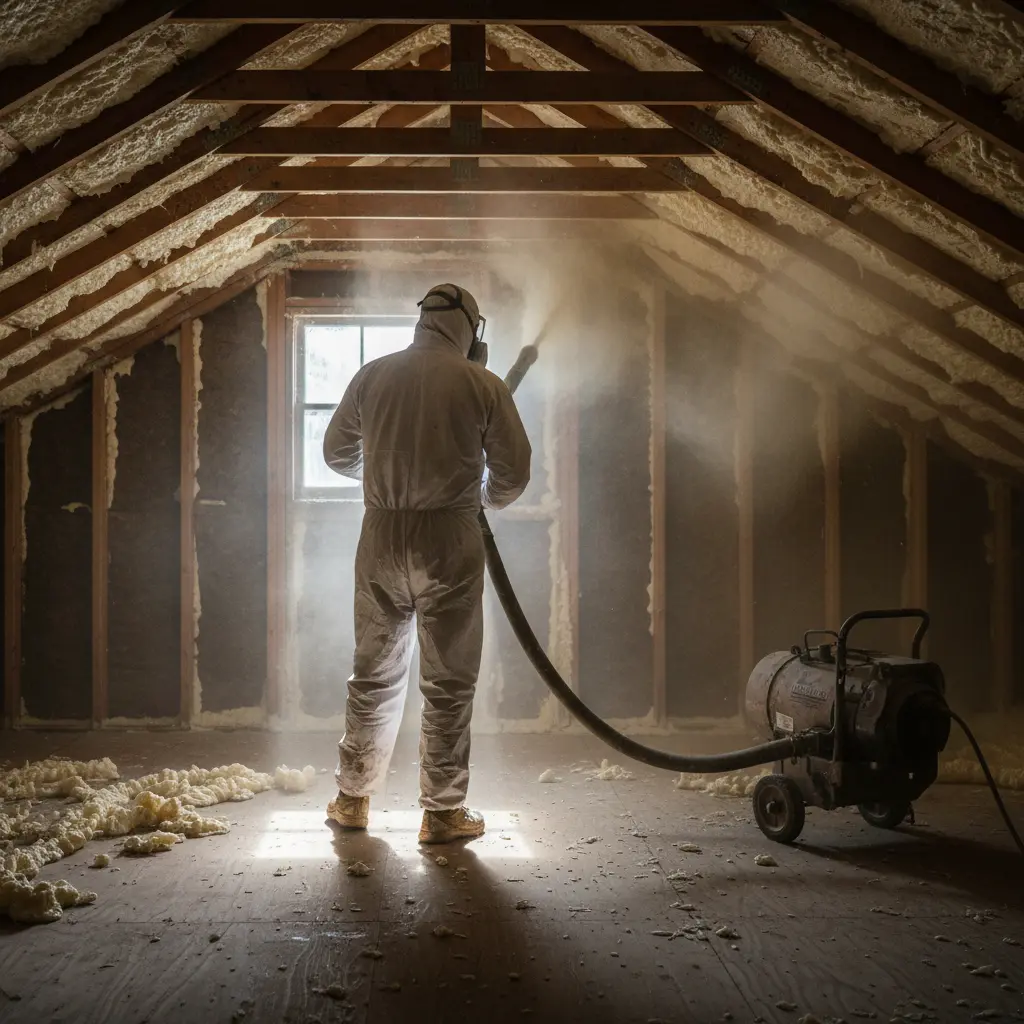
Our team in action — insulation professionals serving Orange
Insulation Methods and Approaches We Use in Orange, CA
Blown-In Insulation
Blown-in insulation — available in both fiberglass and cellulose formulations — is ideal for retrofitting existing attic spaces in Orange’s older housing stock. The loose-fill material conforms to irregular joist cavities, fills around obstacles, and can be installed without removing ceilings or walls. For homes in Orange’s mid-century neighborhoods east of Tustin Street, blown-in insulation to R-38 or R-49 is typically the most cost-effective upgrade available. Learn About Blown-In Insulation
Spray Foam Insulation
Two-component spray polyurethane foam is the gold standard for air-sealing and insulating in a single application. Open-cell foam (R-3.7 per inch) works well for interior attic roof decks and wall cavities, while closed-cell foam (R-6.5 per inch) provides both insulation and a vapor barrier — ideal for Orange crawl spaces affected by seasonal groundwater fluctuation. Explore Spray Foam Solutions
Fiberglass Batt Insulation
Pre-cut fiberglass batts remain the most common approach for new construction wall cavities and accessible floor joist systems. In Orange’s newer residential developments near The Village at Orange shopping area and surrounding Chapman University neighborhoods, batts are frequently used in new additions and room conversions to meet current Title 24 standards efficiently. Fiberglass Insulation Options
Attic Insulation
Given Orange’s extreme attic temperatures — which can reach 150°F+ in summer — attic insulation is almost always the highest-priority upgrade. We offer both blown-in and spray foam attic solutions, always paired with proper baffling and ventilation assessment. Attic Insulation Services
Crawl Space Insulation
For Orange homes on raised foundations, crawl space insulation combined with moisture barrier installation prevents heat loss in winter, heat gain in summer, and the moisture-driven pest activity common in areas near the Santa Ana River corridor. Crawl Space Insulation Details
Ready for Insulation Installation? Get Your Free Estimate Today.
Next Level Insulation of Orange serves Orange and the surrounding area — we’ll be on-site within 24 hours.
📞 Call 714-266-2070Insulation Installation Cost in Orange, CA
Understanding the cost of insulation installation in Orange helps you plan your project and evaluate proposals accurately. Prices vary based on insulation type, project scope, accessibility, and current material costs in Southern California.
Typical Price Ranges in Orange, CA
- Blown-In Attic Insulation: $1.50–$3.50 per square foot installed. A typical 1,500 sq. ft. attic in an Orange ranch-style home costs approximately $1,800–$4,500 to insulate to R-38.
- Spray Foam Insulation: $3.00–$7.00 per square foot for open-cell; $5.00–$10.00 per square foot for closed-cell. Whole-attic spray foam projects in Orange typically range from $3,500–$9,000.
- Fiberglass Batt Installation: $1.00–$2.50 per square foot installed, with wall cavity projects in a 2,000 sq. ft. Orange home typically costing $1,500–$4,000.
- Crawl Space Insulation: $2.00–$5.00 per square foot, with most Orange crawl space projects ranging from $1,200–$4,000 depending on depth, accessibility, and moisture conditions.
- Insulation Removal: $1.00–$2.50 per square foot; required prior to new installation when existing material is contaminated or severely degraded.
Factors Affecting Cost in Orange
Homes in Orange’s historic districts may have attic access limitations that increase labor time. Properties near the Santiago Hills with documented rodent activity typically require remediation before installation, adding $500–$1,500 to project costs. Current California utility rebate programs through Southern California Edison’s Energy Upgrade California initiative can offset 10–30% of qualifying insulation project costs.
For accurate pricing specific to your Orange property: Request a Free Estimate Today
Orange, CA Neighborhoods We Serve
Old Towne Orange
This historic district surrounding the Orange Plaza contains homes dating from 1905 to 1940. Properties here frequently lack any attic insulation or have minimal original vermiculite or horsehair plaster insulation. Our team is experienced working within historic preservation guidelines to deliver modern thermal performance without compromising structural or aesthetic integrity.
Orange Park Acres
This semi-rural community in eastern Orange features larger custom homes on one-acre-plus lots, many built in the 1970s–1990s. Homes here often have expanded attic spaces and crawl spaces that require comprehensive insulation strategies, and the proximity to wildland areas increases both fire risk and rodent pressure.
Villa Park Border / Cambridge and Olive Neighborhoods
Residential areas in western Orange near the Villa Park border include a mix of 1960s tract homes and 1980s–1990s construction. These properties commonly have original R-11 or R-19 insulation that falls far short of current R-38 attic minimums and benefits greatly from blown-in upgrade installations.
Chapman University Area
Older Craftsman and Spanish Colonial homes near Chapman University, dating from the 1920s through 1950s, present unique air-sealing challenges due to balloon-frame construction and dense landscaping that complicates attic access. Spray foam air-sealing paired with blown-in insulation is a common and effective solution in this neighborhood.
Insulation Maintenance Tips for Orange, CA Homeowners
Proper maintenance extends the life of your insulation investment and preserves its thermal performance through Orange’s demanding climate cycles.
- Inspect your attic annually in October before Santa Ana wind season, checking for insulation displacement, moisture staining, or pest evidence.
- Check attic insulation depth after major Santa Ana events — strong winds can infiltrate poorly sealed attic vents and shift loose-fill insulation coverage.
- Maintain proper attic ventilation by ensuring soffit and ridge vents remain unobstructed. Blocked ventilation traps moisture and degrades insulation faster in Orange’s hot summers.
- Seal gaps around new penetrations immediately when plumbers, electricians, or HVAC technicians create new holes in your attic or wall assemblies.
- After any rodent activity, have insulation professionally inspected — contaminated insulation loses R-value and poses health risks that require immediate remediation.
- Monitor energy bills month over month — a sudden increase in summer cooling costs often signals insulation compression, displacement, or moisture damage.
- Following any roof repair or replacement, have your attic insulation inspected, as roofing contractors sometimes disturb or compress insulation during their work.
Why Choose Next Level Insulation of Orange
Next Level Insulation of Orange is a locally focused insulation contractor serving Orange, CA and the surrounding communities of Orange County. Our team understands the specific demands of Orange’s Climate Zone 3B environment, the construction characteristics of the city’s diverse housing stock — from 1910 Craftsman bungalows in Old Towne to 2020s infill construction near The Village — and the California Title 24 energy code requirements that govern every project we complete.
We bring deep familiarity with Orange County’s building department permit process and inspection requirements, ensuring that every installation we complete meets or exceeds the standards required for your permits to close without issues. Our technicians are trained in all major insulation methods — blown-in, spray foam, fiberglass batt, and crawl space systems — allowing us to recommend the right solution for each application rather than defaulting to a one-size-fits-all approach.
Our commitment to Orange homeowners is simple: thorough assessment, honest recommendations, precise installation, and complete cleanup. We treat every property as if it were our own. Call 714-266-2070 to experience the difference local expertise makes.
Learn More About Our Team
Frequently Asked Questions About Insulation Installation in Orange, CA
How much does insulation installation cost in Orange, CA?
Costs vary significantly by insulation type and project scope. Blown-in attic insulation for a typical Orange home runs $1,800–$4,500. Spray foam projects typically range from $3,500–$9,000 depending on area covered and foam type. Crawl space insulation generally runs $1,200–$4,000. Southern California Edison rebate programs may offset a portion of qualifying costs. Contact us at 714-266-2070 for a free, specific estimate for your Orange property.
How long does insulation installation take in Orange?
Most residential insulation projects in Orange are completed in a single day — typically 6 to 10 hours from crew arrival to final cleanup. Larger projects, multi-zone installations, or properties requiring extensive existing insulation removal may require two days. We schedule around your calendar and minimize disruption to your household as much as possible.
What R-value do I need for my attic in Orange, CA?
For homes in Orange, the U.S. Department of Energy recommends attic insulation of R-38 to R-60 for Climate Zone 3. California’s Title 24 Energy Code requires a minimum of R-38 for attic insulation in new construction and major renovations in Orange County. Many older Orange homes currently have R-11 or less — upgrading to R-38 typically delivers dramatic energy bill reductions.
Do I need a permit for insulation installation in Orange, CA?
Adding insulation to an existing home as a like-for-like upgrade typically does not require a building permit in Orange. However, if insulation work is part of a larger renovation project — such as an addition, room conversion, or HVAC replacement — insulation upgrades may be required to meet Title 24 standards, and those projects will require permits. We advise clients on permit requirements specific to their project during the assessment phase.
Is spray foam or blown-in insulation better for Orange homes?
Both methods have appropriate applications in Orange. Blown-in insulation is typically the most cost-effective choice for upgrading existing attic floors and is excellent for retrofit projects in Orange’s older housing stock. Spray foam is superior for air-sealing complex spaces, insulating the attic roof deck (creating an unvented attic), and waterproofing crawl space walls against Orange County’s seasonal groundwater conditions. In many Orange homes, a combination of both methods delivers optimal performance.
How do I know if my Orange home needs insulation removal before installation?
Insulation removal is necessary when existing material is contaminated by rodent activity (very common in Orange’s hillside interface neighborhoods), affected by water damage or mold, or contains potentially hazardous materials such as vermiculite (associated with asbestos in pre-1980 homes). Our assessment process includes identifying these conditions and recommending removal when it is warranted. Learn About Our Insulation Removal Services
Can insulation installation help with wildfire smoke infiltration in Orange?
Yes — significantly. Comprehensive air-sealing performed as part of a professional insulation installation dramatically reduces the infiltration of outdoor air pollutants including wildfire smoke particulates. Following the November 2020 Silverado Fire, many Orange homeowners who had recently upgraded insulation with full air-sealing reported noticeably better indoor air quality compared to neighbors with older, leakier homes. While insulation is not a substitute for air filtration systems, it is a critical first layer of defense.
Does new insulation really lower my energy bills in Orange’s climate?
Yes, consistently. Homeowners in Orange who upgrade from R-11 to R-38 attic insulation typically report summer cooling bill reductions of 20–40%. Given that Southern California Edison customers in Orange often pay $250–$600 per month for summer electricity, these savings add up quickly — frequently producing a full return on investment within 3–6 years, and sometimes faster when utility rebates are applied.
Get Professional Insulation Installation in Orange, CA Today
Don’t let another Orange summer pass with inadequate insulation driving your energy bills to unsustainable levels and leaving your family uncomfortable. Whether you’re dealing with skyrocketing cooling costs, uncomfortable rooms, pest-damaged attic insulation, or simply an aging home that has never received an insulation upgrade, Next Level Insulation of Orange is ready to help.
Our team serves all neighborhoods throughout Orange, CA — from Old Towne to Orange Park Acres to the Chapman University corridor — with thorough assessments, honest recommendations, and expert installations completed to California code standards.
Call us now at 714-266-2070 to schedule your free on-site insulation assessment. You can also reach us online through our contact page to request an estimate at your convenience.
Schedule Your Free Estimate Online
Serving Orange, CA and all of Orange County — Next Level Insulation of Orange is your local insulation expert.