

Closed Cell Spray Foam Insulation in Los Angeles, CA
Energy-Saving Closed Cell Spray Foam Insulation for Los Angeles, CA Homes — Licensed & Insured
Expert closed cell spray foam insulation in Los Angeles, CA. Reduce energy bills, control moisture & improve comfort. Call Next Level Insulation: (323) 765-3939.
- Licensed & Insured
- Locally Owned & Operated
- Free Inspection & Estimate
Request Your
Free EstimateClosed cell spray foam insulation is one of the most advanced and effective insulation solutions available today, creating a rigid, impermeable barrier that simultaneously insulates, air seals, and adds structural strength to walls, roofs, and crawl spaces. Unlike open cell foam or traditional fiberglass batts, closed cell spray foam expands to fill every cavity, cures to a dense solid state, and delivers an R-value of approximately 6.0 to 7.0 per inch — the highest of any residential insulation material on the market.
In Los Angeles, CA, where temperature swings between inland valleys and coastal zones, wildfire-season heat events, and aging housing stock all create unique energy efficiency challenges, closed cell spray foam insulation is not just a luxury upgrade — it is often the most practical long-term investment a homeowner or building owner can make. At Next Level Insulation of Los Angeles, our crews bring deep knowledge of Southern California’s climate zones, building codes, and architectural styles to every project we take on. Call us today at (323) 765-3939 to schedule your free assessment.
Understanding Closed Cell Spray Foam Insulation
Closed cell spray foam insulation (ccSPF) is a two-component polyurethane material that is mixed on-site and sprayed as a liquid, expanding rapidly to 30–60 times its original volume before curing into a hard, closed-cell matrix. Each individual cell within the foam is completely sealed and filled with a blowing agent gas rather than air, which is what gives closed cell foam its exceptional thermal resistance and near-zero vapor permeability.
The technology has roots in mid-20th-century military and aerospace applications, where lightweight yet high-performance insulation was critical. Commercial adoption in residential and light commercial construction accelerated through the 1990s and 2000s as energy codes tightened and building science research confirmed spray foam’s superiority over fiber-based products in real-world air leakage performance.
Today, closed cell spray foam is specified by architects, contractors, and energy auditors for a wide range of applications:
- Roof decks and cathedral ceilings — where limited rafter depth demands maximum R-value per inch
- Exterior walls — especially in wood-frame construction where air sealing dramatically reduces HVAC loads
- Crawl spaces — where moisture control is as important as thermal performance
- Rim joists and band joists — notoriously leaky transition points in older homes
- Metal buildings and commercial structures — where condensation control prevents corrosion
In Los Angeles specifically, the diversity of building stock — from 1920s Craftsman bungalows in Pasadena to mid-century Modern flat-roof homes in Silver Lake to post-war stucco tract houses across the San Fernando Valley — means that no single insulation approach fits every project. Closed cell spray foam’s versatility makes it applicable across virtually all of these building typologies, adapting to shallow rafter bays, irregular stud cavities, and the vented versus unvented attic configurations that appear throughout the region.
California’s Title 24 energy code, one of the strictest in the nation, also increasingly favors continuous insulation assemblies and low air infiltration rates — both hallmarks of a properly installed closed cell spray foam system. Learn more about our full spray foam insulation services.
Why Closed Cell Spray Foam Insulation Is Needed in Los Angeles, CA
Extreme Heat Events and Wildfire-Season Temperature Spikes
Los Angeles has recorded some of its most intense heat events in recent history. The September 2022 heat dome pushed downtown Los Angeles to 108°F, breaking a 131-year-old record, while inland communities like Woodland Hills hit 116°F. The January 2025 Palisades and Eaton fires, which burned through Pacific Palisades and Altadena, demonstrated that fire-adjacent neighborhoods face radiant heat loads that standard fiberglass insulation cannot adequately resist. Closed cell spray foam’s density — typically 2.0 pounds per cubic foot — provides meaningful resistance to radiant heat transfer and its closed-cell structure does not absorb smoke particulates the way fibrous materials do.
Los Angeles’s Dual Climate Zones
The Los Angeles basin spans California Energy Commission (CEC) Climate Zones 6, 8, 9, and 10. Coastal neighborhoods like Culver City and West Hollywood sit in Zone 8, characterized by mild temperatures but high relative humidity from marine layer fog — conditions that promote condensation within wall cavities if vapor control is inadequate. Inland areas like Pasadena and Alhambra (Zone 9) experience temperature differentials of 30°F or more between night and day during summer months, placing sustained stress on HVAC systems. Closed cell spray foam’s Class II vapor retarder properties (perm rating typically below 1.0 at 2 inches) make it ideal for controlling moisture migration in both coastal and inland climates.
Aging Housing Stock and Outdated Insulation
A significant portion of Los Angeles’s residential building stock was constructed between 1920 and 1975 — well before modern energy codes. Neighborhoods like Boyle Heights, Montebello, and East Los Angeles contain thousands of homes with either no wall insulation, degraded vermiculite or cellulose from the mid-20th century, or fiberglass batts that have settled and lost R-value over decades. Many of these homes have uninsulated crawl spaces beneath wood-framed floors, creating significant heat loss pathways in winter and moisture intrusion risks year-round. Our insulation removal and replacement services are frequently paired with closed cell spray foam upgrades in these older neighborhoods.
Seismic Activity and Building Movement
Los Angeles sits astride the San Andreas Fault and dozens of subsidiary fault systems. The 1994 Northridge Earthquake (magnitude 6.7) caused widespread structural damage across the San Fernando Valley, and ongoing microseismic activity — hundreds of small tremors annually — causes continuous minor settlement in wood-frame homes. This movement creates and enlarges gaps in traditional insulation systems over time. Closed cell spray foam, once cured, adheres rigidly to structural members and actually contributes to racking strength — studies have shown shear strength improvements of 250% or more in spray-foamed wall assemblies, making it uniquely suited to seismic zones.
Utility Costs and Grid Pressure
Southern California Edison and LADWP rates have increased substantially in recent years, with tiered residential electricity rates reaching $0.45 per kWh or more in peak tiers. Reducing HVAC runtime through superior building envelope performance translates directly to measurable monthly savings. Energy audits conducted in the Los Angeles metro area consistently identify air infiltration and inadequate insulation as the top two drivers of excessive energy consumption in residential buildings.
Signs You Need Closed Cell Spray Foam Insulation in Los Angeles
Energy and Comfort Indicators
- Monthly electricity bills exceeding $200–$300 during summer months for a typical single-family home
- Rooms that feel significantly hotter or colder than the thermostat setting — common in west-facing rooms during Los Angeles afternoons
- HVAC system running continuously without reaching set temperature during heat events
- Noticeable drafts near electrical outlets, window frames, or recessed lights in the ceiling
Moisture and Air Quality Indicators
- Musty odors emanating from crawl spaces or walls, particularly after winter rains or coastal fog season
- Visible moisture staining or efflorescence on interior walls, especially in below-grade or crawl space areas
- Condensation forming on interior window surfaces during cooler months — a sign of high indoor humidity driven by air infiltration
- Allergy symptoms that worsen indoors, potentially indicating infiltration of outdoor allergens or mold spores through unsealed gaps
Structural and Visual Indicators
- Existing fiberglass batt insulation that appears compressed, stained, or has fallen away from joists in the attic or crawl space
- Visible gaps or daylight around pipe penetrations, wiring runs, or foundation sill plates
- Ice damming — rare in Los Angeles but observed in higher-elevation communities like La Cañada Flintridge during cold winters
Urgency Indicators
If your home lacks any insulation in the crawl space or has original 1950s–1960s fiberglass in the attic, consider your situation urgent from both an energy cost and indoor air quality standpoint. Explore our attic insulation services for related solutions.
Our Closed Cell Spray Foam Insulation Process in Los Angeles
Initial Assessment and Energy Audit (1–2 Hours)
Every project begins with a thorough on-site evaluation. Our technician walks the property to document existing insulation conditions, identify air leakage pathways using visual inspection and, when warranted, a blower door test. We note building-specific factors — rafter bay depth, crawl space height, presence of existing vapor barriers, and proximity to coastal marine layer zones. We also review applicable California Title 24 requirements and local Los Angeles Department of Building and Safety (LADBS) permit thresholds.
Detailed Proposal and Material Selection (1–3 Days)
Based on our assessment, we prepare a written scope of work specifying foam thickness, target R-values, and any preparatory work required. For Los Angeles climate zones, we typically specify 2.0 lb closed cell foam at 2–3 inches in wall cavities and 3–4 inches on roof decks to meet or exceed Title 24 minimums. We communicate clearly about lead times for materials and scheduling.
Site Preparation (2–4 Hours Day-of)
Before any foam is sprayed, the work area is prepped to protect surfaces that should not receive foam. HVAC registers are covered, surfaces are cleaned of dust and debris, and temperature/humidity conditions are verified — closed cell foam requires substrate temperatures above 40°F and relative humidity below 80% for proper cure, conditions we monitor carefully during Los Angeles’s cooler January–February period and during marine layer mornings.
Spray Foam Application (4–8 Hours Depending on Scope)
Our trained applicators, wearing full PPE including supplied-air respirators, apply the two-component foam system in lifts (typically 1–2 inches per pass) to prevent exothermic overheating. Application proceeds systematically from the deepest points of the structure outward — crawl space rim joists first, then attic deck or rafter bays, then any wall cavity work.
Quality Inspection and Thickness Verification (1–2 Hours)
After foam has cured (typically 15–30 minutes to initial set, 24 hours to full cure), our team inspects coverage using calibrated thickness probes to confirm target depths are achieved across all surfaces. Any thin spots or missed areas are addressed immediately.
Cleanup and Ventilation Clearance (1–2 Hours)
Overspray is trimmed and removed. The space is ventilated per manufacturer and California OSHA guidelines before occupants re-enter — typically 24 hours for enclosed spaces.
Final Walkthrough and Documentation
We provide the homeowner with a completed job report documenting materials used, R-values achieved, and any observations for future maintenance. This documentation is valuable for Title 24 compliance records and future real estate transactions.
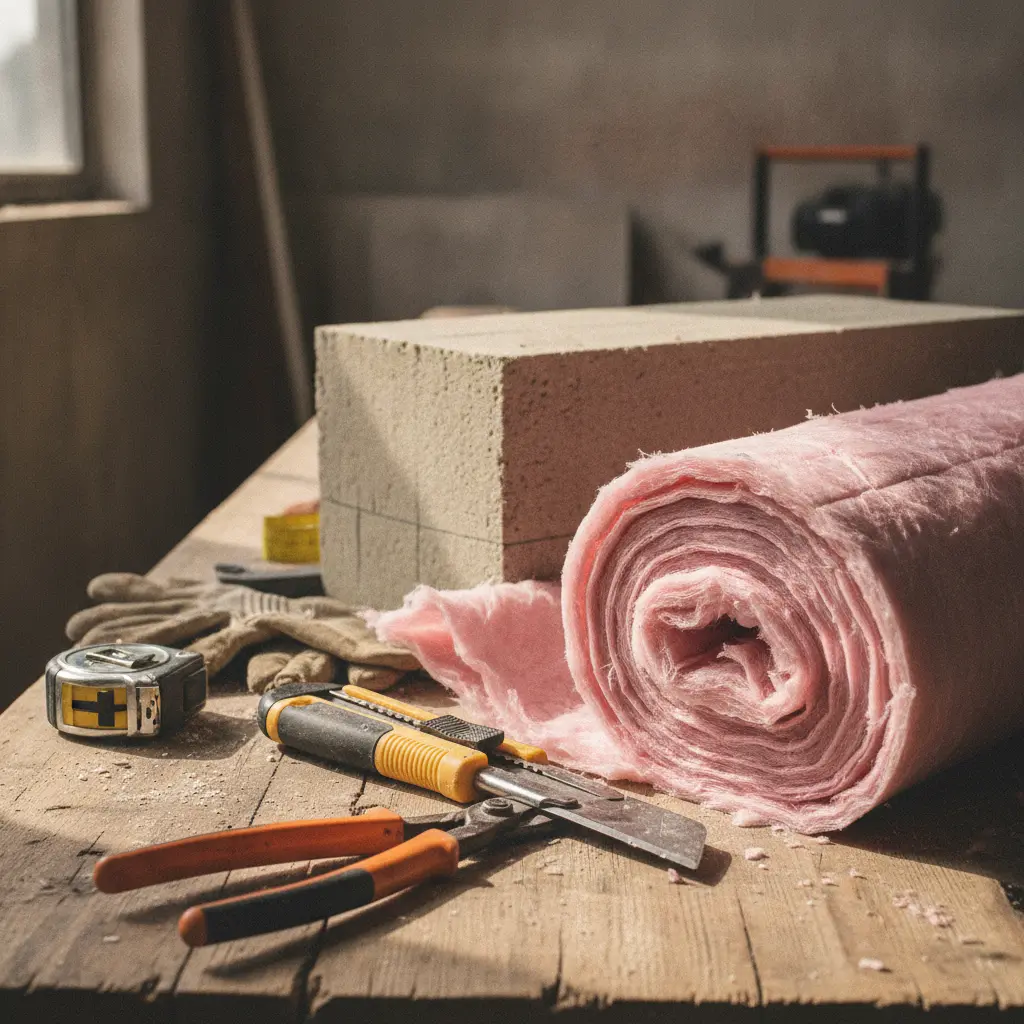
Our team in action — insulation professionals serving Los Angeles
Methods and Approaches for Closed Cell Spray Foam Insulation
Full Cavity Fill — New Construction
In new construction or gut-renovation projects, closed cell foam is sprayed to completely fill or partially fill stud and rafter cavities before drywall installation. This is the most cost-effective application point and delivers the best air sealing results. Common in Glendale and Pasadena new-build projects where architects specify high-performance envelopes to meet LEED or GreenPoint Rated standards.
Flash and Batt — Hybrid Assembly
A popular cost-optimization approach: a 1–2 inch flash coat of closed cell foam is applied to the exterior face of the cavity for its air sealing and vapor retarder properties, and the remaining cavity depth is filled with fiberglass or mineral wool batts. This hybrid method meets California Title 24 requirements in many Climate Zone 8 and 9 applications while reducing material costs by 30–40% compared to full-fill closed cell foam.
Unvented Attic Assembly (Hot Roof)
Los Angeles’s flat-roof and low-slope architecture — prevalent in mid-century Modern homes across Silver Lake, Echo Park, and Mar Vista — often cannot accommodate traditional vented attic assemblies. Closed cell foam sprayed to the underside of the roof deck creates an unvented conditioned attic, eliminating the delta-T between attic and living space and dramatically reducing cooling loads. IRC Section R806.5 and California Building Code provisions govern this application.
Crawl Space Encapsulation with Closed Cell Foam
In Los Angeles’s hillside neighborhoods — Glassell Park, Mount Washington, Eagle Rock — homes frequently sit on pier-and-beam foundations with vented crawl spaces that channel cold, humid air under living floors. Closing cell foam applied to the crawl space walls and band joists, combined with a heavy-duty vapor barrier on the soil, converts these spaces into semi-conditioned encapsulated zones. Learn more about crawl space encapsulation.
Targeted Air Sealing Applications
For homes where full re-insulation is not yet in budget, closed cell foam can be applied in targeted locations — around plumbing penetrations, electrical panel entries, recessed light cans, and attic hatch perimeters — delivering immediate air quality and energy improvements at modest cost.
Ready for Closed Cell Spray Foam Insulation? Get Your Free Estimate Today.
Next Level Insulation of Los Angeles serves Los Angeles and the surrounding area — we’ll be on-site within 24 hours.
📞 Call (323) 765-3939Closed Cell Spray Foam Insulation Cost in Los Angeles, CA
Understanding what to budget for closed cell spray foam insulation in the Los Angeles market helps homeowners plan effectively and evaluate competitive bids. Pricing reflects both material costs and the labor market specific to Southern California.
Typical Price Ranges
- Closed cell spray foam material and installation: $1.50 – $3.50 per board foot (one square foot at one inch thickness), depending on project size and access complexity
- Average wall cavity application (2,000 sq ft home, 2-inch fill): $4,000 – $8,000
- Attic roof deck application (unvented assembly): $3,500 – $7,500 depending on attic square footage and access
- Crawl space encapsulation with closed cell foam: $2,500 – $6,000 for a typical Los Angeles single-family home crawl space
- Flash and batt hybrid system: $2,000 – $5,000, representing 30–40% savings versus full closed cell fill
Key Cost Factors in Los Angeles
- Access difficulty: Homes on steep hillside lots in Silver Lake or Pasadena foothills require additional setup time and safety equipment
- Existing insulation removal: If old fiberglass or cellulose must be removed first, add $1,500 – $3,500 depending on volume. See our insulation removal pricing
- Permit requirements: LADBS may require permits for insulation work exceeding certain thresholds — our team handles all permit coordination
- Material pricing volatility: Polyurethane chemical costs fluctuate with petrochemical markets; current Los Angeles market pricing reflects post-2022 stabilization
Available Incentives
Southern California Edison’s Energy Efficiency Rebate Program and LADWP’s residential rebates may offset $200–$800 of insulation upgrade costs depending on scope and current program availability. Federal Residential Clean Energy Credits (25C) may also apply. Call us at (323) 765-3939 for guidance on current incentive programs.
Closed Cell Spray Foam Insulation Neighborhoods We Serve in Los Angeles
Pasadena
Pasadena’s housing stock includes a high concentration of pre-1940 Craftsman and Spanish Colonial Revival homes with minimal original insulation. Shallow 2×4 rafter bays and decorative wood-paneled ceilings make closed cell foam — with its high R-value-per-inch advantage — the only practical solution for meaningful thermal upgrading without destroying historic interior finishes.
West Hollywood
West Hollywood’s dense mix of 1960s–1970s apartment buildings and newer construction sits squarely in Climate Zone 8, where marine layer humidity and mild but persistent temperature swings drive year-round HVAC costs. Closed cell foam’s vapor control properties are especially valuable here for multi-family building envelope upgrades.
Culver City
Culver City’s growing stock of commercial-to-residential conversions and new mixed-use construction benefits significantly from closed cell spray foam in roof assemblies, where flat or low-slope decks are ubiquitous and thermal bridging through metal framing is a significant energy penalty.
East Los Angeles and Montebello
These communities feature dense concentrations of 1940s–1960s wood-frame homes, many with original blown cellulose or no insulation at all. Blow-in insulation is sometimes appropriate here, but for crawl spaces and rim joists, closed cell foam delivers critical moisture control alongside thermal performance.
Maintenance Tips for Closed Cell Spray Foam Insulation in Los Angeles
- Annual visual inspection: Inspect accessible foam surfaces in attics and crawl spaces annually — look for any mechanical damage, pest intrusion attempts, or delamination at edges where foam meets dissimilar materials
- UV protection: Closed cell foam exposed to sunlight (on rooftops or in open garages) must be protected with an approved coating or paint, as UV radiation degrades foam surface over time — critical for Los Angeles’s 280+ sunny days per year
- Pest monitoring: While closed cell foam is not a food source, some rodents will chew through it to create pathways — inspect perimeter penetrations after winter rodent season
- HVAC filter maintenance: A well-sealed, foam-insulated home recirculates indoor air more than a leaky home — replace HVAC filters every 60–90 days to maintain indoor air quality
- Crawl space vapor barrier inspection: In encapsulated crawl spaces, inspect the ground vapor barrier after every significant rain event (defined as 1+ inch in 24 hours by NOAA standards) for tears or water pooling
- Fire blocking compliance: California Fire Code requires ignition barriers over spray foam in occupied spaces — confirm these barriers remain intact during any renovation work
- Avoid penetrating foam: Avoid drilling through foamed areas for new wiring or plumbing without consulting an insulation professional to preserve the air sealing envelope
Why Choose Next Level Insulation of Los Angeles
Next Level Insulation of Los Angeles was built specifically to serve the unique insulation needs of the greater Los Angeles metro area. Our technicians are trained in California Title 24 compliance, are familiar with the LADBS permitting process, and understand the specific building types and climate conditions that define our service territory — from the coastal fog zones of Culver City and West Hollywood to the hot inland valleys surrounding Pasadena, Alhambra, and Monterey Park.
We serve a broad footprint across Los Angeles County, including Cudahy, Bell Gardens, Bell, Commerce, Downey, East Los Angeles, South Pasadena, Huntington Park, Maywood, Montebello, South Gate, Walnut Park, and Glendale — communities where we understand the architectural character and the energy challenges residents face every day.
Our commitment is to transparent pricing, thorough workmanship, and project documentation that supports your energy efficiency goals and real estate value. Whether you need a targeted air sealing upgrade or a whole-home insulation replacement, we bring the same level of care to every project. Call (323) 765-3939 today to get started.
Frequently Asked Questions About Closed Cell Spray Foam Insulation in Los Angeles
How much does closed cell spray foam insulation cost in Los Angeles?
In the Los Angeles market, closed cell spray foam installation typically ranges from $1.50 to $3.50 per board foot, with complete project costs ranging from $2,500 for a targeted crawl space application to $8,000 or more for a full attic or wall cavity treatment. Hillside properties with difficult access and older homes requiring insulation removal before installation will trend toward the higher end of these ranges.
How does closed cell spray foam compare to open cell foam for Los Angeles homes?
Closed cell foam’s higher density (2.0 lb/ft³ vs. 0.5 lb/ft³ for open cell) gives it a much higher R-value per inch (R-6 to R-7 vs. R-3.5 to R-4 for open cell) and a vapor retarder rating that is critical for controlling moisture in Los Angeles’s coastal climate zones. Open cell foam is more economical and useful for interior soundproofing applications, but closed cell is the preferred choice wherever moisture control and maximum thermal resistance per inch are priorities.
Will closed cell spray foam help reduce my LADWP or SCE electric bill?
Yes — significantly in most cases. Los Angeles homeowners who upgrade from no insulation or degraded fiberglass to closed cell spray foam in attics and crawl spaces report HVAC energy reductions of 20–40% in post-installation energy monitoring. Actual savings depend on baseline conditions, thermostat settings, and Climate Zone, but the payback period in the Los Angeles market — given current utility rates — is typically 5–10 years, with foam lasting 50+ years.
Do I need a permit for spray foam insulation in Los Angeles?
Many spray foam insulation projects fall below LADBS permit thresholds, particularly targeted air sealing and crawl space work. However, when closed cell foam is applied to roof decks as part of an unvented attic assembly, or when the project involves structural modifications, a permit may be required. Next Level Insulation of Los Angeles handles all permit coordination and California Fire Code compliance as part of our standard project management process.
How long does the installation process take?
Most residential closed cell spray foam projects in Los Angeles are completed in a single day — typically 4–8 hours of active spraying plus setup and cleanup. Larger commercial projects or whole-home treatments may require 2 days. Occupants need to remain out of the treated area for a minimum of 24 hours post-installation for off-gassing to clear, per California OSHA guidelines.
Is closed cell spray foam safe after it cures?
Once fully cured — within 24 hours of application — closed cell spray foam is chemically inert and safe for occupied spaces. During and immediately after spraying, the isocyanate and polyol components are hazardous, which is why our applicators use supplied-air respirators and occupants must vacate. After the 24-hour clearance period, cured foam poses no ongoing health risk and does not off-gas volatile compounds.
Can closed cell spray foam help with earthquake resilience?
Yes — this is particularly relevant in Los Angeles given the region’s seismic risk. Research published by the Spray Polyurethane Foam Alliance and building science institutions has demonstrated that closed cell foam applied in wall cavities can increase wall racking strength by 250% or more, contributing to a building’s resistance to lateral seismic forces. While closed cell foam is not a structural system replacement, it is a meaningful supplementary benefit for wood-frame homes in earthquake country.
Do you serve communities outside the City of Los Angeles?
Absolutely. Next Level Insulation of Los Angeles serves the full Los Angeles metro area including Glendale, Pasadena, Alhambra, Monterey Park, Culver City, West Hollywood, Downey, South Gate, Huntington Park, Maywood, Montebello, Commerce, Bell, Bell Gardens, Cudahy, South Pasadena, East Los Angeles, and Walnut Park. View our complete service area.
Get a Free Closed Cell Spray Foam Insulation Estimate in Los Angeles Today
If you’re ready to lower your energy bills, improve indoor comfort, and protect your home from Los Angeles’s heat events, moisture challenges, and seismic stresses, Next Level Insulation of Los Angeles is ready to help. Our team serves communities throughout Los Angeles County with expert closed cell spray foam insulation installation, honest pricing, and a commitment to getting every project right the first time.
Don’t let another scorching Los Angeles summer or rising LADWP bill pass without taking action. Call us now at (323) 765-3939 to schedule your free on-site assessment and no-obligation estimate. We are available Monday through Saturday and are proud to serve homeowners, property managers, and business owners throughout the greater Los Angeles area.
Contact Next Level Insulation of Los Angeles to get started today.