

Fiberglass Insulation in Los Angeles, CA
Energy-Saving Fiberglass Insulation for Los Angeles, CA Homes — Licensed & Insured
Need fiberglass insulation in Los Angeles, CA? Next Level Insulation offers expert installation, attic & wall insulation. Call (323) 765-3939 for a free estimate.
- Licensed & Insured
- Locally Owned & Operated
- Free Inspection & Estimate
Request Your
Free EstimateFiberglass insulation is one of the most widely used and cost-effective thermal and acoustic barrier solutions available for residential and commercial properties. Composed of extremely fine glass fibers, this material traps air pockets to slow the transfer of heat — keeping interiors cooler in Los Angeles’s intense summer heat and warmer during the region’s mild but occasionally chilly winters.
Los Angeles presents a unique insulation environment. The city’s Mediterranean climate, wide temperature swings between the inland valleys and coastal zones, and an aging housing stock that includes bungalows from the 1920s, mid-century modern homes from the 1950s, and modern multi-family developments all demand insulation expertise tailored to local conditions. At Next Level Insulation of Los Angeles, our team specializes in fiberglass insulation installations designed specifically for Southern California buildings. Whether you’re in a hillside home in Silver Lake or a stucco flat in Huntington Park, we deliver solutions that meet California Title 24 energy codes and the real-world demands of Los Angeles living. Call us today at (323) 765-3939 to schedule your assessment.
Understanding Fiberglass Insulation
Fiberglass insulation was first commercially developed in the 1930s by Owens Corning, and by the post-World War II housing boom it had become the standard insulation material across the United States. It is manufactured by melting glass and spinning or blowing it into thin fibers, which are then bound together into batts, rolls, or loose-fill material. The result is a lightweight, non-combustible product that resists moisture absorption and does not support mold growth under typical conditions.
There are two primary forms of fiberglass insulation: batts and rolls, which are pre-cut or continuous sheets designed to fit between wall studs, floor joists, and attic rafters; and loose-fill or blow-in fiberglass, which consists of small tufts of fiberglass blown into cavities using specialized equipment. Both types are rated by R-value — a measurement of thermal resistance. Higher R-values mean greater resistance to heat flow.
In California, the building code (Title 24, Part 6) sets minimum R-value requirements that vary by climate zone. Los Angeles falls primarily within Climate Zones 9 and 10, which require attic insulation of at least R-38 for most residential projects. Many older Los Angeles homes were built with little to no insulation at all, or with outdated materials that have degraded over decades.
Fiberglass insulation is particularly well-suited for Los Angeles building types. The region’s vast inventory of wood-frame homes — from Craftsman bungalows in Pasadena to post-war tract homes in Downey — features standard stud spacing that aligns perfectly with pre-cut fiberglass batt dimensions. Multi-family apartment buildings, which make up a significant portion of the Los Angeles housing stock, benefit from fiberglass’s acoustic dampening properties in addition to its thermal performance. Commercial tilt-up and steel-frame structures in areas like Commerce also frequently use fiberglass for cost-effective code compliance.
Understanding the material is the first step to making an informed insulation investment. Learn more about attic insulation options and how the right product choice can dramatically reduce your monthly energy bills.
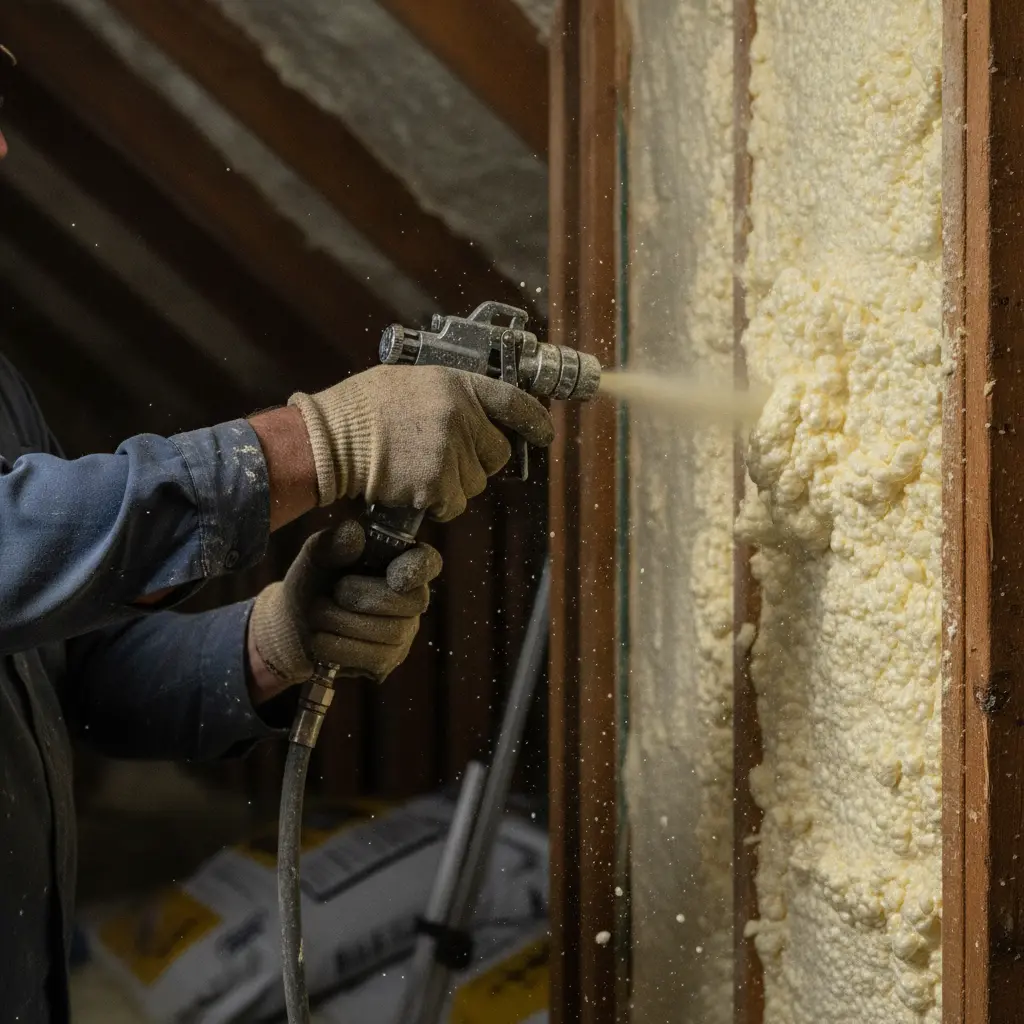
Our team in action — insulation professionals serving Los Angeles
Why Fiberglass Insulation Is Needed in Los Angeles, CA
The Los Angeles Heat Island Effect and Extreme Heat Events
Urban heat island conditions are pronounced in the dense neighborhoods of East Los Angeles, South Gate, and Maywood, where daytime temperatures can run 5°F to 8°F higher than nearby coastal communities like Culver City. During the historic September 2022 heat event — when downtown Los Angeles recorded a temperature of 108°F on September 6, breaking a 130-year-old record — homes without adequate insulation became nearly uninhabitable, with interior temperatures exceeding 90°F even with air conditioning running continuously. Properly installed fiberglass insulation with an R-38 or higher rating in the attic can reduce attic temperatures by as much as 30°F, substantially reducing the load on HVAC systems.
Santa Ana Wind Events and Thermal Stress
Los Angeles experiences dramatic thermal swings during Santa Ana wind events, which typically occur between October and April. During these events, temperatures in the San Gabriel Valley communities of Alhambra, Monterey Park, and Pasadena can climb to 90°F or higher in October or November, only to drop to near-freezing overnight temperatures within 48 hours. This rapid cycling places thermal stress on building envelopes, and homes without continuous insulation layers experience significant air infiltration through gaps that expand and contract with temperature changes. Fiberglass batt insulation, when properly installed with vapor barriers and air sealing, dramatically reduces this infiltration.
Aging Housing Stock and Energy Waste
A large proportion of Los Angeles’s residential housing was constructed before California adopted its first mandatory energy code in 1978. Neighborhoods like Bell Gardens, Cudahy, and Walnut Park contain dense concentrations of homes built between 1940 and 1970 — structures that commonly have zero wall insulation and only 3 to 4 inches of degraded, compressed fiberglass or cellulose in attic spaces. The California Energy Commission estimates that homes built before 1978 use 30–50% more energy for heating and cooling than code-compliant modern homes. Upgrading to current R-value standards with fresh fiberglass insulation can reduce annual HVAC energy consumption by 20–40%.
Wildfire Smoke and Air Quality
The 2020 Bobcat Fire, which burned over 115,000 acres in the Angeles National Forest directly north of Pasadena and Glendale, demonstrated that air sealing paired with fiberglass insulation is also a public health measure. Homes with gaps in insulation layers allow smoke particulates to infiltrate interior spaces. Continuous fiberglass insulation reduces air leakage pathways that allow PM2.5 particles to penetrate building envelopes during future fire events.
Utility Costs in the LA Basin
Southern California Edison and LADWP customers in Los Angeles face some of the highest electricity rates in the continental United States, with residential rates averaging $0.28–$0.34 per kWh in 2024. Inadequate insulation directly translates to hundreds of dollars in unnecessary annual utility costs. Learn about insulation removal and replacement when old materials are degrading your home’s efficiency.
Signs You Need Fiberglass Insulation in Los Angeles
Energy and Comfort Indicators
- Monthly LADWP or SCE bills that spike significantly during June through September or during Santa Ana wind events
- Rooms that feel dramatically hotter or cooler than the rest of the house, particularly second-floor rooms or rooms below the attic
- HVAC system running continuously during summer without reaching the set temperature
- Noticeable drafts near electrical outlets, windows, or interior walls — a common sign of missing wall insulation in pre-1978 Los Angeles homes
Visual and Physical Symptoms
- Attic insulation that appears gray, flattened, or less than 10 inches deep (indicating R-value well below Title 24 minimums)
- Visible gaps, voids, or missing sections of insulation in accessible attic or crawl space areas
- Moisture staining or water damage on insulation batts, which compromises thermal performance
- Rodent damage or pest intrusion — common in older Eastside and San Gabriel Valley properties — creating gaps in insulation coverage
Urgency Indicators
- A home inspection report citing inadequate or absent insulation prior to a real estate transaction
- Recent roof replacement without corresponding attic insulation inspection or upgrade
- Any remodeling that opened wall cavities and revealed empty or degraded insulation
Explore insulation replacement services if your current material is damaged or no longer performing.
Fiberglass Insulation Methods and Approaches
Fiberglass Batt and Roll Insulation
Pre-cut fiberglass batts are the standard choice for new construction and open-cavity retrofit projects in Los Angeles. Available in widths matching standard 16-inch and 24-inch stud spacing — common in both Craftsman-era and mid-century Los Angeles homes — batts are ideal for attic floors between joists, exposed wall cavities during remodeling, and floor cavities above crawl spaces. R-13 and R-15 batts are used for 2×4 wall cavities; R-19 and R-21 for 2×6 framing found in newer West Hollywood and Glendale construction.
Blow-In Fiberglass (Loose-Fill)
For existing attics and enclosed wall cavities, blow-in fiberglass is the most practical approach. Using a blowing machine, technicians inject loose fiberglass into spaces that are inaccessible to batts. This method is especially effective for the dense urban neighborhoods of Culver City and South Pasadena, where attic access may be limited and uniform coverage is essential. Learn more about our blow-in insulation services.
Fiberglass with Vapor Barrier
In crawl spaces and first-floor applications common in older Boyle Heights and Bell properties, fiberglass insulation is paired with a 6-mil polyethylene vapor barrier to manage moisture intrusion from the ground. Explore our crawl space insulation solutions for more details.
High-Density Fiberglass Batts
For multi-family buildings and commercial properties in Commerce and East Los Angeles, high-density fiberglass batts offer superior acoustic performance in addition to thermal resistance — reducing sound transmission between units, a significant quality-of-life concern in Los Angeles’s dense urban residential developments.
Ready for Fiberglass Insulation? Get Your Free Estimate Today.
Next Level Insulation of Los Angeles serves Los Angeles and the surrounding area — we’ll be on-site within 24 hours.
📞 Call (323) 765-3939Fiberglass Insulation Cost in Los Angeles, CA
Understanding the cost of fiberglass insulation in Los Angeles requires accounting for both material costs and the local labor market, which runs higher than national averages due to California’s prevailing wage rates and cost of living.
Typical Cost Ranges
- Attic insulation (blow-in fiberglass): $1.50–$3.00 per square foot installed, or approximately $1,500–$4,500 for a typical 1,200–1,800 sq. ft. Los Angeles home attic
- Wall insulation (batt retrofit): $2.00–$4.50 per square foot, depending on access requirements and wall construction type
- Crawl space floor insulation (batt with vapor barrier): $3.00–$5.50 per square foot installed
- Full-home insulation upgrade (attic + walls + crawl space): $5,000–$15,000 depending on home size, existing conditions, and access difficulty
Factors Affecting Los Angeles Pricing
- Home age and access: Pre-1950 homes in Boyle Heights or Maywood often require more labor due to non-standard framing and limited attic access
- Old material removal: If existing insulation must be removed first, add $1.00–$2.00 per square foot
- R-value target: Achieving R-49 (above Title 24 minimum) costs more than minimum-code R-38 but delivers greater long-term savings
- Permit requirements: Los Angeles Department of Building and Safety may require permits for certain insulation scopes, adding $150–$500 to project costs
Available Rebates
LADWP and Southern California Edison both offer rebates for qualifying insulation upgrades, often $0.10–$0.20 per square foot. We assist clients in identifying and applying for applicable rebates to reduce net project costs. Call (323) 765-3939 for a detailed written estimate.
Fiberglass Insulation Service Areas in Los Angeles
Pasadena and South Pasadena
These communities contain a high concentration of early-20th-century Craftsman and Colonial Revival homes, many built between 1905 and 1930. These structures often have balloon-frame construction with completely empty wall cavities and attics with only 2–3 inches of original insulation. We specialize in dense-pack blow-in fiberglass for wall cavities in these historic properties without disturbing original plaster or exterior cladding.
Glendale and Montebello
Mid-century stucco homes from the 1950s and 1960s dominate these communities. Many have R-11 or less in walls and less than R-19 in attics — far below current Title 24 requirements. Our blow-in attic upgrades and batt wall retrofits bring these homes to modern code compliance.
Culver City and West Hollywood
A mix of renovated bungalows and new multi-family construction characterizes these areas. New construction projects require precise batt installation for Title 24 compliance inspections. Older remodeled properties benefit from our combination of air sealing and fiberglass upgrades.
South Gate, Huntington Park, and Cudahy
These densely populated communities have a high proportion of pre-1960 rental housing with no wall insulation and minimal attic coverage. Urban heat island conditions make insulation upgrades here among the highest-impact projects we undertake. Compare fiberglass to spray foam insulation options for your specific property type.
Fiberglass Insulation Maintenance Tips for Los Angeles Homeowners
- Inspect attic insulation annually, ideally in October before Santa Ana wind season. Look for compressed, wet, or disturbed areas that indicate settling or pest intrusion.
- Check for roof leaks after heavy rain events. Los Angeles’s infrequent but intense rain events — particularly during El Niño years — can saturate attic insulation, dramatically reducing R-value and promoting mold growth.
- Monitor for rodent activity. Roof rats and mice are common in Los Angeles’s urban tree canopy. Rodents tunnel through fiberglass batts, creating gaps. Seal roof penetrations and check insulation for disturbance after any signs of pest activity.
- Keep attic ventilation clear. Los Angeles’s strong sun loads require adequate ridge and soffit ventilation. Block insulation from covering soffit vents, as this traps heat and increases attic temperatures, reducing your insulation’s effectiveness.
- Do not compress fiberglass batts when storing items in the attic. Compression permanently reduces R-value — a common mistake in Los Angeles homes where attic storage is tempting.
- Re-evaluate wall insulation after any remodeling that opens wall cavities. This is the most cost-effective time to add or upgrade fiberglass in walls.
- Apply for LADWP Home Energy Improvement Program rebates after any insulation upgrade to recover a portion of project costs.
Why Choose Next Level Insulation of Los Angeles
Los Angeles is not a generic market, and it deserves an insulation contractor with genuine local expertise. At Next Level Insulation of Los Angeles, our team has worked across the full spectrum of Southern California building types — from 1910-era Craftsman bungalows in Pasadena to modern multi-family complexes in West Hollywood to commercial warehouses in Commerce. We understand the specific demands of California Title 24 compliance, the LADWP and SCE rebate landscape, and the unique microclimatic challenges of the Los Angeles Basin.
We bring specialized knowledge to every project, including familiarity with the permitting processes at the Los Angeles Department of Building and Safety and jurisdictional requirements in cities like Glendale, Culver City, and Pasadena, each of which has its own building department and inspection protocols.
Our approach begins with honest assessment. We will tell you exactly what your home needs, what R-values are appropriate for your climate zone, and what realistic energy savings you can expect — not an inflated sales pitch. We provide detailed written proposals before any work begins.
For fiberglass insulation in Los Angeles that is installed correctly the first time, call (323) 765-3939. Learn about all of our insulation installation services available throughout the greater Los Angeles area.
Frequently Asked Questions: Fiberglass Insulation in Los Angeles
How much does fiberglass insulation cost in Los Angeles?
Costs vary based on the scope of the project. Attic blow-in insulation typically runs $1.50–$3.00 per square foot installed, while wall batt installation ranges from $2.00–$4.50 per square foot. A complete insulation upgrade for a typical 1,500 sq. ft. Los Angeles home commonly falls between $3,500 and $9,000 before available LADWP or SCE rebates. Call (323) 765-3939 for a free, detailed written estimate specific to your property.
What R-value do I need for my Los Angeles home?
Los Angeles falls within California Climate Zones 9 and 10 under Title 24. For attics, the minimum required R-value is R-38, though we recommend R-49 for maximum energy savings given the city’s intense summer heat. Walls in 2×4 framing require R-13 minimum; 2×6 walls require R-19. Your specific climate zone and project type may affect requirements.
How long does a fiberglass insulation installation take?
A standard attic insulation project for a single-family Los Angeles home takes 4–8 hours from start to finish, including preparation and clean-up. Whole-home projects that include walls and crawl spaces may require 1–2 full days. We work efficiently to minimize disruption to your household.
Is fiberglass insulation safe for my family?
Modern fiberglass insulation products have been extensively studied and are classified as safe for building applications by the International Agency for Research on Cancer and the EPA. Installers use appropriate protective equipment during installation. Once installed and enclosed, fiberglass poses no health risk to building occupants. We use only current-generation, low-VOC fiberglass products.
Do I need a permit for insulation installation in Los Angeles?
In the City of Los Angeles, simple attic insulation upgrades (adding insulation to existing attics) generally do not require a permit. However, projects involving insulation removal and replacement, new wall cavity insulation, or work associated with other permitted construction may require a permit from the Los Angeles Department of Building and Safety. In cities like Pasadena, Glendale, and Culver City, requirements vary. We handle permit determination as part of our project planning process.
How does Los Angeles’s climate affect which insulation I should choose?
Los Angeles’s Mediterranean climate — hot, dry summers and mild, occasionally wet winters — makes fiberglass insulation highly effective. The dry conditions mean moisture accumulation in fiberglass is rarely a concern in most LA applications. However, properties in coastal areas near Culver City or lower-lying communities near the Los Angeles River may have elevated humidity conditions that we assess during the initial inspection.
Can fiberglass insulation help reduce noise in my Los Angeles home?
Yes. Fiberglass batts, particularly high-density products, are effective at reducing airborne sound transmission between rooms and floors. This is a significant benefit in Los Angeles’s dense urban neighborhoods and multi-family buildings. If acoustic performance is a priority alongside thermal performance, we can recommend specific product grades designed to optimize both.
What areas near Los Angeles do you serve?
We serve communities throughout the greater Los Angeles area, including Cudahy, Monterey Park, Glendale, Pasadena, Bell Gardens, Alhambra, Bell, Commerce, Culver City, Downey, East Los Angeles, South Pasadena, Huntington Park, Maywood, Montebello, South Gate, Walnut Park, and West Hollywood. View our complete service area for more information.
Get Your Free Fiberglass Insulation Estimate in Los Angeles Today
If your Los Angeles home is uncomfortable, your energy bills are climbing, or your insulation hasn’t been inspected in years, it’s time to take action. Next Level Insulation of Los Angeles is ready to assess your property, identify your specific needs, and provide a clear, honest, written estimate — with no obligation.
We serve homeowners and property managers throughout Los Angeles, Pasadena, Glendale, Culver City, Downey, and all surrounding communities. Our team understands California Title 24 requirements, local building department protocols, and the LADWP and SCE rebate programs that can reduce your net project cost.
Call us now at (323) 765-3939 to schedule your free on-site fiberglass insulation assessment. Comfortable, energy-efficient living in Los Angeles starts with the right insulation — installed right. Contact Next Level Insulation of Los Angeles online to request your estimate today.