

Insulation Replacement in Los Angeles, CA
Quality Insulation Replacement in Los Angeles, CA — Built to Last
Need insulation replacement in Los Angeles, CA? Next Level Insulation removes & replaces old, damaged insulation. Free estimates. Call (323) 765-3939 today.
- Licensed & Insured
- Locally Owned & Operated
- Free Inspection & Estimate
Request Your
Free EstimateInsulation replacement is the process of removing deteriorated, damaged, or inefficient insulating materials from your home or commercial property and installing new, high-performance insulation in its place. Unlike a simple top-off, full replacement ensures that degraded material — which can harbor mold, pest debris, and moisture — is completely eliminated before fresh insulation is installed.
In Los Angeles, the combination of scorching San Fernando Valley summers, marine layer humidity along the coast, and aging mid-century housing stock creates conditions that accelerate insulation breakdown faster than in most U.S. cities. Whether you own a 1940s bungalow in Silver Lake, a post-war ranch in Downey, or a modern condo in West Hollywood, outdated insulation is silently driving up your energy bills and compromising your indoor comfort.
Next Level Insulation of Los Angeles specializes in full-service insulation replacement across the greater Los Angeles area. Our trained technicians assess, remove, and replace insulation using materials and methods matched specifically to Southern California’s unique climate demands. Call us today at (323) 765-3939 for a free assessment.
Understanding Insulation Replacement in Los Angeles
Insulation replacement is more than a home improvement project — it is a critical building science intervention that restores a structure’s thermal envelope to peak performance. The thermal envelope is the barrier between conditioned interior space and the outdoor environment. When insulation within that envelope degrades, the entire system fails, forcing HVAC equipment to work harder and costing homeowners thousands in unnecessary utility expenses.
Insulation materials commonly found in Los Angeles homes include fiberglass batts, blown-in cellulose, mineral wool, and older vermiculite or asbestos-containing products installed before 1980. Many properties throughout East Los Angeles, Alhambra, and Monterey Park were built during the post-World War II housing boom of the late 1940s through the 1960s, when insulation standards were minimal. A typical home of that era may have had only 2 to 3 inches of attic insulation — a fraction of the R-38 to R-60 currently recommended by the Department of Energy for Climate Zone 3, which covers Los Angeles County.
Over time, fiberglass batts compress and lose their R-value. Cellulose settles, creating gaps. Spray foam can delaminate if improperly applied. Rodents — a persistent issue in neighborhoods like Boyle Heights and South Gate — nest in batt insulation, contaminating it with urine and feces that are both a health hazard and an odor source. Moisture intrusion from roof leaks or condensation in poorly ventilated crawl spaces accelerates mold growth within insulation, rendering it not only ineffective but potentially harmful to indoor air quality.
Replacement, rather than supplemental installation over existing material, is the recommended approach whenever insulation is contaminated, moisture-damaged, pest-infested, or has fallen below 50 percent of its original R-value. By starting fresh, homeowners in Los Angeles can take advantage of modern materials that outperform their predecessors while also qualifying for federal energy efficiency tax credits and local utility rebates through programs offered by the Los Angeles Department of Water and Power (LADWP).
Understanding the full scope of what insulation replacement entails — removal, disposal, air sealing, and installation — helps homeowners make informed decisions and avoid contractors who simply layer new insulation over compromised existing material. Learn more about our attic insulation services
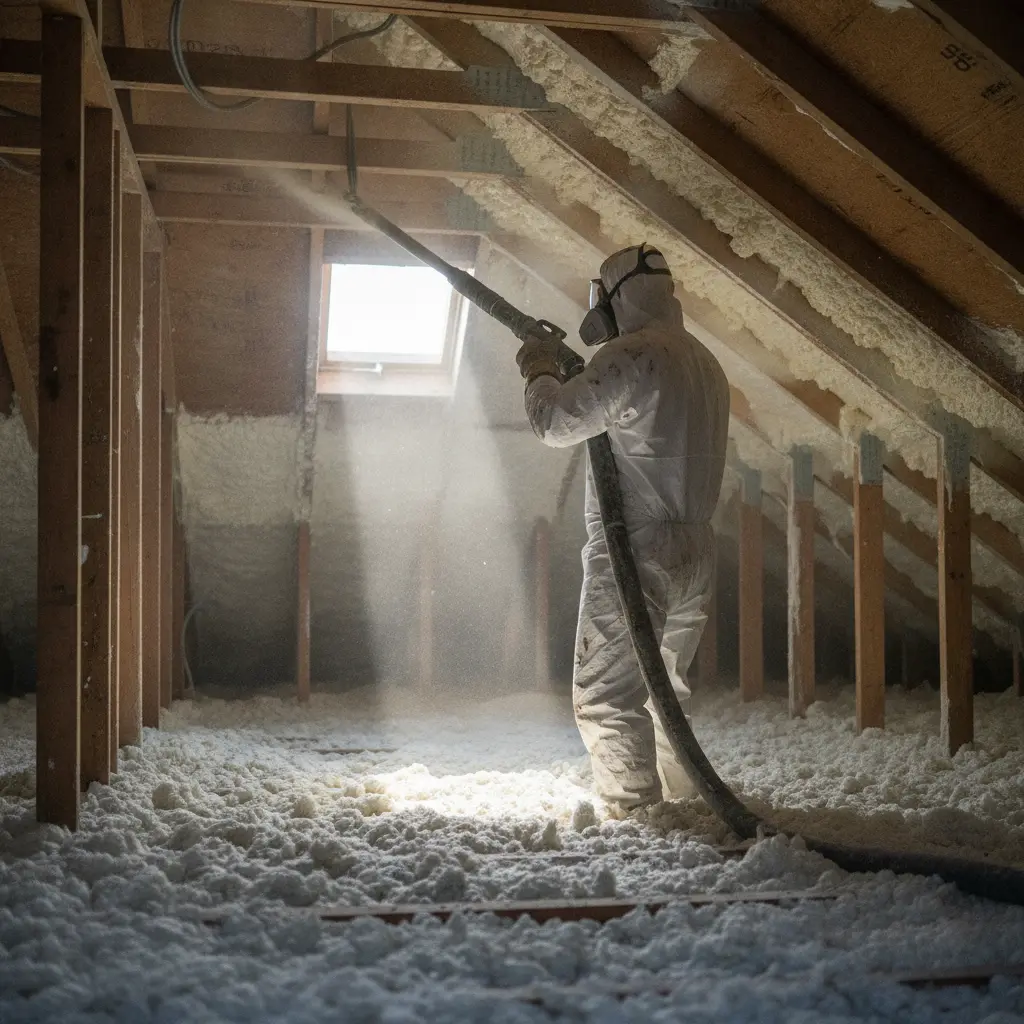
Our team in action — insulation professionals serving Los Angeles
Why Insulation Replacement Is Needed in Los Angeles, CA
Extreme Temperature Swings
While Los Angeles enjoys a Mediterranean climate, temperature differentials between seasons and even between day and night are more extreme than many residents realize. The San Fernando Valley regularly sees summer highs exceeding 105°F, while attic temperatures in unshaded structures in neighborhoods like Reseda or Pacoima can climb past 150°F during peak August heat events. These extreme attic temperatures cause fiberglass batts to lose resilience over time and can cause certain adhesive-bonded products to degrade. Meanwhile, winter nights in elevated areas like the foothills near Pasadena and Glendale can drop into the upper 30s°F, meaning insulation must perform across a wide thermal range every single year.
Marine Layer Humidity and Coastal Moisture
The marine layer — a low-lying stratum of cool, moist ocean air — pushes inland from the Pacific Ocean on most mornings, reaching neighborhoods like Culver City, West Hollywood, and Commerce before burning off by midday. This daily humidity cycle introduces moisture into attic and wall cavities, particularly in homes without adequate vapor barriers or ventilation. Over years, this cyclical wetting and drying weakens cellulose insulation and promotes mold colonization in fiberglass batts, especially in homes with inadequate soffit or ridge ventilation.
The 1994 Northridge Earthquake Legacy
The January 17, 1994 Northridge earthquake (magnitude 6.7) caused widespread structural damage across Los Angeles County, including hairline cracks in wall systems and foundation shifts that altered the air sealing integrity of thousands of homes in Alhambra, Monterey Park, South Pasadena, and surrounding communities. These breaches allowed unconditioned air to infiltrate wall cavities, introducing moisture and accelerating insulation degradation in ways that were not always immediately visible. Many homes repaired after 1994 received cosmetic fixes without addressing insulation in walls and attics — meaning that 30 years later, that insulation is compromised and due for full replacement.
Rodent and Pest Activity
Los Angeles County has documented persistent roof rat (Rattus rattus) and Norway rat activity across urban neighborhoods including Huntington Park, Maywood, Bell, and Bell Gardens. Rats tunnel through attic insulation, compress it into nesting material, and saturate it with urine and droppings. A moderately infested attic can lose 40 to 60 percent of its effective R-value within a single rodent season. Beyond thermal performance, contaminated insulation poses serious hantavirus and leptospirosis risks. Full removal and replacement — combined with pest exclusion — is the only safe remediation approach.
Aging Housing Stock and Asbestos-Era Materials
A significant percentage of residential properties in East Los Angeles, Walnut Park, and South Gate were constructed between 1930 and 1975, when vermiculite insulation containing naturally occurring asbestos was commonly used in attics. Additionally, some older blown-in insulation products used in this era contained asbestos fibers. The EPA recommends that any vermiculite insulation be presumed to contain asbestos and handled accordingly. Professional replacement by certified contractors is mandatory in these cases, as disturbing asbestos-containing materials without proper containment violates California Air Resources Board (CARB) regulations and exposes occupants to serious health risks.
Learn about our safe insulation removal process
Signs You Need Insulation Replacement
Energy and Comfort Indicators
- Monthly electricity bills from LADWP or SoCalGas that have increased 20 percent or more without a change in usage habits
- Rooms that feel significantly warmer or cooler than the thermostat setting, particularly upper-floor bedrooms during summer
- HVAC system running continuously without reaching the set temperature during a heat event
- Noticeable drafts near exterior walls, electrical outlets, or recessed lighting fixtures
Visual and Physical Symptoms
- Attic insulation that appears flat, matted, dirty gray, or compressed below 6 inches in depth
- Visible pest droppings, nesting materials, or runways in attic insulation
- Water staining, dark discoloration, or visible mold growth on insulation surfaces
- Insulation that crumbles, smells musty, or shows signs of moisture damage after roof leaks
- Vermiculite-type granular material in the attic (potential asbestos — do not disturb)
Age-Based Urgency
- Home built before 1980 with no documented insulation upgrade
- Any insulation installed more than 20 to 25 years ago in a rodent-active neighborhood
- Insulation installed immediately after the 1994 Northridge earthquake without professional assessment
If you identify two or more of the above indicators, contact Next Level Insulation of Los Angeles at (323) 765-3939 for an immediate inspection.
Insulation Replacement Methods and Approaches
Blown-In Cellulose Insulation
Blown-in cellulose is the most popular replacement material for existing Los Angeles attics. Made from recycled paper treated with fire retardant, cellulose achieves an R-value of approximately R-3.7 per inch and conforms to irregular attic geometries common in the Spanish Colonial and Craftsman bungalows prevalent in neighborhoods like Silver Lake and Alhambra. Its density also provides superior resistance to air movement compared to fiberglass batts. Learn more about blow-in insulation
Fiberglass Batt Insulation
Pre-cut fiberglass batts remain the standard for wall cavity replacement during remodels and additions. Batts are available in R-13 and R-21 configurations for standard 2×4 and 2×6 wall framing respectively — the two most common framing dimensions found in post-war Los Angeles construction. Batts are also used for floors above crawl spaces throughout communities like Montebello and South Pasadena.
Spray Foam Insulation
Two-component closed-cell spray polyurethane foam (SPF) delivers R-6 to R-7 per inch and provides an integrated air and vapor barrier — critical in homes near the coast in West Hollywood and Culver City where marine layer humidity is a persistent challenge. Spray foam is also the preferred solution for cathedral ceilings, rim joists, and irregularly shaped spaces where batt insulation cannot achieve full coverage. See our spray foam insulation services
Crawl Space Encapsulation
For homes with vented crawl spaces — common in the hillside neighborhoods of Glendale and Pasadena — we combine insulation replacement with full crawl space encapsulation using 20-mil vapor barriers. This approach eliminates ground moisture as a source of insulation degradation and dramatically improves floor comfort. Learn about crawl space encapsulation
Ready for Insulation Replacement? Get Your Free Estimate Today.
Next Level Insulation of Los Angeles serves Los Angeles and the surrounding area — we’ll be on-site within 24 hours.
📞 Call (323) 765-3939Insulation Replacement Cost in Los Angeles, CA
Understanding the cost of insulation replacement helps Los Angeles homeowners budget accurately and avoid being misled by lowball estimates that exclude critical steps like removal and disposal.
Typical Price Ranges
- Attic Insulation Removal Only: $1.00–$2.50 per square foot, depending on depth, contamination level, and access difficulty
- Blown-In Cellulose Replacement (Attic): $1.50–$3.00 per square foot installed to R-38 or R-49
- Spray Foam Replacement (Attic or Walls): $3.00–$7.00 per square foot depending on thickness and area
- Fiberglass Batt Wall Replacement: $1.25–$2.75 per square foot (open-wall access during remodel)
- Full Attic Replacement (1,500 sq ft home): Approximately $3,500–$7,500 all-inclusive
- Crawl Space Replacement with Encapsulation: $5,000–$12,000 depending on square footage and moisture conditions
Los Angeles-Specific Cost Factors
Insulation replacement costs in Los Angeles tend to run 15–25 percent above national averages due to higher labor costs, California disposal fees for contaminated materials, and Cal/OSHA compliance requirements for asbestos-suspect materials. Homes in hillside areas of Glendale, Pasadena, or West Hollywood may also incur access surcharges due to steep or limited attic entry points.
Available Rebates
LADWP customers may qualify for insulation rebates of up to $0.10 per square foot for attic insulation meeting Title 24 requirements. Federal Inflation Reduction Act tax credits offer up to 30 percent back on qualifying insulation materials, up to $1,200 annually. We help every customer identify and apply for available incentives.
Call (323) 765-3939 for a free, no-obligation estimate specific to your property.
Neighborhoods We Serve in the Los Angeles Area
Pasadena and South Pasadena
The Craftsman bungalows and American Foursquare homes built in Pasadena and South Pasadena between 1905 and 1940 typically feature narrow attic hatches, balloon-frame wall construction, and original fiberglass or cellulose insulation that has never been replaced. These homes also sit at elevations that experience colder winter nights than the basin floor, making thermal performance especially important.
Glendale and East Los Angeles
Mid-century tract homes built in Glendale and East Los Angeles between 1945 and 1965 commonly contain the original 2–3 inches of attic insulation installed at construction — well below current standards. Many also show evidence of rodent intrusion through aging soffits and deteriorated fascia boards.
Culver City and West Hollywood
Homes and condos in Culver City and West Hollywood face the most intense marine layer exposure of any communities we serve. Moisture-compromised insulation, combined with flat or low-slope roofs common in modernist architecture, makes spray foam the preferred replacement solution in these neighborhoods.
Huntington Park, Bell, and Maywood
Dense urban housing in these communities often includes multi-unit residential buildings with shared wall construction dating to the 1930s–1950s. Fire-rated mineral wool replacement insulation is frequently specified here to meet current building code requirements for multi-family structures.
View all service areas we cover
Insulation Maintenance Tips for Los Angeles Homeowners
- Inspect your attic annually: Schedule a visual inspection every fall before the rainy season (November–March) to check for moisture intrusion, compression, or pest activity before problems escalate.
- Seal roof and attic penetrations promptly: After any roof work or HVAC service, verify that penetrations through the attic floor have been resealed — common entry points for both air and pests.
- Maintain attic ventilation: Clear soffit vents of debris and bird nests seasonally. Proper ventilation prevents the moisture buildup that accelerates insulation degradation in Los Angeles’s marine layer climate.
- Address roof leaks within 48 hours: Los Angeles’s rainy season can introduce significant moisture in a short time. Wet insulation loses R-value immediately and begins growing mold within 24–72 hours.
- Monitor for pest signs: If you hear scratching in your attic or walls, contact a pest control professional immediately. Early intervention prevents insulation contamination that necessitates full replacement.
- Do not compress insulation: Never store items directly on top of attic insulation. Compression permanently reduces R-value in fiberglass and cellulose products.
- Track your utility bills: A sudden increase in LADWP charges during summer months is a reliable early indicator of insulation degradation worth investigating.
Why Choose Next Level Insulation of Los Angeles
Next Level Insulation of Los Angeles is a dedicated insulation specialty contractor serving homeowners and property managers across Los Angeles County. We focus exclusively on insulation services — removal, replacement, and installation — which means our technicians develop a depth of expertise that general contractors cannot match.
We understand the specific challenges that Los Angeles properties present: asbestos-era materials in pre-1980 homes, rodent contamination in urban neighborhoods, marine layer moisture in coastal communities, and the seismic legacy that has compromised the air sealing integrity of thousands of local structures. Every replacement project is designed with these local realities in mind.
Our team is trained and equipped to handle California’s strict Cal/OSHA requirements for hazardous materials, and we carry full contractor liability insurance appropriate for work in Los Angeles County. We also provide honest, itemized estimates — including removal and disposal costs — so you are never surprised by hidden fees after the work begins.
We serve Cudahy, Los Angeles, Monterey Park, Glendale, Pasadena, Bell Gardens, Alhambra, Bell, Commerce, Culver City, Downey, East Los Angeles, South Pasadena, Huntington Park, Maywood, Montebello, South Gate, Walnut Park, and West Hollywood.
Call (323) 765-3939 to schedule your free assessment today.
Frequently Asked Questions About Insulation Replacement in Los Angeles
How much does insulation replacement cost in Los Angeles?
A typical whole-attic insulation replacement in a 1,500 square foot Los Angeles home — including removal, disposal, air sealing, and new blown-in cellulose installation to R-38 — ranges from $3,500 to $7,500. Costs vary based on contamination level, access difficulty, and material choice. Spray foam applications run higher at $5,000–$12,000 for an equivalent attic. Los Angeles pricing reflects higher local labor costs and California disposal requirements. Contact us at (323) 765-3939 for a specific estimate.
How long does insulation replacement take?
A standard attic insulation replacement in a Los Angeles single-family home is typically completed in one full workday (6–10 hours). Larger homes, severely contaminated attics, or projects that include crawl space encapsulation may require two to three days. We provide a specific timeline estimate during your initial assessment.
Do I need to leave my home during insulation replacement?
For standard blown-in or batt replacement, temporary relocation is generally not required, though we recommend keeping children and pets away from work areas. For projects involving asbestos-suspect vermiculite removal — found in some pre-1980 homes in East Los Angeles and surrounding neighborhoods — temporary relocation during removal is strongly recommended and may be required under Cal/OSHA protocols.
Is there asbestos in my Los Angeles home’s insulation?
If your home was built before 1980 and has granular, pebble-like insulation in the attic, it may be vermiculite from the Libby, Montana mine — which is presumed by the EPA to contain asbestos. Additionally, some older blown-in products used in Los Angeles homes in the 1950s–1970s contained asbestos fibers. Do not disturb suspect material. Call us for a professional assessment and, if indicated, third-party laboratory testing before any removal work begins.
Will new insulation lower my LADWP bill?
Yes, substantially. Homes upgraded from original 1950s-era insulation to current R-38 or R-49 standards typically report LADWP electricity bill reductions of 20 to 40 percent in summer months. The exact savings depend on your HVAC system efficiency, home orientation, shading, and usage patterns. LADWP also offers rebates on qualifying insulation upgrades that can offset a portion of your project cost.
Can I install new insulation over old insulation?
Only if the existing insulation is dry, uncontaminated, pest-free, and structurally sound. In the majority of Los Angeles homes we inspect — particularly those in rodent-active neighborhoods like Huntington Park, Maywood, and Bell — existing insulation is contaminated and must be fully removed before new material is installed. Adding insulation over compromised material traps odors, mold spores, and allergens in your home’s air system.
What R-value do I need for my Los Angeles home?
The Department of Energy and California Title 24 Energy Code recommend R-38 to R-60 for attics in Los Angeles County (Climate Zone 3), R-13 to R-21 for walls depending on framing depth, and R-19 for floors above unconditioned crawl spaces. Homes in elevated foothill communities near Pasadena and Glendale — which experience colder winters — benefit most from achieving the higher end of these ranges.
Do you serve commercial properties in Los Angeles?
Yes. Next Level Insulation of Los Angeles services residential, multi-family, and light commercial properties throughout Los Angeles County. Commercial projects may require additional documentation for building permit compliance under California Title 24. We coordinate all required inspections and paperwork for commercial clients.
Get Your Free Insulation Replacement Estimate Today
Don’t let deteriorated insulation drive up your energy bills and compromise your comfort through another Los Angeles summer. Whether your home has pest-contaminated attic insulation, moisture-damaged crawl space material, or simply decades-old fiberglass that has long outlived its usefulness, Next Level Insulation of Los Angeles is ready to help.
We provide free, no-obligation assessments for homeowners and property managers throughout Los Angeles, Glendale, Pasadena, Culver City, West Hollywood, Downey, Alhambra, Montebello, South Gate, Huntington Park, and all surrounding communities.
Call us now at (323) 765-3939 to schedule your assessment. Our team is available Monday through Saturday and can typically schedule inspections within 48 hours. A more comfortable, energy-efficient home starts with a single call.
Schedule your free insulation assessment online