

Crawl Space Encapsulation in Los Angeles, CA
Professional Crawl Space Encapsulation in Los Angeles, CA — Licensed, Insured & Locally Owned
Need crawl space encapsulation in Los Angeles, CA? Next Level Insulation seals moisture, mold & pests. Free estimates — call (323) 765-3939 today!
- Licensed & Insured
- Locally Owned & Operated
- Free Inspection & Estimate
Request Your
Free EstimateCrawl space encapsulation is the process of sealing your home’s crawl space with heavy-duty vapor barriers, rigid foam insulation, and moisture control systems to create a clean, conditioned environment beneath your living spaces. In Los Angeles, where the Mediterranean climate brings alternating dry summers and wet winters — combined with the region’s well-documented seismic activity and expansive clay soils — crawl spaces face unique and persistent moisture, pest, and structural challenges that demand professional attention.
At Next Level Insulation of Los Angeles, we specialize in crawl space encapsulation solutions designed specifically for Southern California homes. Whether you own a 1920s craftsman bungalow in Pasadena or a mid-century ranch home in Culver City, our trained technicians assess your home’s specific conditions and deliver encapsulation systems that protect your investment for years to come. Call us today at (323) 765-3939 to schedule your free crawl space inspection.
Understanding Crawl Space Encapsulation
Crawl space encapsulation is a comprehensive moisture management strategy that transforms an open, vented crawl space into a sealed, controlled environment. Unlike basic vapor barriers that simply lay plastic sheeting on the ground, full encapsulation involves sealing the floor, walls, and ceiling of the crawl space with thick polyethylene barriers — typically 12 to 20 mils in thickness — along with foam board insulation on foundation walls, sealed vents, and in many cases, a dehumidifier or conditioned air supply to maintain stable humidity levels below 60 percent.
The concept of crawl space encapsulation evolved significantly in the early 2000s when building science researchers, particularly those affiliated with the U.S. Department of Energy’s Building America program, demonstrated that vented crawl spaces — long considered standard construction — actually introduced more moisture problems than they solved in many climates. This research shifted the industry toward sealed, conditioned crawl spaces as a best practice, and today encapsulation is widely recognized by the EPA, ASHRAE, and the International Residential Code as a superior moisture management solution.
In Los Angeles, the majority of residential crawl spaces were constructed between the 1920s and 1970s, when vented crawl space design was the dominant building method. The city’s vast inventory of craftsman bungalows, Spanish Colonial Revival homes, and post-war tract housing — particularly concentrated in neighborhoods like Silver Lake, Eagle Rock, Alhambra, and Montebello — were built with open foundation vents that allow seasonal moisture, pests, and outdoor air to infiltrate freely beneath the home.
Modern encapsulation systems installed by Next Level Insulation of Los Angeles typically include a Class I vapor barrier (minimum 10-mil polyethylene), closed-cell spray foam or rigid foam insulation on foundation walls rated at R-10 or higher, sealed foundation vents, a sump pump when standing water is present, and a properly sized dehumidifier. Together, these components create a crawl space environment that mimics the conditioned interior of your home, protecting your floor joists, subfloor, HVAC equipment, and ductwork from moisture-related decay.
Why Crawl Space Encapsulation Is Needed in Los Angeles, CA
Los Angeles Clay Soils and Ground Moisture
Much of the Los Angeles Basin sits on expansive Montmorillonite clay soils — the same soils that cause foundation heaving and settling across neighborhoods like East Los Angeles, Boyle Heights, and Huntington Park. These clay-rich soils retain significant moisture during the rainy season (typically November through March) and release water vapor slowly throughout the year. Soil moisture readings in the San Gabriel Valley foothill communities, including Monterey Park and Alhambra, frequently reach 30 to 40 percent volumetric water content during wet winters, driving humidity levels beneath homes into ranges well above the 60 percent threshold where mold and wood rot thrive.
El Niño Rainfall Events and Seasonal Flooding
Los Angeles experiences pronounced wet and dry cycles tied to the El Niño-Southern Oscillation. During the significant El Niño events of 1997–1998 and 2022–2023, Los Angeles County received rainfall totals that exceeded 200 percent of seasonal averages, with Downtown Los Angeles recording more than 13 inches of rain in the 2022–2023 season compared to the historical average of approximately 14.9 inches for the full year. Crawl spaces in lower-elevation neighborhoods such as Maywood, Bell, Commerce, and Walnut Park — areas that sit within or near the Los Angeles River floodplain — reported standing water accumulations of 2 to 6 inches during peak storm events. Without encapsulation, this moisture saturates floor joists, insulation, and subfloor materials within days.
Marine Layer Humidity Along the Westside
Coastal and near-coastal communities including Culver City, West Hollywood, and Monterey Park experience morning marine layer intrusion for as many as 200 days per year. This phenomenon pushes relative humidity levels to 85 to 95 percent during overnight and early morning hours, conditions that easily penetrate open crawl space vents. Over time, this cyclical humidity exposure causes wood floor joists to absorb and release moisture repeatedly — a process that accelerates warping, splitting, and biological decay even when no standing water is present.
Seismic Activity and Foundation Movement
Los Angeles sits at the intersection of the San Andreas, Puente Hills, Hollywood, and Newport-Inglewood fault systems. Ground movement — even from smaller magnitude 3.0 to 4.5 events common across the region — can crack foundation walls, shift vapor barriers, and open gaps in sealed vents. The Northridge Earthquake of January 17, 1994, caused an estimated $20 billion in structural damage across the greater Los Angeles area, with thousands of crawl spaces sustaining foundation cracks that created new pathways for soil moisture and pest entry. Regular encapsulation inspections and durable, overlapping barrier systems are essential in this seismically active environment.
Pest Pressure and Subterranean Termites
The Western Subterranean Termite (Reticulitermes hesperus) is endemic to the Los Angeles Basin and thrives in the moist, dark conditions of unencapsulated crawl spaces. The California Department of Food and Agriculture identifies Los Angeles County as a high-infestation zone, and pest control professionals operating throughout Glendale, Pasadena, South Gate, and Downey routinely report termite evidence in open crawl spaces as a leading driver of structural repair costs. Encapsulation significantly reduces the moisture conditions that attract and sustain termite colonies.
Signs You Need Crawl Space Encapsulation in Los Angeles
Moisture and Structural Signs
- Visible standing water or wet soil in the crawl space after rain events
- White mineral deposits (efflorescence) on concrete foundation walls
- Sagging, soft, or spongy floor areas above the crawl space
- Visible mold growth on floor joists, subfloor sheathing, or existing insulation
- Rust on metal fasteners, HVAC components, or ductwork within the crawl space
Indoor Air Quality and Comfort Signs
- Musty or earthy odors present on the first floor or throughout the home
- Increased allergy or respiratory symptoms among household members
- Cold, drafty floors during winter months — common in hillside homes in Glendale and Pasadena
- Higher-than-expected energy bills due to conditioned air escaping through the floor assembly
Pest and Biological Signs
- Evidence of rodent activity including droppings, nesting materials, or chewed insulation
- Termite mud tubes on foundation walls or floor joists
- Visible fungal growth or wood discoloration on structural members
Urgency indicator: If you observe standing water, active mold growth, or structurally compromised joists, contact Next Level Insulation of Los Angeles at (323) 765-3939 immediately. These conditions worsen rapidly in Los Angeles’s seasonal climate cycles.
Our Crawl Space Encapsulation Process in Los Angeles
Free Crawl Space Inspection and Assessment (1–2 Hours)
Our certified technicians conduct a thorough inspection of your crawl space, measuring dimensions, documenting moisture readings with a calibrated hygrometer, identifying pest evidence, assessing insulation condition, and photographing all problem areas. We assess your home’s specific soil type, drainage grade, and foundation vent placement — factors that vary considerably across the Los Angeles Basin.
Debris Removal and Old Insulation Removal (Half Day to Full Day)
We remove all existing batt insulation, fallen vapor barriers, debris, and contaminated materials from the crawl space. In older Los Angeles homes built before 1978, we follow EPA RRP protocols for any materials that may contain asbestos or lead. Removed materials are bagged, transported, and disposed of in compliance with Los Angeles County waste management regulations. Learn more about our insulation removal services
Mold Remediation and Wood Treatment (1–2 Days When Required)
When biological growth is present — common in lower-elevation communities including Maywood, Bell Gardens, and Commerce — we apply EPA-registered antimicrobial treatments to affected joists and subfloor sheathing. Severely damaged wood members are flagged for structural repair prior to encapsulation.
Drainage and Sump Pump Installation (When Applicable, 1 Day)
For properties with chronic water intrusion — particularly homes near the Los Angeles River corridor in Downey, South Gate, and Huntington Park — we install interior French drains and sump pump systems to manage water before it contacts the vapor barrier system.
Vapor Barrier Installation (1–2 Days)
We install a minimum 12-mil reinforced polyethylene vapor barrier across the crawl space floor and up foundation walls, overlapping seams by a minimum of 12 inches and sealing all seams and penetrations with pressure-sensitive tape rated for long-term adhesion. Foundation vents are sealed with foam-backed vent covers or rigid foam insulation panels.
Foundation Wall Insulation (1 Day)
We insulate foundation walls with closed-cell spray foam or rigid foam board insulation to a minimum of R-10 in accordance with California Title 24 energy code requirements. Explore our crawl space insulation options
Dehumidifier Installation and Final Inspection (Half Day)
We install and calibrate a properly sized crawl space dehumidifier set to maintain relative humidity below 55 percent year-round. We conduct a final walkthrough with the homeowner, review maintenance protocols, and provide a written inspection report with photographs.
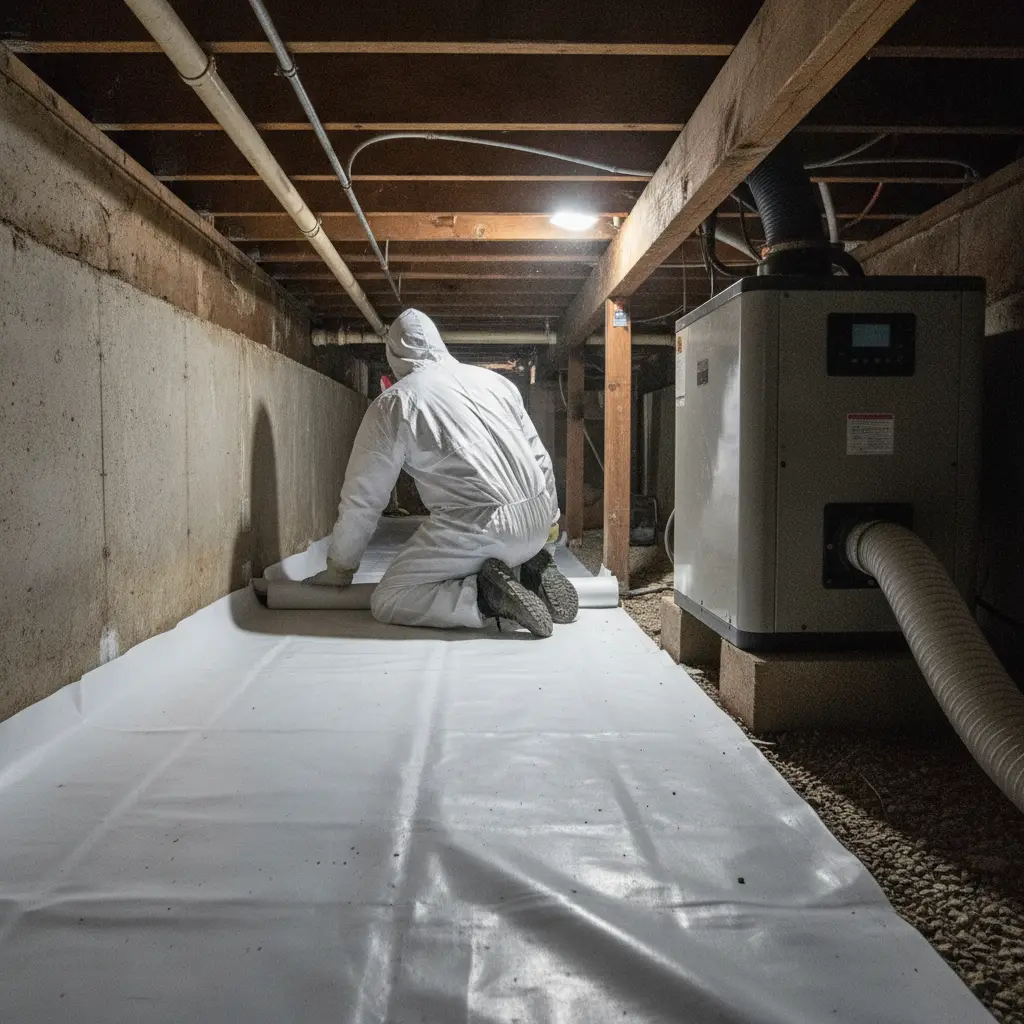
Our team in action — insulation professionals serving Los Angeles
Crawl Space Encapsulation Methods and Approaches
Full Encapsulation with Conditioned Air Supply
The most comprehensive approach, this method seals all vents and introduces a small supply of conditioned air from the home’s HVAC system into the crawl space. Ideal for Los Angeles homes in inland communities like Pasadena and Alhambra where temperature swings between summer and winter are most pronounced. This method maintains the crawl space as a semi-conditioned zone, virtually eliminating humidity fluctuations.
Full Encapsulation with Dedicated Dehumidifier
Best suited for homes where connecting the crawl space to the HVAC system is not practical, this approach seals all vents and installs a dedicated, self-draining crawl space dehumidifier. Widely used in West Hollywood and Culver City properties with older HVAC systems that lack capacity for additional load.
Partial Encapsulation with Enhanced Vapor Barrier
For homeowners with budget constraints, a heavy-duty vapor barrier installation with sealed vents provides meaningful moisture control without full wall insulation. This approach is appropriate for drier, higher-elevation properties in Glendale or South Pasadena where soil moisture levels are moderate.
Spray Foam Encapsulation
Closed-cell spray foam applied directly to foundation walls and rim joists creates both an air seal and a vapor retarder in a single application. This method is especially effective in post-1994 earthquake-retrofitted homes with irregular foundation geometries. Learn more about spray foam insulation
Drainage-First Encapsulation
For properties with active water intrusion — common in low-lying communities like Maywood and Bell — drainage management (sump pumps, interior drains) must precede any vapor barrier installation. Skipping this step results in barrier failure within one to two rainy seasons.
Ready for Crawl Space Encapsulation? Get Your Free Estimate Today.
Next Level Insulation of Los Angeles serves Los Angeles and the surrounding area — we’ll be on-site within 24 hours.
📞 Call (323) 765-3939Crawl Space Encapsulation Cost in Los Angeles, CA
The cost of crawl space encapsulation in Los Angeles varies based on crawl space size, moisture severity, existing conditions, and the scope of work required. Below are typical pricing ranges for the Los Angeles market:
- Basic vapor barrier installation (1,000–1,500 sq ft crawl space): $1,500 – $3,000
- Full encapsulation with dehumidifier (1,000–1,500 sq ft): $4,000 – $7,500
- Full encapsulation with drainage system and dehumidifier (1,500–2,500 sq ft): $7,500 – $15,000
- Mold remediation add-on: $500 – $3,000 depending on extent
- Old insulation removal prior to encapsulation: $1.00 – $2.50 per square foot
Los Angeles-Specific Pricing Factors
Los Angeles labor costs are among the highest in the nation, reflecting the region’s elevated cost of living and skilled trades wages. Homeowners in hillside communities — such as those in the Glendale foothills or Pasadena’s Altadena-adjacent neighborhoods — should anticipate additional access and equipment costs due to limited crawl space clearance and difficult terrain. Homes in the Los Angeles River floodplain may require permits through the Los Angeles Department of Building and Safety for sump pump installation, adding $200 to $600 in permit fees.
California’s Title 24 energy code requirements for minimum insulation R-values on foundation walls may also influence project scope and cost compared to other states. Most encapsulation projects in Los Angeles qualify for rebates through the Los Angeles Department of Water and Power (LADWP) or SoCalGas energy efficiency programs, potentially offsetting $200 to $500 of project costs.
Call (323) 765-3939 for a free, no-obligation estimate tailored to your property.
Crawl Space Encapsulation Service Areas in Los Angeles
Pasadena and South Pasadena
These communities are home to some of the oldest residential stock in the greater Los Angeles area, with significant concentrations of craftsman bungalows and Colonial Revival homes dating from the 1900s to 1930s. Original crawl spaces in these homes feature low clearances and deteriorated redwood framing that is especially vulnerable to moisture damage. We serve both cities with encapsulation systems designed for historic homes.
Glendale
Glendale’s hillside neighborhoods — including the Verdugo Mountains foothill communities — experience pronounced seasonal moisture variation. Many 1940s and 1950s ranch-style homes here have crawl spaces with open vents facing hillside drainage, creating direct pathways for runoff and soil moisture. Crawl space services in Glendale
Culver City and West Hollywood
Westside properties in Culver City and West Hollywood are significantly impacted by coastal marine layer humidity. Mid-century modern and post-war homes in these communities frequently present with deteriorated fiberglass batt insulation and failing plastic sheeting from previous attempts at vapor control.
Maywood, Bell, and Commerce
These lower-elevation communities in the southeast Los Angeles Basin experience the region’s highest incidence of crawl space water intrusion due to proximity to the Los Angeles River and low-lying topography. Drainage-first encapsulation systems are frequently required here.
Crawl Space Maintenance Tips for Los Angeles Homeowners
- Inspect annually before rainy season (October): Check for vapor barrier tears, standing water, and dehumidifier function before Los Angeles’s wet season begins.
- Empty dehumidifier collection buckets or verify auto-drain lines monthly: Los Angeles’s marine layer season from May through September can load dehumidifiers even without rainfall.
- Check foundation vent seals after seismic events: Even minor earthquakes can dislodge foam vent covers. Re-inspect after any felt earthquake of magnitude 3.0 or greater.
- Maintain proper site drainage grading: Ensure soil grades away from your foundation at a minimum of 6 inches per 10 feet to redirect El Niño rainfall away from the crawl space.
- Inspect for pest entry annually: Los Angeles’s subterranean termite season peaks in spring. Check for mud tubes on foundation walls and report any findings to a licensed pest control operator.
- Keep crawl space access doors sealed: Unsealed access hatches are among the most common sources of pest and moisture entry in Los Angeles homes.
- Monitor indoor humidity on the first floor: A relative humidity reading consistently above 55 percent indoors during dry months may indicate crawl space moisture is migrating upward.
Why Choose Next Level Insulation of Los Angeles
Next Level Insulation of Los Angeles is a locally operated insulation and crawl space specialist serving homeowners across the greater Los Angeles Basin. Our technicians understand the unique combination of Mediterranean climate cycles, expansive clay soils, seismic risk, and diverse housing stock that makes Los Angeles crawl space work distinct from any other market in the country.
We offer a complete range of related services — including attic insulation, blow-in insulation, spray foam insulation, insulation removal, and insulation replacement — allowing us to serve as a single-source contractor for all your home performance needs.
Our encapsulation systems use only commercial-grade materials rated for Southern California’s climate conditions. We provide detailed written proposals, transparent pricing with no hidden fees, and a thorough post-installation walkthrough so you fully understand your new crawl space system.
Call us at (323) 765-3939 to speak with a Los Angeles crawl space specialist today.
Frequently Asked Questions: Crawl Space Encapsulation in Los Angeles, CA
How much does crawl space encapsulation cost in Los Angeles?
In the Los Angeles market, full crawl space encapsulation typically ranges from $4,000 to $15,000 depending on crawl space size, moisture severity, drainage requirements, and whether mold remediation is needed. Basic vapor barrier upgrades can start around $1,500 for smaller crawl spaces. Los Angeles’s higher labor costs mean pricing typically runs 15 to 25 percent above national averages. Contact us at (323) 765-3939 for a free site-specific estimate.
How long does crawl space encapsulation take in Los Angeles?
Most residential crawl space encapsulation projects in Los Angeles are completed in two to four days. Larger projects with significant drainage work, mold remediation, or difficult access — common in Glendale hillside homes or older Pasadena craftsman properties with low clearances — may require five to seven days from start to finish.
Does Los Angeles building code require permits for crawl space encapsulation?
Vapor barrier installation and foundation wall insulation generally do not require a permit from the Los Angeles Department of Building and Safety. However, sump pump electrical connections and HVAC modifications to introduce conditioned air to the crawl space typically do require permits. We handle permit procurement as needed and ensure all work complies with California Title 24 energy codes.
Will encapsulation help with the musty smell in my Los Angeles home?
Yes. Musty odors in Los Angeles homes almost always originate from mold or fungal growth in the crawl space, fueled by the region’s seasonal moisture cycles. Encapsulation eliminates the moisture conditions that support biological growth. Most homeowners report noticeable odor improvement within two to four weeks of encapsulation completion as the crawl space environment dries out and stabilizes.
Do I need to encapsulate my crawl space if Los Angeles is dry most of the year?
This is a common misconception. While Los Angeles receives relatively modest annual rainfall (averaging 14.9 inches in Downtown LA), the region’s clay soils retain soil moisture for months after rain events, the Pacific marine layer introduces high overnight humidity for much of the year, and El Niño cycles periodically deliver extreme precipitation. These factors combine to create persistent crawl space moisture challenges regardless of the dry summer season.
Can crawl space encapsulation lower my energy bills in Los Angeles?
Yes. By sealing the crawl space and insulating foundation walls to California Title 24 minimums, encapsulation reduces the volume of unconditioned air infiltrating your home through the floor assembly. Los Angeles homeowners typically report 10 to 20 percent reductions in heating and cooling costs following encapsulation, with the greatest savings seen in older homes with previously uninsulated crawl spaces. LADWP and SoCalGas rebate programs may further offset costs.
Will encapsulation prevent termites in my Los Angeles crawl space?
Encapsulation significantly reduces the moisture conditions that attract Western Subterranean Termites — the dominant species in the Los Angeles Basin — but it is not a termite treatment. We recommend coordinating encapsulation with a licensed pest control operator who can apply a soil treatment or borate wood treatment during the encapsulation process for maximum protection.
What is the difference between crawl space encapsulation and crawl space insulation?
Crawl space insulation refers specifically to adding thermal insulation (such as batt, spray foam, or rigid board) to the floor joists or foundation walls of the crawl space to improve energy efficiency. Crawl space encapsulation is a broader moisture management system that includes a vapor barrier, sealed vents, and often a dehumidifier or drainage system — with insulation as one component. Full encapsulation provides both moisture control and thermal performance. Learn more about crawl space insulation
Get a Free Crawl Space Encapsulation Estimate in Los Angeles Today
Don’t let Los Angeles’s seasonal moisture cycles, clay soils, and marine layer humidity silently damage your home’s foundation, floor joists, and indoor air quality. Next Level Insulation of Los Angeles is ready to help you protect your home with a professional crawl space encapsulation system built for Southern California’s unique conditions.
We serve homeowners throughout Los Angeles, Glendale, Pasadena, Culver City, West Hollywood, Monterey Park, Alhambra, Downey, South Gate, Huntington Park, Maywood, Bell, Commerce, Bell Gardens, Walnut Park, East Los Angeles, Montebello, Cudahy, and South Pasadena.
Call us now at (323) 765-3939 to schedule your free crawl space inspection and receive a detailed, no-obligation project estimate. Our Los Angeles crawl space specialists are standing by.