

Mineral Wool Insulation in Los Angeles, CA
Energy-Saving Mineral Wool Insulation for Los Angeles, CA Homes — Licensed & Insured
Next Level Insulation of Los Angeles delivers professional insulation services for Los Angeles, CA homes. Our licensed team improves energy efficiency and comfort with products designed for local climate conditions.
- Licensed & Insured
- Locally Owned & Operated
- Free Inspection & Estimate
Request Your
Free EstimateMineral wool insulation — also known as rock wool or stone wool — is a high-performance insulation material manufactured from volcanic basalt rock and recycled slag. Unlike fiberglass, mineral wool is naturally fire-resistant, water-repellent, and exceptionally dense, making it one of the most effective thermal and acoustic insulation solutions available today.
In Los Angeles, CA, where Mediterranean climates drive extreme summer heat, wildfire smoke infiltration, and year-round seismic activity, mineral wool offers properties that standard insulation materials simply cannot match. Its non-combustible structure withstands temperatures exceeding 1,400°F — a critical advantage in a region that has experienced devastating fire events across communities like Altadena, the Palisades, and the San Gabriel foothills.
At Next Level Insulation of Los Angeles, our trained crews deliver professional mineral wool installation across the greater Los Angeles metro area. Call us today at (323) 765-3939 to schedule your consultation.
Understanding Mineral Wool Insulation
Mineral wool insulation has been in commercial production since the late 1800s, when engineers first discovered that spinning molten volcanic rock into thin fibers created a material with outstanding thermal properties. By the mid-20th century, manufacturers refined the process using blast furnace slag — a byproduct of steel production — to create the two primary variants used today: rock wool (basalt-based) and slag wool (slag-based). Both variants fall under the broader “mineral wool” category and share similar performance characteristics.
Modern mineral wool products are typically available in rigid boards, semi-rigid batts, and loose-fill forms. The material achieves R-values ranging from R-3.0 to R-3.3 per inch in batt form, and rigid mineral wool boards used in continuous insulation applications can reach R-4.0 per inch — outperforming standard fiberglass batts that typically deliver R-2.9 to R-3.8 per inch.
In Los Angeles, mineral wool has found widespread adoption across several building typologies:
- Mid-century single-family homes (1945–1975): Thousands of post-war bungalows and ranch-style homes in neighborhoods like Culver City, Downey, and Monterey Park were built with minimal or no insulation. Mineral wool batts are ideal retrofit solutions for these 2×4 and 2×6 wall cavities.
- Multi-unit residential buildings: Los Angeles’s dense apartment corridors — particularly along Wilshire Boulevard and in East Los Angeles — benefit from mineral wool’s superior sound transmission class (STC) ratings, which reduce inter-unit noise complaints significantly compared to fiberglass alternatives.
- Commercial and mixed-use structures: Buildings in Glendale’s downtown core and Pasadena’s Old Town district often require continuous insulation systems that meet California Title 24 energy code requirements. Mineral wool rigid boards satisfy both thermal and fire-code mandates in these applications.
- Wildfire-interface (WUI) properties: Homes in Los Angeles County’s designated Very High Fire Hazard Severity Zones (VHFHSZ) increasingly use mineral wool in attic decks and exterior wall assemblies as a primary ember-resistant layer.
Because mineral wool does not absorb moisture readily, it resists the mold and mildew growth that commonly plagues insulation installed in Los Angeles’s marine-layer coastal zones — an advantage that fiberglass and cellulose materials cannot consistently provide in humid microclimates near the coast.
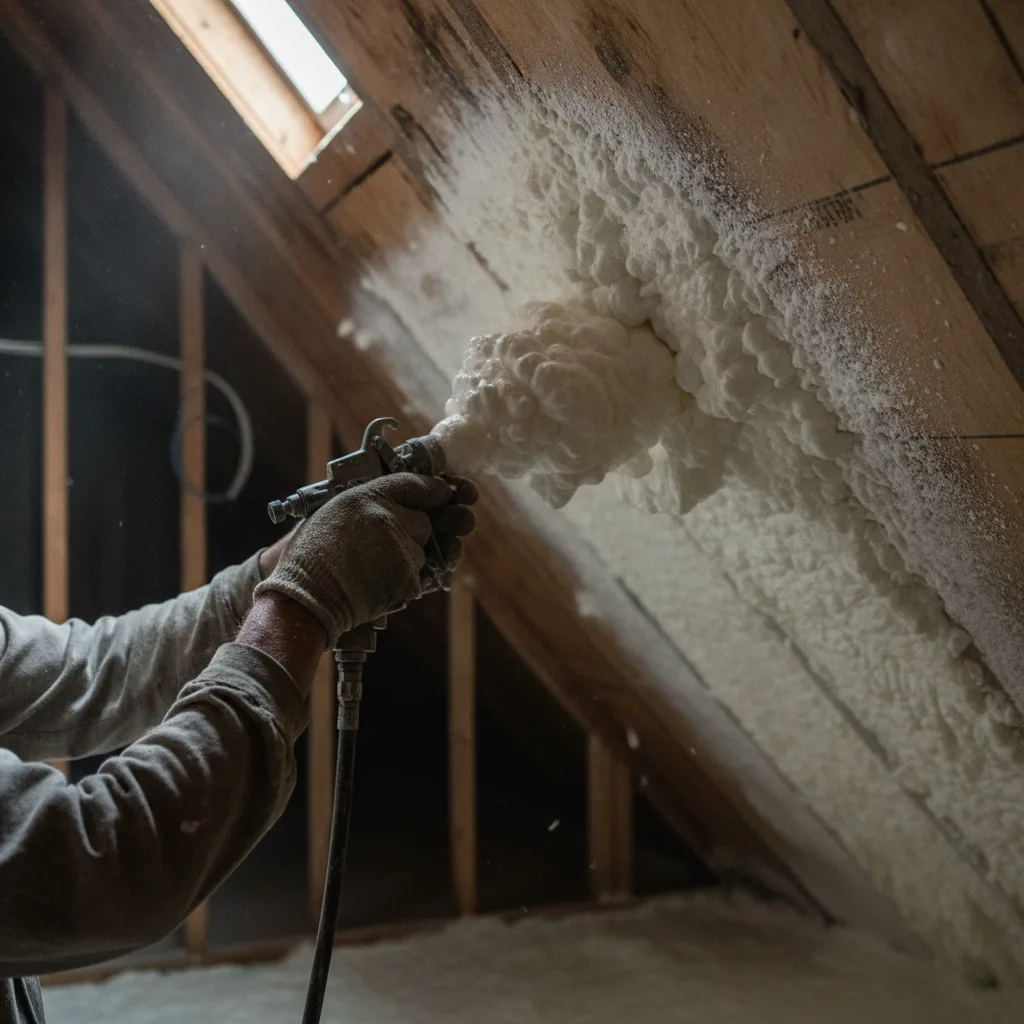
Our team in action — insulation professionals serving Los Angeles
Why Mineral Wool Insulation Is Needed in Los Angeles, CA
Extreme Heat and the Urban Heat Island Effect
Los Angeles recorded a historic high of 113°F in downtown on September 6, 2020 — the hottest temperature ever measured in the city’s recorded history. The Los Angeles urban heat island effect regularly pushes interior San Fernando Valley and San Gabriel Valley temperatures 8°F to 15°F higher than coastal readings, with neighborhoods like Alhambra, Montebello, and Commerce experiencing sustained triple-digit heat events during late summer. Standard fiberglass insulation compresses over time and loses effective R-value, while mineral wool maintains its loft and performance even under continuous thermal cycling — keeping conditioned air inside where it belongs and reducing reliance on HVAC systems running at peak demand.
Wildfire Smoke and Ember Infiltration
The 2020 Bobcat Fire (September–December 2020) burned 115,796 acres in the San Gabriel Mountains directly above Pasadena, Monrovia, and Arcadia, sending weeks of hazardous air quality into surrounding communities. The 2021 Alisal Fire and the devastating January 2025 Eaton and Palisades fires pushed smoke particulates deep into residential building envelopes through gaps and inadequately sealed insulation layers. Mineral wool’s dense, non-fibrous structure — when properly installed against air-sealing materials — creates a secondary barrier that slows smoke infiltration and, critically, does not ignite if an ember contacts the material through a vent or attic opening. Its melting point above 1,800°F provides meaningful protection during ember storms, a recognized mechanism of home ignition in the Los Angeles wildland-urban interface (WUI).
Seismic Considerations and Building Movement
Los Angeles sits directly atop the San Andreas Fault system, the Puente Hills Fault (which runs beneath downtown), and dozens of secondary faults. The 1994 Northridge earthquake (magnitude 6.7) caused widespread structural damage across the San Fernando Valley, including in Glendale, Culver City, and West Hollywood. Post-earthquake inspections routinely reveal that traditional batt insulation has shifted, settled, or detached from framing, creating thermal gaps of 20–40% effective R-value loss. Mineral wool’s semi-rigid density — typically 2.0 to 8.0 lb/ft³ depending on product — allows it to remain friction-fit within wall and attic cavities even after the racking movement associated with moderate to major seismic events.
California Title 24 Energy Code Compliance
California’s 2022 Title 24 Part 6 energy standards require new construction and significant renovations to meet prescriptive R-values of R-19 minimum for walls and R-38 to R-49 for attic assemblies in Los Angeles’s Climate Zone 9 (inland valley areas) and Climate Zone 10 (the hottest inland zones covering communities like Commerce, Downey, and South Gate). Mineral wool batts and boards help contractors achieve these targets without the depth penalties associated with lower-density fiberglass products.
Acoustic Challenges in Dense Urban Neighborhoods
Los Angeles International Airport (LAX) flight paths produce sustained noise levels of 65–75 dB across neighborhoods including Culver City, West Hollywood, and Inglewood. Mineral wool insulation in exterior walls and ceilings achieves Sound Transmission Class (STC) ratings of 45–52, meaningfully higher than fiberglass batts (STC 39–43), making it the preferred choice for homeowners seeking both thermal and acoustic performance simultaneously.
Signs You Need Mineral Wool Insulation in Your Los Angeles Home
Thermal Performance Indicators
- Rooms that exceed 85°F indoors even with air conditioning running during Los Angeles summer heat events
- Noticeably warm walls or ceilings when touched during late afternoon hours in east-facing rooms
- HVAC system cycling more than 3–4 times per hour during peak summer temperatures
- Monthly electricity bills above $250–$350 for a standard 1,500 sq. ft. Los Angeles home during June through September
Acoustic and Air Quality Symptoms
- Clearly audible street traffic, freeway noise (particularly near I-5, I-10, or I-110 corridors), or LAX flight paths inside bedrooms and living areas
- Noticeable smoke odor entering living spaces during fire season events without opening windows
- Visible dust and particulate accumulation along baseboards or ceiling edges, indicating air infiltration through insulation gaps
Physical Insulation Deterioration
- Attic insulation depth below 10 inches, indicating R-value degradation from original installation
- Compressed, matted, or visibly shifted insulation batts following an earthquake or significant wind event
- Moisture staining, mold, or mildew visible on existing insulation material in coastal-area crawl spaces or attic knee walls
- Insulation material crumbling or releasing particles — a sign of age-related degradation in pre-1980 installations
Urgency Note: If you observe mold growth or smell persistent smoke infiltration, contact Next Level Insulation of Los Angeles immediately at (323) 765-3939 — these conditions require prompt assessment before the upcoming fire or marine-layer season.
Mineral Wool Insulation Methods We Use in Los Angeles
Mineral Wool Batt Installation
The most common method for retrofitting existing Los Angeles wall cavities and attic joist bays. Pre-cut batts are friction-fit between studs or joists without adhesive, making them easy to install and inspect. Best suited for intact wall cavities in post-war single-family homes throughout Downey, Montebello, South Gate, and Alhambra. R-values achievable: R-15 per 3.5-inch cavity; R-21 per 5.5-inch cavity.
Rigid Mineral Wool Board (Continuous Insulation)
Rigid boards are fastened to exterior wall sheathing beneath cladding or applied to the underside of roof decks in commercial and mixed-use buildings. Particularly relevant in Glendale and Pasadena commercial retrofits required to meet 2022 Title 24 continuous insulation mandates. Provides thermal bridging control across framing members that batt-only systems cannot achieve.
Mineral Wool Loose-Fill (Blown-In)
For existing enclosed wall cavities where opening drywall is not practical, loose-fill mineral wool is blown in through small drilled ports. Explore our blow-in insulation services. This approach is common in pre-1960 Craftsman bungalows in South Pasadena and Monterey Park where preserving original wall finishes is a priority.
Mineral Wool Attic Deck Layering
Two or more layers of mineral wool batts are installed in the attic floor with seams offset to eliminate thermal bridging. Used extensively in East Los Angeles and Huntington Park neighborhoods where attic heat gain drives the majority of summer cooling load. See our attic insulation service page for details.
Combination Assembly (Mineral Wool + Spray Foam)
In wildfire-interface properties, closed-cell spray foam is first applied to provide air-sealing and vapor control, followed by mineral wool batts for thermal performance and non-combustible surface exposure. Learn about our spray foam insulation services. This hybrid approach meets both LA County fire code and California Energy Code in a single assembly.
Ready for Mineral Wool Insulation? Get Your Free Estimate Today.
Next Level Insulation of Los Angeles serves Los Angeles and the surrounding area — we’ll be on-site within 24 hours.
📞 Call (323) 765-3939Mineral Wool Insulation Cost in Los Angeles, CA
Understanding the cost of mineral wool insulation in Los Angeles helps homeowners and property managers budget accurately. Pricing in the Los Angeles metro area reflects higher labor rates, California-specific disposal fees, and Title 24 compliance documentation requirements compared to national averages.
Typical Price Ranges
- Mineral Wool Batt Installation (walls): $1.80 – $3.50 per square foot installed, depending on cavity depth and accessibility
- Mineral Wool Attic Installation: $2.50 – $4.50 per square foot installed, including air sealing and HERS verification if required
- Rigid Mineral Wool Board (exterior continuous insulation): $4.00 – $7.00 per square foot installed, reflecting higher material costs and mechanical fastening labor
- Blown-In Mineral Wool (closed wall cavities): $3.00 – $5.00 per square foot installed, including drilling and patching
- Full Home Package (1,500 sq. ft. single-family): $8,000 – $18,000 depending on scope, existing conditions, and permit requirements
Factors Affecting Los Angeles Pricing
- Permit and inspection fees: LADBS permit fees for insulation work range from $150–$450 depending on project valuation
- Existing insulation removal: Add $1.00–$2.00 per square foot if old insulation must be removed first
- Access difficulty: Homes in hillside neighborhoods (Glendale, Pasadena foothills) with tight attic access or crawl spaces add 15–25% to labor costs
- HERS testing: Required for certain Title 24 compliance projects — typically $300–$600 per test in Los Angeles County
Mineral wool typically costs 20–40% more than comparable fiberglass products, but its durability, fire resistance, and acoustic performance make it a cost-effective long-term investment for Los Angeles property owners. Call (323) 765-3939 for a free, itemized estimate. See detailed Mineral Wool Insulation cost information.
Los Angeles Neighborhoods We Serve
Pasadena
Pasadena’s housing stock spans Craftsman bungalows (1905–1930) along Prospect and Arroyo neighborhoods to mid-century modern homes near Caltech. Many of these properties sit in VHFHSZ territory bordering the San Gabriel Mountains, making fire-resistant mineral wool a critical upgrade. Mineral Wool Insulation in Pasadena.
Glendale
Glendale’s hillside neighborhoods — particularly above the 2 Freeway near Chevy Chase Canyon — combine older 1950s–1970s construction with high wildfire exposure. Downtown Glendale’s commercial corridor also sees significant demand for rigid mineral wool in mixed-use building retrofits. Mineral Wool Insulation in Glendale.
East Los Angeles and Montebello
Dense working-class neighborhoods in East LA and Montebello feature post-war stucco homes built between 1945 and 1965 with minimal original insulation. Urban heat island conditions here regularly reach 105°F+ in summer, making mineral wool attic upgrades among the highest-ROI home improvements available to residents.
Culver City and West Hollywood
These urbanized communities combine proximity to LAX flight paths (Culver City) and dense multi-family housing (West Hollywood) where acoustic mineral wool performance is as important as thermal insulation values. Many 1960s–1980s apartment buildings in these areas require full insulation replacement after decades of degradation.
We also serve: Cudahy, Monterey Park, Bell Gardens, Alhambra, Bell, Commerce, Downey, South Pasadena, Huntington Park, Maywood, South Gate, and Walnut Park.
Mineral Wool Insulation Maintenance Tips for Los Angeles Homeowners
Mineral wool is exceptionally durable, but Los Angeles’s specific climate conditions and seismic environment mean periodic attention keeps your insulation performing at its best.
- Inspect attic insulation depth annually — ideally each October before fire season begins. Look for settling or shifting that may have resulted from summer thermal expansion and contraction cycles in hot inland ZIP codes.
- Check attic vents after wind events — Santa Ana winds (typically October–February) can dislodge vent screens and allow debris to displace loose-fill insulation near eaves.
- Monitor for moisture intrusion after winter rains — El Niño years bring above-average precipitation to Los Angeles; inspect crawl spaces and attic perimeters for water staining that could compromise insulation performance. Learn about our crawl space insulation services.
- Reseal any new penetrations immediately — HVAC upgrades, new lighting, or cable installations that penetrate insulated ceilings or walls must be sealed with fire-rated caulk to prevent air and smoke infiltration pathways.
- Conduct a post-earthquake walkthrough — after any event registering 4.0 or greater on the USGS ShakeMap for the Los Angeles basin, visually inspect accessible insulation in attics and crawl spaces for displacement.
- Keep attic access hatches weather-stripped — the attic hatch is the single most common point of conditioned air loss in Los Angeles bungalows and ranch homes. Re-apply weather stripping every 2–3 years.
- Schedule a professional assessment every 7–10 years — even high-quality mineral wool benefits from a professional review to confirm continued compliance with current California Title 24 standards as codes evolve.
Why Choose Next Level Insulation of Los Angeles
Next Level Insulation of Los Angeles is a locally operated insulation company serving homeowners, property managers, and commercial clients across the greater Los Angeles metro area. Our crews are trained specifically on the building types, climate zones, and code requirements unique to Los Angeles County — from hillside wildfire-interface homes in Glendale and Pasadena to dense multi-family retrofits in East Los Angeles and Culver City.
We offer a comprehensive range of insulation services under one roof, including attic insulation, spray foam insulation, blow-in insulation, crawl space encapsulation, insulation removal, and insulation replacement — ensuring that every aspect of your building envelope is addressed by a single, accountable team.
We provide detailed written estimates, clear project timelines, and thorough post-installation documentation for permit and insurance purposes. Our knowledge of Los Angeles Department of Building and Safety (LADBS) requirements and California Title 24 compliance means your project is handled correctly from day one.
Ready to get started? Call us at (323) 765-3939 to schedule your free on-site assessment.
Frequently Asked Questions About Mineral Wool Insulation in Los Angeles
How much does mineral wool insulation cost in Los Angeles?
In Los Angeles, mineral wool batt installation typically ranges from $1.80 to $3.50 per square foot for walls and $2.50 to $4.50 per square foot for attic applications. A complete single-family home project commonly falls between $8,000 and $18,000 depending on home size, existing conditions, permit fees, and whether old insulation removal is required. Los Angeles pricing runs 15–25% higher than national averages due to local labor rates and California compliance requirements.
Is mineral wool insulation better than fiberglass for Los Angeles homes?
For most Los Angeles applications — particularly homes near wildfire-interface zones, homes along freeway or LAX flight corridors, and older properties prone to moisture — mineral wool outperforms fiberglass in three key areas: fire resistance (melting point above 1,800°F vs. fiberglass melting at approximately 1,100°F), acoustic performance (STC 45–52 vs. STC 39–43), and moisture resistance. Fiberglass remains a cost-effective option in low-risk interior applications where these performance differences are less critical.
How long does mineral wool insulation installation take in a typical Los Angeles home?
A standard single-family home project in Los Angeles — including insulation removal, air sealing, and mineral wool installation — typically takes 2 to 3 days. Larger homes, hillside properties with difficult access (common in Glendale and Pasadena), or projects requiring LADBS permit inspections may extend to 4–5 days total.
Does mineral wool insulation help with fire protection in Los Angeles wildfire zones?
Yes. Mineral wool is classified as non-combustible (ASTM E136) and does not contribute fuel to a fire. In Los Angeles County Very High Fire Hazard Severity Zones (VHFHSZ), mineral wool used in attic floor assemblies, exterior wall systems, and under-deck applications provides a meaningful layer of protection against radiant heat and ember intrusion — two of the primary ignition pathways identified in post-fire forensic studies of the 2020 Bobcat Fire and 2025 Eaton Fire events.
Is a permit required to install mineral wool insulation in Los Angeles?
Permit requirements vary by project scope. In the City of Los Angeles, insulation replacement in existing buildings typically does not require a permit if no structural work is involved. However, projects that include exterior continuous insulation, attic hatch modifications, or work tied to HVAC replacement may trigger LADBS permit requirements. We handle permit research and documentation for all applicable projects.
Can mineral wool insulation reduce my Los Angeles utility bills?
Yes. Properly installed mineral wool insulation achieving R-38 to R-49 in attic assemblies can reduce cooling energy consumption by 15–30% in Los Angeles inland climate zones (ASHRAE Zone 3B). At average Southern California Edison residential rates of $0.29–$0.35 per kWh (2024), this translates to annual savings of $300–$700 for a typical 1,500 sq. ft. Los Angeles home — with payback periods typically between 5 and 10 years depending on prior insulation condition.
Does mineral wool insulation help with noise from LAX flight paths and freeways?
Mineral wool insulation is significantly more effective than fiberglass for airborne sound reduction. Installed in exterior walls beneath stucco or siding, mineral wool batts can improve Sound Transmission Class (STC) values by 6–13 points compared to uninsulated or fiberglass-insulated assemblies — reducing perceived noise levels by approximately 25–50% for residents in Culver City, West Hollywood, and other communities impacted by LAX approach corridors or freeway proximity.
How do I find mineral wool insulation services near me in Los Angeles?
Next Level Insulation of Los Angeles serves all communities across the greater Los Angeles metro area, including Pasadena, Glendale, Culver City, East Los Angeles, Downey, Montebello, South Gate, Huntington Park, Alhambra, West Hollywood, Monterey Park, Maywood, Bell Gardens, Bell, Commerce, Walnut Park, South Pasadena, and Cudahy. Call us at (323) 765-3939 or visit our contact page to schedule a free assessment at your property.