

Cellulose Insulation in Orange, CA
Energy-Saving Cellulose Insulation for Orange, CA Homes — Licensed & Insured
Expert cellulose insulation in Orange, CA. Attic, wall & crawl space solutions for all neighborhoods. Free estimates — call (714) 266-2070 today!
- Licensed & Insured
- Locally Owned & Operated
- Free Inspection & Estimate
Request Your
Free EstimateCellulose insulation is a high-performance, eco-friendly insulating material made from recycled paper fiber — typically newsprint — treated with fire-retardant chemicals to meet modern building codes. It delivers exceptional thermal resistance and sound-dampening qualities, making it one of the most popular choices for homeowners and commercial property owners across Southern California.
In Orange, CA, where summer temperatures regularly climb above 95°F and the region experiences distinct seasonal swings influenced by Santa Ana wind events and coastal marine layers, having a properly insulated home is not a luxury — it’s a necessity. Homes in Orange range from mid-century ranch-style properties in historic districts to newer construction near the Village at Orange, each presenting unique insulation challenges.
At Next Level Insulation of Orange, our team brings deep local knowledge and technical expertise to every cellulose insulation project. Whether you’re upgrading an older attic, replacing damaged insulation, or building new, we deliver solutions tailored to Orange’s specific climate, building stock, and energy standards. Call us at (714) 266-2070 to schedule your assessment today.
Understanding Cellulose Insulation
Cellulose insulation has been used in North American buildings since the late 1800s, but its modern formulation — incorporating fire retardants such as boric acid and ammonium sulfate — became the standard following energy code reforms spurred by the 1973 oil crisis. Today, cellulose ranks among the most recycled building products available, with some products containing up to 85% post-consumer recycled content.
The material works by trapping millions of tiny air pockets within its fibrous structure. This slows the transfer of heat between interior and exterior spaces, reducing the load on HVAC systems and cutting monthly utility costs. Cellulose achieves an R-value of approximately R-3.2 to R-3.8 per inch when installed via loose-fill or blow-in methods, and slightly higher when dense-packed into wall cavities.
How Cellulose Differs from Other Insulation Types
Unlike fiberglass batts, cellulose fills irregular spaces, gaps around joists, and oddly shaped attic corners without leaving thermal bridging — areas where heat bypasses the insulation. Unlike spray foam, cellulose is vapor-permeable, which matters significantly in climates like Orange’s where moisture management is a factor. It also provides superior soundproofing compared to fiberglass, which is a notable benefit in neighborhoods near the 22 Freeway or Chapman Avenue corridor where traffic noise is a daily reality.
Prevalence and Building Types in Orange, CA
Orange is home to a remarkably diverse housing stock. The Old Towne Orange Historic District — listed on the National Register of Historic Places — contains hundreds of Craftsman bungalows and Victorian homes built between 1880 and 1930, many of which were constructed before modern insulation standards existed. Mid-century tract homes from the 1950s and 1960s dominate neighborhoods like Serrano Heights and areas east of Tustin Street. Newer master-planned communities near Irvine Boulevard and Katella Avenue include homes built to Title 24 energy standards but still benefit from cellulose upgrades in attic spaces. All of these building types are well-suited to cellulose insulation applications.
Cellulose is also widely used in commercial buildings, apartment complexes, and mixed-use developments throughout Orange’s downtown core and Chapman University corridor, where noise reduction and fire resistance are prioritized alongside thermal performance.
Signs You Need Cellulose Insulation in Orange, CA
Energy and Comfort Indicators
- Monthly electricity bills exceeding $200–$300 during summer months despite typical usage patterns
- Rooms that remain noticeably warmer or cooler than the rest of the home, particularly top-floor bedrooms
- HVAC system running almost continuously during Orange’s summer heat events without maintaining set temperatures
- Cold floors in rooms above crawl spaces during winter evenings when temperatures drop to the mid-40s°F
Physical and Visual Signs
- Visible gaps, compressed fiberglass batts, or bare patches when inspecting your attic space
- Insulation depth measuring less than 10 inches in the attic (indicating R-values below current Title 24 minimums)
- Discolored or stained insulation, indicating moisture intrusion and potential mold risk
- Pest damage — rodent nesting in attic insulation is common in Orange’s older neighborhoods near Santiago Creek and Hart Park areas
Structural and Age-Related Indicators
- Home built before 1980 with no documented insulation upgrades
- Drafts felt near electrical outlets or light switches on exterior walls
- Condensation on interior walls during Santa Ana wind cycles, suggesting inadequate vapor management
Urgency Note: If you notice mold growth, persistent musty odors in attic or crawl spaces, or evidence of significant pest infestation in your existing insulation, contact us immediately. These conditions require insulation removal before any new installation. Learn about our insulation removal services
Our Cellulose Insulation Installation Process in Orange, CA
Free On-Site Assessment (Day 1 — 1 to 2 Hours)
Our process begins with a thorough inspection of your attic, walls, crawl space, and overall building envelope. We use a thermal imaging camera to identify hot and cold spots invisible to the naked eye, and measure existing insulation depth at multiple points. We also check for air leaks, moisture damage, pest activity, and ventilation issues specific to your home’s construction era and neighborhood.
Detailed Written Estimate (Within 24–48 Hours)
Following the assessment, we provide a written estimate that specifies the scope of work, the R-value targets based on Title 24 requirements for Climate Zone 3B, material quantities, and itemized pricing. We identify whether your project qualifies for Southern California Edison energy efficiency rebates.
Air Sealing and Preparation (Installation Day — 1 to 2 Hours)
Before any cellulose is installed, our technicians seal air bypasses — gaps around recessed lights, plumbing penetrations, attic hatches, and wall top plates. This step is critical in Orange’s older homes, where decades of settling have created numerous air infiltration pathways. Air sealing alone can reduce energy loss by 15–20% and ensures the cellulose performs to its rated R-value.
Cellulose Installation (1 to 4 Hours Depending on Scope)
Using commercial-grade blowing machines, we install loose-fill cellulose to the specified depth — typically 14 to 17 inches in attic spaces to achieve R-38 to R-49. For wall cavities, we use dense-pack techniques at 3.5 pounds per cubic foot to prevent settling. Our team adapts to the unique framing configurations common in Orange’s Craftsman and mid-century homes.
Quality Verification and Depth Marking (30 Minutes)
We install depth marker tabs throughout the attic and conduct a final measurement sweep to confirm uniform coverage. We verify that no HVAC vents, exhaust fans, or attic ventilation pathways have been blocked.
Cleanup and Final Walkthrough (30 Minutes)
We remove all equipment and packaging, clean up any cellulose dust from living areas, and walk you through the completed installation. We provide documentation of installed R-values for your records — useful for Title 24 compliance, home sales, and rebate applications.
Post-Installation Support
Our team remains available to answer questions about performance and maintenance. Most homeowners in Orange report noticeable comfort improvements within the first cooling or heating cycle following installation.
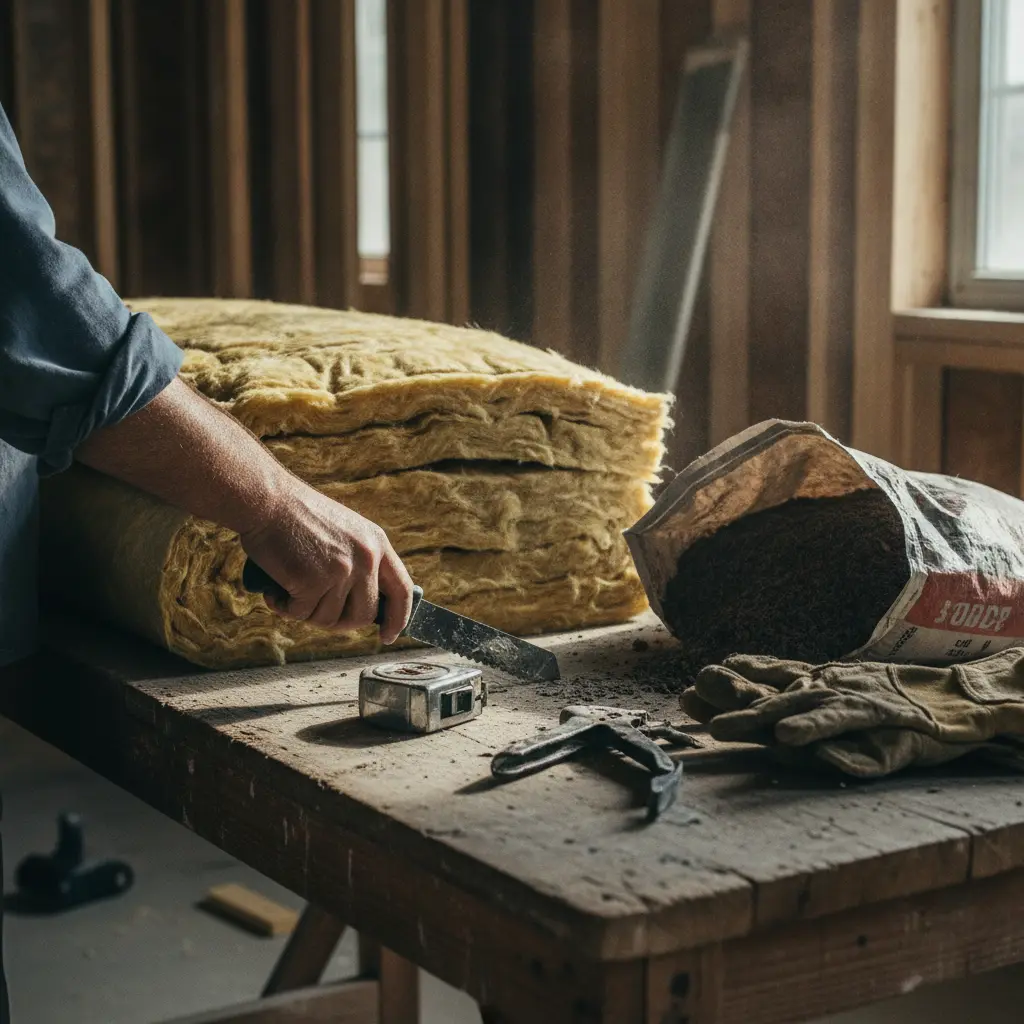
Our team in action — insulation professionals serving Orange
Cellulose Insulation Methods and Approaches
Loose-Fill Blow-In (Attic Application)
The most common method for attic insulation in Orange homes, loose-fill cellulose is blown in dry using a high-volume blowing machine. It naturally conforms to irregular joist bays, around obstructions, and into corners. This method is ideal for open attic spaces in the ranch-style homes prevalent along Meats Avenue and Orange Park Acres, where clear attic access allows for rapid, even coverage. Learn more about our blow-in insulation services
Dense-Pack Wall Insulation
Dense-pack cellulose is injected into enclosed wall cavities under pressure through small holes drilled from the interior or exterior. At installation densities of 3.5 lb/ft³ or greater, it resists settling for the life of the building. This method is particularly valuable for Old Towne Orange Craftsman and Victorian homes that have never been insulated but where opening walls for batt installation would damage historic plaster and trim.
Stabilized Wet-Spray Cellulose (New Construction)
In open wall cavities during new construction or major renovation, cellulose can be applied with a small amount of water or adhesive, causing it to adhere to framing and stay in place until drywall is installed. This method is used in new developments near Irvine Boulevard and in Chapman University-area renovation projects where precise cavity filling is required.
Combination Applications with Spray Foam
In some Orange homes — particularly those with complex roof geometries, cathedral ceilings, or significant air sealing challenges — we combine a thin flash coat of closed-cell spray foam (1 to 2 inches) with blown-in cellulose. The spray foam seals the building envelope and adds a moisture retarder, while the cellulose delivers bulk R-value at lower cost. Explore our spray foam insulation options
Crawl Space Floor Insulation
For vented crawl spaces, dense-pack cellulose in batts or blown into netting between floor joists provides thermal resistance against Orange’s cooler winter nights. This method is commonly used in homes in the Olive Hills and Panorama Heights areas, where older foundations with vented crawl spaces create comfort issues in living areas above. Learn about crawl space insulation
Ready for Cellulose Insulation? Get Your Free Estimate Today.
Next Level Insulation of Orange serves Orange and the surrounding area — we’ll be on-site within 24 hours.
📞 Call (714) 266-2070Cellulose Insulation Cost in Orange, CA
Understanding cellulose insulation costs helps Orange homeowners budget accurately and evaluate contractor proposals with confidence. Prices reflect material, labor, equipment, and any preparatory work required.
Typical Price Ranges
- Attic Loose-Fill Cellulose: $1.50 to $3.00 per square foot installed, depending on target R-value and existing insulation conditions. A typical 1,500 sq ft Orange home attic runs $1,800 to $4,500.
- Dense-Pack Wall Insulation: $2.50 to $5.00 per square foot, with retrofit projects in historic homes trending toward the higher end due to access complexity. A full exterior wall treatment on a 1,200 sq ft Craftsman bungalow may run $3,500 to $7,000.
- Crawl Space Floor Insulation: $2.00 to $4.50 per square foot. A 1,000 sq ft crawl space typically costs $2,000 to $4,500.
- Combination Spray Foam + Cellulose: $3.00 to $6.00 per square foot for attic or roof deck applications.
Factors That Affect Cellulose Insulation Cost in Orange
- Existing insulation removal requirements — common in older Orange homes with deteriorated or pest-damaged insulation
- Attic accessibility — low-pitch rooflines common in 1950s tract homes can increase labor time
- Air sealing scope — required prior to cellulose installation for optimal performance
- Target R-value and current insulation depth
- Southern California Edison rebate eligibility, which can offset $0.05 to $0.15 per square foot
Most Orange homeowners see a return on cellulose insulation investment within 3 to 7 years through reduced energy bills, with annual savings of $300 to $800 per year depending on home size and prior insulation conditions. Contact us at (714) 266-2070 for a free, itemized estimate specific to your property.
Cellulose Insulation Services Across Orange, CA Neighborhoods
Old Towne Orange
The historic district surrounding Orange Circle contains homes predominantly built from 1880 to 1940. Craftsman bungalows, Victorian cottages, and Spanish Colonial Revival homes in this area rarely have adequate attic insulation and almost never have insulated wall cavities. Dense-pack cellulose retrofits are the method of choice here, preserving historic interior finishes while dramatically improving energy performance.
Orange Park Acres
This semi-rural community in the eastern foothills of Orange features custom homes built from the 1960s through the 1980s, many on large lots with complex rooflines and vaulted ceilings. Homes here are particularly exposed to Santa Ana wind-driven temperature swings and often have undersized original insulation. Loose-fill attic cellulose upgrades are consistently among the highest-ROI improvements for this neighborhood.
Serrano Heights and Belmont
Newer master-planned communities in north Orange, built primarily in the 1990s and 2000s, generally have adequate but aging insulation. As original fiberglass batts settle and compress over 20–30 years, blown-in cellulose topper installations restore thermal performance efficiently without requiring removal of existing materials.
Panorama Heights
Situated near the Tustin border, Panorama Heights features mid-century homes from the 1950s and 1960s with minimal wall insulation and original attic insulation measuring just 2 to 4 inches — far below current Title 24 requirements. This neighborhood is one of the most active areas for our cellulose insulation upgrade projects in Orange.
Maintenance Tips for Cellulose Insulation in Orange, CA
- Inspect Your Attic Annually: Check insulation depth and condition each fall before Orange’s cooler months. Look for signs of pest activity, moisture staining, or compression near attic access points.
- Maintain Attic Ventilation: Ensure soffit and ridge vents remain unobstructed. Orange’s summer heat makes proper ventilation critical to preventing attic moisture buildup that can degrade cellulose over time.
- Address Roof Leaks Immediately: Even minor roof leaks can saturate cellulose and promote mold growth. After any rainstorm — rare but possible during Orange County’s December through March wet season — inspect the attic for water intrusion.
- Seal Any New Penetrations: If you add recessed lighting, a bathroom exhaust fan, or HVAC equipment, ensure penetrations through the insulated plane are properly air-sealed.
- Monitor After Seismic Events: Following any earthquake of magnitude 4.0 or greater felt in Orange County, visually check your attic for displaced insulation or new air gaps at the building envelope perimeter.
- Keep Pests Out: Rodents will nest in cellulose insulation. Seal any entry points into the attic or crawl space, particularly in older homes near Santiago Creek where wildlife pressure is higher.
- Schedule a Professional Inspection Every 10 Years: Cellulose can settle 5–15% over a decade. A professional top-off maintains your target R-value without full replacement.
Why Choose Next Level Insulation of Orange
Next Level Insulation of Orange is a locally focused insulation contractor with deep knowledge of Orange’s diverse housing stock, climate conditions, and energy code requirements. We are not a national franchise — we are invested in the communities of Orange County and bring that commitment to every project we complete.
Our technicians are trained in the specific challenges of insulating Southern California homes, from the historic Craftsman properties of Old Towne to the sprawling custom homes of Orange Park Acres. We understand Title 24 compliance requirements for Climate Zone 3B and can help you navigate Southern California Edison rebate programs to maximize your return on investment.
We provide comprehensive services beyond cellulose installation, including insulation removal, attic insulation, crawl space encapsulation, and spray foam insulation — giving you a single trusted partner for your entire building envelope.
Our pricing is transparent, our estimates are detailed, and our work is performed by our own trained team — never subcontracted. Call us at (714) 266-2070 to experience the Next Level difference.
Frequently Asked Questions: Cellulose Insulation in Orange, CA
How much does cellulose insulation cost in Orange, CA?
Cellulose insulation in Orange typically costs $1.50 to $3.00 per square foot for attic loose-fill installation and $2.50 to $5.00 per square foot for dense-pack wall applications. A standard 1,500 sq ft attic project runs between $1,800 and $4,500 depending on target R-value, existing insulation conditions, and any required air sealing or removal. Contact us for a free on-site estimate specific to your home.
How long does cellulose insulation installation take in Orange?
Most residential cellulose insulation projects in Orange are completed in a single day. A standard attic installation takes 3 to 6 hours including air sealing preparation. Dense-pack wall projects may take 1 to 2 days depending on the size of the home and the number of exterior wall cavities being treated.
Is cellulose insulation a good choice for older Orange homes?
Yes — cellulose is particularly well-suited to Orange’s older housing stock, including the Craftsman and Victorian homes of Old Towne Orange and the mid-century tract homes throughout the city. Its ability to fill irregular cavities, vapor permeability, and retrofit-friendly installation methods make it ideal for homes built before modern insulation standards. Dense-pack cellulose can be injected into existing wall cavities with minimal disruption to historic plaster and trim.
What R-value do I need for attic insulation in Orange, CA?
Orange, CA falls within IECC Climate Zone 3B. California’s Title 24 Energy Standards currently require a minimum R-38 for attic insulation in this zone — approximately 14 inches of cellulose. We generally recommend R-49 (approximately 17 inches) for maximum energy performance given Orange’s summer heat extremes, which have reached 108°F during events like the August 2020 heat wave.
Will cellulose insulation reduce my utility bills in Orange?
Yes. Most Orange homeowners who upgrade from inadequate or aging insulation to properly installed cellulose at R-38 or higher report annual savings of $300 to $800 on electricity and gas bills. Homes in older neighborhoods like Old Towne or Panorama Heights — where original insulation was minimal — typically see the largest improvements, with some homeowners reducing cooling costs by 20–30% in the first full year.
Does cellulose insulation settle over time?
Loose-fill cellulose can settle 5–15% over the first few years following installation. This is normal and is accounted for in professional installation — contractors install cellulose to a slightly greater depth than the final target R-value to compensate for settling. Dense-pack cellulose installed at 3.5 lb/ft³ or greater in wall cavities resists settling for the life of the building. We recommend a professional inspection every 10 years to evaluate whether an attic top-off is warranted.
Do I need to remove existing insulation before installing cellulose?
Not always. If existing insulation is dry, undamaged, and free of pest contamination, new cellulose can be blown over the top to bring it to the target R-value. However, if existing insulation shows signs of moisture damage, mold, or rodent nesting — all common in Orange’s older homes — removal is required before new installation. Learn more about our insulation removal services
Is cellulose insulation fire-resistant?
Yes. Modern cellulose insulation is treated with boric acid, ammonium sulfate, or other fire-retardant compounds that give it a Class 1 fire rating (ASTM E84). It is not fireproof, but it resists ignition and slows flame spread more effectively than untreated paper products. This fire resistance is particularly relevant in Orange County, where wildfire risk and extreme Santa Ana wind conditions make fire-safe building materials an important consideration for homeowners in areas like Orange Park Acres near the Irvine Regional Park interface.
Get a Free Cellulose Insulation Estimate in Orange, CA Today
If your Orange home is uncomfortable, your energy bills are climbing, or you simply know it’s time to upgrade an aging building envelope, Next Level Insulation of Orange is ready to help. Our team provides free, no-obligation on-site assessments with detailed written estimates and clear explanations of your options.
We serve all neighborhoods across Orange — from Old Towne and Orange Park Acres to Serrano Heights and Panorama Heights — with expert cellulose insulation installation, removal, and replacement services tailored to Southern California’s unique climate demands.
Call us now at (714) 266-2070 to schedule your free estimate, or reach out online to get started. Stop overpaying for heating and cooling — let Next Level Insulation of Orange bring your home’s performance to the next level.