

Insulation Removal in Los Angeles, CA
Energy-Saving Insulation Removal for Los Angeles, CA Homes — Licensed & Insured
Need insulation removal in Los Angeles, CA? Next Level Insulation removes old, damaged & contaminated insulation. Call (323) 765-3939 for a free estimate today.
- Licensed & Insured
- Locally Owned & Operated
- Free Inspection & Estimate
Request Your
Free EstimateInsulation removal is the professional process of safely extracting old, damaged, contaminated, or inefficient insulation materials from your home or commercial property — clearing the way for a healthier, more energy-efficient building envelope. In Los Angeles, where aging housing stock, seismic activity, wildfire smoke infiltration, and marine layer humidity create unique demands on building materials, proper insulation removal is not simply a maintenance task — it is a critical investment in your property’s long-term performance and your family’s indoor air quality.
At Next Level Insulation of Los Angeles, we specialize in comprehensive insulation removal services across the greater Los Angeles area. Our team understands the specific challenges that Southern California’s climate, construction history, and environmental conditions present. From mid-century homes in Pasadena to post-war bungalows in Culver City, we bring the expertise, equipment, and local knowledge necessary to remove insulation safely and efficiently — preparing your property for a high-performance upgrade that meets today’s energy standards.
Call us today at (323) 765-3939 for a free assessment.
Understanding Insulation Removal
Insulation removal is the controlled extraction of thermal and acoustic insulating materials from wall cavities, attic floors and rafters, crawl spaces, and other building cavities. The process requires specialized vacuum equipment, personal protective gear, and a systematic approach to ensure that contaminants — whether mold spores, rodent droppings, asbestos fibers, or fire-damaged particles — are fully contained and disposed of according to local and state regulations.
The most common insulation materials found in Los Angeles-area homes include blown-in fiberglass, loose-fill cellulose, batt fiberglass, mineral wool, and in older structures built before the 1980s, vermiculite or even asbestos-containing materials. Each type presents its own removal challenges and safety protocols. Blown-in cellulose, for example, compacts over decades and can harbor moisture and mold, while vermiculite insulation — once popular in attic spaces — may contain naturally occurring asbestos and must be handled by certified professionals under strict California Department of Public Health (CDPH) guidelines.
Los Angeles’s building history spans over a century of residential and commercial construction. The city saw explosive growth during several distinct eras: the 1920s craftsman bungalow boom, post-World War II tract home development throughout the 1940s and 1950s, and rapid apartment construction during the 1960s and 1970s. Each era brought different insulation standards — or in many cases, no insulation at all. Homes built before 1978 are particularly likely to contain insulation products that no longer meet modern performance or safety standards.
Beyond age, Los Angeles’s designation as a seismically active region means insulation can shift, compress, or become dislodged following earthquakes, reducing its R-value and leaving thermal gaps that drive up energy bills. The region’s dry Santa Ana wind events, periodically severe wildfires, and year-round particulate air quality concerns further accelerate insulation degradation, making removal and replacement a recurring necessity for many property owners across the metropolitan area.
Understanding when and why insulation removal is necessary — rather than simply adding new material on top of old — is the foundation of a sound building performance strategy. Learn more about our insulation installation services.
Why Insulation Removal Is Needed in Los Angeles, CA
Seismic Activity and Structural Disruption
Los Angeles sits at the intersection of multiple active fault systems, including the Puente Hills Fault, the Hollywood Fault, and the Newport-Inglewood Fault Zone. The 1994 Northridge Earthquake — a 6.7-magnitude event centered approximately 20 miles northwest of downtown Los Angeles — caused widespread structural damage across neighborhoods including Sherman Oaks, Van Nuys, and Reseda. Beyond visible structural damage, this event and subsequent smaller earthquakes have displaced blown-in insulation in countless attic spaces throughout the region. Loose-fill insulation that has settled unevenly due to seismic vibration can leave coverage gaps of 2 to 4 inches or more in affected attic areas, reducing the effective R-value of an R-30 attic installation to the equivalent of R-10 or less in the affected zones.
Wildfire Smoke and Ash Infiltration
The Los Angeles Basin has experienced increasingly destructive wildfire seasons. Events such as the 2018 Woolsey Fire, which burned over 96,000 acres across Los Angeles and Ventura Counties, deposited fine ash and smoke particulates throughout communities including West Los Angeles, Malibu-adjacent neighborhoods, and the San Fernando Valley. Smoke and ash infiltrate attic spaces through ridge vents, soffit vents, and gaps in the building envelope, contaminating insulation with carcinogenic compounds and persistent odors. In such cases, insulation removal is the only effective remediation strategy — surface cleaning or air purification alone cannot eliminate particulates embedded 6 to 12 inches deep in loose-fill attic insulation.
Rodent Infestation in the Urban-Wildlife Interface
Los Angeles’s position at the edge of the Santa Monica Mountains, the Verdugo Mountains, and the Angeles National Forest creates an extensive urban-wildlife interface. Neighborhoods such as Silver Lake, Eagle Rock, and the hillside communities above Glendale and Pasadena regularly experience rodent activity — particularly roof rats (Rattus rattus), which are endemic to Los Angeles and prefer to nest in attic insulation. Rodent urine and feces not only contaminate insulation with hantavirus-associated hazards but also structurally degrade blown-in materials, compressing and matting insulation to a fraction of its installed depth. Attics that once had 12 inches of blown-in fiberglass may be left with only 4 to 6 inches of compromised material after rodent activity.
Aging Housing Stock and Outdated Materials
A significant percentage of Los Angeles’s residential housing was built between 1940 and 1975. During this period, insulation standards were minimal and many materials now known to be hazardous were in common use. Homes in established neighborhoods such as Montebello, Bell Gardens, and Huntington Park frequently contain original insulation from this era — materials that have degraded to well below modern minimum code requirements of R-38 for attic spaces in California’s Climate Zone 9, which covers most of the Los Angeles metropolitan area.
Marine Layer Moisture and Mold Growth
The coastal marine layer brings persistent morning moisture to communities from Culver City to the Westside throughout the spring and early summer — a period locally known as “June Gloom.” This sustained humidity, combined with the region’s warm afternoons, creates condensation cycles within poorly ventilated attic and crawl space assemblies. Moisture readings above 19% in wood framing members adjacent to insulation indicate conditions favorable for mold growth, which can render entire attic insulation systems unsalvageable without full removal and remediation.
Signs You Need Insulation Removal
Energy Performance Indicators
- Unusually high electricity bills during Los Angeles summers, particularly during heat events when temperatures exceed 95°F in the San Fernando Valley or inland communities
- Rooms that fail to maintain consistent temperatures despite functioning HVAC systems
- HVAC systems running continuously without reaching set temperatures
Visual and Physical Signs
- Visible mold growth, dark staining, or musty odors emanating from attic access hatches or crawl space vents
- Insulation that appears matted, compressed below 6 inches in depth, or visibly soiled with rodent droppings
- Ash or smoke odor persisting in the home following a nearby wildfire event
- Vermiculite-type granular insulation present in attics of homes built between 1950 and 1980
Health and Safety Indicators
- Unexplained allergy symptoms, respiratory irritation, or persistent headaches among occupants — particularly in older homes with unknown insulation history
- Evidence of active or past rodent infestation including droppings, nesting material, or gnaw marks near attic access
Urgency Indicators
If you suspect asbestos-containing insulation, observe active mold growth, or have recently experienced rodent infestation, removal should be treated as urgent. Do not disturb potentially hazardous materials. Contact a professional immediately for assessment.
Our Insulation Removal Process
Next Level Insulation of Los Angeles follows a structured, safety-first removal process adapted to the specific conditions common in Los Angeles-area properties.
Initial Assessment and Inspection (Day 1 — 1 to 2 Hours)
Our technician performs a comprehensive inspection of your attic, crawl space, or wall cavities. We measure existing insulation depth, document coverage gaps, assess moisture content using calibrated moisture meters, and identify any potential hazardous materials. In Los Angeles homes built before 1980, we visually inspect for vermiculite and may recommend laboratory testing if asbestos-containing materials are suspected.
Hazardous Material Testing and Clearance (Day 1 to 3 — If Required)
If asbestos or other regulated materials are identified or suspected, samples are submitted to a certified California laboratory. This step adds 1 to 2 business days but is non-negotiable for the safety of your family and our team. Results determine whether standard removal or specialized abatement protocols are required.
Preparation and Containment (Day of Removal — 30 to 60 Minutes)
We seal attic access points, protect your living space with heavy-duty poly sheeting, and establish a negative pressure pathway to prevent contaminants from entering the home. Our team dons appropriate PPE including respirators and Tyvek suits.
Mechanical Extraction (Day of Removal — 2 to 6 Hours Depending on Scope)
Using commercial-grade HEPA vacuum equipment with 150-foot hose capacity, we extract loose-fill insulation from the attic floor or crawl space. Batt insulation is manually removed and bagged. For larger Los Angeles properties — particularly hillside homes with complex rooflines common in areas like Los Feliz or Echo Park — this phase may require a full day.
Surface Cleaning and Sanitization (Post-Extraction — 1 to 2 Hours)
Following extraction, all exposed framing, decking, and surfaces are vacuumed and treated with an EPA-registered antimicrobial agent where rodent activity or mold is present. This is a critical step often skipped by lower-cost operators.
Disposal and Documentation (Same Day)
All extracted materials are bagged, sealed, and transported to a licensed Los Angeles County disposal facility in compliance with California Code of Regulations Title 22 requirements for construction waste. We provide you with disposal documentation.
Post-Removal Inspection and New Insulation Consultation (Same Day or Following Day)
We conduct a final walkthrough and provide a written report of findings along with a recommendation for replacement insulation. Explore our attic insulation solutions.
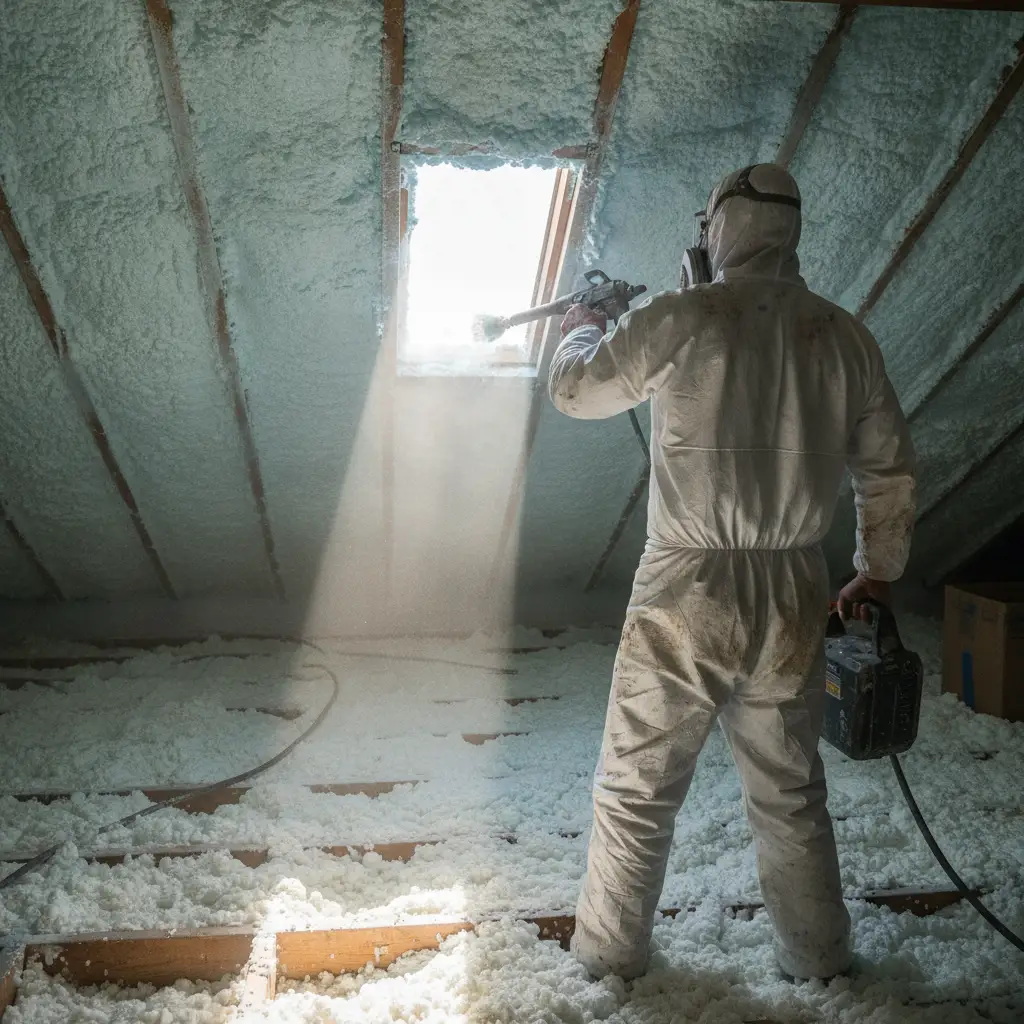
Our team in action — insulation professionals serving Los Angeles
Insulation Removal Methods and Approaches
1. Mechanical Vacuum Extraction
The most common method for attic loose-fill removal. Industrial pneumatic vacuums with HEPA filtration extract blown-in fiberglass or cellulose through large-diameter hoses fed from the attic access. This method is used in the majority of Los Angeles-area attic projects where insulation is not contaminated with asbestos. Extraction rates average 100 to 150 square feet per hour depending on depth and compaction.
2. Manual Batt Removal
Fiberglass or mineral wool batt insulation installed between rafters, floor joists, or wall studs is removed manually — cut free, rolled, and bagged. This approach is common in post-war homes throughout communities like Downey and South Gate where original batt installation remains intact. Manual removal allows for more precise inspection of underlying framing for moisture damage or pest activity.
3. Wet Spray Removal
In specific cases involving dense-pack cellulose or spray-applied insulation in wall cavities, controlled wet application softens the material before extraction. This method minimizes airborne particulate dispersion and is particularly applicable in occupied buildings or homes with known air quality sensitivities.
4. Hazardous Material Abatement Protocols
Where asbestos-containing vermiculite is confirmed in pre-1980 Los Angeles homes, removal must follow California-specific asbestos abatement regulations under Cal/OSHA Standard 8 CCR 1529. This includes air monitoring, sealed containment, and certified disposal at approved facilities. We coordinate with licensed abatement contractors when required.
5. Crawl Space Encapsulation Preparation Removal
For properties undergoing crawl space encapsulation, all existing floor insulation and vapor barrier materials are removed before the new sealed system is installed. This is particularly relevant for older homes in low-lying areas of East Los Angeles or Commerce where ground moisture is a persistent challenge.
Ready for Insulation Removal? Get Your Free Estimate Today.
Next Level Insulation of Los Angeles serves Los Angeles and the surrounding area — we’ll be on-site within 24 hours.
📞 Call (323) 765-3939Insulation Removal Cost in Los Angeles, CA
Understanding the cost of insulation removal in Los Angeles helps property owners budget appropriately and evaluate proposals from contractors. Pricing varies based on the type of insulation, the area to be cleared, accessibility, and whether hazardous materials are present.
Typical Price Ranges
- Attic Insulation Removal (Standard): $1.00 to $2.50 per square foot. A typical 1,500-square-foot Los Angeles attic costs between $1,500 and $3,750 for removal only.
- Crawl Space Insulation Removal: $1.50 to $3.00 per square foot due to limited access and the physical demands of working in confined spaces. A 1,000-square-foot crawl space may range from $1,500 to $3,000.
- Contaminated or Rodent-Damaged Insulation: Add $0.50 to $1.00 per square foot for additional sanitization and biohazard handling protocols.
- Asbestos Abatement (Verified Vermiculite): $2,000 to $8,000+ depending on volume. Asbestos abatement requires licensed professionals and involves additional regulatory compliance costs specific to California.
Factors That Influence Los Angeles Pricing
Los Angeles labor costs are among the highest in the nation, reflecting the region’s cost of living and California’s contractor licensing requirements. Properties with complex rooflines — common in hillside neighborhoods throughout the Hollywood Hills, Glendale foothills, and Pasadena — may incur additional labor charges of 15 to 25% due to access challenges. Properties requiring permits through the Los Angeles Department of Building and Safety (LADBS) may add $150 to $400 in permit fees.
Most removal projects are completed as part of a removal-and-replacement package. Bundling removal with new insulation installation typically results in 10 to 15% cost savings versus scheduling the services separately. Call (323) 765-3939 for a site-specific estimate.
Neighborhoods We Serve in Los Angeles
Pasadena
Pasadena is home to a significant concentration of Craftsman bungalows and Victorian-era residences, many built between 1900 and 1930. These homes frequently contain original insulation — or none at all — and present a high likelihood of outdated materials including early cellulose products. The area’s inland location also exposes homes to greater temperature swings than coastal communities, with summer highs regularly exceeding 100°F, making insulation performance particularly critical.
Culver City and West Hollywood
These mid-city communities feature a mix of 1940s and 1950s post-war residential construction and 1960s-1970s apartment buildings. Many properties have undergone partial renovations over the decades, resulting in a patchwork of insulation types and ages that frequently requires complete removal and standardization before energy-efficient replacements can be installed.
East Los Angeles and Montebello
These communities contain dense concentrations of pre-1960 single-family homes and duplexes. Lower-lying topography and proximity to the Los Angeles River corridor mean crawl space moisture is a more persistent concern, and vapor-contaminated insulation is a frequent finding during our inspections.
Glendale and the Verdugo Foothills
Glendale’s hillside neighborhoods adjacent to the Verdugo Mountains experience elevated rodent pressure and periodic wind-driven wildfire smoke events. Homes in these areas require thorough post-infestation removal and sanitization protocols on a more frequent basis than flatland communities.
Insulation Maintenance Tips for Los Angeles Homeowners
- Inspect attic insulation depth annually. Use a ruler to spot-check insulation depth at multiple attic locations. In Los Angeles Climate Zone 9, a minimum of 13 to 14 inches of blown-in fiberglass is required to achieve R-38 compliance.
- Seal all attic penetrations. Gaps around recessed lights, plumbing vents, and HVAC ducts allow conditioned air to escape and rodents to enter. Seal with fire-rated caulk or foam before wildfire season each year.
- Check soffit and ridge vents after Santa Ana wind events. High-velocity winds can dislodge vent covers and push debris into attic spaces that contaminates insulation.
- Monitor for signs of rodent activity each fall when roof rats seek warm nesting sites. Place monitoring traps in the attic perimeter quarterly.
- Test attic moisture levels following June Gloom season. If readings exceed 15% in wood framing, improve ventilation before moisture promotes mold growth in insulation.
- Schedule a professional insulation inspection every 5 to 7 years for homes built before 1980, and following any earthquake greater than 4.0 magnitude that is felt at your property.
- Keep attic access hatches weather-stripped and insulated to prevent the thermal bypass common in Los Angeles attic conversions and storage lofts.
Why Choose Next Level Insulation of Los Angeles
Next Level Insulation of Los Angeles is a locally focused insulation contractor serving the greater Los Angeles metropolitan area with a comprehensive range of services including insulation removal, spray foam insulation, blow-in insulation, and crawl space insulation.
We understand Los Angeles. Our team works daily across the region’s diverse neighborhoods — from the hillside homes of Glendale to the post-war flats of Downey — and we bring that granular local knowledge to every project. We know which neighborhoods are most likely to contain vermiculite insulation, which communities face elevated rodent pressure, and how the marine layer affects attic moisture in coastal versus inland zip codes.
We use commercial-grade HEPA extraction equipment that outperforms the shop-vac setups employed by less specialized contractors. Our disposal practices comply fully with California Title 22 and Los Angeles County waste management requirements. We provide written documentation of the removed materials, the area cleared, and the condition of underlying structural elements — giving you a complete record for your property files.
Our service area covers Los Angeles and surrounding communities including Pasadena, Glendale, Culver City, Montebello, Huntington Park, South Gate, Maywood, Bell, Commerce, Alhambra, Monterey Park, Downey, West Hollywood, South Pasadena, East Los Angeles, Walnut Park, Bell Gardens, and Cudahy.
Contact us at (323) 765-3939 to schedule your assessment.
Frequently Asked Questions About Insulation Removal in Los Angeles
How much does insulation removal cost in Los Angeles?
Standard attic insulation removal in Los Angeles typically costs between $1.00 and $2.50 per square foot. For a typical 1,500-square-foot Los Angeles attic, expect to invest $1,500 to $3,750 for removal alone. Contaminated insulation involving rodent activity or mold adds $0.50 to $1.00 per square foot. Confirmed asbestos abatement is priced separately starting at approximately $2,000. Los Angeles pricing is higher than the national average due to regional labor costs and California regulatory compliance requirements.
How long does insulation removal take?
Most residential attic insulation removal projects in Los Angeles are completed in one day. A standard 1,200 to 1,800-square-foot attic typically requires 4 to 8 hours of on-site work, including setup, extraction, sanitization, and cleanup. Larger homes, homes with complex hillside rooflines, or projects requiring hazardous material testing may extend to two days.
Does my Los Angeles home have asbestos insulation?
Homes built before 1980 — which represents a large portion of Los Angeles’s housing stock — may contain asbestos-containing insulation materials, most commonly in the form of vermiculite attic insulation or pipe insulation. If your home was built before 1980 and you are unsure of the insulation history, we recommend a pre-removal assessment before any disturbance. Do not attempt to remove suspected asbestos-containing materials yourself.
Can I add new insulation on top of existing insulation without removing it?
In some cases, yes — adding new insulation over existing material is acceptable if the existing insulation is dry, undamaged, free of contamination, and provides a reasonably even base layer. However, in Los Angeles, where rodent activity, wildfire smoke infiltration, and seismic displacement are common, removal and replacement is frequently the correct choice. Burying contaminated insulation under new material does not eliminate odors, allergens, or biological hazards.
What happens to the insulation after it is removed?
All extracted insulation materials are sealed in heavy-duty disposal bags and transported to a licensed Los Angeles County disposal facility. We comply with California Code of Regulations Title 22 standards for construction and demolition waste. We provide disposal documentation upon request — a record useful for real estate transactions or insurance claims.
How soon after insulation removal can new insulation be installed?
In most cases, new insulation can be installed the same day or the following day after removal, provided no mold remediation or structural repairs are required. If active mold is found, the affected area must be treated and allowed to dry — typically 24 to 48 hours — before new insulation is installed. Learn about our insulation replacement services.
Does insulation removal require a permit in Los Angeles?
Insulation removal by itself does not typically require a permit from the Los Angeles Department of Building and Safety (LADBS). However, if removal is part of a larger renovation project, or if asbestos abatement is involved, additional permitting and notification requirements apply under California regulations. We advise clients on applicable requirements during the initial assessment.
What areas of Los Angeles do you serve?
We serve the entire greater Los Angeles metropolitan area, including Los Angeles, Pasadena, Glendale, Culver City, West Hollywood, Montebello, Monterey Park, Alhambra, Huntington Park, South Gate, Maywood, Bell, Bell Gardens, Commerce, Downey, East Los Angeles, South Pasadena, Walnut Park, and Cudahy. Contact us to confirm service availability at your specific address.
Get Your Free Insulation Removal Assessment in Los Angeles
Old, damaged, or contaminated insulation is not a problem that improves with time. Whether you are dealing with rodent-damaged attic insulation in Glendale, wildfire smoke infiltration in West Hollywood, or decades-old materials in a Montebello post-war home, Next Level Insulation of Los Angeles is ready to help.
Our team serves all of Los Angeles and the surrounding communities with professional insulation removal, sanitization, and replacement services. We provide free on-site assessments and detailed written proposals so you know exactly what to expect before work begins.
Call us today at (323) 765-3939 to schedule your free inspection. You can also reach us through our contact form to request a callback at your preferred time. Protect your home, your health, and your energy investment — start with a clean foundation from Next Level Insulation of Los Angeles.