

Insulation Replacement in Orange, CA
Quality Insulation Replacement in Orange, CA in Orange, CA — Built to Last
Need insulation replacement in Orange, CA? Next Level Insulation of Orange offers expert attic, spray foam & blown-in insulation replacement. Call 714-266-2070 for a free estimate.
- Licensed & Insured
- Locally Owned & Operated
- 24/7 Emergency Service
- Financing Available
- Free Inspection & Estimate
Request Your
Free EstimateInsulation replacement is the process of removing degraded, damaged, or inefficient insulation materials from your home or commercial property and installing fresh, high-performance insulation in its place. For homeowners and businesses in Orange, CA, this service is not merely a comfort upgrade — it is a critical investment in energy efficiency, indoor air quality, and structural protection against Southern California’s unique climate demands.
Orange sits in the Santa Ana Canyon corridor, where summer temperatures routinely exceed 95°F and dry Santa Ana wind events can force heating and cooling systems into overdrive. Aging insulation that was installed in the 1970s or 1980s simply cannot keep pace with today’s energy costs or building performance standards. At Next Level Insulation of Orange, our team brings hands-on expertise with the specific home styles, construction eras, and microclimatic conditions found throughout the City of Orange. We deliver insulation replacement solutions that are engineered for this community — not copied from a one-size-fits-all playbook.
Call us today at 714-266-2070 for a free estimate.
Understanding Insulation Replacement in Orange, CA
Insulation replacement encompasses the full lifecycle management of a building’s thermal and acoustic envelope. Unlike a simple top-off, true replacement requires the identification and removal of failing material, preparation of the substrate, air sealing of penetrations, and installation of a new insulation system rated to current California Title 24 energy code standards.
Historically, California homes built before 1978 — a large share of Orange’s residential stock — were insulated with materials that are now known to degrade rapidly or pose health risks. Cellulose blown into attics during the post-war suburban boom can compact over decades, losing up to 40% of its original R-value. Fiberglass batts installed in crawl spaces beneath slab-on-grade additions absorb moisture from Orange County’s marine influence and fall out of position, creating uninsulated voids. Even spray foam applied more than 20 years ago can become brittle and separate from rafters in the temperature cycling that characterizes Orange’s inland climate.
The City of Orange was largely developed in three distinct construction waves: the pre-war bungalows and Craftsman homes clustered around Old Towne Orange (roughly 1900–1940), the post-war tract housing that expanded east and south through the 1950s and 1960s, and the master-planned communities built during the 1980s and 1990s in areas like Serrano Heights and East Orange. Each wave used the insulation standards and materials available at the time, meaning a significant portion of the city’s housing stock is now operating with insulation that is 30 to 80 years old.
Modern insulation replacement integrates multiple material types — including blown-in fiberglass, closed-cell spray foam, and mineral wool — strategically placed to address the thermal bridging points specific to each building era. When performed correctly, replacement can reduce HVAC energy consumption by 20% to 40%, measurably improve indoor comfort, and protect structural wood members from the moisture-driven rot that affects homes in Orange’s lower-elevation neighborhoods near the Santiago Creek flood plain.
Learn more about our full range of services: Explore All Insulation Services
Why Insulation Replacement Is Needed in Orange, CA
Santa Ana Wind Events and Extreme Heat Cycles
Orange County’s Santa Ana wind events — which typically occur between October and March — drive hot, dry air from the Mojave Desert through the Santa Ana Canyon and directly into the City of Orange. During the October 2007 Witch and Harris Fire weather event, temperatures in Orange exceeded 100°F with relative humidity below 5%. These conditions accelerate the oxidation and brittleness of foam-based insulation products. Attic temperatures during Santa Ana events can surpass 160°F when the insulation layer is thin or compromised, putting enormous strain on HVAC equipment and dramatically increasing energy bills.
Marine Layer Moisture Intrusion
Despite its inland position, Orange experiences a persistent marine layer effect from June through August — locally known as “June Gloom.” Morning relative humidity in neighborhoods like Villa Park Road corridor and Panorama Heights can reach 85% to 92% before burning off by afternoon. This daily humidity cycling causes fiberglass batt insulation in unventilated crawl spaces and rim joists to absorb and release moisture repeatedly. Over 10 to 15 years, this cycling degrades the batt’s loft, reduces its effective R-value from R-19 to as low as R-9, and creates conditions for mold colonization within the insulation matrix.
Soil Movement in the Santiago Hills Zone
Orange sits atop expansive clay soils classified by Orange County’s geotechnical surveys as Montmorillonite-dominant. Neighborhoods built on the eastern slopes near Cannon Street and Meats Avenue experience measurable seasonal foundation movement — sometimes 0.5 to 1.5 inches of differential settling during wet and dry seasons. This movement creates micro-gaps between wall framing and insulation batts, allowing conditioned air to bypass insulation entirely. Homeowners in these zones often report drafts and uneven room temperatures even when their insulation appears intact from below.
Rodent Activity in Older Neighborhoods
Old Towne Orange, Chapman University’s surrounding blocks, and the historic districts along Glassell Street report elevated roof rat activity, particularly in properties with mature citrus trees — a legacy of Orange County’s agricultural history. Rats nest in attic insulation, compress it into tunnels, urinate and defecate throughout the material, and render blown-in cellulose or fiberglass completely unusable from both an R-value and a health perspective. The California Department of Public Health recommends complete insulation removal and replacement, combined with rodent proofing, in confirmed infestation cases. Learn About Our Rodent Proofing Service
Title 24 Compliance Requirements
California’s Title 24 Building Energy Efficiency Standards, most recently updated in the 2022 code cycle, require attic insulation to achieve a minimum of R-38 in Orange County’s Climate Zone 8. Many homes built before 1990 have attic insulation measured at R-11 to R-19, placing them well below code. Property owners undertaking permitted renovations, additions, or HVAC replacements are often required to bring insulation into compliance at the same time — making replacement both a performance and a legal necessity.
Signs You Need Insulation Replacement in Orange
Energy Performance Indicators
- Monthly SCE (Southern California Edison) bills consistently 25% or more above neighbors with comparable square footage
- HVAC system running continuously during summer without reaching set temperature
- Noticeable temperature differences of 5°F or more between rooms on the same floor
Physical and Structural Symptoms
- Visible attic insulation that appears gray, matted, or compressed below 4 inches in depth
- Damp or discolored insulation in the crawl space or around rim joists
- Ice-dam staining or water marks on interior ceilings near eaves (rare in Orange but possible after unusual winter rain events)
- Insulation batts hanging loose or fallen from floor joists in raised-foundation areas
Indoor Air Quality and Pest Warning Signs
- Musty or ammonia odors emanating from supply vents — a key indicator of rodent contamination
- Visible pest droppings, nesting material, or tunnel trails through attic insulation
- Increase in allergy or asthma symptoms among household members, potentially indicating mold in insulation
Urgency Indicators
If you observe any combination of rodent contamination, visible mold growth, or active moisture intrusion in insulation, treat the situation as urgent. Delaying replacement in these cases can allow biological contaminants to spread through your HVAC ductwork and into living areas. Call 714-266-2070 immediately for same-week inspection scheduling.
Our Insulation Replacement Process in Orange, CA
Comprehensive On-Site Assessment (1–2 Hours)
A Next Level Insulation technician visits your Orange property and conducts a full thermal assessment of attic, walls, crawl space, and rim joists. We use infrared thermometry to identify cold spots and measure current insulation depth at multiple points. We also inspect for signs of rodent activity, moisture damage, and HVAC duct leakage — conditions that must be addressed before new insulation is installed.
Detailed Written Estimate and Material Selection (Same Day)
Based on our findings, we provide a written scope of work including recommended insulation type, target R-value (typically R-38 or higher for Orange County Climate Zone 8 attics), and an itemized cost breakdown. We discuss material options suited to your home’s construction era and any specific needs such as pest history or moisture exposure.
Preparation and Containment (2–4 Hours on Job Day)
Our crew protects your home’s living areas with floor runners and attic hatch seals to prevent contaminated material from entering occupied spaces. In Old Towne Orange properties and other homes with finished attic conversions, we take additional precautions to protect architectural woodwork and period details.
Old Insulation Removal (3–6 Hours)
Using commercial-grade HEPA-filtered vacuum equipment, we extract all existing insulation — whether blown-in cellulose, fiberglass batts, or degraded spray foam. All removed material is double-bagged and disposed of in accordance with Orange County waste management regulations. Learn More About Our Insulation Removal Service
Air Sealing and Substrate Preparation (1–3 Hours)
Before any new insulation is placed, we seal all attic bypasses — including top plates, electrical penetrations, plumbing chases, and recessed light housings — with fire-rated caulk or two-component spray foam. This step alone can reduce air infiltration by 20% to 30% in pre-1990 Orange homes.
New Insulation Installation (2–5 Hours)
New insulation is installed to the specified depth and R-value using methods appropriate to the location and material. Blown-in fiberglass or cellulose is distributed evenly across attic floors; spray foam is applied to rim joists, skylights, and knee walls; batts are cut and friction-fit into wall cavities where open framing is accessible during renovation work.
Post-Installation Verification and Cleanup (1 Hour)
A lead technician measures final insulation depth at a minimum of 10 sampling points, photographs completed work, and walks the homeowner through the finished installation. All debris is removed from the property. You receive a written completion report suitable for permit documentation or home sale disclosure purposes.
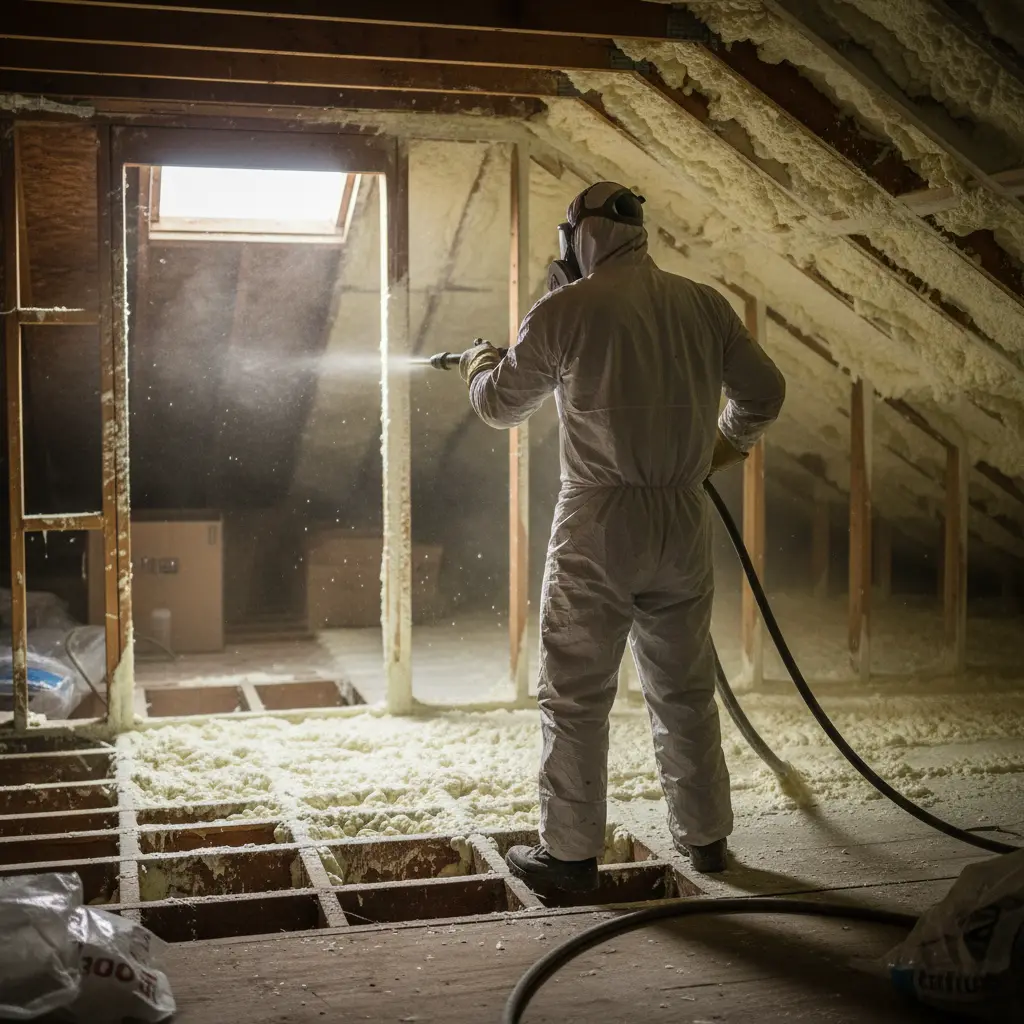
Our team in action — insulation professionals serving Orange
Insulation Replacement Methods We Use in Orange
Blown-In Fiberglass Insulation
Our most commonly specified attic solution in Orange. Blown-in fiberglass achieves R-38 to R-60 coverage efficiently in the wide, open attic spaces typical of 1960s and 1970s tract homes in Orange’s central districts. It resists moisture absorption better than cellulose and does not settle as dramatically over time. Ideal for homes along Chapman Avenue and Katella Avenue corridors where attic access is standard. Learn More About Blown-In Insulation
Spray Foam Insulation
Closed-cell spray foam is our preferred solution for rim joists, crawl space walls in raised-foundation homes, and unvented attic assemblies. Its air-impermeable seal is particularly valuable in East Orange hillside properties where wind-driven air infiltration through foundation gaps is a documented problem. Closed-cell foam also adds structural rigidity — a benefit in areas with expansive clay soil movement. Explore Spray Foam Insulation Options
Fiberglass Batt Insulation
Batt insulation remains the right choice for wall cavity work during remodels and for floor systems in homes with accessible crawl spaces. Pre-cut batts allow precise placement in the varied stud spacing found in Old Towne Orange Craftsman bungalows, where non-standard framing dimensions are common. Learn More About Fiberglass Insulation
Crawl Space Insulation Systems
For Orange’s older hillside homes with raised foundations, we install encapsulated crawl space systems that combine vapor barriers, rigid foam board on foundation walls, and sealed vents to control the humidity cycling that degrades traditional batt insulation in these environments. View Our Crawl Space Insulation Service
Ready for Insulation Replacement? Get Your Free Estimate Today.
Next Level Insulation of Orange serves Orange and the surrounding area — we’ll be on-site within 24 hours.
📞 Call 714-266-2070Insulation Replacement Cost in Orange, CA
Understanding the cost of insulation replacement in Orange helps homeowners plan accurately and avoid surprises. Pricing varies based on square footage, material type, access conditions, and the extent of preparation work required.
Typical Price Ranges
- Attic Insulation Replacement (Blown-In): $1.50 to $3.50 per square foot, including removal of existing material. A typical 1,500 sq ft Orange tract home attic runs $2,200 to $4,500 complete.
- Crawl Space Insulation Replacement: $2.00 to $4.00 per square foot. A 1,000 sq ft crawl space averages $2,000 to $4,000.
- Spray Foam (Rim Joists and Targeted Areas): $800 to $2,500 for a standard single-family home, depending on linear footage and foam type.
- Whole-House Insulation Replacement: $5,000 to $14,000 for a 2,000 sq ft Orange home, depending on material mix and site conditions.
Cost Factors Specific to Orange
- Rodent contamination: Full decontamination and attic cleaning before replacement adds $800 to $2,500 to project costs in heavily affected properties.
- Permit requirements: Orange Building Division permits are required for insulation work tied to HVAC replacement or room additions, typically adding $150 to $400 in permit fees.
- Access difficulty: Low-slope rooflines common in 1950s ranch-style homes in Orange’s south end require specialized equipment and add 10% to 20% to labor costs.
- SCE Rebates: Southern California Edison’s Energy Upgrade California program offers rebates of $0.10 to $0.25 per square foot for qualifying insulation upgrades, reducing net costs for eligible Orange homeowners.
Call 714-266-2070 for a no-cost, no-obligation estimate tailored to your Orange property’s specific conditions and square footage.
Neighborhoods We Serve in Orange, CA
Old Towne Orange
The National Register Historic District surrounding Old Towne Orange’s iconic traffic circle contains hundreds of Craftsman bungalows and Colonial Revival homes built between 1905 and 1940. These properties feature non-standard framing dimensions, knob-and-tube electrical systems requiring careful air-sealing techniques, and plaster walls that limit cavity access. We specialize in replacement approaches that preserve period architecture while achieving modern thermal performance.
Serrano Heights and East Orange
Developed primarily in the late 1980s and 1990s, Serrano Heights homes feature two-story construction with complex rooflines and cathedral ceilings that require specialized blown-in and spray foam application. Wind exposure from Santiago Canyon makes air sealing a high priority in this area.
Panorama Heights
Mid-century ranch homes on Panorama Heights’ hillside lots face unique soil movement challenges and elevated wind exposure. Many properties here have crawl spaces with failing pier-and-beam insulation that requires complete removal and replacement with modern encapsulated systems.
El Modena
One of Orange’s oldest unincorporated communities, now within city limits, El Modena contains a high concentration of pre-1960 homes along Hewes Avenue and Meats Avenue. These properties often have original insulation that has never been replaced, making comprehensive attic and wall insulation replacement particularly high-value investments for residents here.
Insulation Maintenance Tips for Orange Homeowners
- Inspect attic insulation depth annually — measure at multiple points each fall before Santa Ana wind season begins. Target a minimum depth of 14 inches for blown-in fiberglass to maintain R-38.
- Seal attic hatch covers with weatherstripping and rigid foam board insulation. Unsealed hatches in Orange homes account for up to 15% of attic heat gain.
- Trim citrus trees away from the roofline by at least 4 feet to reduce roof rat access — a leading cause of insulation contamination in older Orange neighborhoods.
- Check crawl space vapor barriers each spring after Orange’s rainy season (typically January through March) for tears, pooled water, or mold growth that can wick into adjacent insulation.
- Schedule a professional insulation assessment every 7 to 10 years, or after any significant roof repair, attic rodent treatment, or HVAC replacement that involves attic work.
- Monitor SCE bills monthly — a sudden 15% or greater increase in cooling costs during summer, without a corresponding rate change, often signals insulation degradation.
- Ensure attic ventilation is unobstructed — blown-in insulation can cover soffit vents over time in Orange’s hot attic environments, trapping heat and accelerating insulation degradation. Use baffles to maintain a clear ventilation path.
Why Choose Next Level Insulation of Orange
Next Level Insulation of Orange is a locally focused insulation contractor with deep familiarity with the homes, neighborhoods, and climate conditions that make insulation replacement in Orange uniquely challenging. We do not apply cookie-cutter solutions across every property we visit. Every project begins with a detailed site assessment, and every installation plan is designed around what your specific home — whether a 1920s Old Towne Craftsman or a 1990s Serrano Heights two-story — actually requires.
Our team is knowledgeable in California Title 24 energy code requirements for Orange County Climate Zone 8 and stays current with SCE rebate programs that can reduce your out-of-pocket costs. We work with materials sourced from manufacturers with established track records for performance in Southern California’s demanding thermal environment.
We also offer the full range of services that often accompany insulation replacement: attic cleaning, rodent proofing, crawl space encapsulation, and air sealing — so you have a single, accountable contractor for your entire project rather than coordinating between multiple vendors.
Frequently Asked Questions About Insulation Replacement in Orange, CA
How much does insulation replacement cost in Orange, CA?
Most Orange homeowners pay between $2,200 and $6,500 for attic insulation replacement, depending on home size, material type, and the extent of preparation required. Whole-house projects that include crawl space and wall insulation typically range from $5,000 to $14,000. Rodent decontamination, if needed, adds $800 to $2,500. We provide free, itemized estimates with no obligation — call 714-266-2070 to schedule yours.
How long does an insulation replacement project take in Orange?
Most single-story Orange homes can have attic insulation replaced in a single day — typically 6 to 8 hours including removal, air sealing, and installation. Larger two-story homes or projects involving crawl spaces and wall work may require 2 to 3 days. We schedule projects around your availability and work to minimize disruption to your household.
Do I need a permit for insulation replacement in Orange, CA?
Standalone insulation replacement in an existing home generally does not require a permit from the City of Orange Building Division. However, if the insulation replacement is part of a larger permitted project — such as an HVAC replacement, room addition, or roof replacement — the insulation work must meet current Title 24 standards and will be included in the permit scope. We can advise you on permit requirements specific to your project.
What R-value do I need for my Orange, CA home?
Orange falls within California Energy Commission Climate Zone 8. Current Title 24 standards require a minimum of R-38 in attics and R-13 in exterior walls for existing homes undergoing renovation. For new construction or maximum energy savings, we recommend R-49 to R-60 in attics. Crawl space floors should be insulated to a minimum of R-19, though R-30 is preferred for homes in El Modena and Panorama Heights where floor temperature differentials are more pronounced.
My home in Old Towne Orange has original insulation from the 1930s — is it hazardous?
Insulation installed before 1978 in Orange County may contain vermiculite (potentially contaminated with asbestos) or early mineral wool products that require testing before removal. Next Level Insulation recommends a material sample test — available through certified Orange County environmental labs — before any disturbance of pre-1950 insulation. We can advise on appropriate testing protocols during your free assessment.
Can insulation replacement in Orange reduce my SCE bill?
Yes — upgrading attic insulation from a typical pre-1990 level of R-11 to R-19 up to current standards of R-38 to R-49 can reduce HVAC-related energy consumption by 20% to 40% in Orange’s climate. SCE’s Energy Upgrade California program also offers rebates of $0.10 to $0.25 per square foot for qualifying installations, providing additional savings on top of your ongoing energy bill reductions.
What happens to the old insulation that is removed?
All removed insulation is double-bagged in heavy-duty plastic on site and transported to an Orange County-approved waste disposal facility. In cases of rodent contamination, we treat removed material as biohazardous waste and follow California Department of Public Health guidelines for handling and disposal. You receive documentation of proper disposal upon request.
Do you also handle rodent proofing before installing new insulation?
Yes. In Orange neighborhoods with documented roof rat activity — particularly in Old Towne, El Modena, and areas with mature citrus tree canopy — we strongly recommend combining insulation replacement with a full rodent exclusion service. Installing new insulation without sealing entry points will simply result in re-infestation within 1 to 2 years. Learn About Our Rodent Proofing Service
Get Your Free Insulation Replacement Estimate in Orange, CA Today
If your Orange home is losing energy to aging, damaged, or contaminated insulation, there is no reason to delay. Every month with underperforming insulation costs you money on your SCE bill and puts unnecessary strain on your HVAC system — especially as Southern California’s summers grow hotter and Santa Ana wind seasons grow more intense.
Next Level Insulation of Orange is ready to assess your property, explain your options clearly, and deliver a completed installation that meets California Title 24 standards and your household’s comfort goals.
- Call us at 714-266-2070 to speak directly with a local insulation specialist.
- Request a free, no-obligation on-site estimate for your Orange property.
- Ask about current SCE rebate eligibility for your project.
Schedule Your Free Estimate Now — and take the first step toward a more comfortable, energy-efficient Orange home.