
Mineral Wool Insulation in El Monte, CA
Energy-Saving Mineral Wool Insulation for El Monte, CA Homes — Licensed & Insured
Need mineral wool insulation in El Monte, CA? Next Level Insulation offers expert installation, removal & replacement. Call (626) 469-7656 for a free estimate.
- Licensed & Insured
- Locally Owned & Operated
- Free Inspection & Estimate
Request Your
Free EstimateMineral wool insulation — also known as rock wool or slag wool — is a high-performance insulation material made from natural volcanic rock or industrial slag, spun into dense, fire-resistant fibers. Unlike fiberglass, mineral wool offers superior sound attenuation, moisture resistance, and an impressive thermal resistance that holds up under the intense heat cycles common to the San Gabriel Valley. At Next Level Insulation of El Monte, we specialize in professional mineral wool insulation installation tailored to the unique climate, building stock, and energy demands of El Monte, CA.
El Monte sits in the eastern end of the Los Angeles Basin, where summer temperatures regularly climb above 95°F and temperature swings between night and day can exceed 30°F — conditions that stress standard insulation materials and drive energy bills skyward. Our team understands these local dynamics and delivers mineral wool solutions that reduce heat gain, lower HVAC loads, and improve indoor air quality for homeowners and commercial property owners alike.
Call us today at (626) 469-7656 to schedule your free insulation assessment.
Understanding Mineral Wool Insulation
Mineral wool is one of the oldest manufactured insulation materials still in active use, with roots tracing back to the late 19th century when engineers discovered that molten slag from iron furnaces could be spun into fiber and used to insulate steam pipes. By the mid-20th century, manufacturers had refined the process using basalt and other volcanic rock, producing a product with a melting point above 2,000°F — far exceeding the fire-resistance threshold of fiberglass or cellulose.
Today, mineral wool insulation is produced in several forms: batts and blankets for stud-cavity applications, rigid boards for continuous exterior insulation, and loose-fill for blow-in applications. The material achieves R-values typically ranging from R-3.0 to R-3.3 per inch in batt form, meaning a standard 3.5-inch wall cavity filled with mineral wool delivers approximately R-15 — meaningfully better than comparably sized fiberglass batts at R-11 to R-13.
Beyond thermal performance, mineral wool carries several characteristics especially relevant to Southern California construction:
- Fire resistance: Mineral wool does not combust and can act as a passive fire barrier between wall cavities, a quality that California’s Title 24 energy code increasingly rewards.
- Hydrophobic properties: The fibers naturally repel water, resisting mold and mildew growth — critical in crawl spaces and attic assemblies exposed to coastal moisture intrusion from the Pacific.
- Acoustic control: The dense, semi-rigid structure absorbs sound waves across a broad frequency range, reducing exterior traffic noise from nearby Interstate 10 and Route 60.
- Dimensional stability: Unlike fiberglass batts that can sag over time in vertical wall cavities, mineral wool maintains its thickness and R-value for decades without settling.
El Monte’s housing stock spans from post-war wood-frame bungalows built in the 1940s and 1950s with little to no insulation, to mid-century concrete block commercial buildings, and newer mixed-use developments along Valley Boulevard. Each building type presents a distinct set of thermal challenges that mineral wool addresses differently, and our team is trained to evaluate which product form and installation method delivers the best long-term result for your specific property.
Learn more about our full insulation installation services
Why Mineral Wool Insulation Is Needed in El Monte, CA
Extreme Inland Heat Cycles
Unlike coastal communities such as Santa Monica or Long Beach that benefit from consistent marine layer cooling, El Monte sits approximately 13 miles inland from downtown Los Angeles and is largely sheltered from the ocean breeze by the Puente Hills to the southeast. According to historical weather data from the National Weather Service station at El Monte Airport (EMT), the city records an average of 28 days per year above 95°F, with peak temperatures occasionally reaching 110°F during prolonged heat events such as the record-setting September 2022 heatwave that pushed temperatures in the San Gabriel Valley above 109°F for multiple consecutive days. During these events, attic temperatures in uninsulated or under-insulated homes can exceed 150°F, forcing HVAC systems to work 40–60% harder than necessary and causing premature equipment failure.
Mineral wool’s high thermal mass and low thermal conductivity create a radiant heat buffer that dramatically reduces attic-to-living-space heat transfer during these extreme events.
Santa Ana Wind Events and Air Sealing Demands
El Monte lies in a corridor frequently impacted by Santa Ana wind events, typically occurring October through March. Wind speeds during significant Santa Ana episodes — such as the January 2021 event that recorded gusts exceeding 70 mph at nearby Whittier Narrows — drive cold outside air through wall gaps, penetrations, and poorly sealed insulation systems. Mineral wool’s semi-rigid batt structure fills cavities completely edge-to-edge, leaving fewer gaps than loosely installed fiberglass, reducing infiltration-driven heat loss that can account for 25–40% of a home’s total energy loss.
Aging Housing Stock in Central and South El Monte
The neighborhoods of Central El Monte, South El Monte along Tyler Avenue, and the residential blocks around Garvey Avenue were largely developed between 1945 and 1965 — a period when California building codes required no minimum insulation in walls and only nominal attic insulation. Many of these original wood-frame structures still contain their factory-original insulation, if any at all. Settled fiberglass batts from this era may have lost 20–30% of their stated R-value due to compression and moisture absorption. Replacing this aging material with mineral wool brings these homes into compliance with current California Energy Code Title 24 standards and delivers measurable reductions in utility costs.
Industrial Proximity and Indoor Air Quality
El Monte has a significant concentration of light industrial and warehousing operations, particularly along the Ramona Boulevard corridor and near the I-10 freeway. Diesel particulate matter and ground-level ozone levels in the San Gabriel Valley consistently rank among the highest in Los Angeles County, according to the South Coast Air Quality Management District (SCAQMD). A properly installed mineral wool system, combined with air sealing at penetrations, reduces the infiltration of outdoor pollutants into living spaces — an important health benefit for households near these corridors.
Crawl Space and Moisture Challenges Near the San Gabriel River
Properties located within a half-mile of the San Gabriel River flood control channel — particularly those in the Norwood neighborhood and along lower Peck Road — sit atop soil classifications that include expansive clays and alluvial deposits with elevated groundwater potential. Crawl spaces in these zones frequently experience seasonal moisture intrusion that destroys fiberglass insulation within a few years. Mineral wool’s hydrophobic fiber structure resists moisture absorption, making it the preferred choice for crawl space insulation in these at-risk zones.
Signs You Need Mineral Wool Insulation in El Monte
In Your Living Spaces
- Rooms that feel noticeably hotter than 78°F even when the air conditioner is running continuously during El Monte summers
- Drafts near electrical outlets on exterior walls during Santa Ana wind conditions
- Uneven temperatures between rooms on the same floor — a variance of more than 5°F suggests missing or damaged wall insulation
- Increased allergy symptoms or dustiness, potentially indicating air infiltration from attic or crawl space
In Your Attic
- Visible attic floor joists — if you can see the wood structure through your insulation, depth is critically insufficient
- Insulation that appears gray, compacted, or less than 10 inches deep (El Monte homes should target R-38 to R-60 attic insulation per Title 24)
- Ice dam analogs in reverse: excessive heat buildup causing roofing material to cup or crack prematurely
On Your Energy Bills
- SoCalGas or SCE utility bills more than 20% higher than comparable homes in your ZIP code (91731, 91732, 91733)
- HVAC runtime exceeding 14 hours per day during summer peak periods
Urgent Warning Signs
- Visible mold growth on insulation surfaces in the attic or crawl space — requires immediate insulation removal before replacement
- Pest or rodent evidence within insulation material, which compromises thermal performance and creates hygiene hazards
Our Mineral Wool Insulation Process in El Monte
We follow a structured, transparent installation process refined for El Monte’s specific building types and climate conditions. Here is what to expect from start to finish:
Free On-Site Assessment (1–2 Hours)
Our technician visits your property and performs a comprehensive inspection of all insulated assemblies — attic, walls, crawl space, and any mechanical rooms. We use an infrared thermal imaging camera to identify thermal bridging, air leaks, and moisture-compromised zones invisible to the naked eye. We document existing R-values and compare them against California Energy Code Title 24 requirements for Climate Zone 9, which covers El Monte.
Scope and Proposal Development (24–48 Hours)
Based on the assessment, we prepare a detailed written proposal specifying the mineral wool product selected (batt, board, or loose-fill), coverage area, target R-value, and itemized pricing. We also identify any prerequisite work — such as air sealing, insulation removal, or moisture remediation — needed before installation.
Prerequisite Work — Air Sealing and Removal (Half Day to Full Day)
Where old or damaged insulation is present, our crew performs safe removal using HEPA-filtered vacuum equipment. We then seal all attic penetrations — plumbing chases, electrical boxes, recessed lighting housings, and HVAC duct boots — with fire-rated caulk or spray foam prior to installing new mineral wool. This step is especially important in El Monte’s older housing stock where decades of settling have opened significant air pathways.
Mineral Wool Installation (Half Day to Full Day)
Our certified installers cut and fit mineral wool batts to friction-fit within stud and joist cavities without gaps, voids, or compression. For attic installations, we install mineral wool to the depth required to achieve the target R-value, working systematically from eaves to the center ridge. Rigid mineral wool board is applied to continuous surfaces such as basement rim joists or exterior sheathing where applicable.
Quality Inspection and Blower Door Test (1–2 Hours)
Following installation, we conduct a visual quality inspection of all installed areas and, upon request, coordinate a blower door test to quantify air leakage reduction — a metric increasingly required for Title 24 compliance documentation in El Monte permit applications.
Cleanup and Documentation (1 Hour)
We remove all packaging waste and debris from the property and provide you with a completed installation summary including product specifications, R-values achieved, and coverage areas — documentation useful for utility rebate applications through Southern California Edison and SoCalGas efficiency programs.
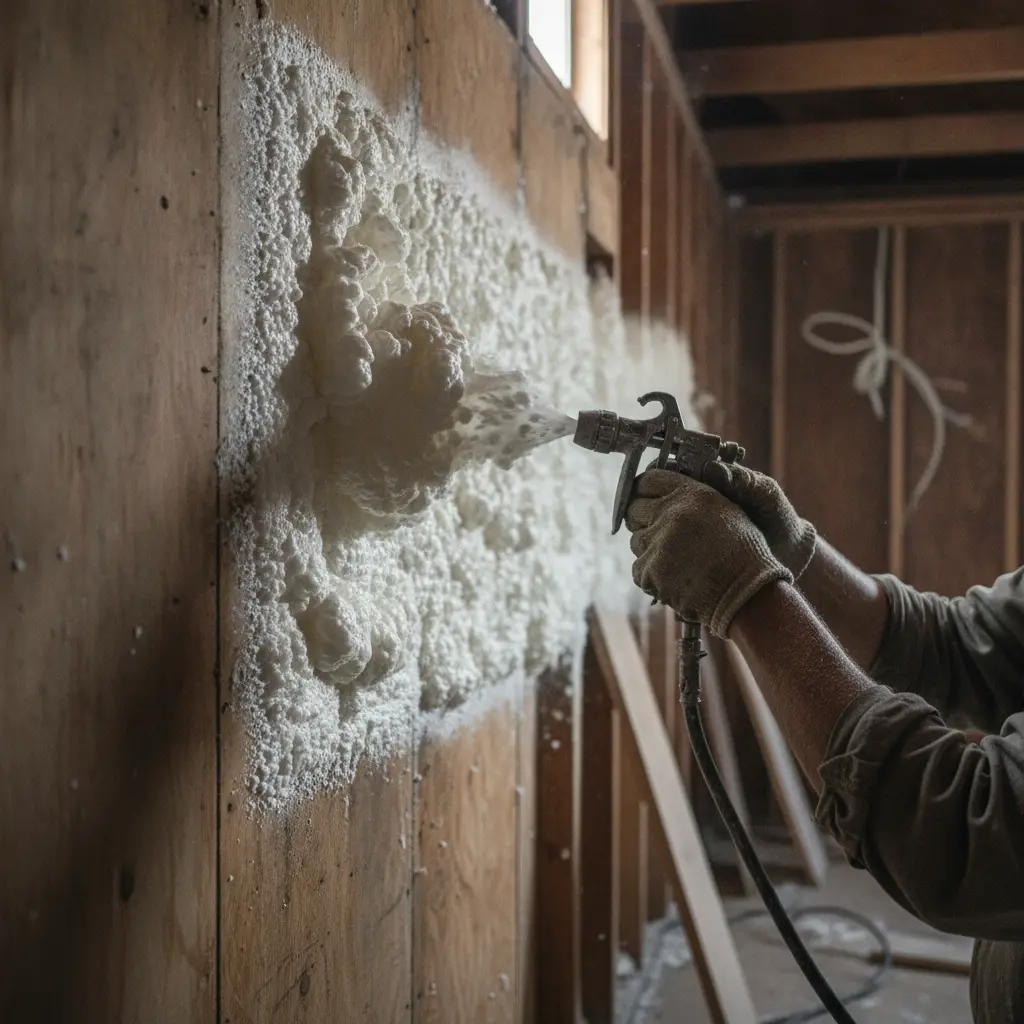
Our team in action — insulation professionals serving El Monte
Mineral Wool Insulation Methods and Applications
Mineral Wool Batt Installation
Batts are the most common form used in new construction and open-cavity retrofits. Pre-cut to standard stud spacings of 16 and 24 inches on center, mineral wool batts are ideal for El Monte attic floors, interior wall sound-dampening projects, and any wall assembly where the drywall has been removed for renovation. We commonly recommend this method for post-war bungalows in the Garvey Avenue corridor during kitchen or bathroom remodels.
Mineral Wool Rigid Board
Rigid mineral wool board provides continuous insulation without thermal bridging through framing members. It is best suited for flat roof assemblies, concrete block walls common in El Monte’s commercial buildings along Valley Boulevard, and crawl space perimeter walls where moisture exposure is a concern. R-values of R-4.2 per inch make it an efficient choice where cavity depth is limited.
Blown-In Mineral Wool
Loose-fill mineral wool is blown into enclosed cavities or laid over existing attic insulation using specialized equipment. This method is particularly effective for El Monte homes where attic access is limited or where adding depth over existing insulation is the most cost-efficient upgrade path. Learn more about our blow-in insulation services
Mineral Wool for Crawl Space Assemblies
For El Monte properties near the San Gabriel River flood control channel, we install mineral wool batts or rigid board in crawl space floor joist cavities, paired with a vapor barrier or full crawl space encapsulation system to address groundwater moisture. The hydrophobic fiber resists moisture absorption far better than fiberglass in these challenging conditions.
Hybrid Mineral Wool and Spray Foam Systems
In some applications — particularly older El Monte commercial buildings with complex roof geometries — we combine a thin layer of spray foam insulation at the air barrier plane with mineral wool for the bulk of the thermal resistance. This hybrid approach maximizes air sealing performance while keeping material costs controlled.
Ready for Mineral Wool Insulation? Get Your Free Estimate Today.
Next Level Insulation of El Monte serves El Monte and the surrounding area — we’ll be on-site within 24 hours.
📞 Call (626) 469-7656Mineral Wool Insulation Cost in El Monte, CA
Understanding the investment required for mineral wool insulation helps El Monte homeowners and property managers plan accurately. Below are typical cost ranges observed in the local market. Note that final pricing depends on project-specific variables assessed during your free estimate.
Typical Price Ranges
- Attic mineral wool insulation (batt or blown-in): $1.50–$2.75 per square foot installed, or $1,800–$4,500 for a typical 1,200–1,800 sq ft El Monte home attic
- Wall cavity mineral wool batt (open wall retrofit): $2.00–$3.50 per square foot installed
- Crawl space mineral wool with vapor barrier: $3.00–$5.00 per square foot installed
- Rigid mineral wool board (commercial or exterior): $4.00–$7.00 per square foot installed depending on thickness
- Insulation removal prior to replacement: $1.00–$2.00 per square foot, added to installation cost
Factors That Affect Your Cost
- Target R-value: Achieving R-60 in an attic costs more in material than R-38 but delivers greater long-term energy savings
- Access difficulty: Low-pitch attics or crawl spaces under El Monte’s older slab-on-grade additions increase labor time
- Prerequisite work: Air sealing, mold remediation, or removal of damaged insulation adds to the base price
- Building size and layout: Commercial properties along Ramona Boulevard typically involve larger square footages and specialized equipment
Rebates and Incentives
El Monte property owners may qualify for Southern California Edison’s Home Upgrade Program rebates of up to $1,500 for attic insulation upgrades meeting R-38 minimum. SoCalGas offers additional incentives for qualifying insulation work. We assist clients with rebate documentation as part of our service. Call (626) 469-7656 for a detailed estimate specific to your property.
Neighborhoods in El Monte We Serve
Central El Monte (91731)
The core residential neighborhoods around Tyler Avenue and Ramona Boulevard contain a dense concentration of 1940s–1960s wood-frame homes, many with original minimal attic insulation and uninsulated wall cavities. Mineral wool attic retrofits and open-wall batt installation during kitchen or bathroom renovations are the most common projects in this zone.
North El Monte and Norwood
Proximity to the San Gabriel River and alluvial soil deposits creates elevated crawl space moisture challenges in this area. We frequently pair mineral wool crawl space insulation with full encapsulation systems here to address both thermal and moisture performance simultaneously.
South El Monte (91733)
South El Monte’s industrial and residential mix along Lower Azusa Road and Tyler Avenue includes both light commercial buildings needing rigid mineral wool board systems and residential properties requiring attic and wall upgrades. Air quality considerations from nearby freight corridors make tight-building air sealing especially important.
Mountain View District
This neighborhood features a mix of mid-century and 1970s construction with partial original insulation that has often settled or been compromised. Mineral wool batt insulation replacement is a common upgrade here, delivering significant comfort improvements for families dealing with inconsistent room temperatures.
Mineral Wool Insulation Maintenance Tips for El Monte Property Owners
Mineral wool is inherently low-maintenance, but proactive monitoring ensures your investment performs at its rated level for decades. Follow these location-specific tips:
- Inspect your attic annually after Santa Ana season (March–April): High winds can disturb attic insulation near eave vents. Check that batts remain seated and unbunched.
- Check for pest intrusion after summer: Roof rats are common in El Monte. Seal any entry points at eaves or gable vents before they nest in insulation materials.
- Monitor crawl space moisture quarterly: If your property is near the San Gabriel River, check vapor barriers and insulation for signs of moisture contact after winter rain events.
- Keep attic vents clear: Ensure ridge and soffit vents are unobstructed to maintain proper airflow above your insulation layer and prevent moisture accumulation.
- Avoid compressing batt insulation during storage: If items are stored in your attic, keep them on raised platforms rather than stacked directly on mineral wool batts, which lose R-value when compressed.
- Schedule a professional thermal inspection every 5–7 years: Infrared imaging can detect developing thermal voids or moisture intrusion invisible to visual inspection.
- Update air sealing after any plumbing or electrical work: Contractor penetrations through insulated assemblies should be resealed promptly to maintain airtightness.
Why Choose Next Level Insulation of El Monte
El Monte homeowners and property managers choose Next Level Insulation because we combine deep local knowledge with professional-grade products and workmanship standards that meet or exceed California’s demanding Title 24 energy code requirements.
We are a locally rooted insulation contractor serving El Monte and the broader San Gabriel Valley. Our technicians are trained specifically in the installation standards for mineral wool products from leading manufacturers and understand how Climate Zone 9 performance requirements translate into real-world installation specifications for El Monte’s housing stock.
Every project begins with a thorough diagnostic assessment — we do not offer one-size-fits-all solutions. Whether your property is a 1950s wood-frame bungalow on Tyler Avenue, a concrete block commercial building on Valley Boulevard, or a newer mixed-use structure near the 10 freeway, we design a mineral wool system appropriate for your specific building assembly and energy goals.
We also assist clients in identifying and applying for SCE and SoCalGas rebate programs, helping offset upfront insulation costs and accelerate return on investment. Our work is performed with attention to cleanliness, clear communication, and on-schedule completion.
Ready to improve your comfort and reduce your energy bills? Call (626) 469-7656 for your free estimate.
Frequently Asked Questions About Mineral Wool Insulation in El Monte
How much does mineral wool insulation cost in El Monte, CA?
Mineral wool insulation in El Monte typically costs between $1.50 and $5.00 per square foot installed, depending on the application, target R-value, and whether prerequisite work such as insulation removal or air sealing is needed. Attic projects for a standard 1,200–1,800 sq ft home generally range from $1,800 to $4,500. Call (626) 469-7656 for a free on-site estimate tailored to your specific property.
How does mineral wool compare to fiberglass insulation for El Monte homes?
Mineral wool outperforms fiberglass in several ways that matter specifically for El Monte’s climate: it provides higher R-value per inch (approximately R-3.0–3.3 vs. R-2.9–3.0 for fiberglass), it does not sag or settle in vertical cavities over time, it is naturally fire-resistant with a melting point above 2,000°F, and its hydrophobic fibers resist moisture absorption — a key advantage in El Monte crawl spaces and attic assemblies exposed to seasonal humidity and Santa Ana-driven moisture swings.
Is mineral wool safe to install in occupied El Monte homes?
Yes. Unlike spray polyurethane foam, mineral wool installation produces no chemical off-gassing. The fibers are bound and stable during installation; our crew uses appropriate respiratory protection during handling, and occupants can typically return to the space immediately after work is complete. Mineral wool does not contain formaldehyde binders, making it a suitable choice for households with respiratory sensitivities — an important consideration given El Monte’s air quality profile.
How long does mineral wool insulation last in El Monte’s climate?
Mineral wool insulation has an expected service life of 50+ years under normal conditions. Unlike fiberglass, it does not degrade in the presence of moderate moisture exposure, and its fiber structure does not compress significantly over time. Properly installed mineral wool in an El Monte attic installed today should still be performing near its rated R-value well into the 2070s.
Will mineral wool insulation help with noise from the I-10 and Route 60 freeways?
Yes, this is one of mineral wool’s significant advantages for El Monte residents near the freeway corridors. Mineral wool’s dense, semi-rigid fiber structure absorbs sound energy across mid and high frequencies far more effectively than fiberglass. For homes along the 10 freeway or Route 60 interchange, installing mineral wool batts in exterior walls during a renovation can reduce interior noise levels by 30–50% compared to an uninsulated or fiberglass-insulated wall assembly.
How long does a typical mineral wool insulation project take in El Monte?
Most residential attic insulation projects are completed in a single day. Full-home projects involving attic, walls (open-cavity), and crawl space typically take two to three days, including prerequisite air sealing and any insulation removal. Commercial projects are scoped individually. We provide a specific timeline with your written proposal.
Do I need a permit for mineral wool insulation installation in El Monte?
In most cases, insulation-only installation in existing El Monte residential properties does not require a building permit from the City of El Monte Building and Safety Division. However, projects involving structural changes, HVAC modification, or certain commercial applications may require permits. We advise clients on permit requirements during the proposal stage and can assist with documentation where needed.
Does mineral wool insulation qualify for rebates from Southern California Edison or SoCalGas?
Yes. Qualifying attic insulation upgrades using mineral wool that bring El Monte homes to R-38 or above may be eligible for SCE Home Upgrade Program rebates. SoCalGas also offers incentives for insulation improvements in eligible properties. Exact rebate amounts depend on current program availability and your specific upgrade. We assist clients with rebate paperwork as part of our service at no additional charge.
Get Your Free Mineral Wool Insulation Estimate in El Monte Today
Stop overpaying on energy bills and suffering through El Monte’s intense summer heat with inadequate insulation. Next Level Insulation of El Monte is ready to assess your property, explain your options clearly, and deliver a professional mineral wool installation that will improve your comfort and efficiency for decades to come.
Whether you need attic insulation, wall insulation, crawl space solutions, or a complete insulation replacement, our local team has the expertise to handle it right the first time. We serve all El Monte neighborhoods including Central El Monte, North El Monte, South El Monte, Norwood, and the Mountain View District.
Call us now at (626) 469-7656 to schedule your free, no-obligation on-site assessment. Our team is ready to help El Monte homeowners and property managers take their comfort and energy performance to the next level.
Schedule Your Free Estimate Online