
Crawl Space Encapsulation in El Monte, CA
Professional Crawl Space Encapsulation in El Monte, CA — Licensed, Insured & Locally Owned
Expert crawl space encapsulation in El Monte, CA. Next Level Insulation solves moisture, mold & energy issues. Free estimate — call (626) 469-7656 today!
- Licensed & Insured
- Locally Owned & Operated
- Free Inspection & Estimate
Request Your
Free EstimateCrawl space encapsulation is the process of sealing your home’s crawl space with heavy-duty vapor barriers, rigid insulation, and moisture-control systems to prevent ground moisture, outside air, and pests from entering your living environment. In El Monte, CA — where the San Gabriel Valley’s clay-rich soils retain water, seasonal Santa Ana winds drive rapid humidity swings, and aging post-war tract homes sit on shallow, unvented crawl spaces — encapsulation is one of the most impactful home-improvement investments you can make.
At Next Level Insulation of El Monte, our technicians specialize in the unique soil conditions, building stock, and climate patterns of El Monte and the surrounding San Gabriel Valley. Whether you’re dealing with mold odors rising from beneath your floors or spiking energy bills you can’t explain, our crawl space encapsulation services deliver lasting protection. Call us today at (626) 469-7656 for a free on-site assessment.
Understanding Crawl Space Encapsulation
What Is Crawl Space Encapsulation?
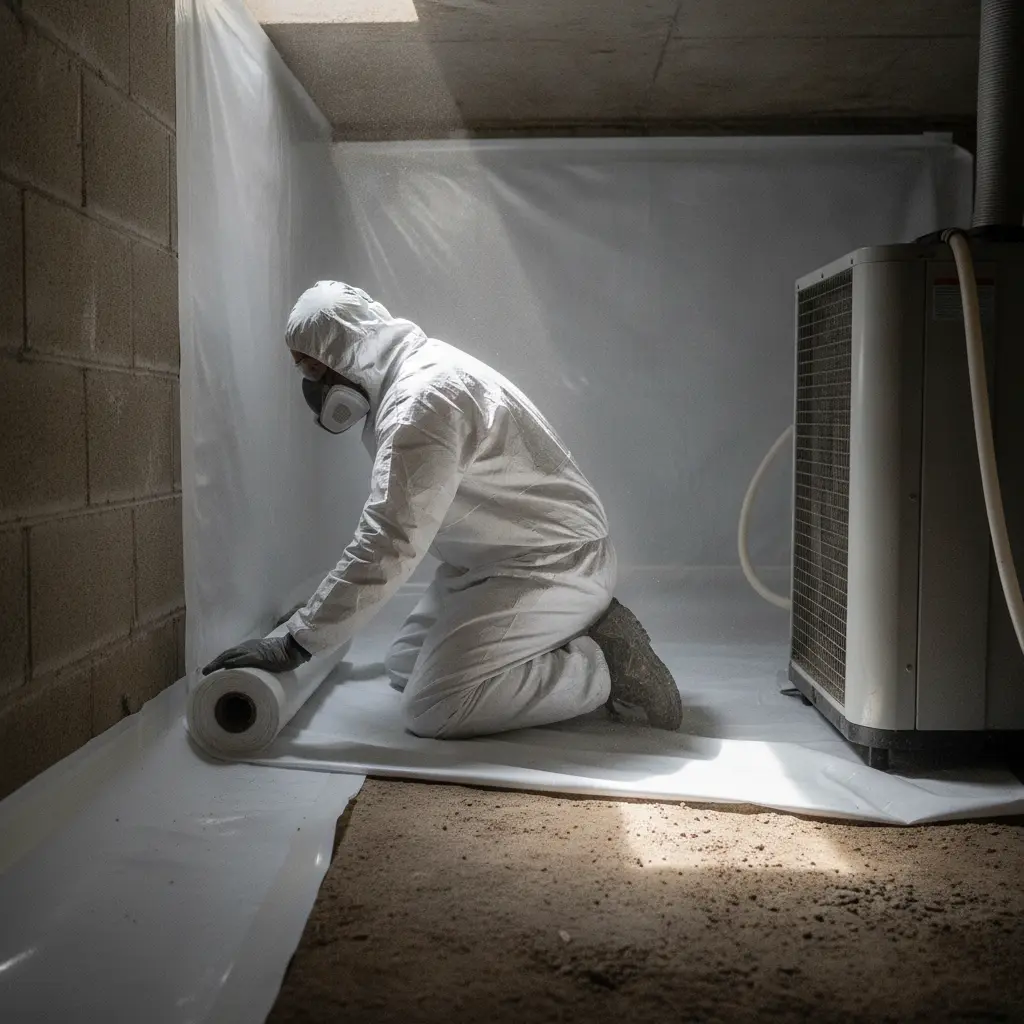
A crawl space encapsulation system transforms a raw, dirt-floor crawl space into a clean, controlled environment. The system typically includes a 20-mil (or heavier) polyethylene vapor barrier covering the ground and foundation walls, sealed penetrations around pipes and columns, rigid foam insulation on the walls, and — where needed — a mechanical dehumidifier or sump pump to actively manage moisture levels year-round.
A Brief History of Crawl Space Construction
Modern building codes began requiring vapor retarders in crawl spaces only after research in the 1980s confirmed that ground moisture migrates upward through convection and diffusion, damaging floor joists, ductwork, and indoor air quality. Prior to that era, most California homes — including the thousands of post-World War II ranch homes built in El Monte between 1945 and 1970 — were constructed with little or no moisture protection beneath the floor assembly. Many of those homes still stand today, now 55 to 79 years old, with their original unprotected crawl spaces.
Why El Monte Homes Are Particularly Susceptible
El Monte sits within the broader San Gabriel Valley, a region developed rapidly during California’s post-war housing boom. The city’s residential neighborhoods — including North El Monte, South El Monte, and the Garvey Avenue corridor — are dense with single-story and split-level homes built on shallow crawl spaces averaging 18 to 36 inches in clearance height. These homes predate modern moisture-management standards, making them prime candidates for encapsulation upgrades.
Related Services That Work with Encapsulation
Crawl space encapsulation works best as part of a comprehensive building envelope strategy. Many El Monte homeowners pair encapsulation with crawl space insulation to improve thermal performance, and with insulation removal to replace old, moisture-damaged batt insulation before sealing the space. spray foam insulation is also frequently applied at the rim joists during encapsulation to eliminate one of the most common air-leakage points in older California homes.
Our team in action — insulation professionals serving El Monte
Why Crawl Space Encapsulation Is Needed in El Monte, CA
El Monte’s Clay-Heavy Soils and the “Stack Effect”
The soils underlying much of El Monte and the broader San Gabriel Valley are classified as Montebello-Ramona clay loams and Hanford fine sandy loams — soil series known for their moderate to high shrink-swell capacity and elevated moisture retention. When seasonal rains saturate these soils, moisture does not drain quickly. Instead, it sits at or near the surface and migrates upward through a dirt crawl space floor at rates measured in pints per hour. The “stack effect” — the natural upward flow of air through a structure — then carries that moisture-laden air from the crawl space into living areas, raising indoor relative humidity levels by as much as 15 to 25 percentage points above outdoor averages.
The El Monte Rainfall Pattern and the 2023 Winter Storms
Southern California’s Mediterranean climate means El Monte receives the majority of its annual 15 to 17 inches of rainfall between November and March. The atmospheric river events of January and February 2023 deposited nearly 8 inches of rain on the San Gabriel Valley in a matter of weeks — more than half the annual average in a single season. Flood advisories were issued along the San Gabriel River, which runs less than two miles west of El Monte’s city center, and numerous residents in the Loma and Tyler Avenue neighborhoods reported standing water in crawl spaces for the first time in decades. Homes without encapsulated crawl spaces saw accelerated mold growth, swelling subfloors, and elevated indoor humidity well into the spring.
Santa Ana Wind Events and Rapid Humidity Cycling
El Monte experiences 10 to 15 significant Santa Ana wind events per year, typically between October and February. During these events, outdoor relative humidity can drop from 60–70% to under 15% within hours. This rapid humidity cycling stresses wood-framed floor joists and subfloor sheathing, causing repeated expansion and contraction that loosens fasteners, creates squeaky floors, and accelerates structural degradation — especially in homes where the crawl space has already been compromised by prior moisture intrusion.
High-Water-Table Zones Near the Rio Hondo
Properties located within roughly half a mile of the Rio Hondo channel — including portions of the Ramona Boulevard and Peck Road corridors — sit above a water table that can rise to within 4 to 6 feet of the surface following wet winters. Crawl spaces in these zones are at elevated risk for persistent ground moisture, and some require active drainage solutions such as an interior drainage channel and sump pump in addition to a vapor barrier and wall insulation.
Pest Pressure Unique to the San Gabriel Valley
El Monte’s warm climate and abundant older wood-framed housing stock create ideal conditions for subterranean termites (Reticulitermes hesperus) and moisture-seeking rodents. A properly encapsulated crawl space eliminates the dark, humid, debris-laden environment that both pests require, serving as a meaningful line of defense between routine pest-control treatments.
Signs You Need Crawl Space Encapsulation in El Monte
Moisture and Mold Indicators
- Musty or earthy odors inside the home, particularly noticeable on the ground floor or near HVAC vents
- Visible mold or white efflorescence on crawl space walls, joists, or existing insulation
- Condensation on cold-water pipes beneath the floor
- Standing water or saturated soil visible in the crawl space after rain
Structural Warning Signs
- Soft, spongy, or bouncy sections of flooring — especially in kitchens and bathrooms
- Hardwood floors cupping, buckling, or developing wide gaps between boards
- Doors or windows sticking seasonally without an obvious cause
- Sagging or discolored fiberglass batt insulation hanging from the floor joists
Energy and Comfort Signals
- Cold floors in winter despite adequate heating — common in El Monte’s older ranch homes with uninsulated crawl spaces
- HVAC system running significantly longer cycles than in comparable homes nearby
- Unexplained spikes in gas or electric bills between December and March
Urgency Indicators
If you observe active standing water, joist discoloration spanning more than a few square feet, or visible termite mud tubes, treat these as urgent conditions requiring professional inspection within 48 to 72 hours. Call (626) 469-7656 to schedule an emergency assessment.
Crawl Space Encapsulation Methods We Use in El Monte
1. Full Perimeter and Floor Encapsulation (Most Common)
The gold-standard approach covers both the crawl space floor and all foundation walls with a continuous vapor barrier. This method is recommended for the majority of El Monte homes, particularly those within the post-war neighborhoods of North El Monte and the Garvey corridor where the crawl space connects directly to the building envelope.
2. Floor-Only Vapor Barrier (Budget Entry-Level)
A 6-mil to 10-mil poly barrier applied to the ground only — without wall coverage or vent sealing — provides a basic level of moisture protection at lower cost. Suitable for crawl spaces with good natural ventilation and low ground moisture. We typically recommend upgrading to full encapsulation within five years.
3. Spray Foam Rim Joist Sealing
Open-cell or closed-cell spray foam insulation applied at the rim joists seals the single largest air-leakage path in most El Monte crawl spaces. This method is frequently added during or after a full encapsulation to achieve maximum energy performance.
4. Active Drainage with Sump Pump Integration
For properties near the Rio Hondo or in flood-prone zones along Ramona Boulevard, we install a perimeter drain channel beneath the vapor barrier feeding to a sump basin and automatic sump pump. This active system handles water intrusion that passive barriers alone cannot address.
5. Conditioned Crawl Space Conversion
By sealing all vents, insulating walls, and supplying a small volume of conditioned air from the HVAC system, the crawl space becomes part of the home’s thermal envelope. This approach delivers the highest energy savings and is recommended alongside attic insulation upgrades for maximum whole-home efficiency.
Ready for Crawl Space Encapsulation? Get Your Free Estimate Today.
Next Level Insulation of El Monte serves El Monte and the surrounding area — we’ll be on-site within 24 hours.
📞 Call (626) 469-7656Crawl Space Encapsulation Cost in El Monte, CA
Typical Price Ranges
Crawl space encapsulation in El Monte generally costs between $3,500 and $9,500 for a standard single-family home, with an average project landing between $5,000 and $7,000. These figures reflect the full-perimeter encapsulation approach including a 20-mil vapor barrier, wall insulation, vent sealing, and a basic dehumidifier. Smaller crawl spaces under 800 square feet may start at $2,800 to $3,500, while larger or more complex projects — such as those requiring active drainage systems or extensive mold remediation — can reach $10,000 to $14,000.
Key Cost Factors in El Monte
- Crawl space square footage: Most pricing is quoted per square foot, typically $5 to $12/sq ft depending on method and materials.
- Clearance height: Many El Monte homes have 18- to 24-inch crawl spaces, which slow labor and increase cost by 10 to 20% versus taller spaces.
- Vapor barrier thickness: 6-mil poly starts around $0.15/sq ft in materials; 20-mil reinforced liner runs $0.40 to $0.65/sq ft.
- Dehumidifier installation: Add $900 to $1,800 depending on unit capacity and electrical access.
- Mold remediation: If required, expect $500 to $2,500 as a separate line item.
- Insulation removal: Old batt removal adds $1.00 to $2.50/sq ft to project cost.
El Monte–Specific Pricing Notes
Labor costs in the San Gabriel Valley reflect the Los Angeles metro market and typically run 10 to 15% higher than the statewide average. California’s prevailing material costs for vapor barriers and rigid foam are also above the national average due to state fire-rating and off-gassing standards. For a binding written estimate, call us at (626) 469-7656. We offer free on-site quotes with no obligation.
El Monte Neighborhoods We Serve
North El Monte
North El Monte features a dense stock of 1950s and 1960s ranch-style homes with shallow, dirt-floor crawl spaces and original galvanized ductwork. Properties near Cogswell Road and Lower Azusa Road see elevated ground moisture from proximity to the San Gabriel River spreading grounds.
Downtown El Monte / Ramona Boulevard Corridor
Older bungalows and mixed-use residential structures from the 1920s through 1940s are common here. Many have stone or unreinforced masonry foundations that require special anchoring techniques for vapor barrier attachment.
South El Monte
Although technically a separate city, many South El Monte residents contact us for service. Homes along Tyler Avenue and Durfee Avenue sit close to the Rio Hondo and experience the most pronounced high-water-table challenges in the service area.
Garvey Avenue / Central El Monte
Post-war tract developments from the late 1940s and early 1950s dominate this area. Crawl spaces here often contain original 4-mil poly barriers that have degraded and require full replacement before new encapsulation can be applied.
Peck Road / Valley Corridor
Industrial-adjacent residential pockets in this zone contend with occasional surface-water intrusion and benefit most from the active drainage and sump pump integration method described above.
Crawl Space Maintenance Tips for El Monte Homeowners
- Inspect after every significant rain event. Following storms — especially November-through-March atmospheric river events — check the crawl space access hatch for any water pooling on the vapor barrier surface.
- Monitor your dehumidifier’s water collection or drain line monthly. In El Monte’s humid winter months, a properly sized unit may extract 5 to 15 gallons of water per day.
- Keep crawl space vents sealed year-round if your system is an unvented (conditioned) crawl space. Re-opening vents defeats the encapsulation and invites outside humidity.
- Trim vegetation and maintain positive drainage around your foundation. Grade soil so that the first 6 feet from the foundation slopes away at a minimum 5% grade to redirect rainwater.
- Inspect the vapor barrier annually for tears, punctures, or lifted seams. A simple walk-through with a flashlight every spring is sufficient for most homes.
- Check for pest intrusion entry points around pipe penetrations, especially after Santa Ana wind events that can shift landscaping and expose gaps at the foundation.
- Have crawl space insulation inspected every 5 to 7 years by a qualified professional, particularly if your home is in a flood-advisory zone near the San Gabriel River or Rio Hondo. Learn about crawl space insulation options
Why Choose Next Level Insulation of El Monte
Deep Local Knowledge
We work exclusively in the San Gabriel Valley and have direct, hands-on experience with El Monte’s specific soil conditions, housing eras, and seasonal moisture patterns. We know the difference between a crawl space on Ramona Boulevard and one near Peck Road — and we calibrate our solutions accordingly.
Comprehensive Service Under One Roof
From insulation removal and mold prep to blow-in insulation above the crawl space, Next Level Insulation handles every phase of your project without subcontracting key tasks. That means cleaner coordination, clearer accountability, and a finished product that performs as a system.
Transparent, Written Estimates
We provide itemized written proposals before any work begins. No surprise charges, no vague line items. Our team explains every cost factor — including how El Monte’s soil and climate specifically affect your project.
Responsive Local Service
As a locally focused company, we can typically schedule your free inspection within 48 hours. Call us at (626) 469-7656 to speak directly with a knowledgeable team member — not a national call center.
Frequently Asked Questions About Crawl Space Encapsulation in El Monte, CA
How much does crawl space encapsulation cost in El Monte?
Most El Monte homeowners pay between $5,000 and $7,000 for a full-perimeter encapsulation of an average-sized crawl space (800 to 1,500 square feet). Smaller spaces start around $2,800; larger or more complex projects with active drainage can reach $12,000 to $14,000. We provide free, itemized on-site estimates — call (626) 469-7656 to schedule yours.
How long does crawl space encapsulation take in El Monte?
The majority of our El Monte projects are completed in two to four working days. Straightforward spaces with no mold or drainage complications are often finished in two days. Larger homes or those requiring old insulation removal, mold treatment, and active drainage installation take three to four days.
Do I need a permit for crawl space encapsulation in El Monte?
In most cases, a standalone vapor barrier installation does not require a building permit in the City of El Monte. However, if the project involves converting a vented crawl space to an unvented (conditioned) configuration, or if electrical work is required for a dehumidifier or sump pump, permits may be required. We handle permit applications on your behalf when needed.
Is crawl space encapsulation worth it for older homes in El Monte?
Absolutely. In fact, older homes — particularly those built between 1945 and 1970 in neighborhoods like North El Monte and the Garvey corridor — benefit the most from encapsulation because they were built without any moisture management below the floor. Homeowners typically report energy bill reductions of 10 to 20%, improved indoor air quality, and fewer pest issues after encapsulation.
What is the difference between a vapor barrier and full encapsulation?
A vapor barrier is just the polyethylene sheet placed on the crawl space floor — it’s one component of a complete system. Full encapsulation includes the floor barrier, foundation wall insulation, sealed vents, and often a mechanical dehumidifier. The full system is significantly more effective because it controls both ground moisture and conditioned air exchange.
Will encapsulation help with the musty smell in my El Monte home?
Yes. Musty odors are almost always caused by mold or mildew growing on organic materials in a damp crawl space. By eliminating the moisture source and sealing the space, encapsulation eliminates the conditions that mold requires. Most homeowners notice a significant improvement in odor within two to four weeks of project completion.
Does my crawl space need a dehumidifier after encapsulation?
Not always. Smaller crawl spaces in well-drained areas of El Monte may maintain acceptable humidity levels with a sealed barrier alone. However, for crawl spaces larger than 1,000 square feet, homes near the Rio Hondo or San Gabriel River, or in neighborhoods with clay-heavy soils, we typically recommend a dedicated dehumidifier to maintain relative humidity below 60% year-round.
Can I combine crawl space encapsulation with attic insulation upgrades?
Yes, and we recommend it. Combining crawl space encapsulation with attic insulation improvements creates a complete building envelope solution that addresses heat gain from above and moisture intrusion from below. Many El Monte homeowners bundle both services for maximum energy efficiency and cost savings.
Get Your Free Crawl Space Encapsulation Estimate in El Monte Today
If your El Monte home has a musty smell, cold floors, spiking energy bills, or a crawl space you haven’t inspected in years, now is the time to act. El Monte’s clay soils, post-war housing stock, and seasonal rainfall events make crawl space moisture damage an ongoing risk — but it’s one you can address permanently with professional encapsulation from Next Level Insulation of El Monte.
Our team will inspect your crawl space, explain exactly what we find, and give you a clear, itemized written proposal with no pressure and no obligation. We serve all El Monte neighborhoods, including North El Monte, the Garvey corridor, the Ramona Boulevard area, and properties near the Rio Hondo.
Call us now at (626) 469-7656 or use our online contact form to schedule your free on-site assessment. Protect your home from the ground up.