

Blown-In Insulation Cost in Burbank, CA
Transparent Blown-In Insulation Cost Pricing for Burbank, CA Homeowners — Free Estimates
Discover blown-in insulation costs in Burbank, CA. Next Level Insulation offers free estimates, transparent pricing & expert installation. Call (818) 514-7541.
- Licensed & Insured
- Locally Owned & Operated
- Free Inspection & Estimate
Request Your
Free EstimateBlown-in insulation is a highly efficient method of insulating homes and commercial buildings by pneumatically dispersing loose-fill materials — such as cellulose, fiberglass, or mineral wool — into attics, walls, and other cavities. The result is seamless, gap-free thermal coverage that outperforms traditional batt insulation in many applications. In Burbank, CA, where summer temperatures routinely climb above 95°F in the San Fernando Valley heat corridor and utility bills spike accordingly, understanding the true cost of blown-in insulation is essential for every homeowner and property manager.
At Next Level Insulation of Burbank, we specialize in delivering accurate, transparent pricing and professional blown-in insulation installation tailored to Burbank’s unique climate, building stock, and local energy codes. Whether you own a 1950s ranch-style home near Magnolia Park or a mid-century apartment building in the Rancho District, our team provides solutions designed specifically for this community. Call us today at (818) 514-7541 to schedule your free cost estimate.
Understanding Blown-In Insulation and Its Costs
Blown-in insulation — also called loose-fill insulation — has been used in American residential construction since the early 20th century, initially as a retrofit solution for older homes lacking modern thermal envelopes. The method gained widespread adoption in the 1970s following the oil embargo energy crisis, when federal and state incentives pushed California homeowners to upgrade aging housing stock rapidly. Today, it remains one of the most cost-effective and versatile insulation strategies available.
The process involves loading loose insulation material into a blowing machine and pumping it through a flexible hose into the target space. For open attic applications, a technician walks the attic deck and distributes material evenly. For dense-pack wall applications, small holes are drilled in the exterior or interior wall surface, material is compacted to a specified density, and holes are patched afterward. Each method delivers different R-values — the industry measure of thermal resistance — and carries different labor and material costs.
In Burbank specifically, the prevalence of post-WWII construction is significant. A large portion of the city’s residential neighborhoods — including Magnolia Park, the Rancho District, and the hillside streets above Glenoaks Boulevard — were developed between 1945 and 1970. Homes from this era were built under older California building codes that required minimal insulation by today’s standards. Many of these properties have original insulation that is either severely degraded, contaminated with rodent activity, or simply insufficient for Climate Zone 9, which is the California Energy Commission designation covering Burbank. Title 24 energy standards now mandate minimum R-38 in attics for this climate zone, meaning most older Burbank homes are significantly under-insulated and stand to gain substantial energy savings from blown-in upgrades.
Blown-in insulation is particularly well-suited to Burbank’s building types because it conforms to irregular joist spacing, fills around existing wiring and plumbing, and can be installed without tearing open finished walls in most retrofit situations. This makes it the preferred method for the city’s large inventory of occupied single-family homes, duplexes, and small apartment buildings.
Signs You Need Blown-In Insulation in Burbank
Energy and Comfort Indicators
- Monthly SoCal Gas or Edison bills that have increased more than 20% without a change in usage habits
- Rooms above the garage or at the top floor that are consistently 5–10°F warmer than the rest of the house
- HVAC system running continuously during summer afternoons without reaching the thermostat set point
- Noticeable drafts near ceiling-mounted light fixtures, which often indicate attic air bypasses
Physical and Visual Symptoms
- Visible insulation in the attic that is thin, matted, or compressed below the tops of the floor joists
- Insulation that appears gray or black — a sign of air filtration staining that indicates airflow gaps
- Moisture staining or mold growth on attic sheathing or rafters
- Rodent droppings, tunnels, or nesting material visible in the attic or crawl space
Urgency Indicators
- Your home was built before 1980 and has never had insulation upgraded — a near-certain sign of sub-code R-values
- You are preparing for a sale and a home inspector has flagged inadequate attic insulation
- You are applying for a HERO Program or PACE financing upgrade and need documentation of current insulation levels
Our Blown-In Insulation Process in Burbank
Free On-Site Assessment (Day 1 — 45 to 60 Minutes)
A Next Level Insulation technician visits your Burbank property to measure existing insulation depth, assess attic ventilation, check for moisture intrusion, and identify any air bypasses around recessed lights, plumbing chases, or HVAC ducts. We document current R-values and compare them against California Title 24 Climate Zone 9 requirements.
Written Cost Estimate and Material Selection (Day 1–2)
We provide a written, itemized estimate covering material type (cellulose, fiberglass, or mineral wool), square footage, target R-value, labor, and any preparatory work such as air sealing or removal of contaminated existing insulation. We explain the cost differences and long-term performance trade-offs so you can make an informed decision.
Air Sealing and Preparation (Installation Day — 1 to 2 Hours)
Before any blown-in material is installed, our crew seals all identified air bypass locations using spray foam or caulk. This step is critical in Burbank’s older homes where top-plate gaps and recessed light cans can account for 30–40% of total air leakage. Skipping air sealing dramatically reduces the effectiveness of blown-in insulation.
Installation (Installation Day — 2 to 4 Hours Depending on Square Footage)
We set up our blowing machine outside the home to avoid interior dust intrusion. Our technicians install baffles at each eave to maintain a minimum 1-inch ventilation channel, then distribute blown-in material to the specified depth. For a standard 1,500-square-foot Burbank attic targeting R-49, this typically requires 20–25 bags of material installed to a depth of approximately 16 inches.
Depth Verification and Documentation (Installation Day — 30 Minutes)
We install manufacturer-required depth rulers throughout the attic and photograph the completed installation. This documentation supports any utility rebate applications through Southern California Edison’s Energy Savings Assistance Program or SoCal Gas rebate programs.
Cleanup and Final Walkthrough (Installation Day — 30 Minutes)
All equipment is removed, the attic hatch is resealed, and a final walkthrough is conducted with the homeowner. We review maintenance recommendations specific to Burbank’s climate and rodent pressure environment.
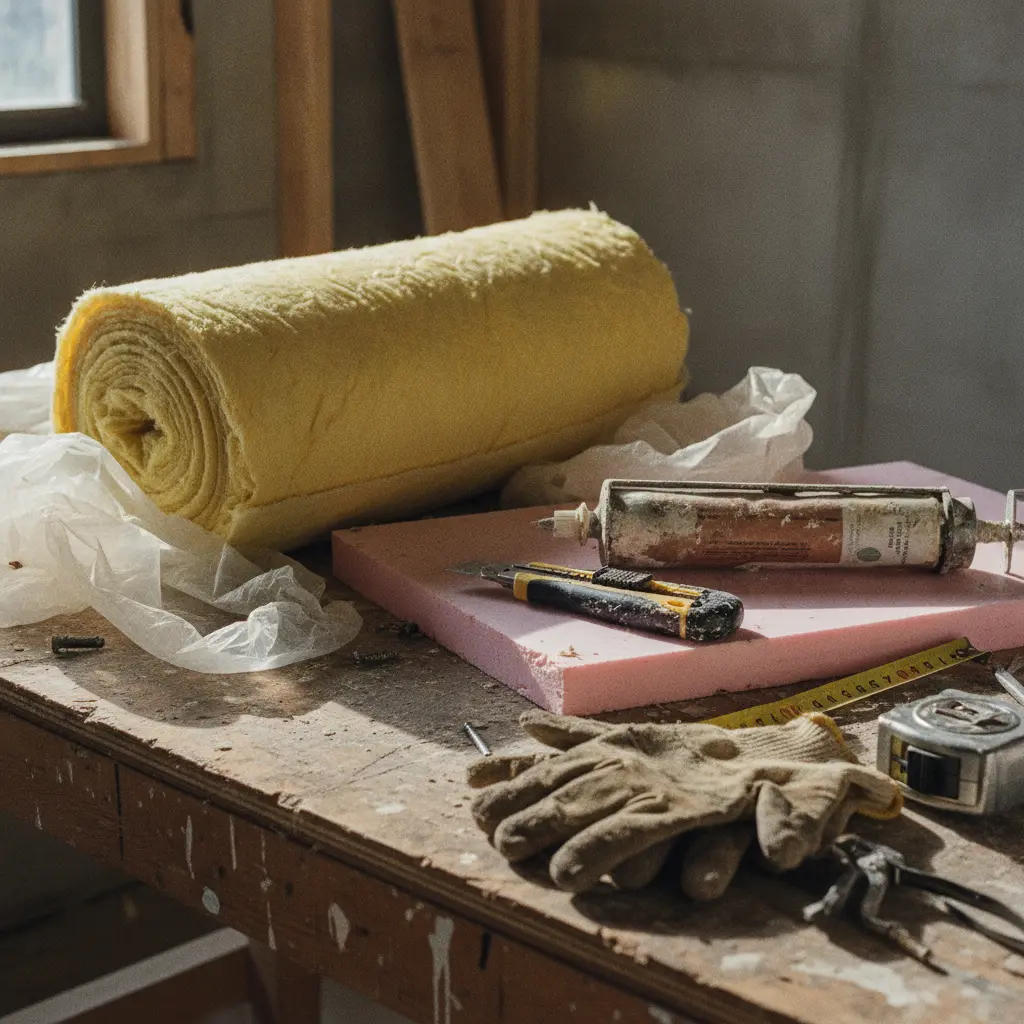
Our team in action — insulation professionals serving Burbank
Blown-In Insulation Methods and Approaches for Burbank Properties
Open-Blow Attic Installation
The most common method for Burbank homes, open-blow involves distributing loose-fill material freely across the attic floor. Cellulose is the preferred material for this application in Burbank due to its recycled content, fire-retardant treatment, and superior performance at sealing small gaps compared to standard fiberglass. It is well-suited to the city’s hot-dry summers and mild-wet winters. Cost range: $1.00–$1.50 per square foot installed. Explore our attic insulation services
Dense-Pack Wall Insulation
For Burbank’s older stucco homes with uninsulated 2×4 wall cavities — common in the Magnolia Park and Chandler Estates neighborhoods — dense-pack cellulose or fiberglass is injected at 3.5 lbs per cubic foot to prevent settling. This method requires drilling 2-inch holes in each stud bay and is best performed from the exterior to preserve interior finishes. Cost range: $2.50–$4.00 per square foot of wall area.
Blow-In Batt (BIB) System
Used primarily in new construction or open-wall renovation projects in Burbank, the BIB system installs netting across wall studs before blowing material behind it. This approach achieves consistent density and is ideal for additions and ADU construction throughout Burbank’s residential neighborhoods. Cost range: $1.80–$2.80 per square foot. Learn more about blow-in insulation options
Crawl Space Blown-In Insulation
For Burbank homes on raised foundations near the Los Angeles River corridor where crawl space moisture is a factor, blown-in mineral wool between floor joists provides moisture resistance and superior fire performance. This is frequently combined with crawl space encapsulation for maximum protection. View our crawl space insulation services
Ready for Blown-In Insulation Cost? Get Your Free Estimate Today.
Next Level Insulation of Burbank serves Burbank and the surrounding area — we’ll be on-site within 24 hours.
📞 Call (818) 514-7541Blown-In Insulation Cost in Burbank, CA — What to Expect
Understanding the cost of blown-in insulation in Burbank requires looking at several variables. The figures below reflect current 2024 market pricing for the greater Los Angeles area, with Burbank-specific factors noted.
Typical Cost Ranges
- Attic blown-in insulation (open blow): $1,200–$3,500 for a typical 1,000–2,500 sq ft Burbank home
- Dense-pack wall insulation: $3,500–$8,000 for a full exterior wall upgrade on a 1,500 sq ft home
- Crawl space blown-in insulation: $1,500–$4,000 depending on access and square footage
- Insulation removal prior to blown-in: $1.00–$2.00 per square foot, commonly needed after rodent intrusion
Key Cost Factors in Burbank
- Existing insulation condition: Homes in Burbank with rodent-contaminated insulation require removal first, adding cost but also being essential for health and code compliance
- Target R-value: Upgrading from R-11 (common in 1960s Burbank homes) to R-49 requires significantly more material than topping off an R-30 attic
- Attic access difficulty: Low-pitch rooflines common in mid-century Burbank ranch homes can complicate installation and add 10–20% to labor costs
- Permit requirements: Burbank Building and Safety may require permits for insulation work combined with electrical modifications — we advise on a project-by-project basis
Available Rebates and Financing
Southern California Edison and SoCal Gas both offer rebates of $0.10–$0.30 per square foot for qualifying insulation upgrades. Federal energy efficiency tax credits under the Inflation Reduction Act may cover up to 30% of project costs. Call (818) 514-7541 for rebate guidance.
Blown-In Insulation Services Across Burbank Neighborhoods
Magnolia Park
This beloved Burbank neighborhood is characterized by Craftsman bungalows and early ranch homes built between the 1920s and 1950s. These homes frequently have original knob-and-tube wiring that must be evaluated before blown-in insulation is installed — cellulose contacting active knob-and-tube wiring is a fire hazard. Our team is experienced in coordinating insulation work with electrical upgrades in this neighborhood.
The Rancho District
Burbank’s Rancho District features a dense concentration of post-WWII tract homes with low-slope rooflines and minimal original insulation. Eave ventilation is often compromised in these homes, requiring baffle installation before blown-in attic work can proceed safely.
Chandler Estates
Located near the Chandler Bikeway corridor, this neighborhood’s mid-century homes benefit significantly from dense-pack wall insulation given their uninsulated stucco exterior walls. Many homeowners here combine wall and attic blown-in upgrades for comprehensive energy improvements.
Toluca Lake and Beyond
We also serve adjacent communities including Studio City, North Hollywood, Glendale, and Pasadena, bringing the same Burbank-focused expertise to neighboring service areas throughout the region.
Maintenance Tips for Blown-In Insulation in Burbank
- Inspect attic depth annually: Check that depth rulers remain visible at the originally installed depth. Burbank’s seismic activity — even minor tremors — can settle cellulose insulation over time.
- Monitor for rodent entry points each fall: Before Santa Ana wind season drives rodents indoors, inspect roof eaves, gable vents, and attic hatches for gaps. Install steel mesh where needed.
- Check attic ventilation after re-roofing: Many Burbank homeowners who replace their roofs inadvertently block soffit vents, causing moisture buildup that degrades insulation.
- Keep attic hatch weatherstripped: An unsealed attic hatch can negate 15–20% of blown-in insulation performance by creating a direct thermal bypass.
- Avoid attic storage on insulation: Placing boxes and items directly on blown-in material compresses it and reduces R-value. Use raised attic walkboards instead.
- Request a post-earthquake inspection: Following any earthquake of magnitude 4.0 or greater centered near Burbank, have insulation depth verified and air sealing inspected for damage.
- Schedule a professional inspection every 10 years: Even high-quality blown-in insulation can shift or settle over a decade in Burbank’s active seismic and thermal cycling environment.
Why Choose Next Level Insulation of Burbank
Next Level Insulation of Burbank is a locally focused insulation contractor with deep familiarity with the specific challenges Burbank homeowners face — from the Valley’s extreme summer heat to post-earthquake insulation integrity and the ongoing rodent pressure created by the city’s mature urban tree canopy. We don’t apply one-size-fits-all solutions from a regional call center. Every estimate is performed in person, on your property, by a technician who knows Burbank’s neighborhoods and building stock.
We offer the full spectrum of insulation services Burbank residents need: spray foam insulation, attic insulation, insulation removal and replacement, and crawl space encapsulation — all coordinated under one roof to simplify your project and protect your investment.
Our pricing is transparent, our estimates are written and itemized, and we guide you through every available rebate and tax credit opportunity. When you call (818) 514-7541, you reach a real local professional — not a national dispatcher.
Frequently Asked Questions About Blown-In Insulation Cost in Burbank
How much does blown-in attic insulation cost for an average Burbank home?
For a typical 1,500–2,000 square foot Burbank home upgrading from minimal existing insulation to R-49 (the recommended level for Climate Zone 9), expect to pay between $1,800 and $3,200 including air sealing, materials, and labor. Homes requiring insulation removal first will add $800–$1,800 to the total.
Is blown-in insulation better than batt insulation for Burbank homes?
In most Burbank retrofit situations, yes. Blown-in insulation fills around existing wiring, plumbing, and structural members without gaps, which is critical in older homes. Batt insulation installed in attics with irregular joist spacing or existing obstacles typically leaves voids that dramatically reduce effective R-value.
How long does blown-in insulation installation take in a Burbank home?
Most attic blown-in projects in Burbank are completed in a single day. Assessment and air sealing typically take 1–3 hours; blowing material into a 1,500–2,000 square foot attic takes 2–4 hours. Dense-pack wall projects may require 2–3 days depending on the number of wall cavities and exterior patching required.
Do I need a permit for blown-in insulation in Burbank?
Standalone insulation installation generally does not require a permit from Burbank Building and Safety. However, if the project involves electrical work (such as upgrading recessed lights prior to insulation) or structural modifications, permits may be required. We advise on each specific project during the assessment phase.
Can blown-in insulation help reduce my Southern California Edison bills?
Yes, significantly. Burbank homes that upgrade from R-11 or R-19 attic insulation to R-49 commonly report 20–35% reductions in cooling energy use during summer peak months. With SCE’s tiered rate structure, the savings are amplified because reduced consumption keeps usage below the upper rate tiers where costs per kilowatt-hour are highest.
What type of blown-in insulation material do you recommend for Burbank?
We most commonly recommend cellulose for open-blow attic applications in Burbank. It is treated with borate-based fire and pest retardants, which provides an added layer of protection against Burbank’s rodent pressure. Fiberglass blown-in is preferred in situations where moisture exposure is a concern, such as near Burbank’s lower-lying areas with higher soil moisture conditions.
Are there rebates available for blown-in insulation in Burbank?
Yes. Southern California Edison offers rebates through its Energy Savings Assistance Program for income-qualifying households and through its standard residential rebate program. SoCal Gas also offers insulation rebates for natural gas customers. Additionally, the federal 25C tax credit under the Inflation Reduction Act provides up to 30% back on qualifying insulation upgrades, up to $1,200 annually. We provide all necessary documentation at project completion.
How do I know if my Burbank home needs blown-in insulation or full removal and replacement?
During our free on-site assessment, we evaluate the condition of existing insulation for rodent contamination, moisture damage, mold, and depth adequacy. If insulation is contaminated or severely degraded, removal is recommended before new material is installed. If existing insulation is clean and intact but simply insufficient in depth, a top-off blown-in installation over the existing material is typically appropriate and more cost-effective. Learn about insulation replacement options
Get Your Free Blown-In Insulation Cost Estimate in Burbank Today
Don’t let another brutal Burbank summer or Santa Ana wind season cost you hundreds of dollars in wasted energy. Next Level Insulation of Burbank is ready to assess your home, explain your options, and provide a clear, written estimate — at no charge and with no obligation.
Call us now at (818) 514-7541 to schedule your free on-site blown-in insulation assessment. We serve Burbank and surrounding communities including Glendale, Toluca Lake, North Hollywood, Studio City, and Pasadena. Our team is available Monday through Saturday, and we offer convenient early-morning and late-afternoon appointments to fit your schedule. Take the first step toward a more comfortable, energy-efficient Burbank home today.