

Cellulose Insulation in Burbank, CA
Energy-Saving Cellulose Insulation for Burbank, CA Homes — Licensed & Insured
Need cellulose insulation in Burbank, CA? Next Level Insulation of Burbank delivers expert installation for attics & walls. Call (818) 514-7541 for a free estimate.
- Licensed & Insured
- Locally Owned & Operated
- Free Inspection & Estimate
Request Your
Free EstimateCellulose insulation is a high-performance, eco-friendly insulation material made from recycled paper fibers treated with fire-retardant compounds. It is installed inside walls, attics, and floors to create a dense thermal and acoustic barrier that significantly reduces energy loss and outside noise penetration.
Burbank’s Mediterranean climate — characterized by hot, dry summers regularly exceeding 95°F and cool winters that can dip below 40°F overnight — creates year-round thermal stress on homes and commercial buildings. Older construction along Magnolia Boulevard and in the Rancho District was rarely built with modern energy efficiency in mind, leaving thousands of properties chronically under-insulated.
At Next Level Insulation of Burbank, we specialize in cellulose insulation solutions tailored to the specific building stock, climate demands, and utility costs found right here in Burbank. Our team understands the nuances of local construction styles and delivers installations designed to lower your Southern California Gas and Burbank Water and Power bills from day one. Call us at (818) 514-7541 to schedule your free assessment.
Understanding Cellulose Insulation
Cellulose insulation is one of the oldest and most proven insulation materials in modern construction. Dating back to the early 1900s when newspapers and paper byproducts were first repurposed as thermal fill, cellulose has evolved into a scientifically engineered product that meets or exceeds current California Title 24 energy code requirements. Today’s cellulose is composed of approximately 75–85% post-consumer recycled content, making it one of the most environmentally responsible insulation choices available.
The material achieves an R-value (thermal resistance) of approximately R-3.2 to R-3.8 per inch when loose-fill blown, and can reach R-3.6 to R-4.0 per inch in dense-pack applications. For Burbank attics, the California Energy Commission recommends a minimum of R-38, meaning most attic installations require 10 to 12 inches of blown cellulose. Older Burbank homes built before the state’s 1978 Title 24 energy standards — many of which line streets like Glenoaks Boulevard and Hollywood Way — often have little to no existing attic insulation, or decades-old degraded fiberglass that no longer performs adequately.
Cellulose is treated with borate compounds that provide Class 1 fire resistance ratings and natural resistance to mold, mildew, and pest infestations — a critical advantage in Southern California’s dry conditions where rodents commonly nest in poorly insulated attic spaces. Unlike fiberglass batts, which leave air gaps along joists and around obstructions, properly installed cellulose fills every cavity conformally, dramatically reducing air infiltration.
Burbank’s housing stock is particularly well-suited to cellulose solutions. The city contains a significant concentration of post-World War II residential construction — bungalows, ranch-style homes, and stucco duplexes built between 1945 and 1970 — that commonly feature shallow attic cavities and wall assemblies that respond exceptionally well to dense-pack cellulose retrofits. Commercial properties near the Burbank Media District and along San Fernando Boulevard also benefit from cellulose’s superior acoustic dampening properties, reducing HVAC noise and external traffic sound penetration.
Why Cellulose Insulation Is Needed in Burbank, CA
Burbank’s Extreme Temperature Swings
Burbank sits in the southern end of the San Fernando Valley, a bowl-shaped geographic formation that traps heat during summer months. The California Department of Water Resources identifies the San Fernando Valley as a heat island environment where summer temperatures can exceed coastal Los Angeles by 10 to 15°F. During the record-breaking heat events of September 2020, Burbank recorded temperatures of 112°F — among the highest ever measured in the region. Without adequate insulation, attic spaces in Burbank homes can reach 150°F or more on such days, radiating heat downward into living spaces and forcing air conditioning systems to work at 40–60% greater capacity than necessary.
Santa Ana Wind Events and Air Infiltration
Santa Ana wind events, which occur most intensely from October through March, drive powerful dry air through the Verdugo Mountains and across Burbank at sustained speeds of 25 to 50 mph, with gusts recorded at over 70 mph near the Burbank foothills neighborhoods such as Magnolia Park and the Verdugo Woodlands. These winds force cold, dry air through every unsealed gap in a building’s envelope. Homes without dense-pack cellulose in walls and attic floors experience dramatic pressure-driven infiltration that spikes heating bills and creates uncomfortable drafts. The California Air Resources Board has documented that poorly sealed, under-insulated homes in inland valley communities like Burbank can lose up to 30% of conditioned air annually through envelope leakage.
Aging Housing Stock and Code Non-Compliance
A significant portion of Burbank’s residential inventory was constructed between 1940 and 1965, predating California’s energy code entirely. Neighborhoods such as the Rancho District, Burbank’s historic downtown residential blocks near Olive Avenue, and the hillside streets approaching the Verdugo Mountains contain hundreds of homes with either no wall insulation or original blown-in vermiculite that has settled and compacted to near-zero insulating value over decades. Vermiculite products used before 1980 have also been flagged for potential asbestos contamination, making replacement with safe cellulose a health priority alongside an energy upgrade.
Burbank Water and Power Utility Costs
Burbank Water and Power (BWP) operates independently of Southern California Edison, and residential electricity rates in Burbank have increased by approximately 18% over the past five years. BWP’s own energy efficiency data indicates that uninsulated or poorly insulated homes consume 25 to 40% more electricity for cooling than properly insulated equivalents. Installing cellulose insulation to Title 24 standards — R-38 in attics, R-13 to R-21 in walls — is one of the most cost-effective ways Burbank homeowners can reduce monthly energy expenses and qualify for BWP’s rebate programs.
Film and Studio Industry Buildings
Burbank’s identity as the media capital of the San Fernando Valley means many commercial and mixed-use buildings near the Warner Bros. lot on Warner Boulevard and the NBC/Telemundo complex on West Alameda Avenue require exceptional acoustic insulation performance. Cellulose’s density and conforming installation characteristics make it the preferred choice for sound-sensitive applications throughout the Burbank Media District.
Signs You Need Cellulose Insulation in Burbank
Energy and Comfort Warning Signs
- Monthly Burbank Water and Power bills exceeding $200 during summer months despite moderate thermostat settings
- Rooms near the roofline or exterior walls that are consistently 5°F or more warmer or cooler than central areas
- Air conditioning running continuously during Burbank’s summer heat events without reaching the set temperature
- Noticeable cold drafts near exterior walls or ceiling joints during Santa Ana wind events
Physical and Structural Indicators
- Attic insulation depth measuring less than 10 inches (below R-38 minimum for Burbank’s Climate Zone 9)
- Visible fiberglass batts that are yellow-gray, flattened, or have gaps along joist edges
- Walls that feel cold to the touch in winter or warm in summer when tested from inside
- Evidence of rodent activity in the attic — cellulose’s borate treatment deters pest nesting
Health and Safety Urgency Indicators
- Dust or particulate matter entering the home during high-wind days, indicating air sealing deficiencies
- Older homes with suspected vermiculite or pre-1980 blown insulation requiring professional assessment
- Allergy symptoms that worsen indoors, potentially linked to degraded or mold-affected insulation material
If you recognize two or more of these signs in your Burbank property, contact Next Level Insulation of Burbank at (818) 514-7541 for an immediate evaluation.
Our Cellulose Insulation Installation Process in Burbank
Free On-Site Assessment (1–2 Hours)
Our Burbank-based technician visits your property to conduct a comprehensive evaluation. We measure existing insulation depth and R-value, inspect attic ventilation (critical in Burbank’s hot climate to prevent moisture buildup), identify air leakage points, and review your current BWP energy bills to establish a performance baseline. We document all findings with photographs and provide a written report before recommending any work.
Insulation Removal and Prep (Half Day to Full Day)
Where old or contaminated insulation is present — a common situation in Burbank homes built before 1975 — we safely remove and dispose of existing material using HEPA-filtered vacuum equipment. Learn more about our insulation removal services for details on our handling protocols for legacy materials. This step also includes sealing all attic penetrations, electrical boxes, and recessed light fixtures with fire-rated foam to prevent air bypass.
Air Sealing (2–4 Hours)
Before any cellulose is installed, our crew performs comprehensive air sealing using spray foam and fire-rated caulk at all penetration points. This step is especially important in Burbank’s older ranch-style and bungalow construction where top plates and rim joists are frequently unsealed.
Cellulose Installation (3–6 Hours Depending on Property Size)
Using truck-mounted or portable blowing machines, we install cellulose to the specified depth — typically 12 inches for R-38 in Burbank attics. Technicians use calibrated depth markers throughout the attic to ensure uniform coverage. For wall retrofits, dense-pack cellulose is injected through small access holes drilled from the exterior or interior at a density of approximately 3.5 lbs per cubic foot.
Quality Inspection and Verification (1 Hour)
Following installation, we conduct a room-by-room thermal assessment and re-measure insulation depths at multiple attic points to confirm R-value compliance with California Title 24 requirements for Burbank’s Climate Zone 9.
Cleanup and Final Documentation (30–60 Minutes)
We restore your property to pre-installation condition, remove all equipment and material waste, and provide you with a written completion report including R-value certification — documentation required to claim BWP energy efficiency rebates.
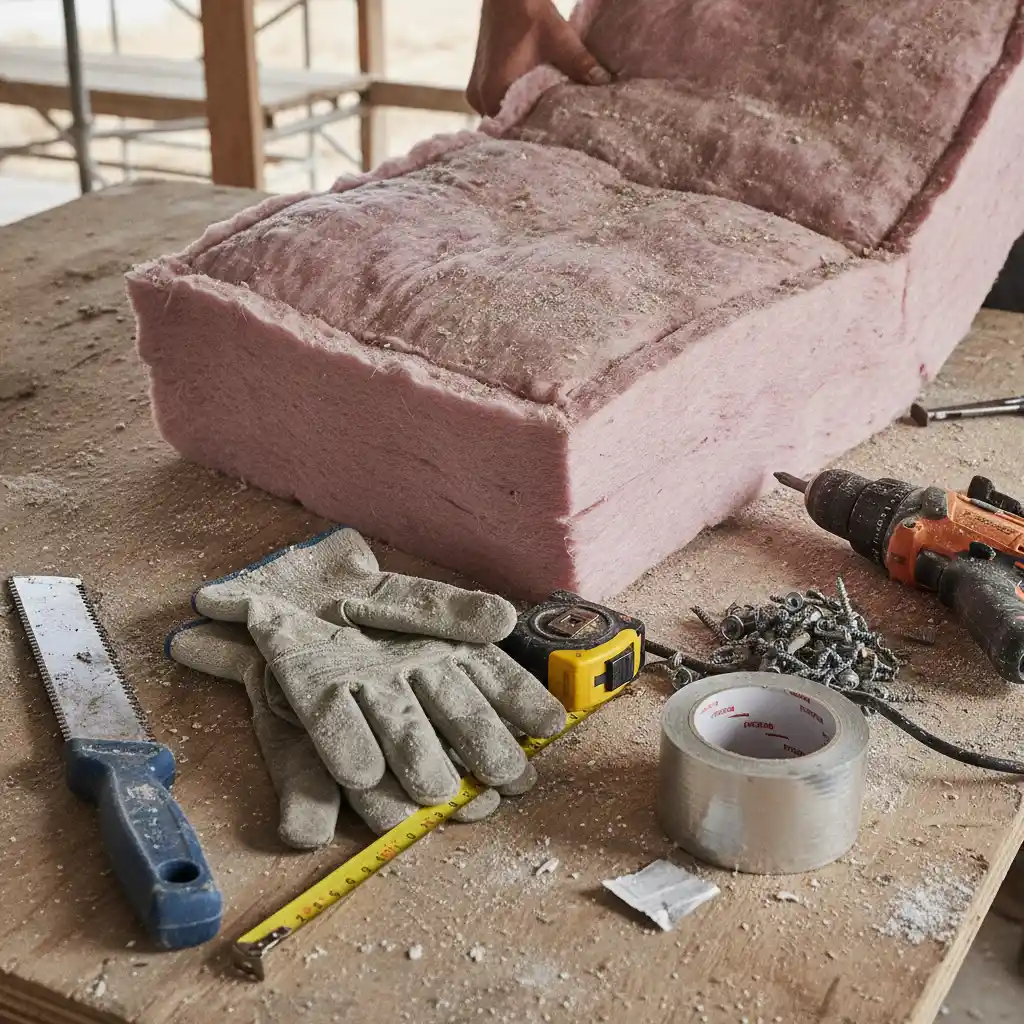
Our team in action — insulation professionals serving Burbank
Cellulose Insulation Methods We Use in Burbank
Loose-Fill Blown Cellulose
The most common method for Burbank attic applications. Cellulose is blown using high-volume equipment to an even depth across open attic floors. Best suited for accessible attics in the ranch-style and mid-century homes predominant in Burbank’s flatland neighborhoods. Achieves R-38 at approximately 12 inches depth.
Dense-Pack Cellulose
Used for wall cavities, enclosed rafter bays, and other confined spaces. Cellulose is injected at high density (3.5–4.0 lbs/ft³) through small-diameter holes, completely filling the cavity without settling. Ideal for the stucco-clad homes throughout Magnolia Park and the Rancho District where wall insulation retrofits must be performed with minimal exterior disruption. Explore our blow-in insulation services for more about this technique.
Stabilized or Spray-Applied Cellulose
Cellulose mixed with a small amount of water and adhesive binder is spray-applied to open wall cavities or cathedral ceilings during new construction or major renovation projects. This method is increasingly used in Burbank’s growing residential renovation market, particularly in hillside properties near the Verdugo Woodlands where open rafter systems are common.
Combination Cellulose and Spray Foam Systems
For maximum energy performance, we often pair a 1–2 inch closed-cell spray foam air barrier at the roofline or rim joist with blown cellulose fill for the remainder of the cavity. See our spray foam insulation page for details. This hybrid approach is particularly effective in Burbank properties that experience both extreme summer heat and significant Santa Ana wind pressure cycling.
Ready for Cellulose Insulation? Get Your Free Estimate Today.
Next Level Insulation of Burbank serves Burbank and the surrounding area — we’ll be on-site within 24 hours.
📞 Call (818) 514-7541Cellulose Insulation Cost in Burbank, CA
Understanding cellulose insulation costs helps Burbank homeowners and property managers plan their investment and take full advantage of available rebates. Pricing in the Burbank market reflects Southern California labor rates, material supply chain factors, and local project complexity.
Typical Price Ranges
- Attic loose-fill cellulose (standard Burbank home, 1,200–1,500 sq ft attic): $1,200 – $2,800
- Dense-pack wall insulation (per 1,000 sq ft of wall area): $1,800 – $3,500
- Crawl space cellulose or encapsulation with cellulose: $2,000 – $4,500 depending on access and condition
- Combined insulation removal and replacement (attic): $2,500 – $5,500
Factors That Affect Your Burbank Project Cost
- Existing insulation removal: Adds $500–$1,500 depending on volume and material type
- Attic access difficulty: Tight attic clearances common in Burbank’s 1950s–1960s ranch homes can increase labor time by 20–30%
- Air sealing scope: Heavily penetrated attic floors (common in older Burbank construction with original knob-and-tube electrical) require additional sealing material and time
- R-value target: Upgrading beyond R-38 to R-49 for maximum efficiency adds approximately $400–$800 to attic projects
Burbank-Specific Rebates and Savings
Burbank Water and Power offers residential energy efficiency rebates of up to $500 for qualifying insulation upgrades. Federal tax credits under the Inflation Reduction Act allow homeowners to claim 30% of insulation project costs (up to $1,200) annually. Call (818) 514-7541 for a detailed written estimate specific to your Burbank property.
Cellulose Insulation Services Across Burbank Neighborhoods
Magnolia Park
This historic district along Magnolia Boulevard features a high concentration of 1930s–1950s bungalows and Craftsman homes with original balloon-frame construction. These older wall assemblies respond exceptionally well to dense-pack cellulose retrofits and require careful air sealing at top plates common to this era’s framing methods.
Rancho District
Burbank’s Rancho District contains a mix of post-war ranch homes and newer infill construction. Many original ranch homes in this area were built with minimal or no wall insulation and feature low-pitch attic assemblies that benefit significantly from blown cellulose upgrades to meet current Title 24 standards.
Verdugo Woodlands
Hillside properties near the Verdugo Mountains face amplified Santa Ana wind exposure and greater thermal variability than Burbank’s flatland areas. Dense-pack cellulose combined with spray foam air barriers is the preferred solution for these homes, which often feature cathedral ceilings and complex roof geometries. Learn more about our attic insulation services.
Burbank Media District and Downtown
Commercial and mixed-use properties in this high-activity zone benefit from cellulose’s acoustic dampening performance, reducing external noise from Burbank Airport flight paths and surface street traffic along Olive Avenue and Alameda Avenue.
Cellulose Insulation Maintenance Tips for Burbank Properties
- Annual attic inspection: Check cellulose depth each fall before Burbank’s cooler season. Settled areas below 10 inches should be topped off to maintain R-38 compliance.
- Monitor for moisture after rare rainfall events: Burbank averages only 14 inches of rain annually, but concentrated winter storms can introduce attic moisture. Inspect for wet or clumped cellulose after significant rain.
- Check attic ventilation: Ensure soffit and ridge vents remain clear of cellulose overfill. Blocked ventilation in Burbank’s summer heat can accelerate moisture-related degradation.
- Seal new penetrations immediately: Any new electrical, plumbing, or HVAC penetrations through the attic floor should be sealed with fire-rated foam before they compromise your air barrier.
- Pest monitoring: While cellulose’s borate treatment deters most pests, check for rodent entry points along Burbank’s rooflines seasonally, particularly before fall when rodents seek warm shelter.
- BWP energy bill review: Compare summer and winter bills year over year. A significant spike in energy use without a change in habits may indicate insulation settlement or damage worth investigating.
- Professional inspection every 5–7 years: Schedule a professional depth and R-value assessment with Next Level Insulation of Burbank to ensure your cellulose continues to perform at the original installed specification.
Why Choose Next Level Insulation of Burbank
Next Level Insulation of Burbank is a locally focused insulation contractor with deep knowledge of the specific building types, climate challenges, and energy code requirements that define Burbank and the surrounding San Fernando Valley communities. We don’t apply generic solutions — every project is assessed and specified based on your property’s construction era, current condition, and performance goals.
Our team is trained to work within Burbank’s unique mix of historic bungalows, mid-century ranch homes, and contemporary commercial buildings, adapting our installation methods to each structure’s specific characteristics. We are familiar with Burbank Water and Power’s rebate documentation requirements and can assist clients in preparing accurate project records to maximize available incentives.
We offer comprehensive insulation services beyond cellulose, including crawl space encapsulation, crawl space insulation, insulation replacement, and spray foam insulation, allowing us to address your entire building envelope in a single relationship with a contractor who knows Burbank. Call (818) 514-7541 to speak with our team today.
Frequently Asked Questions About Cellulose Insulation in Burbank, CA
How much does cellulose insulation cost in Burbank?
For a typical Burbank single-family home, attic cellulose insulation installation ranges from $1,200 to $2,800 depending on attic size, current insulation conditions, and air sealing scope. Wall dense-pack projects range from $1,800 to $3,500 per 1,000 square feet of wall area. Burbank Water and Power rebates and federal tax credits can offset 30–40% of project costs for qualifying installations.
How long does cellulose insulation installation take in Burbank?
Most Burbank attic insulation projects are completed in a single day — typically 4 to 8 hours including prep, installation, and cleanup. Wall dense-pack projects in older Burbank homes may require 1 to 2 days depending on the number of wall bays and access point drilling required. Combination projects involving removal and replacement typically take 1 to 2 full days.
Does cellulose insulation settle over time in Burbank’s climate?
All loose-fill cellulose experiences some initial settling of approximately 15–20% within the first year of installation. Professional installers, including our Burbank team, account for this by installing to a depth greater than the target settled R-value. Dense-pack applications installed at 3.5 lbs/ft³ or greater experience negligible settling due to the compressive density achieved during installation.
Is cellulose insulation safe for Burbank’s fire-prone environment?
Yes. Modern cellulose insulation is treated with borate compounds that give it a Class 1 fire resistance rating — the highest available category. Borate-treated cellulose actually chars and self-extinguishes rather than melting or dripping like some synthetic insulation materials. This is an important consideration for properties in Burbank’s hillside areas near the Verdugo Mountains, which fall within the Very High Fire Hazard Severity Zone.
Can cellulose insulation be installed in Burbank homes with knob-and-tube wiring?
This is an important question specific to Burbank’s older housing stock. California code generally prohibits covering active knob-and-tube wiring with insulation. Before installing cellulose in homes built before 1950, we conduct a thorough electrical assessment and require any active knob-and-tube circuits to be evaluated and cleared by a licensed electrician prior to our installation. We are experienced in coordinating this process with Burbank-area electrical contractors.
What R-value do I need for my Burbank attic?
Burbank falls within California Climate Zone 9. The California Energy Commission’s current Title 24 standards require a minimum of R-38 for attic insulation in this climate zone for existing homes and R-49 for new construction. For most Burbank properties, R-38 (approximately 12 inches of blown cellulose) provides excellent performance and cost-effectiveness. Homes on hillside exposures near Verdugo Woodlands that face amplified heat loading may benefit from upgrading to R-49.
How does cellulose insulation compare to spray foam for Burbank attics?
Both materials are excellent options with different performance profiles. Cellulose offers superior cost-effectiveness, environmental credentials (up to 85% recycled content), and acoustic performance. Spray foam provides a combined air barrier and insulation in a single application and is preferred for unvented attic assemblies or where extreme air sealing is the primary goal. Our Burbank team frequently recommends hybrid systems — spray foam at critical air leakage points with cellulose fill for the main insulation layer — to optimize performance at a practical cost. Compare spray foam insulation options.
Do you serve areas near Burbank?
Yes. In addition to Burbank, Next Level Insulation serves Studio City, Sherman Oaks, North Hollywood, Sun Valley, Toluca Lake, Universal City, Valley Village, Glendale, Pasadena, Hollywood, Beverly Hills, and many other surrounding communities throughout the greater Los Angeles area.
Get Your Free Cellulose Insulation Estimate in Burbank Today
Don’t let another Burbank summer heat event or Santa Ana wind season drain your energy budget and comfort. Next Level Insulation of Burbank is ready to assess your property, identify insulation deficiencies, and deliver a written proposal with clear pricing — at no cost to you.
Whether your Burbank home is a 1950s Rancho District ranch, a Magnolia Park Craftsman bungalow, or a hillside Verdugo Woodlands property, our team has the local expertise to design and install the right cellulose insulation solution for your building.
Call us now at (818) 514-7541 to schedule your free on-site assessment. Our Burbank team is available Monday through Saturday and offers prompt scheduling to accommodate your timeline. Invest in year-round comfort, lower BWP bills, and a healthier indoor environment — starting today.