

Cellulose Insulation in Chula Vista, CA
Energy-Saving Cellulose Insulation for Chula Vista, CA Homes — Licensed & Insured
Need cellulose insulation in Chula Vista, CA? Next Level Insulation serves all Chula Vista neighborhoods. Call (619) 789-4273 for a free estimate today.
- Licensed & Insured
- Locally Owned & Operated
- Free Inspection & Estimate
Request Your
Free EstimateCellulose insulation is a plant-based, recycled-fiber insulation material made primarily from post-consumer newsprint and cardboard, treated with fire-retardant compounds to meet modern building codes. It is blown or densely packed into wall cavities, attics, and floors to create a high-performance thermal and acoustic barrier between conditioned living spaces and the outdoors.
In Chula Vista, CA — a coastal inland city stretching from the shores of San Diego Bay east into the Otay Ranch mesas — homes and businesses face a unique combination of marine air, seasonal temperature swings, and aging building stock that makes quality insulation critical year-round. Nights in western Chula Vista can drop into the low 50s°F while east-side communities like Eastlake Greens experience summer highs exceeding 95°F, creating significant energy loads on poorly insulated structures.
At Next Level Insulation of Chula Vista, our technicians are trained specifically on the building types, permit requirements, and climate conditions found throughout Chula Vista and the greater South Bay. Call us today at (619) 789-4273 to schedule your free assessment.
Understanding Cellulose Insulation
Cellulose insulation has been used in North American construction for over a century, with widespread commercial adoption accelerating after the 1973 oil embargo spurred a national push for residential energy efficiency. Today it remains one of the most environmentally responsible insulation choices available, with recycled content typically ranging from 75% to 85% by weight — among the highest of any insulation product on the market.
The material achieves thermal resistance values (R-values) of approximately R-3.2 to R-3.8 per inch, depending on installation density. When blown into an attic to a recommended depth of 12 to 15 inches, the resulting R-38 to R-49 blanket substantially reduces heat transfer through the roof assembly. Beyond thermal performance, cellulose’s dense fiber matrix provides meaningful noise attenuation — a feature particularly valuable in urban neighborhoods close to State Route 125 or Interstate 805.
There are two primary installation forms: loose-fill (blown-in) cellulose, which is ideal for open attic floors and hard-to-reach cavities, and dense-pack cellulose, which is injected under pressure into enclosed wall cavities or floor systems to eliminate air infiltration. Both forms conform naturally to irregular framing, pipes, and obstructions — a practical advantage in older Chula Vista homes built before standard framing dimensions were normalized.
Chemically, cellulose is treated with borates — compounds like boric acid and sodium borate — which provide Class I or Class II fire resistance ratings and also act as natural pesticide deterrents against insects, a meaningful benefit given the active termite pressure found throughout San Diego County. Unlike fiberglass batts, cellulose does not contain glass fibers that can irritate airways, making installation and future renovation work more comfortable for occupants and contractors alike.
In Chula Vista’s diverse housing stock — ranging from 1960s ranch-style homes in western neighborhoods near Third Avenue to contemporary two-story production homes in Eastlake and Otay Ranch — cellulose insulation adapts readily to varied construction assemblies, making it a versatile solution across the city’s many building eras.
Why Cellulose Insulation Is Needed in Chula Vista, CA
Marine Air and Moisture Infiltration
The San Diego Bay shoreline lies fewer than two miles from Chula Vista’s western residential grid. Salt-laden marine air carried inland by afternoon sea breezes accelerates the degradation of older fiberglass batt insulation, which can absorb moisture and lose up to 40% of its rated R-value when wet. Cellulose, when properly installed with appropriate vapor management, is less prone to sustained moisture retention and recovers its thermal performance as it dries — a meaningful durability advantage in coastal-adjacent conditions.
Significant Summer Heat Loads in East Chula Vista
East Chula Vista communities including Eastlake Greens, Otay Ranch, and Rolling Hills Ranch routinely record July and August temperatures 10°F to 15°F higher than coastal San Diego — frequently exceeding 95°F and occasionally surpassing 105°F during Santa Ana wind events. During the September 2022 heat emergency, when California’s grid operator issued a Flex Alert, inland Chula Vista temperatures reached 108°F, placing extreme demand on residential HVAC systems. Homes with inadequate attic insulation — or insulation that has settled and compressed over time — saw cooling costs spike by an estimated 30% to 50% above baseline during that event. Adding or replenishing cellulose to achieve R-38 or higher in these attic spaces directly reduces that peak cooling load.
Aging Housing Stock with Degraded Original Insulation
A large portion of Chula Vista’s residential inventory was constructed between 1955 and 1985, when building codes required only R-11 or R-19 in attics — well below the current California Title 24 standard of R-38 minimum for Climate Zone 3. Surveys of homes in established neighborhoods like Otay and Harborside consistently reveal original rock-wool or early fiberglass batts that have settled, been disturbed by pest activity, or become contaminated by rodent waste. Replacing or augmenting this degraded material with blown-in cellulose restores code-compliant performance and improves indoor air quality.
Seismic Activity and Building Movement
Southern California’s seismic environment, including proximity to the Rose Canyon Fault system and regional faults along the US-Mexico border corridor, subjects Chula Vista structures to periodic minor shaking. This movement can open gaps in batt insulation at framing intersections and at the interface between wall plates and ceiling drywall. Dense-pack cellulose fills and maintains these gaps continuously, whereas batts rely on friction-fit contact that seismic movement can disrupt.
Signs You Need Cellulose Insulation in Chula Vista
Energy Performance Indicators
- Monthly SDG&E electricity bills exceeding $200 during summer months for a home under 2,000 square feet
- HVAC system running nearly continuously on afternoons above 85°F without achieving the thermostat setpoint
- Noticeable temperature differences of 5°F or more between upstairs and downstairs rooms
- Drafts felt near electrical outlets or along baseboards on exterior walls during winter nights
Physical Inspection Findings
- Visible attic insulation depth below 10 inches (indicating R-30 or less — below current Title 24 minimum)
- Insulation that appears yellowed, matted, or flattened rather than fluffy and lofted
- Evidence of rodent tunneling, droppings, or nesting material mixed into existing insulation
- Moisture stains, mold spots, or musty odors emanating from attic access areas
Comfort and Indoor Environment Signals
- Second-floor bedrooms that remain uncomfortably warm past 9 PM during summer
- Excessive street and freeway noise audible inside rooms on walls adjacent to SR-125 or I-805 corridors
- Increased dust or allergen levels that worsen after the HVAC system cycles on
If you recognize two or more of these signs, contact Next Level Insulation of Chula Vista at (619) 789-4273 to arrange an inspection.
Our Cellulose Insulation Installation Process
Initial Assessment and Measurements (1–2 Hours)
Our technician performs a full walkthrough of the accessible attic, crawl space, and wall cavities, measuring existing insulation depth at multiple points, checking for moisture intrusion, and documenting any pest damage or contaminated material. We use a calibrated depth ruler and thermal imaging camera to identify cold spots invisible to the naked eye. For Chula Vista properties, we also note proximity to coastal marine layer exposure and any indications of past roof leak activity that may have compromised insulation integrity.
Detailed Written Estimate (Same Day or Next Business Day)
We provide a line-item written estimate specifying square footage, target R-value, material quantities, and labor costs. We cross-reference current California Title 24 requirements and note any Chula Vista building permit requirements applicable to your project type.
Pre-Installation Preparation (2–4 Hours)
Before any insulation is installed, we seal critical air leakage points — top plates, recessed light housings, HVAC penetrations, and attic hatch perimeters — using expanding foam or fire-rated caulk. This air-sealing step, often skipped by lower-cost contractors, is particularly important in Chula Vista homes with older framing where gaps at plate lines can account for 25% to 40% of total air infiltration. We also install ventilation baffles at eave rafter channels to preserve the required 1-inch minimum airway under roof sheathing.
Cellulose Installation (2–6 Hours Depending on Area)
Using professional-grade blowing machines, we install cellulose to the specified depth and density. For open attic floors, we blow loose-fill cellulose to achieve the target R-value depth marked by depth gauges placed every 10 feet. For enclosed wall cavities, we use dense-pack injection at 3.0 to 3.5 lbs per cubic foot to eliminate settling and air movement within the wall assembly.
Depth and Density Verification (30 Minutes)
After blowing is complete, we measure installed depth at no fewer than six locations across the attic and compare against the job specification. Any low spots are immediately supplemented before we leave the site.
Cleanup and Final Walkthrough (30–60 Minutes)
We vacuum all dust from the attic access area, replace the hatch, and walk the property interior with the homeowner to confirm comfort and cleanliness. We provide a completion certificate noting installed R-value, material brand, and square footage — documentation useful for SDG&E rebate applications and home resale disclosure.
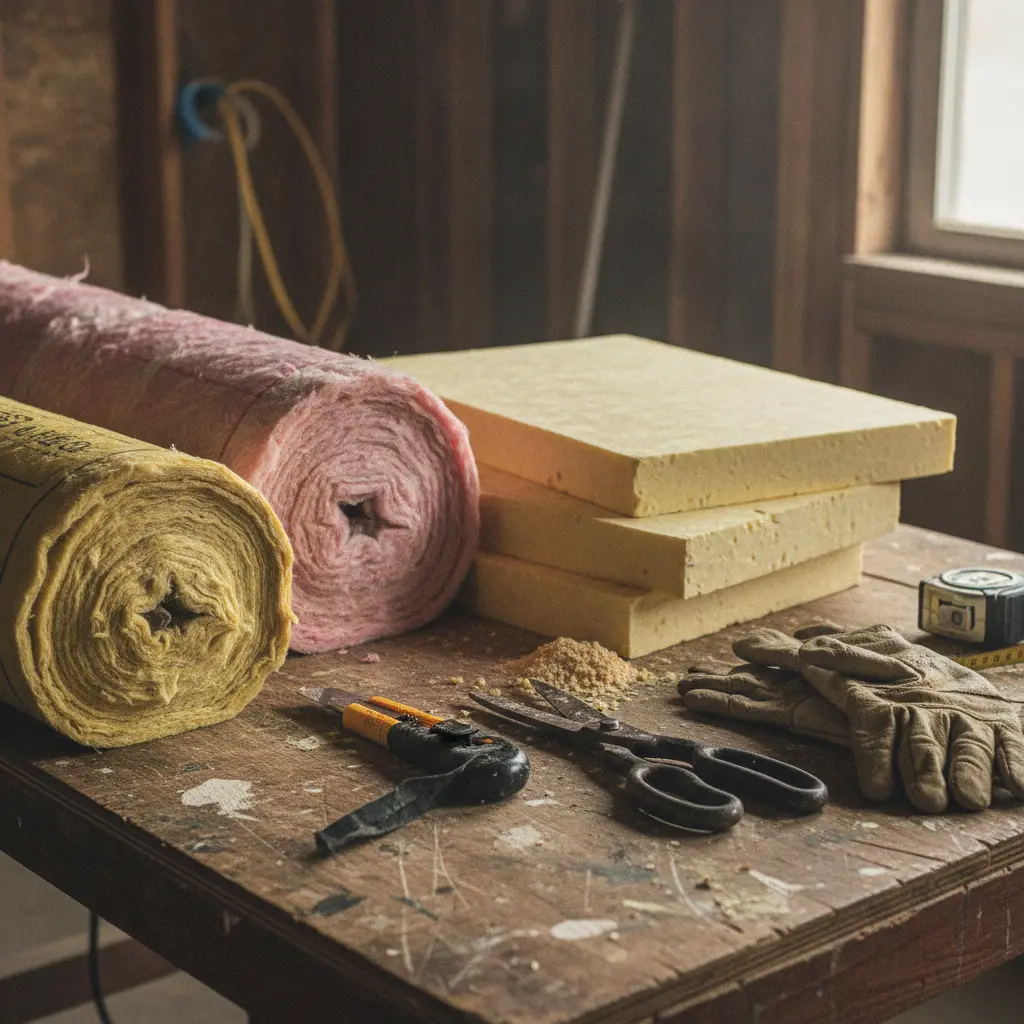
Our team in action — insulation professionals serving Chula Vista
Cellulose Insulation Methods We Use in Chula Vista
Loose-Fill Blown-In Cellulose (Open Attics)
The most common application in Chula Vista’s single-story ranch homes and two-story production homes, loose-fill cellulose is blown onto the open attic floor between joists. It is ideal for topping up existing insulation and for new installations in accessible attic spaces. Installation is fast — typically 1,500 square feet of attic can be insulated to R-38 in under three hours.
Dense-Pack Cellulose (Enclosed Wall Cavities)
For Chula Vista’s 1960s and 1970s stucco-exterior homes — which were frequently built with minimal or no wall insulation — dense-pack cellulose is injected through small holes drilled in the exterior stucco or interior drywall. The material is pressurized to a minimum of 3.0 lbs/ft³ to prevent future settling. Holes are patched and finished to match existing surfaces. Learn how spray foam compares for wall cavity applications
Stabilized Spray-Applied Cellulose (Cathedral Ceilings and Sloped Roofs)
For vaulted ceilings, exposed rafter bays, or open beam construction — found in many custom homes in the Bonita area and in hillside properties near the Otay Lakes corridor — stabilized cellulose mixed with a small amount of adhesive binder is spray-applied directly to the roof deck or underside of sheathing. This method achieves excellent density and adhesion without requiring a net or support.
Blow-In Blanket System (Sloped Cathedral Applications)
Where rafter depth is limited, a breathable fabric net is stapled across the interior face of the rafters, and cellulose is blown behind it under light pressure. This creates a consistent insulation layer that conforms to the full rafter depth. Explore our full blow-in insulation services
Ready for Cellulose Insulation? Get Your Free Estimate Today.
Next Level Insulation of Chula Vista serves Chula Vista and the surrounding area — we’ll be on-site within 24 hours.
📞 Call (619) 789-4273Cellulose Insulation Cost in Chula Vista, CA
Understanding typical pricing helps Chula Vista homeowners budget accurately and evaluate contractor proposals. The following ranges reflect current material and labor costs in the South Bay San Diego market.
Typical Price Ranges
- Attic loose-fill cellulose (new installation to R-38): $1.20 to $1.80 per square foot of attic floor area. For a 1,500 sq ft attic, expect $1,800 to $2,700.
- Attic top-up (adding 4–6 inches to existing insulation): $0.70 to $1.10 per square foot, or approximately $1,050 to $1,650 for 1,500 sq ft.
- Dense-pack wall cavities (exterior walls, per linear foot of wall): $3.50 to $6.00 per linear foot, depending on wall height and access method.
- Crawl space floor insulation (blown cellulose into floor cavities): $2.00 to $3.50 per square foot. Learn about our crawl space insulation services
- Combined insulation removal and replacement: Add $1.00 to $2.00 per square foot for professional removal of contaminated existing material. See our insulation removal and replacement services
Factors That Affect Your Chula Vista Project Cost
- Attic access and headroom: Low-pitch roofs common in 1970s Chula Vista tract homes may require additional labor for tight-space installation.
- Existing insulation condition: Rodent-contaminated insulation in older western Chula Vista homes must be bagged and disposed of before new material is installed, adding removal cost.
- Permit fees: Some Chula Vista insulation projects over a certain scope may require a City of Chula Vista building permit, which adds $150 to $400 to total project cost.
- SDG&E rebates: Qualified cellulose insulation upgrades in SDG&E territory may receive rebates of $0.10 to $0.25 per square foot, partially offsetting project costs.
Contact us at (619) 789-4273 for a no-obligation written estimate tailored to your property.
Neighborhoods We Serve in and Around Chula Vista
Eastlake Greens
Developed primarily in the late 1980s through the 1990s, Eastlake Greens homes frequently feature original fiberglass batt attic insulation at R-19 or R-30 — now below Title 24 minimums. The community’s inland location means summer temperatures regularly reach 95°F to 100°F, making attic insulation upgrades directly impactful on cooling costs. We frequently top up existing batts with blown cellulose to achieve R-49 in this neighborhood.
Otay Ranch
Chula Vista’s largest master-planned community, built from the mid-1990s onward, Otay Ranch contains both newer homes with adequate insulation and older sections where original insulation has degraded. The eastern mesa location exposes these homes to the most extreme temperature swings in the city. Explore our attic insulation services for Otay Ranch homes
Castle Park and Harborside (Western Chula Vista)
These established western neighborhoods contain a high concentration of pre-1970 single-story stucco homes with little or no wall insulation and minimal attic coverage. Marine layer influence is strongest here, making dense-pack wall cellulose particularly valuable for moisture management and thermal comfort.
Bonita (Unincorporated South Bay)
The Bonita community adjacent to Chula Vista features a mix of 1960s ranch homes, custom hillside builds, and horse-property estates. Irregular framing, cathedral ceilings, and expansive attic spaces make cellulose — with its ability to conform to complex geometries — an ideal solution. View our full insulation installation services
Cellulose Insulation Maintenance Tips for Chula Vista Homeowners
- Inspect attic insulation depth annually. Use a ruler at the attic access hatch each fall — if settled depth is below 10 inches, schedule a top-up before winter heating season.
- Check for rodent activity after spring and fall. Roof rats are active throughout Chula Vista. Seal any new penetrations around fascia boards, vents, and utility entries promptly to prevent insulation contamination.
- Keep attic ventilation clear. Do not block soffit vents with stored items. Proper ventilation prevents summer heat buildup that can accelerate insulation degradation and increase cooling loads.
- Monitor for moisture after winter rains. Chula Vista receives most of its approximately 10 inches of annual rainfall between November and March. Check attic spaces after major rain events for signs of roof leaks that could wet insulation.
- Avoid compressing insulation during attic storage. Laid-on boards or heavy stored items reduce insulation loft and R-value. Use raised attic walkboards that span joists without compressing the insulation below.
- Have insulation professionally inspected every 7 to 10 years. A professional assessment will catch settling, moisture damage, and pest intrusion before they become costly problems, and can confirm whether your home still meets current California Title 24 standards.
- Seal recessed lights before adding insulation. Older Chula Vista homes frequently have un-gasketed recessed lights that draw conditioned air into the attic — sealing these dramatically improves insulation effectiveness.
Why Choose Next Level Insulation of Chula Vista
Next Level Insulation of Chula Vista is a locally operated insulation company serving homeowners and property managers throughout the South Bay region of San Diego County. Our technicians work in Chula Vista every week — not as an occasional service territory, but as our primary market. That means we understand the specific permit processes at the City of Chula Vista Development Services Department, the insulation challenges unique to the city’s coastal-to-inland climate gradient, and the building types found in every neighborhood from Castle Park to Otay Ranch.
We offer a comprehensive range of insulation services under one roof: insulation installation, spray foam insulation, attic insulation, blow-in insulation, crawl space encapsulation, crawl space insulation, insulation removal, and insulation replacement. This breadth means you work with one trusted team from assessment through completion, without coordinating between multiple contractors.
Our written estimates are detailed and transparent, our installation teams are clean and professional, and we stand behind our work. Call (619) 789-4273 to schedule your free Chula Vista property assessment today.
Frequently Asked Questions About Cellulose Insulation in Chula Vista, CA
How much does cellulose insulation cost in Chula Vista?
For a typical Chula Vista attic, expect to pay between $1,800 and $2,700 for a new loose-fill cellulose installation to R-38 in a 1,500 square foot attic. Top-up projects are less expensive at $1,050 to $1,650 for the same space. Dense-pack wall cavity projects are priced per linear foot of wall at $3.50 to $6.00. These prices reflect current South Bay San Diego labor and material rates and may vary based on attic access difficulty, existing insulation condition, and project scope.
Does Chula Vista require a permit for insulation installation?
Most attic insulation top-up projects in the City of Chula Vista do not require a building permit. However, projects involving insulation removal, structural modifications, or work on historically designated properties may trigger permit requirements. Next Level Insulation of Chula Vista will advise you on permit requirements during your initial assessment, and we are familiar with the City of Chula Vista Building and Fire Safety Division’s current standards.
How long does cellulose insulation last in a Chula Vista home?
Properly installed cellulose insulation in a well-ventilated, moisture-controlled attic can retain effective performance for 20 to 30 years. In Chula Vista, the primary factors that shorten lifespan are moisture infiltration from roof leaks during winter rain events, rodent disturbance, and settling in areas with inadequate installation density. Annual visual inspections and prompt response to pest activity will maximize the service life of your installation.
How does cellulose insulation compare to spray foam for Chula Vista homes?
Cellulose and spray foam each have ideal applications. Cellulose is generally more cost-effective for open attic floors and for dense-pack wall retrofits in older western Chula Vista homes. Spray foam provides a higher R-value per inch and a complete air and vapor barrier — making it preferable for tight rafter bays in cathedral ceilings or for unvented attic assemblies in high-humidity coastal exposures. Learn more about our spray foam insulation services We assess each property individually and recommend the most appropriate solution.
Can cellulose insulation help with noise reduction near SR-125 or I-805?
Yes. Dense-pack cellulose in exterior wall cavities significantly reduces airborne sound transmission compared to empty cavities or fiberglass batts, because its mass and density disrupt sound wave propagation. Homes in Chula Vista communities near State Route 125 in Eastlake or Interstate 805 near Bonita Vista and Southwestern College frequently benefit from wall cellulose installations that measurably reduce interior noise levels — often by 5 to 10 decibels, which is perceived as roughly a 50% reduction in loudness.
Is cellulose insulation safe if I have children or pets in my Chula Vista home?
Cellulose insulation is considered safe for occupied buildings when installed correctly. It contains no formaldehyde, no glass fibers, and no asbestos. The borate fire-retardant treatment is the same chemistry used in many pharmaceutical products. Once installed and covered by drywall or an attic hatch, occupant exposure to the material is essentially zero. We take care during installation to prevent dust migration into living spaces by sealing attic access points and using proper equipment filtration.
How quickly can I see savings on my SDG&E bill after installation?
Most Chula Vista homeowners report noticeable changes in HVAC run time and indoor comfort within the first full billing cycle after installation. Measurable reductions in SDG&E electricity costs — typically 15% to 25% on heating and cooling-related consumption — become apparent over the first full seasonal cycle. Savings are most pronounced in east Chula Vista communities like Eastlake Greens and Otay Ranch where summer cooling loads are highest, and in older western homes where starting insulation levels were lowest.
Do you serve areas outside of Chula Vista?
Yes. In addition to all of Chula Vista — including Eastlake Greens, Otay Ranch, Castle Park, and Harborside — we serve National City, Imperial Beach, Bonita, Spring Valley, La Presa, Lemon Grove, La Mesa, and communities throughout San Diego including Encanto, Hillcrest, North Park, University Heights, and South Park. Contact us at (619) 789-4273 to confirm service availability for your specific address.
Get Your Free Cellulose Insulation Estimate in Chula Vista Today
If your Chula Vista home has high summer cooling bills, uncomfortable upstairs rooms, or insulation that hasn’t been evaluated in more than a decade, now is the time to act. California’s Title 24 energy standards continue to evolve, and SDG&E rebate programs for qualifying insulation upgrades may not be available indefinitely.
Next Level Insulation of Chula Vista provides free, no-obligation property assessments for homeowners and property managers throughout the South Bay. Our team will measure your existing insulation, identify air-sealing opportunities, and provide a transparent written estimate — typically on the same day as your inspection.
Call us now at (619) 789-4273 to schedule your free assessment. We serve all Chula Vista neighborhoods and surrounding South Bay communities, and we’re ready to help you achieve a more comfortable, energy-efficient home.