

Crawl Space Encapsulation Cost in Los Angeles, CA
Transparent Crawl Space Encapsulation Cost Pricing for Los Angeles, CA Homeowners — Free Estimates
Discover crawl space encapsulation costs in Los Angeles, CA. Get local pricing, methods, and a free estimate from Next Level Insulation. Call (323) 765-3939.
- Licensed & Insured
- Locally Owned & Operated
- Free Inspection & Estimate
Request Your
Free EstimateCrawl space encapsulation is the process of sealing your home’s crawl space with heavy-duty vapor barriers, insulation, and moisture controls to protect the structural integrity of your property and improve indoor air quality. In Los Angeles, CA, where Mediterranean climate conditions, coastal humidity, and expansive clay soils create persistent moisture challenges, encapsulation is not a luxury — it is a necessity for long-term home protection.
At Next Level Insulation of Los Angeles, we specialize in comprehensive crawl space encapsulation services tailored to the unique demands of Southern California homes. From craftsman bungalows in Pasadena to mid-century properties in Culver City, our team understands the specific construction methods and soil conditions that affect crawl spaces across the greater Los Angeles area. We deliver transparent, competitive pricing so homeowners know exactly what to expect before work begins. Call us today at (323) 765-3939 for a free on-site estimate.
Understanding Crawl Space Encapsulation
Crawl space encapsulation refers to the comprehensive sealing of the area beneath a raised-foundation home, creating a controlled environment that resists moisture intrusion, pest access, and air quality degradation. The process typically involves installing a thick polyethylene vapor barrier — most commonly 12-mil to 20-mil thickness — across the crawl space floor and walls, sealing all vents and penetrations, adding rigid foam or spray foam insulation to the walls, and sometimes incorporating a dehumidifier or sump pump system to manage any residual moisture.
Historically, homes in the United States were built with vented crawl spaces, following building codes that assumed outside air would naturally dry out the crawl space. Decades of building science research have since demonstrated the opposite: vented crawl spaces in most climates actively draw in humid exterior air, which then condenses on cooler structural surfaces, encouraging mold growth, wood rot, and pest infestations. The shift toward encapsulated, conditioned crawl spaces began gaining mainstream acceptance in the early 2000s and is now recognized by the Building Science Corporation and the U.S. Department of Energy as a superior approach.
In Los Angeles, a significant proportion of the housing stock dates to the 1920s through the 1960s, a period when raised-foundation construction was the dominant building method across neighborhoods like Silver Lake, Echo Park, Boyle Heights, and Highland Park. These homes feature wooden floor joists sitting above exposed soil — a configuration highly vulnerable to the region’s seasonal moisture swings. According to the California Department of Housing and Community Development, tens of thousands of Los Angeles homes still have unencapsulated or inadequately vented crawl spaces, leaving them exposed to ongoing structural and health risks.
Encapsulation is also increasingly relevant for homes in hillside communities throughout the Santa Monica Mountains and the Verdugo Hills, where groundwater seepage and slope drainage can push moisture directly into crawl spaces during the rainy season, which typically runs from November through March. Whether your home is a 1940s Spanish Colonial in Alhambra or a 1970s split-level in Glendale, understanding what encapsulation involves is the first step toward making an informed investment decision.
Learn more about related services: Crawl Space Insulation in Los Angeles
Why Crawl Space Encapsulation Is Needed in Los Angeles
Expansive Clay Soils
Much of the Los Angeles Basin sits atop Pliocene-age clay-rich soils, particularly the Hanford, Ramona, and Montebello series soils identified by the USDA Natural Resources Conservation Service. These expansive soils absorb water and swell during wet months, then shrink and crack during dry periods. This cycle, called shrink-swell behavior, causes seasonal ground movement that can compromise crawl space vapor barriers that are not professionally installed and anchored. Neighborhoods like Montebello, Commerce, and East Los Angeles sit on particularly high concentrations of these reactive soils, making encapsulation with properly secured barriers essential rather than optional.
The Marine Layer and Coastal Humidity
Los Angeles’s famous marine layer — the low-lying stratus clouds that roll in from the Pacific Ocean, especially between May and September during the “June Gloom” phenomenon — keeps ground-level relative humidity elevated to between 75% and 90% on coastal mornings in communities like Culver City, West Hollywood, and parts of South Gate. Even when daytime temperatures climb into the 80s°F, the overnight and early morning moisture accumulation is sufficient to drive condensation beneath homes with unprotected crawl spaces. Over time, this repeated wetting and drying cycle degrades floor joists, encourages mold colonies, and compromises insulation performance.
Seismic Activity and Foundation Vulnerability
The 1994 Northridge Earthquake — a magnitude 6.7 event that caused over $20 billion in structural damage across Los Angeles County — exposed how vulnerable raised-foundation homes with deteriorated crawl spaces can be. Moisture-weakened floor joists and rotted sill plates contributed to structural failures in neighborhoods including Reseda, Chatsworth, and Granada Hills. Post-earthquake inspections routinely revealed crawl spaces with standing water and fungal growth that had gone undetected for years. Encapsulation creates a sealed, inspectable environment that makes future damage assessment easier and limits the moisture deterioration that amplifies seismic risk.
Santa Ana Winds and Pest Pressure
Los Angeles’s seasonal Santa Ana wind events — which arrive primarily in October through December and again in February through April — dramatically drop outdoor humidity levels while simultaneously depositing dust, debris, and pest pressure into vented crawl spaces. Subterranean termites, which are endemic throughout Los Angeles County, exploit unprotected crawl space vents and gaps to access structural wood. The University of California Cooperative Extension reports that subterranean termite damage costs California homeowners an estimated $300 million annually, with Los Angeles County accounting for a disproportionate share. A fully encapsulated crawl space significantly reduces entry points for these destructive pests.
Energy Costs and Title 24 Compliance
California’s Title 24 Building Energy Efficiency Standards require that newly constructed or substantially renovated homes meet specific thermal performance benchmarks. Encapsulated crawl spaces with continuous vapor barriers and insulated walls perform significantly better than vented alternatives, reducing heating and cooling loads by an estimated 15% to 25% according to Oak Ridge National Laboratory research. In a city where Southern California Edison rates average 30–35 cents per kWh — among the highest in the continental United States — that energy reduction translates to meaningful annual savings for Los Angeles homeowners.
Signs You Need Crawl Space Encapsulation in Los Angeles
Moisture and Water Indicators
- Visible standing water or pooling beneath your home after winter rains
- Condensation on pipes, floor joists, or existing vapor barriers
- Efflorescence (white mineral deposits) on concrete foundation walls
- A persistent musty or earthy odor rising through floors, particularly noticeable after morning marine layer events
Structural Warning Signs
- Soft, spongy, or uneven floor surfaces — particularly common in 1930s–1950s bungalows throughout the Los Angeles Basin
- Sagging or discolored hardwood or laminate flooring
- Visible wood rot, dark staining, or fungal growth on joists and beams
- Doors or windows that stick seasonally as joists shift with moisture levels
Health and Indoor Air Quality Symptoms
- Increased allergy or respiratory symptoms among household members, especially during May–September coastal humidity season
- Visible mold growth on baseboards or lower walls
- Elevated indoor humidity readings consistently above 60% RH
Pest Activity
- Evidence of subterranean termite mud tubes on foundation walls or joists
- Rodent droppings or nesting material visible in the crawl space
Urgency note: Any visible structural damage, active water intrusion, or confirmed mold growth warrants immediate professional evaluation. Contact us at (323) 765-3939.
Our Crawl Space Encapsulation Process
At Next Level Insulation of Los Angeles, we follow a systematic, proven process designed specifically for the construction styles and environmental conditions found across Southern California.
Free On-Site Assessment (Day 1 — 1 to 2 Hours)
Our technician inspects the crawl space for moisture levels, existing damage, pest evidence, soil conditions, and current insulation. We use a digital moisture meter to measure wood moisture content — readings above 19% indicate active risk. We document all findings and provide a detailed written estimate before any work begins.
Debris Removal and Preparation (Day 1–2 — 2 to 4 Hours)
We remove all existing debris, deteriorated insulation, damaged vapor barriers, and any rodent nesting material. For homes in older neighborhoods like Boyle Heights or Huntington Park where original asbestos-backed insulation may be present, we coordinate appropriate removal protocols. Professional Insulation Removal Services
Pest and Mold Treatment Coordination (Day 2 — As Needed)
If our inspection reveals active termite activity or mold growth, we coordinate with licensed pest control and mold remediation professionals before encapsulation proceeds. Encapsulating over active biological issues can trap problems and accelerate damage.
Vapor Barrier Installation (Day 2–3 — 4 to 8 Hours)
We install a minimum 12-mil, and typically 20-mil, reinforced polyethylene vapor barrier across all exposed soil surfaces and up the foundation walls, overlapping seams by at least 12 inches and sealing them with specialized waterproof tape. For homes on hillside lots in Glendale or Pasadena where slope drainage is a factor, we extend the barrier higher on upslope walls.
Vent Sealing and Wall Insulation (Day 3 — 2 to 4 Hours)
Existing crawl space vents are sealed with rigid foam plugs and spray foam to create a fully conditioned space. We then insulate the perimeter foundation walls with rigid foam board (R-10 to R-19) or closed-cell spray foam, meeting or exceeding California’s Title 24 requirements. Spray Foam Insulation Services
Humidity Management Installation (Day 3–4 — 1 to 3 Hours)
Depending on the home’s location and baseline moisture readings, we install a properly sized energy-star-rated dehumidifier or recommend a drainage system for properties with active groundwater intrusion — particularly relevant for homes in low-lying areas of Maywood, Bell, or Walnut Park.
Final Inspection and Client Walkthrough (Day 4 — 1 Hour)
We conduct a post-installation moisture reading, photograph the completed work, and walk the homeowner through maintenance recommendations. Total project timeline for most Los Angeles homes: 2 to 4 days.
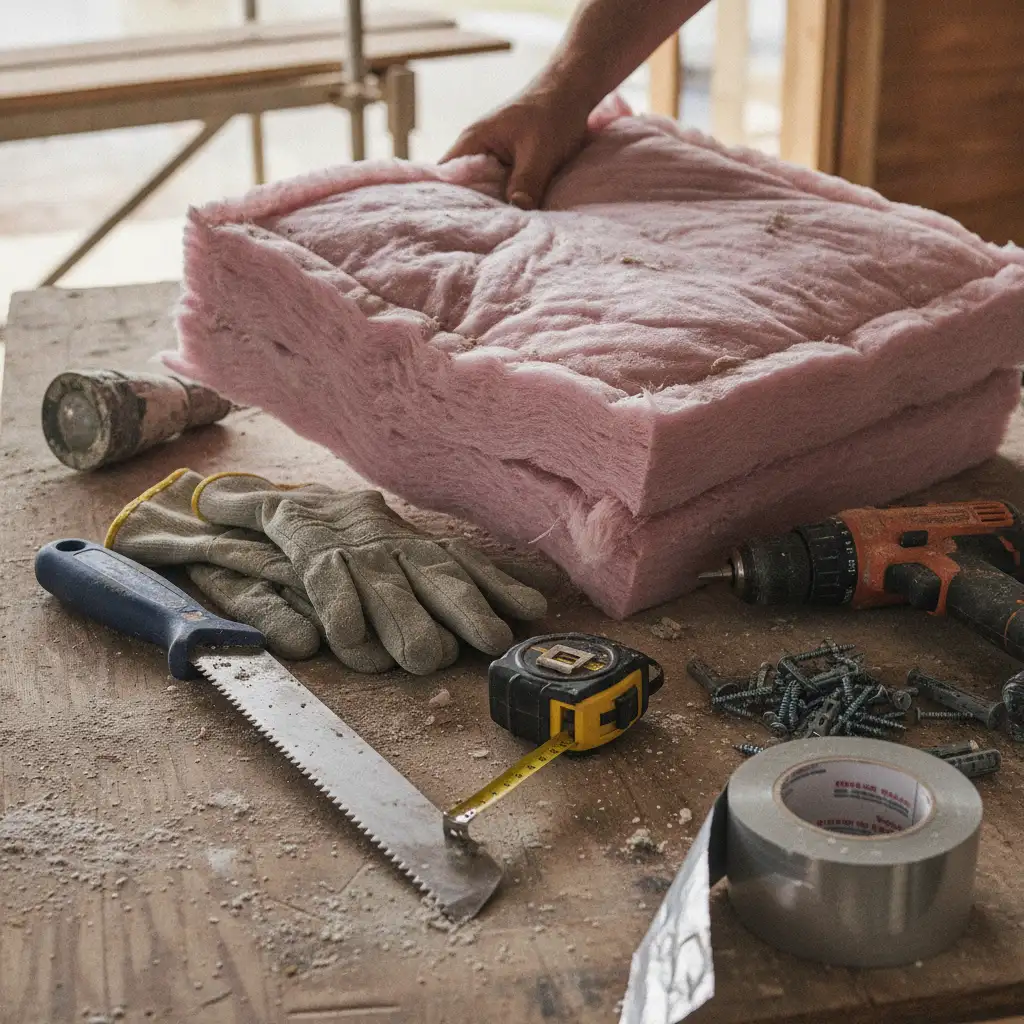
Our team in action — insulation professionals serving Los Angeles
Crawl Space Encapsulation Methods and Approaches
Full Encapsulation with Conditioned Air Supply
The most comprehensive approach, involving a complete vapor barrier, sealed vents, insulated walls, and a supply of conditioned air from the home’s HVAC system. Recommended for homes in coastal Los Angeles communities like Culver City or West Hollywood with persistent marine layer humidity. This method effectively makes the crawl space a semi-conditioned part of the home’s thermal envelope.
Full Encapsulation with Standalone Dehumidifier
Similar to the above but uses a dedicated crawl space dehumidifier rather than tying into the home’s HVAC. Preferred for older Los Angeles homes where ductwork modification is impractical or cost-prohibitive. Particularly effective in Pasadena and Alhambra properties with 1920s–1940s construction where HVAC systems may be original or recently updated.
Partial Encapsulation (Floor-Only Barrier)
A floor-only vapor barrier installation without full wall insulation. A lower-cost option suited to homes in drier inland Los Angeles neighborhoods or as a first-phase improvement. Less effective than full encapsulation but significantly better than no barrier. Typically appropriate for properties in Commerce or Monterey Park where seasonal moisture exposure is moderate rather than severe.
Encapsulation with Sump Pump Integration
For homes with documented groundwater intrusion or those situated in FEMA-mapped flood zones — including portions of Bell Gardens and South Gate near the Los Angeles River corridor — we integrate a sump pump system beneath the vapor barrier to actively remove water before it can accumulate. This is the highest-protection approach for flood-adjacent properties.
Spray Foam Wall Encapsulation
Closed-cell spray foam applied directly to the crawl space walls and rim joists offers the highest R-value per inch (R-6 to R-7 per inch) and also serves as a vapor retarder. Ideal for hillside homes in Glendale or Pasadena where irregular foundation wall geometry makes rigid board installation difficult. Learn More About Spray Foam Insulation
Ready for Crawl Space Encapsulation Cost? Get Your Free Estimate Today.
Next Level Insulation of Los Angeles serves Los Angeles and the surrounding area — we’ll be on-site within 24 hours.
📞 Call (323) 765-3939Crawl Space Encapsulation Cost in Los Angeles
Understanding the true cost of crawl space encapsulation in Los Angeles requires accounting for several local market factors that influence pricing compared to national averages.
Typical Cost Ranges
- Basic vapor barrier only (floor coverage): $1,500 – $3,500 for a standard 1,000–1,500 sq ft crawl space
- Full encapsulation with dehumidifier: $4,000 – $8,000 for most Los Angeles single-family homes
- Full encapsulation with spray foam walls and sump pump: $7,000 – $15,000+ for larger homes or complex conditions
- Average per square foot: $3.00 – $8.00 per square foot, with Los Angeles pricing typically at the higher end due to regional labor rates
Factors That Influence Your Final Cost
- Crawl space size and height: Smaller access points and low clearance (under 18 inches) increase labor time significantly
- Existing damage: Mold remediation, pest treatment, or structural repairs add $500 – $5,000+ before encapsulation can begin
- Vapor barrier thickness: Upgrading from 12-mil to 20-mil reinforced barrier adds $0.30 – $0.60 per square foot
- Insulation method: Spray foam walls cost more than rigid board but provide superior performance in Los Angeles’s variable climate
- Los Angeles permit requirements: Some encapsulation scopes may require a building permit from LADBS (Los Angeles Department of Building and Safety), adding $150 – $500 in permit fees
Most Los Angeles homeowners report recouping a significant portion of encapsulation costs through reduced energy bills and avoided remediation expenses within 5 to 10 years. Contact us at (323) 765-3939 for a detailed written estimate. Request Your Free Estimate
Neighborhoods We Serve in the Greater Los Angeles Area
Pasadena and South Pasadena
These communities are home to a high concentration of pre-World War II Craftsman bungalows and Spanish Colonial Revival homes, most built between 1905 and 1945 on raised foundations with minimal original moisture protection. The Arroyo Seco drainage corridor increases groundwater presence seasonally. Our encapsulation work here frequently involves addressing decades of accumulated moisture damage before installing new barriers.
Glendale and the Verdugo Hills
Hillside properties in Glendale present unique encapsulation challenges due to slope drainage and irregular foundation geometries. Many homes here were built in the 1950s–1970s, a period when vented crawl spaces were code-standard. Spray foam wall encapsulation is particularly effective for these properties.
Huntington Park, Maywood, and Bell
These dense urban communities in the southeastern Los Angeles Basin sit on lower-elevation terrain with higher clay soil concentrations. Older rental properties and multi-unit homes in this area often have severely degraded original vapor barriers that provide minimal protection. We offer cost-effective full encapsulation packages for these communities.
Culver City and West Hollywood
Coastal proximity drives persistent marine layer humidity in these mid-city neighborhoods, making dehumidifier-equipped full encapsulation the preferred approach. Many 1940s–1960s homes in these areas have never had their crawl spaces professionally evaluated.
We also serve: All Los Angeles Service Areas
Crawl Space Maintenance Tips for Los Angeles Homeowners
- Inspect annually before rainy season (October): Check vapor barriers for tears, punctures, or tape failures before the November–March wet season begins.
- Monitor dehumidifier performance: Empty collection buckets or verify drain lines are clear monthly during summer marine layer season (May–September).
- Check wood moisture levels: Use an inexpensive digital moisture meter to spot-check floor joists annually. Target readings below 15%.
- Clear exterior drainage: Ensure gutters, downspouts, and yard grading direct water away from the foundation, especially important for hillside homes in Glendale and Pasadena.
- Seal new penetrations promptly: Any new plumbing, electrical, or HVAC lines that penetrate the encapsulation must be sealed with spray foam or approved tape immediately.
- Inspect for pest entry points: Check foundation vents and access doors for gaps or damage, particularly after Santa Ana wind events that can loosen materials.
- Document and photograph: Maintain a photo log of your crawl space condition annually to track any changes and support insurance or real estate disclosure needs.
Why Choose Next Level Insulation of Los Angeles
Next Level Insulation of Los Angeles is a locally focused insulation and encapsulation contractor serving the greater Los Angeles area with deep knowledge of Southern California’s unique building stock, climate conditions, and regulatory environment. We understand the specific challenges posed by Los Angeles’s expansive clay soils, coastal humidity patterns, seismic considerations, and the California Title 24 energy code — because these are the conditions we work in every day.
Our team is trained in the full spectrum of crawl space encapsulation methods, from basic vapor barrier installation to complex spray foam and sump pump integrated systems. We do not believe in one-size-fits-all solutions. Every estimate is based on an in-person crawl space assessment, not a square footage formula.
We serve homeowners across Los Angeles, Pasadena, Glendale, Culver City, West Hollywood, Huntington Park, Maywood, Bell, Bell Gardens, Alhambra, Monterey Park, South Pasadena, Montebello, South Gate, Walnut Park, Commerce, Downey, East Los Angeles, and Cudahy. Our commitment is straightforward pricing, professional installation, and long-lasting results.
Call us at (323) 765-3939 or request a free estimate online. View All Insulation Services
Frequently Asked Questions About Crawl Space Encapsulation Cost in Los Angeles
How much does crawl space encapsulation cost in Los Angeles?
Most Los Angeles homeowners pay between $4,000 and $8,000 for a full crawl space encapsulation with a vapor barrier, sealed vents, insulated walls, and a dehumidifier. Basic vapor barrier-only installations start around $1,500–$3,500. Complex projects involving spray foam walls, sump pumps, or significant pre-existing damage can reach $10,000–$15,000 or more. Los Angeles pricing runs approximately 15–25% above national averages due to regional labor costs.
Is crawl space encapsulation worth the cost in Southern California?
Yes, particularly in Los Angeles where marine layer humidity, expansive clay soils, and a large inventory of older raised-foundation homes create persistent moisture risks. Homeowners typically see energy bill reductions of 15–25%, avoid costly remediation expenses, and protect structural integrity that would be far more expensive to repair if moisture damage is left unaddressed.
How long does crawl space encapsulation take?
For most Los Angeles single-family homes, the encapsulation process takes 2 to 4 days from initial preparation through final inspection. Homes requiring pre-encapsulation mold remediation or pest treatment will require additional time before the encapsulation crew begins.
Do I need a permit for crawl space encapsulation in Los Angeles?
Permit requirements depend on the scope of work. Basic vapor barrier installation typically does not require a permit. However, if the project involves modifying existing vents, adding HVAC connections, or structural work, a permit from the Los Angeles Department of Building and Safety (LADBS) may be required. We assess permit needs as part of every project estimate.
How does Los Angeles’s climate affect the type of encapsulation I need?
Homes in coastal neighborhoods like Culver City and West Hollywood, where marine layer humidity is most persistent, benefit most from full encapsulation with an active dehumidification system. Homes in more inland areas like Alhambra or Monterey Park may achieve adequate protection with a high-quality vapor barrier and sealed vents without a dedicated dehumidifier, depending on their specific moisture readings.
What is the difference between crawl space encapsulation and crawl space insulation?
Crawl space insulation refers specifically to adding thermal insulation to the floor joists or foundation walls. Encapsulation is a broader process that includes a vapor barrier, vent sealing, wall insulation, and moisture management. Most Los Angeles homes benefit from both, and the two services are frequently performed together. Learn About Crawl Space Insulation
Can encapsulation help with termite prevention in Los Angeles?
Yes. A properly installed encapsulation system seals the primary entry points used by subterranean termites — the most common species in Los Angeles County — to access structural wood. While encapsulation alone does not replace licensed termite treatment for active infestations, it is a significant deterrent for future pest pressure.
How do I know if my crawl space needs encapsulation or just repair?
If your crawl space has minor moisture concerns and a relatively intact existing vapor barrier, targeted repairs may be sufficient. If you have visible mold, structural wood with moisture readings above 19%, standing water, or a completely deteriorated or absent barrier — as is common in Los Angeles homes built before 1970 — full encapsulation is the appropriate solution. A free on-site assessment is the best way to determine the right course of action.
Get Your Free Crawl Space Encapsulation Estimate in Los Angeles Today
Don’t let Los Angeles’s unique moisture challenges, clay soils, and coastal humidity silently damage your home’s foundation and floor structure. Next Level Insulation of Los Angeles provides professional crawl space encapsulation services with transparent pricing, experienced technicians, and solutions built specifically for Southern California homes.
Whether you’re in Pasadena, Glendale, Culver City, Huntington Park, or anywhere across the greater Los Angeles area, we’re ready to protect your home from the ground up.
Call us now at (323) 765-3939 to schedule your free on-site crawl space assessment. You can also submit a request online and a member of our team will contact you within one business day. Explore Attic Insulation Services | Blow-In Insulation Options