
Fiberglass Insulation in El Monte, CA
Energy-Saving Fiberglass Insulation for El Monte, CA Homes — Licensed & Insured
Need fiberglass insulation in El Monte, CA? Next Level Insulation offers expert installation, attic & crawl space services. Call (626) 469-7656 for a free estimate.
- Licensed & Insured
- Locally Owned & Operated
- Free Inspection & Estimate
Request Your
Free EstimateFiberglass insulation is one of the most trusted and widely used insulation materials in residential and commercial construction. Composed of extremely fine glass fibers, it traps air to slow the transfer of heat, keeping your home cooler in summer and warmer in winter. For El Monte homeowners, where the San Gabriel Valley’s intense summer heat regularly pushes temperatures above 95°F and seasonal temperature swings demand year-round energy management, proper fiberglass insulation is not a luxury — it’s a necessity.
At Next Level Insulation of El Monte, we specialize in delivering professional fiberglass insulation solutions tailored to the specific climate conditions, building types, and energy challenges of El Monte, CA. Whether you’re upgrading an older mid-century ranch home or insulating a newer construction, our team brings hands-on expertise and a deep understanding of local conditions to every project. Call us today at (626) 469-7656 to schedule your free assessment.
Understanding Fiberglass Insulation
Fiberglass insulation was first developed in the late 1930s by Owens-Corning, and it quickly became the industry standard across American residential construction throughout the post-World War II building boom. Today, it remains the most commonly installed insulation type in the United States, accounting for more than 45% of all residential insulation installed annually according to the North American Insulation Manufacturers Association.
Fiberglass insulation works through a simple but highly effective principle: its tangled web of microscopic glass strands creates millions of tiny air pockets that resist heat movement through conduction and convection. This makes it especially effective at slowing the relentless summer heat that characterizes the San Gabriel Valley’s inland climate.
Fiberglass insulation comes in two primary forms: batts and rolls, which are pre-cut panels designed to fit between standard wall studs, floor joists, and ceiling rafters; and loose-fill (blown-in) fiberglass, which is blown into attic floors, wall cavities, and hard-to-reach spaces using specialized equipment. Both forms are rated by their R-value — a measurement of thermal resistance. In El Monte and surrounding San Gabriel Valley communities, the California Energy Commission’s Title 24 building standards typically require a minimum of R-38 in attic spaces and R-13 to R-21 in exterior walls for climate zone 10, which encompasses El Monte.
El Monte’s housing stock includes a large concentration of homes built between the 1940s and 1970s — many of which were constructed when insulation requirements were minimal or nonexistent. This era of construction is particularly prevalent in neighborhoods along Garvey Avenue and Tyler Avenue, where post-war working-class families settled in modest tract homes. These older properties are among the most in need of fiberglass insulation upgrades, both for energy efficiency and for occupant comfort during the region’s increasingly hot summers driven by urban heat island effects in the eastern San Gabriel Valley.
Learn more about our blow-in insulation services
Why Fiberglass Insulation Is Needed in El Monte, CA
Extreme Summer Heat in the San Gabriel Valley
El Monte sits in a low-lying inland basin surrounded by mountains, which traps heat and creates conditions significantly warmer than coastal Los Angeles. The city regularly experiences summer temperatures exceeding 95°F, with heat events occasionally spiking above 105°F — as was documented during the record-breaking September 2022 heat wave, when the San Gabriel Valley recorded temperatures above 108°F for multiple consecutive days. Without adequate attic insulation, radiant heat from the roof surface can raise attic temperatures to 150°F or higher, forcing air conditioning systems to work far harder than they should. Proper R-38 or greater fiberglass insulation in the attic creates a thermal barrier that dramatically reduces this heat transfer into living spaces.
Urban Heat Island Effect
El Monte is a densely developed urban community with significant commercial and industrial land use along the 10 Freeway corridor and throughout the Garvey Avenue commercial strip. This development pattern contributes to El Monte’s urban heat island effect, where paved surfaces, rooftops, and reduced tree canopy cause ambient temperatures to run 3°F to 8°F higher than surrounding less-developed areas. Homes in neighborhoods like Mountain View Acres and South El Monte experience this effect acutely, making insulation upgrades a high-priority energy strategy.
Aging Housing Stock with Little to No Original Insulation
A significant percentage of El Monte’s residential buildings were constructed before California adopted mandatory insulation requirements in Title 24, which was first enacted in 1978. Homes built prior to this date — particularly those in the Durfee Avenue corridor and near the historic downtown area — frequently have wall cavities with no insulation at all and attic spaces with R-6 or less. Modern Title 24 standards require R-38 minimum in attics for climate zone 10, meaning many El Monte homes are operating at a small fraction of their required thermal performance.
Seasonal Temperature Swings
While El Monte is known for hot summers, the city also experiences cool winters, with nighttime temperatures dropping into the low 40s°F from December through February. This wide annual temperature range — sometimes exceeding a 60°F differential between winter nights and summer afternoons — means that insulation must perform effectively in both directions. Fiberglass insulation, when properly installed to appropriate R-values, provides bidirectional thermal protection year-round.
Poor Air Quality and Dust Infiltration
El Monte is situated in one of the most air-pollution-affected regions in the country, located downwind of the Los Angeles basin’s prevailing westerly winds and adjacent to heavy truck traffic on Interstate 10. Proper insulation combined with air sealing helps minimize the infiltration of outdoor particulates into living spaces, supporting better indoor air quality for families, including the large number of households in El Monte with children under 18.
Explore our attic insulation solutions for El Monte homes
Signs You Need Fiberglass Insulation in El Monte
Energy and Comfort Indicators
- Monthly utility bills that spike significantly in July and August, often exceeding $200–$350 for average-sized El Monte homes
- Rooms that feel noticeably hotter or cooler than adjacent spaces, indicating inconsistent insulation coverage
- Air conditioning running continuously during summer afternoons without achieving the set thermostat temperature
- Drafts near wall outlets, window frames, or at ceiling junctions even when windows are closed
Visual and Structural Signs
- Visible attic insulation that appears flat, compressed, discolored, or less than 10–12 inches deep
- Insulation batts in walls or attic spaces that show water staining, mold discoloration, or pest damage
- Cold or excessively warm walls and ceilings to the touch during extreme weather days
- Presence of rodent nesting materials mixed into existing attic insulation — a common issue in older El Monte properties near the Rio Hondo River corridor
Urgency Indicators
- Home built before 1978 with no documented insulation upgrades
- Recent roof replacement that may have disturbed or compressed existing attic insulation
- Evidence of moisture intrusion in attic spaces following winter rains
Learn about our insulation removal services before replacement
Our Fiberglass Insulation Installation Process in El Monte
At Next Level Insulation of El Monte, we follow a structured, transparent installation process designed to deliver lasting results for your specific home and conditions.
Free On-Site Assessment (Day 1 — 60 to 90 Minutes)
Our technician visits your El Monte property to conduct a thorough inspection of your current insulation levels, air sealing condition, and any problem areas. We assess your attic, walls, crawl space, and any accessible floor cavities. We document existing R-values and check for moisture, pest activity, or structural issues specific to your property.
Customized Insulation Plan and Quote (Within 24 Hours)
Based on the assessment, we prepare a written plan specifying recommended R-values per California Title 24 climate zone 10 requirements, the type of fiberglass insulation best suited to your home, and a detailed cost estimate with no hidden fees.
Old Insulation Removal If Required (Day 2 — 2 to 6 Hours)
If existing insulation is damaged, contaminated, or insufficient, our crew safely removes and bags all old material using HEPA-filtered vacuum equipment, protecting your home’s indoor air quality throughout the process. This is particularly important for pre-1978 El Monte homes where degraded fiberglass or vermiculite-based materials may be present.
Air Sealing (Day 2 — 1 to 3 Hours)
Before new insulation is installed, we seal all attic penetrations, gaps around pipes, HVAC ducts, and wall top plates using foam sealant. This step is critical in older El Monte homes where decades of settling have opened significant air gaps.
Fiberglass Insulation Installation (Day 2 to Day 3 — 2 to 8 Hours Depending on Scope)
Our trained installers lay fiberglass batts or blow loose-fill fiberglass to the specified depth and R-value, working methodically to ensure complete, uniform coverage with no gaps or voids. We confirm final installed depth measurements before completing the work.
Final Inspection and Documentation (Day 3 — 30 to 60 Minutes)
We conduct a post-installation walkthrough with you, document installed R-values, and provide written records suitable for use with SCE or SoCal Gas rebate programs available to El Monte residents.
Cleanup and Site Restoration
All debris, packaging, and old insulation materials are fully removed from your property. Your attic access and living spaces are returned to their pre-installation condition.
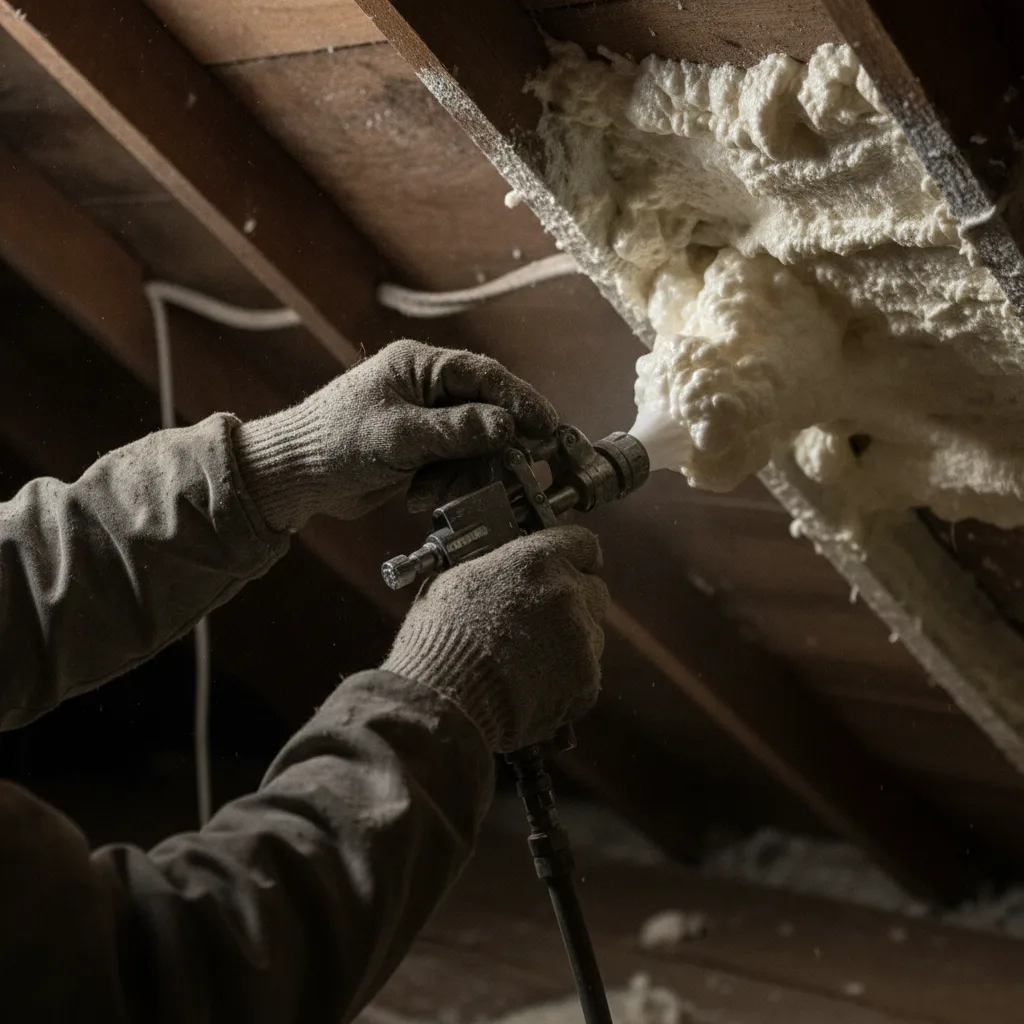
Our team in action — insulation professionals serving El Monte
Fiberglass Insulation Methods and Approaches
Fiberglass Batt Insulation
Pre-cut fiberglass batts are the most common installation method for new construction and open-wall retrofit projects. Batts are available in standard widths matching 16-inch and 24-inch stud spacing, making them ideal for El Monte’s many mid-century tract homes with accessible wall cavities during renovation. R-13 batts are standard for 2×4 walls; R-21 high-density batts are used for 2×6 wall construction common in newer El Monte builds.
Blown-In Fiberglass Loose Fill
Blown-in fiberglass is the preferred method for attic floor insulation and for retrofitting closed wall cavities. Using pneumatic blowing equipment, loose fiberglass fills every gap and corner, achieving superior coverage in the irregular spaces common in older El Monte homes. This method is used to achieve R-38 to R-60 in attic spaces per Title 24 climate zone 10 requirements. Learn more about blow-in insulation
Encapsulated Fiberglass Batts for Crawl Spaces
For El Monte homes with raised foundations — common in the older residential areas near Ramona Boulevard — encapsulated fiberglass batts with a vapor-barrier facing are installed between floor joists to prevent moisture from the ground below from degrading insulation performance. Learn more about crawl space insulation
High-Density Fiberglass for Sound Attenuation
For El Monte properties near Interstate 10 or the Metrolink rail corridor, high-density fiberglass batts are installed in interior walls and floor/ceiling assemblies to reduce noise transmission in addition to providing thermal performance.
Ready for Fiberglass Insulation? Get Your Free Estimate Today.
Next Level Insulation of El Monte serves El Monte and the surrounding area — we’ll be on-site within 24 hours.
📞 Call (626) 469-7656Fiberglass Insulation Cost in El Monte, CA
Understanding the cost of fiberglass insulation helps El Monte homeowners plan and budget accurately. Pricing varies based on scope, access conditions, and the specific products used.
Typical Price Ranges
- Attic blown-in fiberglass insulation: $1.50 to $3.00 per square foot installed, depending on depth and existing conditions. A typical 1,200 sq. ft. El Monte home attic generally costs between $1,800 and $3,600 to insulate to R-38.
- Fiberglass batt insulation for walls: $1.00 to $2.50 per square foot installed. Open-wall access during a renovation significantly reduces labor costs.
- Crawl space fiberglass insulation: $2.00 to $4.00 per square foot, with pricing influenced by crawl space height and accessibility — a common challenge in El Monte’s older bungalow and ranch-style homes.
- Full home insulation package (attic + walls + crawl space): $4,500 to $12,000 depending on home size and existing conditions.
Factors That Affect Your Cost
- Current insulation removal requirements (add $500 to $2,000 for contaminated or heavily degraded existing insulation)
- Attic accessibility and available working height
- Number of HVAC penetrations requiring air sealing
- Target R-value (R-38 vs. R-49 or higher)
Available Rebates
Southern California Edison (SCE) and SoCal Gas offer rebates for qualifying insulation upgrades for El Monte residents. Rebates can offset $100 to $500 or more of project costs. We assist our clients in documenting installations for rebate qualification. Call (626) 469-7656 for a personalized quote.
Neighborhoods We Serve in El Monte
Mountain View Acres
Primarily developed in the 1950s and 1960s, Mountain View Acres features ranch-style single-family homes with low-slope roofs that are particularly susceptible to radiant heat gain. Most homes in this area were built with minimal or no attic insulation, making blown-in fiberglass upgrades a high-priority improvement.
South El Monte / Garvey Corridor
The Garvey Avenue corridor and adjacent residential streets feature a mix of older bungalows and small apartment buildings, many built in the 1940s. These properties frequently have uninsulated wall cavities and attic R-values below 6, requiring comprehensive fiberglass insulation retrofits.
Historic Downtown El Monte
Older properties near Ramona Boulevard and Valley Boulevard include some of El Monte’s earliest homes — some dating to the 1920s — with pier-and-beam foundations requiring crawl space insulation and floor cavity treatment.
Norwood / Tyler Avenue Area
This established residential neighborhood includes post-war tract homes from the late 1940s through 1960s. Many properties here have been partially upgraded but still fall short of current Title 24 R-value requirements, making targeted attic top-ups and wall insulation additions a cost-effective solution.
Fiberglass Insulation Maintenance Tips for El Monte Homeowners
- Inspect your attic annually — Check insulation depth each fall before the heating season and each spring after winter rains. Confirm fiberglass has not been compressed or disturbed.
- Check for moisture after winter storms — El Monte’s periodic heavy rain events, especially during La Niña years, can cause roof leaks that saturate fiberglass insulation, destroying its thermal performance and encouraging mold growth.
- Monitor for pest activity — Rodents are active throughout the San Gabriel Valley. Check for nesting materials in attic insulation at least once per year and seal any entry points immediately.
- Keep attic vents clear — Ensure soffit and ridge vents are unobstructed so air can circulate through the attic, preventing moisture accumulation that degrades fiberglass over time.
- Avoid compressing insulation — Never store heavy items directly on attic floor insulation. Compression reduces R-value significantly.
- Reseal air gaps after any HVAC or plumbing work — Contractors working in your attic often disturb insulation and air sealing. Have insulation re-inspected after any attic-accessed service work.
- Consider an upgrade every 20–25 years — Fiberglass insulation degrades over time. Properties with original 1960s insulation in El Monte are significantly overdue for replacement.
Why Choose Next Level Insulation of El Monte
Next Level Insulation of El Monte is a locally focused insulation contractor serving the El Monte community and the broader San Gabriel Valley. Our team understands the specific building types, climate challenges, and energy code requirements that apply to El Monte properties — from the post-war bungalows near downtown to the newer residential developments along the city’s eastern edges.
We specialize in the full range of insulation services El Monte homeowners need, including professional insulation installation, spray foam insulation, attic insulation, blow-in insulation, crawl space encapsulation, crawl space insulation, insulation removal, and insulation replacement.
We provide transparent pricing, honest assessments, and no-pressure consultations. Our installations are performed to California Title 24 standards, and we assist clients in documenting work for SCE and SoCal Gas energy efficiency rebates. We’re committed to delivering results that make a measurable difference in your home’s comfort and energy costs. Call us at (626) 469-7656 to get started.
Frequently Asked Questions About Fiberglass Insulation in El Monte, CA
How much does fiberglass insulation cost in El Monte, CA?
The cost of fiberglass insulation in El Monte depends on the area being insulated, the current condition of existing insulation, and the R-value required. Attic blown-in insulation typically runs $1.50 to $3.00 per square foot installed. A standard El Monte home with a 1,200 sq. ft. attic can expect to pay between $1,800 and $3,600 for an attic insulation upgrade to R-38. Wall and crawl space insulation are priced separately. Contact us at (626) 469-7656 for a free, no-obligation quote.
What R-value do I need for fiberglass insulation in El Monte?
El Monte falls within California Energy Commission Climate Zone 10. For this zone, Title 24 requires a minimum of R-38 in attic spaces for existing homes undergoing permitted renovations, with R-49 recommended for maximum efficiency given the region’s hot summers. Exterior walls typically require R-13 minimum for 2×4 framing or R-21 for 2×6 framing. Our technicians assess your specific home and recommend the most cost-effective R-value targets.
How long does fiberglass insulation installation take in El Monte?
Most fiberglass insulation projects in El Monte are completed within one to two days. A standard attic insulation upgrade takes approximately two to four hours of installation time, plus any prep work like old insulation removal or air sealing. Larger whole-home projects involving walls and crawl spaces may require two full days. We schedule efficiently to minimize disruption to your household.
Is fiberglass insulation safe for my family?
Modern fiberglass insulation products are manufactured to strict safety standards and are classified as non-carcinogenic by major health organizations. During installation, our technicians wear appropriate personal protective equipment, and we take precautions to contain fiberglass particles. Once installed and covered, fiberglass insulation poses no health risk to building occupants. For families with respiratory sensitivities — a consideration given El Monte’s air quality challenges — we recommend air sealing alongside insulation installation to further reduce indoor air infiltration.
Can fiberglass insulation help reduce noise from the 10 Freeway?
Yes. Fiberglass insulation, particularly high-density batts, provides meaningful sound attenuation in addition to thermal performance. For El Monte homes near Interstate 10 or the Metrolink El Monte Station, installing fiberglass in exterior walls and ceiling assemblies can noticeably reduce traffic and train noise infiltration. For maximum sound reduction, fiberglass is sometimes paired with resilient channel or acoustic panels in walls facing high-noise sources.
Does fiberglass insulation work well in El Monte’s hot climate?
Absolutely. Fiberglass insulation is highly effective at blocking radiant heat transfer in hot climates like El Monte’s. When installed to appropriate R-values in the attic — where the majority of summer heat enters a home — fiberglass can reduce cooling loads by 20% to 30%, meaningfully lowering summer electricity bills. For optimal performance in the San Gabriel Valley’s extreme summer heat, we often recommend combining fiberglass insulation with radiant barrier foil in the attic rafters.
Should I remove old fiberglass insulation before adding new insulation?
Not always. If existing fiberglass insulation is in good condition — not wet, moldy, pest-contaminated, or significantly compressed — it may be possible to simply add new blown-in fiberglass on top to bring the total R-value up to current standards. However, many older El Monte homes have degraded, contaminated, or rodent-damaged insulation that should be fully removed and replaced before new insulation is installed. Our technicians make this assessment during the free initial inspection. Learn more about our insulation removal services
Are there rebates available for fiberglass insulation upgrades in El Monte?
Yes. Southern California Edison (SCE) and SoCal Gas both offer energy efficiency rebate programs that may apply to qualifying fiberglass insulation upgrades in El Monte. Rebate amounts vary by program year and project specifics but can range from $100 to $500 or more. We help our El Monte clients document their installation to meet rebate requirements and can advise on which programs are currently active. Call (626) 469-7656 for current rebate information.
Get a Free Fiberglass Insulation Estimate in El Monte Today
Don’t let El Monte’s extreme summer heat and aging housing stock drain your energy budget year after year. Next Level Insulation of El Monte is ready to assess your home, recommend the right fiberglass insulation solution, and install it to California Title 24 standards with professional care.
Whether you need a full attic insulation upgrade, wall cavity insulation for a renovation project, or a complete whole-home insulation retrofit, we’re your local El Monte experts. We serve homeowners throughout El Monte and the greater San Gabriel Valley with honest assessments and quality workmanship.
Call us now at (626) 469-7656 to schedule your free on-site consultation. We’re ready to help you make your El Monte home more comfortable, more energy-efficient, and better protected against the region’s demanding climate — starting today.