
Mineral Wool Insulation in Chula Vista, CA
Energy-Saving Mineral Wool Insulation for Chula Vista, CA Homes — Licensed & Insured
Get expert mineral wool insulation in Chula Vista, CA. Next Level Insulation serves Otay Ranch, Eastlake & South Bay. Free estimates. Call (619) 789-4273.
- Licensed & Insured
- Locally Owned & Operated
- Free Inspection & Estimate
Request Your
Free EstimateMineral wool insulation — also known as rock wool or stone wool — is a high-performance insulating material manufactured from natural volcanic rock and industrial slag spun into dense, fire-resistant fibers. At Next Level Insulation of Chula Vista, we install mineral wool insulation across residential and commercial properties throughout Chula Vista and the greater South Bay region, helping homeowners and building managers tackle the unique thermal and acoustic demands of Southern California’s coastal climate.
Chula Vista’s position between the San Diego Bay waterfront and the inland foothills creates a distinct microclimate: marine layer mornings, afternoon heat spikes, and year-round humidity fluctuations that standard fiberglass batts struggle to manage. Mineral wool’s dimensional stability, moisture resistance, and superior R-value retention make it an ideal match for Chula Vista’s mixed building stock — from mid-century ranch homes in Otay Ranch to newer townhomes in Eastlake. Call us today at (619) 789-4273 to schedule your free assessment.
Understanding Mineral Wool Insulation
Mineral wool insulation is produced by melting basaltic rock or recycled blast-furnace slag at temperatures exceeding 2,900°F and spinning the molten material into thin, interlocking fibers. The resulting product is pressed into batts, boards, or loose-fill material that traps air within its fibrous matrix, resisting the transfer of heat, sound, and fire simultaneously.
The technology traces its origins to the 1840s when iron furnace workers in Wales observed that wind blowing over molten slag produced fine glass-like filaments they called “slag wool.” Commercial production began in the United States in the 1870s, and mineral wool dominated the insulation market until fiberglass products became widely available after World War II. Today, mineral wool has experienced a significant resurgence driven by growing demand for fire-resistant, moisture-tolerant building assemblies — especially in wildfire-prone and coastal regions like San Diego County.
In California, Title 24 energy codes have pushed builders and retrofitters toward insulation materials that deliver consistent R-values even when compressed or exposed to elevated humidity. Mineral wool batts maintain approximately 95% of their labeled R-value under real-world conditions, compared to fiberglass, which can lose 15–30% of performance when slightly compressed or damp. This performance consistency is especially relevant in Chula Vista’s older housing stock, where wall cavities are often irregular or partially obstructed.
Mineral wool is available in several forms relevant to Chula Vista construction:
- Batt insulation: Pre-cut panels for stud wall cavities, attic floors, and crawl spaces — common in Chula Vista’s post-1960s tract homes.
- Rigid boards: High-density panels used for continuous exterior insulation on commercial buildings and newer residential construction in developments like Millenia.
- Loose-fill (blown-in): Granulated mineral wool blown into attic cavities, ideal for the shallow attic profiles common in South Bay ranch-style homes.
With a melting point above 1,800°F and a Class A fire rating, mineral wool provides a critical passive fire barrier — a feature that resonates strongly with San Diego County homeowners who experienced the devastation of the 2003 Cedar Fire and 2007 Witch Creek Fire, events that reshaped regional building codes and homeowner awareness.
Why Mineral Wool Insulation Is Needed in Chula Vista, CA
The Chula Vista Marine Layer Effect
Chula Vista sits approximately 6 miles east of the San Diego Bay shoreline and is regularly blanketed by the Southern California marine layer from May through September — a period locals call “June Gloom,” though it extends well beyond June. Morning relative humidity levels along the Third Avenue corridor and in the Harborside neighborhood routinely reach 85–95%, dropping to 40–55% by mid-afternoon as onshore flow diminishes. This daily 40–50 percentage point humidity swing is punishing to fiberglass insulation, which absorbs ambient moisture, loses R-value, and becomes a substrate for mold growth within wall assemblies. Mineral wool’s hydrophobic fiber treatment causes water to bead and drain rather than absorb, maintaining thermal performance through Chula Vista’s humid mornings without requiring a vapor barrier upgrade in most assemblies.
Inland Heat Corridors and the Urban Heat Island
Eastern Chula Vista neighborhoods — including Otay Ranch, Rolling Hills Ranch, and Eastlake Greens — sit 400–650 feet above sea level and experience afternoon temperatures that consistently run 8–15°F warmer than bayside areas. During summer heat events, these neighborhoods regularly record temperatures between 95°F and 105°F, placing substantial thermal load on building envelopes. Homes insulated with standard R-13 fiberglass batts — the California minimum for 2×4 wall framing — often see indoor temperatures spike 10–15°F above thermostat settings when attic temperatures exceed 140°F, a common occurrence in Chula Vista’s dark-roofed stucco homes. Upgrading to mineral wool batts (which provide a true R-15 in a 2×4 cavity, versus fiberglass’s real-world R-11 to R-12) delivers measurable cooling load reduction.
Seismic Activity and Settlement Gaps
Chula Vista lies within 20 miles of the Rose Canyon Fault and the Coronado Banks Fault Zone. Minor seismic events — including the 5.3 magnitude earthquake centered near Borrego Springs in June 2016 that was felt throughout South Bay — cause incremental settlement in older wood-frame and stucco construction. This settlement creates air gaps around electrical boxes, plumbing penetrations, and wall plate connections. Unlike fiberglass batts, which lose contact with framing members when gaps form, mineral wool’s semi-rigid density allows it to bridge minor voids and maintain continuous thermal coverage even after settling occurs.
Aging Housing Stock and Code Compliance
A significant portion of Chula Vista’s residential inventory was constructed between 1955 and 1985, before modern California energy codes required continuous insulation layers. The neighborhoods of Castle Park, Harborside, and central Chula Vista near Broadway contain thousands of homes with original R-7 or R-11 fiberglass insulation — or no insulation at all in wall cavities. California’s current Title 24 energy code requires R-13 minimum for climate zone 7 (which includes Chula Vista), and the state’s 2025 code updates will increase requirements further. Retrofitting with mineral wool not only meets current code but provides a buffer against future tightening, avoiding repeated costly upgrades.
Wildfire Risk and Insurance Pressure
While Chula Vista’s urban core is not classified as a Very High Fire Hazard Severity Zone (VHFHSZ), its eastern foothill communities bordering Otay Lakes and the Otay Mountain Wilderness face elevated wildfire exposure. Following major San Diego County fire events, insurance carriers have increasingly scrutinized building material specifications during renewals. Mineral wool’s Class A fire rating and non-combustible fiber composition can support documentation for fire-resistant building assemblies, a factor some insurers consider when evaluating risk.
Signs You Need Mineral Wool Insulation in Chula Vista
Thermal Comfort Indicators
- Rooms in your Chula Vista home feel noticeably warmer in the afternoon than the thermostat setting, particularly in east-facing bedrooms in Otay Ranch or Eastlake.
- Significant temperature differences (more than 5°F) between rooms on the same floor.
- HVAC system runs continuously during summer afternoons without reaching the set temperature.
- Drafts felt along wall surfaces, baseboards, or around window frames during Chula Vista’s Santa Ana wind events.
Moisture and Air Quality Indicators
- Musty odors in closets, attic spaces, or crawl spaces — particularly after Chula Vista’s marine layer mornings.
- Visible condensation on interior wall surfaces during cool mornings in bayside neighborhoods like Harborside.
- Worsening allergy symptoms indoors, potentially linked to degraded fiberglass releasing airborne particles.
- Discoloration or staining on interior wall surfaces near electrical outlets, indicating air infiltration carrying moisture and particulates.
Structural and Age Indicators
- Home was built before 1985 and insulation has never been replaced or assessed.
- Energy bills have increased 15% or more year-over-year without a corresponding rate increase from SDG&E.
- Existing fiberglass insulation is visibly compressed, discolored, or sagging when viewed from the attic.
- Recent seismic activity has caused visible cracking in drywall, suggesting structural movement that may have displaced existing insulation batts.
Our Mineral Wool Insulation Process in Chula Vista
At Next Level Insulation of Chula Vista, we follow a structured installation process designed specifically for the building types and climate conditions found throughout Chula Vista and South Bay San Diego.
Free On-Site Assessment (1–2 Hours)
Our technician visits your property to evaluate existing insulation conditions, measure wall cavity dimensions, inspect attic and crawl space access points, and identify moisture intrusion risks. For older Chula Vista homes along Broadway and Third Avenue, we pay particular attention to original stucco cladding and the air sealing condition of top plates, which are common failure points in pre-1970s construction.
Detailed Proposal and Material Specification (24–48 Hours)
Based on the assessment, we provide a written proposal specifying mineral wool product type, R-value targets, installation method, and estimated energy savings aligned with SDG&E rebate program eligibility. We identify whether your home qualifies for California’s Energy Upgrade CA rebates, which can offset installation costs by $300–$1,500 depending on scope.
Old Insulation Removal (If Required) (Half-Day to Full Day)
When existing insulation is degraded, moldy, or pest-contaminated — a condition we frequently encounter in Chula Vista crawl spaces due to ground moisture from the clay-heavy Chula Vista soil series — we perform complete insulation removal before installing new material. All removed material is bagged, sealed, and disposed of in compliance with California regulations.
Air Sealing (2–4 Hours)
Before mineral wool installation, we seal penetrations around pipes, wires, recessed lights, and top/bottom plates using fire-rated caulk and expanding foam. This step is critical in Chula Vista’s climate because air leakage accounts for 25–40% of total thermal loss in homes built before 1990.
Mineral Wool Installation (Half-Day to Full Day)
Our technicians cut and friction-fit mineral wool batts into wall and floor cavities, ensuring full contact with framing members on all sides. For attic installations, we use blow-in insulation techniques when loose-fill mineral wool is specified. Rigid mineral wool boards are mechanically fastened for exterior continuous insulation applications on commercial and multifamily properties in the Millenia development and along the Third Avenue business corridor.
Quality Inspection and Thermal Verification (1–2 Hours)
We perform a final walkthrough using infrared thermal imaging to confirm uniform insulation coverage and identify any cold or hot spots that indicate missed areas. This step is included at no charge on all Chula Vista projects.
Cleanup and Documentation (1 Hour)
We restore the installation area and provide you with a completed project summary, product data sheets, R-value certifications, and SDG&E rebate application documentation.
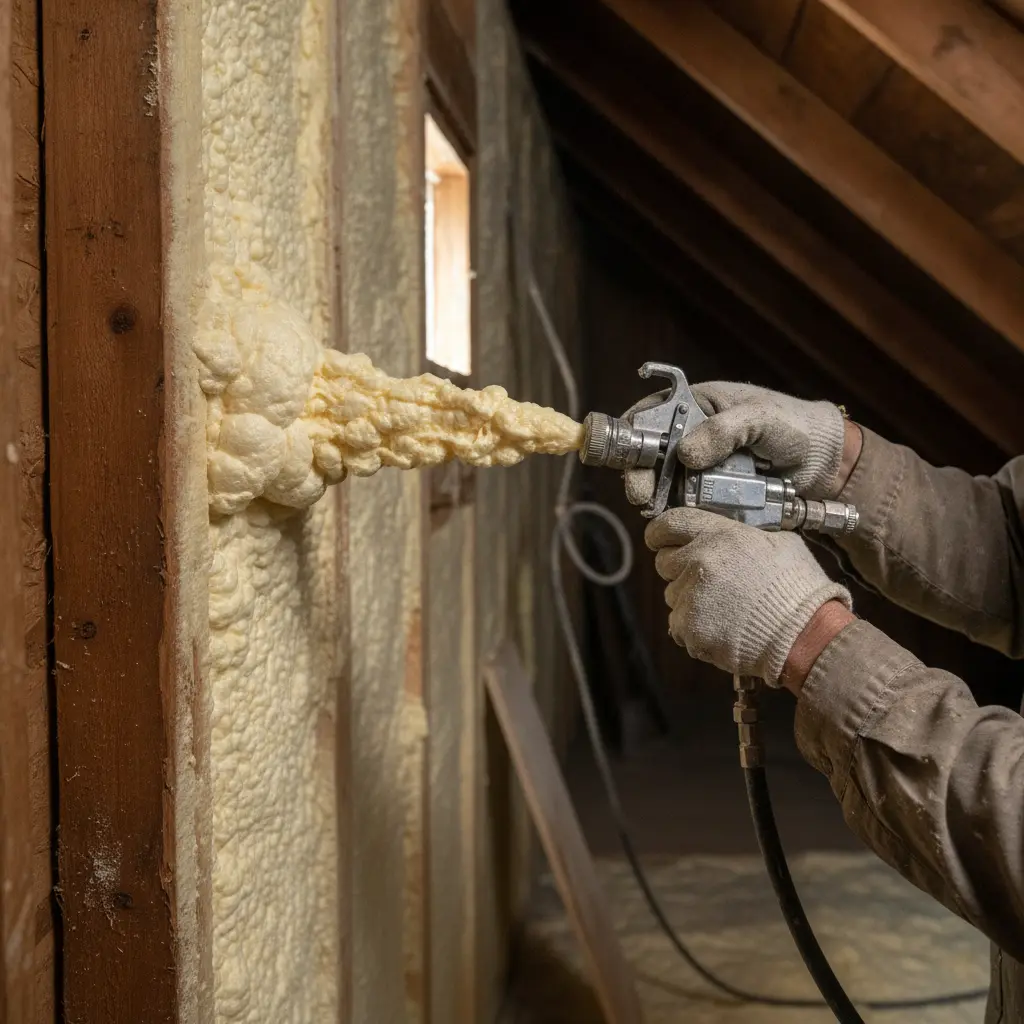
Our team in action — insulation professionals serving Chula Vista
Mineral Wool Insulation Methods and Approaches
Batt Installation (Standard Wall and Floor Cavities)
The most common method for Chula Vista’s residential framing applications. Mineral wool batts are pre-cut to standard 16-inch and 24-inch on-center stud spacing and friction-fit without mechanical fasteners. This method is ideal for open wall renovations, new construction, and crawl space insulation floor applications in South Bay homes. Typical installation timeline: one day for a 1,500–2,000 square foot home.
Blown-In Loose Fill (Attic Applications)
Granulated mineral wool blown pneumatically into attic spaces achieves complete coverage over ceiling joists, around blocking, and into irregular spaces. This method is particularly effective for Chula Vista’s shallow attic profiles found in ranch-style homes in Castle Park and Harborside, where batt access is limited. We calibrate blowing depth to achieve R-30 to R-60 depending on project specifications and Title 24 compliance requirements. Learn more about our attic insulation services.
Rigid Board Installation (Exterior Continuous Insulation)
High-density mineral wool boards (typically 1.5 to 3 inches thick, providing R-6 to R-12) are applied to exterior sheathing before cladding installation on new construction and deep-energy retrofits. This method eliminates thermal bridging through studs — a significant heat loss pathway in Chula Vista’s stucco-clad wood-frame construction. Used primarily for commercial projects along Broadway and multifamily developments in eastern Chula Vista.
Hybrid Mineral Wool and Spray Foam Systems
For properties with significant air leakage and irregular cavity geometry — common in Chula Vista’s older commercial buildings near the downtown core — we combine closed-cell spray foam insulation for air sealing and moisture control with mineral wool batts for thermal mass. This hybrid approach achieves both Class A fire ratings and superior R-values within code-compliant assembly thicknesses.
Ready for Mineral Wool Insulation? Get Your Free Estimate Today.
Next Level Insulation of Chula Vista serves Chula Vista and the surrounding area — we’ll be on-site within 24 hours.
📞 Call (619) 789-4273Mineral Wool Insulation Cost in Chula Vista, CA
Understanding the cost of mineral wool insulation in Chula Vista helps property owners budget accurately and evaluate the return on investment relative to energy savings and comfort improvements.
Typical Price Ranges
- Mineral wool batt installation (walls): $1.80–$3.50 per square foot installed, depending on cavity depth, accessibility, and whether old insulation removal is required.
- Mineral wool blown-in (attic): $1.50–$3.00 per square foot installed to achieve R-30 to R-38. A typical 1,200-square-foot Chula Vista attic costs $1,800–$3,600 fully installed.
- Mineral wool rigid board (exterior continuous): $3.00–$5.50 per square foot installed, including mechanical fastening and weather-resistant barrier integration.
- Full home mineral wool retrofit (walls + attic): $4,500–$12,000 for a typical 1,400–2,200 square foot Chula Vista single-family home.
Factors That Affect Chula Vista Pricing
- Old insulation removal: Adds $0.50–$1.50 per square foot. Crawl space removal in Chula Vista clay-soil properties with moisture damage typically falls at the higher end.
- Property age: Pre-1970 homes in Castle Park and Harborside often have non-standard cavity dimensions requiring custom cuts, adding 10–20% to material waste and labor time.
- Access difficulty: Attics with less than 30 inches of clearance — common in Chula Vista’s ranch-style stock — require additional labor for equipment positioning.
- SDG&E rebates: Qualifying Chula Vista homeowners can receive $0.10–$0.15 per square foot in utility rebates through SDG&E’s Energy Savings Assistance Program, reducing net cost by $150–$500 on typical projects.
Mineral wool typically costs 15–25% more than comparable fiberglass products at the material level, but the performance gap, reduced HVAC runtime, and longer product lifespan (mineral wool has an indefinite service life under normal conditions) deliver positive ROI for most Chula Vista homeowners within 5–9 years.
Chula Vista Neighborhoods We Serve
Otay Ranch and Rolling Hills Ranch
Built primarily between 1998 and 2015, these eastern Chula Vista master-planned communities feature 2×6 framing with original R-19 fiberglass insulation. At 500–650 feet elevation, afternoon temperatures regularly exceed 100°F in summer. Many homeowners here benefit from mineral wool upgrades to exterior rigid board installations that eliminate stud thermal bridging and reduce cooling loads by 15–25%.
Eastlake Greens and Eastlake Trails
Mid-1990s construction with mixed 2×4 and 2×6 framing. Proximity to the Otay Lakes Reservoir creates localized humidity that accelerates fiberglass degradation. Our crawl space encapsulation services are frequently paired with mineral wool floor insulation in these neighborhoods.
Castle Park and Harborside
Chula Vista’s oldest residential neighborhoods, with significant housing stock from the 1950s and 1960s. Original insulation is typically R-7 or absent entirely. Stucco exteriors and plaster interior walls require careful drilling and blow-in insulation retrofits. Marine layer exposure is heaviest here, making mineral wool’s moisture resistance critical.
Millenia (Western and Central Districts)
Chula Vista’s newest planned district features modern multifamily and mixed-use construction where mineral wool rigid boards are frequently specified by architects for fire separation and acoustic performance between units. We serve both new construction and early renovation projects in this rapidly developing area.
Mineral Wool Insulation Maintenance Tips for Chula Vista Homeowners
- Annual attic inspection: Each spring before Chula Vista’s June Gloom season begins, visually inspect attic insulation for compression, pest intrusion, or moisture staining from winter rains.
- Monitor crawl space humidity: Use an inexpensive hygrometer in your crawl space. Chula Vista’s clay-heavy soils retain ground moisture — readings above 60% relative humidity warrant re-evaluation of your vapor barrier and insulation condition.
- Seal new penetrations promptly: Any new electrical, plumbing, or HVAC penetrations through insulated assemblies should be air-sealed with fire-rated caulk within 30 days of completion.
- Check for pest entry points: After Santa Ana wind events, inspect exterior stucco and foundation venting for cracks that could allow rodents access to insulation cavities.
- Verify attic ventilation: Chula Vista’s summer heat requires balanced soffit and ridge ventilation. Blocked soffit vents raise attic temperatures above 150°F, overwhelming even high-performance insulation.
- Review SDG&E bills annually: A year-over-year increase of more than 10% in usage (not rate) during summer months suggests insulation performance has declined and warrants professional reassessment.
- Keep insulation clear of recessed lights: Non-IC-rated recessed lights in contact with mineral wool batts create a fire hazard. Ensure all attic insulation maintains the manufacturer-required clearance.
Why Choose Next Level Insulation of Chula Vista
Next Level Insulation of Chula Vista is a locally based insulation contractor serving Chula Vista and the South Bay region with deep familiarity with the specific building types, climate conditions, and code requirements that define our service area. Unlike national franchise operators, our team works exclusively in communities like Otay Ranch, Castle Park, Eastlake, and Harborside — neighborhoods we understand at the street level.
We offer a comprehensive range of insulation services beyond mineral wool, including spray foam insulation, attic insulation, blow-in insulation, crawl space encapsulation, and complete insulation removal and replacement. This full-service capability means we can evaluate your entire building envelope and recommend the right combination of solutions — not just the product we happen to carry.
Every project begins with a free, no-pressure on-site assessment. We provide written proposals with clear pricing, no hidden fees, and documentation supporting SDG&E rebate applications. Our goal is to earn your trust through transparent communication, quality workmanship, and measurable results you’ll see on your energy bill.
Call us at (619) 789-4273 to get started.
Frequently Asked Questions: Mineral Wool Insulation in Chula Vista, CA
How much does mineral wool insulation cost in Chula Vista?
In Chula Vista, mineral wool insulation typically costs $1.50–$3.50 per square foot installed for batt and blown-in applications. A full attic installation for a 1,200-square-foot home runs $1,800–$3,600. Complete whole-home retrofits (walls and attic) generally range from $4,500–$12,000 depending on home size, access conditions, and whether old insulation removal is included. SDG&E rebates can reduce your net cost by $150–$500 on qualifying projects.
Is mineral wool better than fiberglass for Chula Vista homes?
For most Chula Vista applications, yes. Chula Vista’s combination of marine layer humidity, heat spikes in eastern neighborhoods, and older housing stock makes mineral wool’s moisture resistance, consistent R-value, and fire rating significant advantages over standard fiberglass. Mineral wool maintains its R-value under the humidity swings common between Chula Vista’s coastal and inland zones, while fiberglass can lose 15–30% of rated performance when exposed to moisture.
How long does mineral wool insulation installation take in Chula Vista?
Most residential mineral wool installations in Chula Vista are completed in one to two days. A standard attic installation takes a half-day to one full day. Wall cavity retrofits for a 1,500–2,000 square foot home typically require one full day. Projects that include old insulation removal add a half-day to one full day to the timeline.
Does mineral wool insulation help with sound reduction in Chula Vista?
Yes — this is one of mineral wool’s strongest advantages in Chula Vista. Homes near the South Bay Expressway (SR-54), the Otay Ranch Town Center, or within earshot of Chula Vista’s growing commercial corridors benefit significantly from mineral wool’s superior sound transmission class (STC) ratings compared to fiberglass. Mineral wool batts in interior walls can reduce sound transmission by 45–52 STC points, compared to fiberglass at 39–43 STC points.
Can mineral wool insulation help me qualify for SDG&E rebates?
Qualifying Chula Vista homeowners may be eligible for SDG&E Energy Savings Assistance Program rebates when upgrading insulation to meet or exceed Title 24 standards for Climate Zone 7. We assist all clients with rebate documentation. Additional rebates may be available through California’s Energy Upgrade CA program. Specific eligibility depends on your current insulation levels, household income, and project scope.
Do I need to remove my old insulation before installing mineral wool?
Not always. If your existing insulation is structurally intact, dry, and free of mold or pest contamination, mineral wool can often be installed over or alongside it. However, in Chula Vista crawl spaces and older attics where moisture damage, rodent activity, or mold is present, we recommend complete removal before installing new mineral wool. We assess every project individually during our free on-site evaluation.
Is mineral wool insulation safe for my family?
Yes. Modern mineral wool products manufactured to ASTM standards are bio-soluble, meaning fibers that are inhaled dissolve in lung fluid and are eliminated naturally. The International Agency for Research on Cancer (IARC) classifies modern mineral wool as Group 3 — “not classifiable as carcinogenic to humans.” During installation, our technicians wear appropriate respiratory protection, and we ensure the property is properly ventilated before reoccupation.
Does mineral wool insulation help with wildfire risk for Chula Vista’s eastern neighborhoods?
Mineral wool’s Class A fire rating and melting point above 1,800°F make it a non-combustible insulation material that does not contribute to fire spread within wall and attic assemblies. For Chula Vista homes in eastern areas bordering the Otay Mountain Wilderness, mineral wool can be a component of a broader fire-resistant building assembly strategy. We recommend consulting with your insurance carrier about specific documentation requirements.
Get a Free Mineral Wool Insulation Estimate in Chula Vista
If your Chula Vista home is underperforming during summer heat events, struggling with marine layer humidity, or simply running up energy bills that seem too high — mineral wool insulation may be the upgrade that makes the difference. Next Level Insulation of Chula Vista provides free, no-obligation on-site assessments for homeowners and property managers throughout Chula Vista, Eastlake, Otay Ranch, Castle Park, and across South Bay San Diego.
Our team is ready to evaluate your current insulation, identify the right mineral wool solution for your specific building type and neighborhood conditions, and help you take advantage of available SDG&E rebates to reduce your upfront cost.
Call us today at (619) 789-4273 to schedule your free assessment. You can also explore our full range of services including attic insulation, crawl space encapsulation, and insulation removal to address your complete building envelope needs.