

Wall Insulation in Burbank, CA
Energy-Saving Wall Insulation for Burbank, CA Homes — Licensed & Insured
Need wall insulation in Burbank, CA? Next Level Insulation offers blown-in, spray foam & batt installation. Title 24 compliant. Call (818) 514-7541 today.
- Licensed & Insured
- Locally Owned & Operated
- Free Inspection & Estimate
Request Your
Free EstimateWall insulation is the process of installing thermal and acoustic barrier materials within the interior and exterior walls of a building to regulate indoor temperatures, reduce energy consumption, and minimize sound transmission. For homeowners and business owners in Burbank, CA, proper wall insulation is not a luxury — it is a necessity shaped by the region’s hot, dry summers, occasional cold snaps in the San Fernando Valley foothills, and the unique mix of older craftsman bungalows and mid-century commercial buildings that define the city’s built environment.
At Next Level Insulation of Burbank, we specialize in delivering precise, code-compliant wall insulation solutions tailored to Burbank’s climate and construction landscape. Whether you’re retrofitting a 1940s home in Magnolia Park or upgrading a commercial space near the Burbank Media District, our team brings local expertise and professional-grade materials to every project. Call us today at (818) 514-7541 to schedule your assessment.
Understanding Wall Insulation in Burbank, CA
Wall insulation refers to any material or system installed within wall cavities, between studs, or applied to wall surfaces to slow the transfer of heat, sound, and moisture between a building’s interior and its exterior environment. The concept has existed in construction for centuries, but modern wall insulation as we know it — using fiberglass batts, spray polyurethane foam, blown-in cellulose, and rigid foam boards — emerged as a professional trade discipline during the post-World War II housing boom of the late 1940s and 1950s, a period that directly shaped a large portion of Burbank’s residential housing stock.
Insulation performance is measured using R-values, where a higher number indicates greater resistance to heat flow. For California Climate Zone 9, which encompasses Burbank, the California Energy Commission recommends a minimum R-13 for exterior wood-framed walls in new construction. However, many older Burbank homes — particularly those built before 1970 — were constructed with little to no wall insulation, leaving homeowners dependent on inefficient heating and cooling systems to compensate.
Burbank’s building landscape is remarkably diverse. The city is home to thousands of wood-frame single-family residences built between 1930 and 1960, multi-unit apartment complexes constructed during the 1970s development surge along streets like Olive Avenue and Victory Boulevard, and modern commercial and studio-adjacent structures in the Media District near Warner Bros. and Disney. Each building type presents distinct wall insulation challenges. Older balloon-framed homes have open wall cavities that allow air to move freely from the foundation to the attic, making them especially prone to thermal loss. Mid-century stucco exteriors often hide deteriorated or absent batt insulation in the stud bays behind them. Modern commercial tilt-up concrete construction requires entirely different insulation approaches than residential wood framing.
Understanding what type of walls your Burbank property has — and what insulation, if any, is already present — is the essential first step toward an effective upgrade. Schedule a professional insulation inspection to get a clear picture of your current wall insulation status.
Why Wall Insulation Is Needed in Burbank, CA
Burbank occupies a geographic position in the eastern San Fernando Valley that exposes it to some of Southern California’s most extreme temperature swings. The city sits at approximately 580 feet above sea level near the base of the Verdugo Mountains, a positioning that traps heat radiating off the valley floor while also channeling cold air drainage from the Santa Monica and San Gabriel mountain ranges during winter nights. According to historical climate data from the National Weather Service station at Bob Hope Airport (just 1.3 miles from Burbank’s city center), summer high temperatures in Burbank regularly reach 95°F to 105°F between June and September, while winter overnight lows can dip to 35°F to 42°F from December through February.
The Santa Ana wind events, which strike the San Fernando Valley with particular intensity each autumn and winter, drive outdoor temperatures dramatically and rapidly. During the October 2019 Saddleridge Fire wind event, sustained winds of 50 to 70 mph swept through the Burbank foothills, pushing hot, dry air through building envelopes and exacerbating the indoor temperature volatility that poorly insulated walls fail to buffer. Homes with inadequate wall insulation in neighborhoods like Burbank Hills and Rancho adjacent to the Verdugo Mountains experienced some of the most dramatic indoor temperature spikes during such events.
The urban heat island effect is another critical local factor. Burbank’s dense mix of asphalt-paved lots, concrete structures, and dark rooftop surfaces — concentrated especially around the San Fernando Boulevard commercial corridor, the Empire Center shopping district, and the Burbank Media District — absorbs and reradiates solar heat into surrounding residential streets. Studies published by the Los Angeles County Department of Public Health have noted that San Fernando Valley communities, including Burbank, can experience ambient temperatures 5°F to 8°F higher than coastal areas like Santa Monica on peak summer days. Without adequate wall insulation, this ambient heat radiates directly into living spaces.
Burbank also sits within a seismically active zone. The Verdugo Fault runs along the northern edge of the city, and the Hollywood Fault lies to the south. Significant earthquake events — including the January 17, 1994 Northridge earthquake, which registered 6.7 on the Richter scale — caused wall cracking and structural settling throughout Burbank’s older residential neighborhoods, particularly in the Magnolia Park Historic District and along Providencia Avenue. These seismic movements can compress or dislodge existing batt insulation, creating gaps in the thermal envelope that go undetected for years.
California’s Title 24 Building Energy Efficiency Standards, last significantly updated in 2022, require all residential additions and substantial renovations in Burbank to meet current wall insulation minimums. Noncompliance can result in failed inspections by the City of Burbank Building and Safety Division, delayed permits, and costly retrofit work after the fact. Proactively upgrading wall insulation protects your investment and ensures regulatory compliance.
Signs You Need Wall Insulation in Burbank
Energy and Comfort Indicators
- Monthly SoCalGas or LADWP bills that spike significantly between June and September or during December cold snaps, with no obvious explanation in usage changes.
- Certain rooms — especially those facing south or west, common in Burbank’s grid-aligned neighborhoods — feeling noticeably hotter or colder than the rest of the house.
- HVAC systems running continuously without achieving the thermostat set point, particularly during peak Burbank summer temperatures above 100°F.
- Drafts or cold spots felt near exterior walls even when windows and doors are properly sealed.
Physical and Structural Signs
- Visible moisture stains, mold growth, or peeling paint on interior wall surfaces, especially in bathrooms or laundry areas adjacent to exterior walls.
- Cracks in drywall or plaster along exterior walls — a common post-earthquake occurrence in Burbank’s older housing stock — that may indicate displaced insulation beneath.
- Walls that feel warm to the touch on interior surfaces during summer afternoons.
Urgency Indicators
- Your home was built before 1978 and has never had a professional insulation assessment — a high-probability scenario in Burbank’s Magnolia Park or Rancho neighborhoods.
- You are planning a renovation that will open wall cavities, creating the ideal retrofit window with minimal additional cost.
Our Wall Insulation Process in Burbank
Initial Consultation and Site Assessment (Day 1 — 1 to 2 Hours)
Our Burbank-based team visits your property to conduct a thorough assessment. We review the building’s age, construction type, current wall assembly, and existing insulation condition. We note Burbank-specific factors such as proximity to the Verdugo foothills, sun exposure on south- and west-facing walls, and any visible seismic settling in the structure.
Thermal Imaging and Diagnostic Testing (Day 1 — 1 Hour)
Using infrared thermal imaging cameras, we identify gaps, voids, and areas of thermal bridging within existing wall assemblies. This is particularly valuable in Burbank’s older stucco homes, where insulation deficiencies are invisible from the surface. We document findings and share them with you in a clear report before any work begins.
Customized Project Proposal (Days 1–3)
Based on our findings and your budget, we prepare a detailed written proposal specifying the insulation method, material R-values, scope of work, timeline, and cost. All recommendations comply with California Title 24 standards and the City of Burbank’s current building codes.
Permitting and Scheduling (Days 3–7)
When required by the City of Burbank Building and Safety Division, we handle permit applications on your behalf, minimizing delays. We schedule the installation at a time that works for your household or business operations.
Preparation and Protection (Installation Day — 1 to 2 Hours)
We protect your furniture, flooring, and fixtures with drop cloths and plastic sheeting. For blown-in applications in existing walls, we carefully mark stud locations and prepare injection points. For open-cavity work, we ensure all electrical, plumbing, and structural elements are safely documented before proceeding.
Insulation Installation (Installation Day — 4 to 8 Hours Depending on Scope)
Our certified installers apply the chosen insulation system with precision, ensuring continuous coverage without gaps or compression. We verify R-value achievement at multiple points throughout the installation and make real-time adjustments as needed.
Final Inspection, Cleanup, and Walkthrough (Installation Day — 1 Hour)
We conduct a post-installation quality check, restore all injection or access points, and walk you through the completed work. We provide documentation suitable for any required City of Burbank building inspections and answer any remaining questions about maintenance and performance expectations.
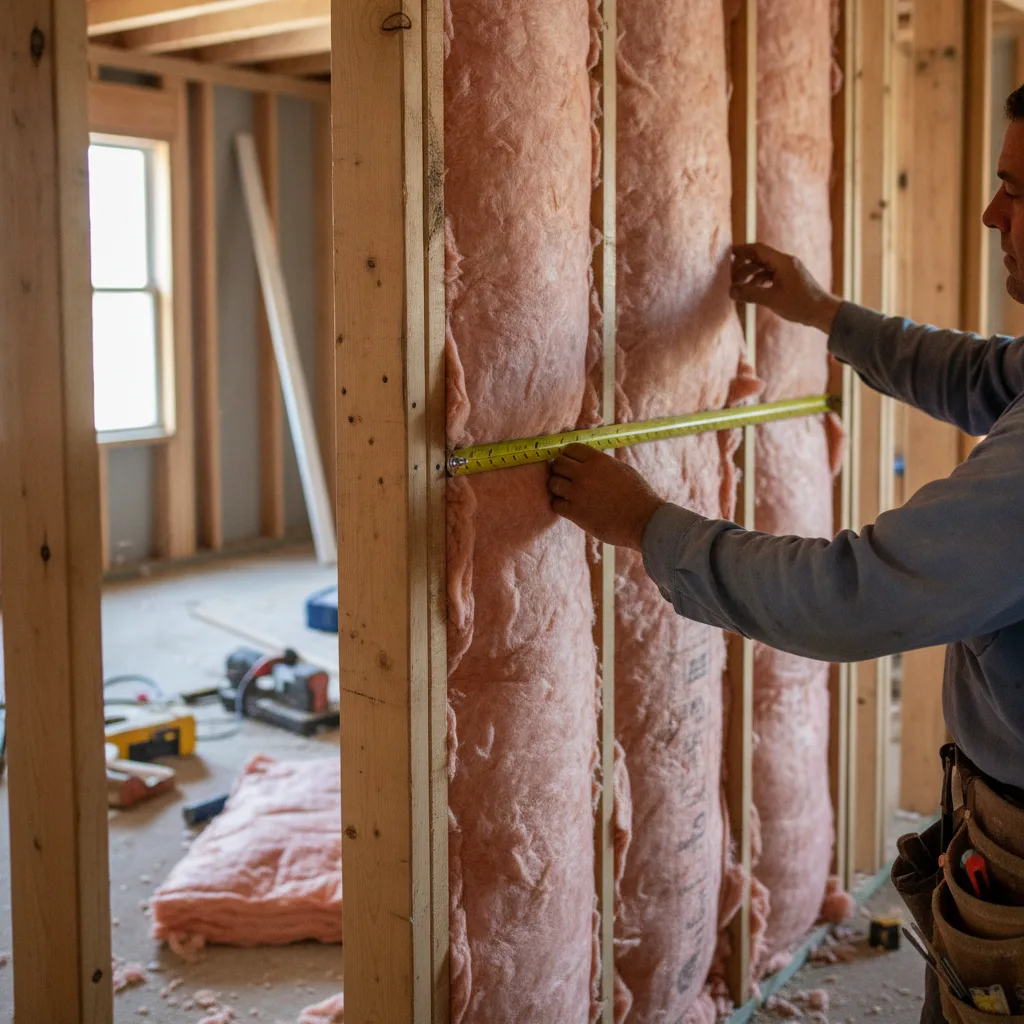
Our team in action — insulation professionals serving Burbank
Wall Insulation Methods and Approaches
Blown-In Insulation (Drill-and-Fill)
Blown-in cellulose or fiberglass is the most common method for retrofitting insulation into existing, closed wall cavities in Burbank’s older single-family homes. Small holes (approximately 2 inches in diameter) are drilled through the exterior or interior wall surface between each stud bay, and loose-fill insulation is injected under controlled pressure. This method achieves R-13 to R-15 in a standard 2×4 stud wall without requiring demolition. It is ideal for Magnolia Park craftsman bungalows and mid-century stucco homes where preserving original finishes is important. Learn more about our blown-in insulation services.
Spray Foam Insulation
Open-cell and closed-cell spray polyurethane foam is applied directly to open wall cavities during new construction or renovation projects where walls are exposed. Closed-cell spray foam achieves R-6 to R-7 per inch, making it the highest-performing option available and especially valuable for Burbank properties near the Media District where both thermal performance and sound attenuation are priorities. Explore our spray foam insulation options.
Fiberglass Batt Insulation
Pre-cut fiberglass batts are installed between wall studs in open-cavity situations during new construction or gut renovations. Standard R-13 batts fit 2×4 framing; R-19 or R-21 batts fit 2×6 framing common in newer Burbank construction. This is a cost-effective, reliable solution for addition projects and room conversions.
Rigid Foam Board Insulation
Rigid foam panels installed on exterior wall surfaces provide continuous insulation that eliminates thermal bridging through studs. This approach is used in commercial renovations and high-performance residential upgrades in Burbank’s newer construction zones near the Empire Center area.
Ready for Wall Insulation? Get Your Free Estimate Today.
Next Level Insulation of Burbank serves Burbank and the surrounding area — we’ll be on-site within 24 hours.
📞 Call (818) 514-7541Wall Insulation Cost in Burbank, CA
Understanding the cost of wall insulation in Burbank requires accounting for multiple variables, including the method chosen, the size and age of the structure, current wall access, and local labor rates in the Los Angeles metro area.
Typical Cost Ranges
- Blown-In Retrofit (Drill-and-Fill): $1.50 to $3.50 per square foot of wall surface, or approximately $1,800 to $4,500 for a typical 1,200 to 1,500 square foot Burbank single-family home with exterior walls only.
- Spray Foam (Open Walls): $2.00 to $5.00 per square foot for open-cell foam; $3.00 to $7.00 per square foot for closed-cell foam. A full exterior wall treatment in a 2,000 square foot home may range from $4,000 to $10,000 depending on foam type and wall complexity.
- Fiberglass Batt Installation: $0.50 to $1.50 per square foot of wall area, making it the most economical option for open-cavity projects. Expect $800 to $2,500 for a standard room addition in Burbank.
- Rigid Foam Board: $3.00 to $6.00 per square foot installed, typically used in commercial or high-performance residential applications.
Burbank-Specific Cost Factors
Labor costs in the Burbank and greater Los Angeles area are generally 15% to 25% higher than national averages due to California’s prevailing wage standards and higher cost of living. Older Burbank homes with original plaster walls (common in pre-1950 construction) may require additional patching work after blown-in injection, adding $200 to $600 to the total project cost. California utility rebates through SoCalGas and LADWP’s Home Energy Improvement Program can offset qualifying insulation projects by $200 to $600. Get a detailed cost estimate for your Burbank property.
Neighborhoods We Serve in and Around Burbank
Magnolia Park Historic District
This beloved Burbank neighborhood along Magnolia Boulevard features some of the city’s oldest housing stock, with many craftsman bungalows and Spanish Colonial Revival homes dating from the 1920s to 1940s. Most of these homes were built with minimal or no wall insulation, and their original plaster-over-lath wall construction requires specialized drill-and-fill techniques to avoid surface damage. We regularly work with Magnolia Park homeowners to retrofit R-13 blown-in insulation while preserving original architectural details.
Burbank Hills and Verdugo Woodlands
Perched along the base of the Verdugo Mountains, these neighborhoods experience amplified wind exposure during Santa Ana events and stronger temperature swings between daytime highs and nighttime lows compared to the valley floor. Homes here, many built in the 1950s and 1960s, benefit greatly from closed-cell spray foam upgrades that also provide added structural rigidity.
Media District and Downtown Burbank
This area’s mix of commercial buildings, live-work studios, and newer residential developments presents unique acoustic insulation demands alongside thermal performance requirements. We serve commercial and mixed-use properties in this zone with high-density spray foam and rigid board solutions.
We also serve Studio City, Sherman Oaks, North Hollywood, Toluca Lake, Glendale, Pasadena, and Beverly Hills. View our full service area.
Wall Insulation Maintenance Tips for Burbank Homeowners
- Inspect after Santa Ana wind events: After major wind events, check exterior walls for new cracks or gaps in stucco or siding that could allow air infiltration to reach wall insulation.
- Monitor indoor humidity: Burbank’s dry climate (average annual relative humidity around 57%) can cause older cellulose insulation to settle over time. A consistent indoor humidity level of 35% to 50% helps maintain insulation stability.
- Check for pest activity: Rodents seeking warmth during Burbank’s cooler winter months (December through February) can tunnel through batt insulation. Inspect accessible wall areas in attics and crawl spaces annually.
- Seal wall penetrations promptly: Any new cable, pipe, or utility penetrations through exterior walls should be sealed with spray foam or caulk immediately to prevent thermal bypass around insulation.
- Retest thermal performance after renovations: Burbank’s frequent home addition and ADU (Accessory Dwelling Unit) projects can disturb existing wall insulation. Request a thermal imaging check after any remodeling work that touches exterior walls.
- Review LADWP and SoCalGas bills annually: A sudden increase in energy use without a change in occupancy habits may signal insulation degradation or displacement.
- Schedule a professional inspection every 10 years: Even well-installed wall insulation can settle, shift, or degrade over a decade, particularly in seismically active areas like Burbank.
Why Choose Next Level Insulation of Burbank
Next Level Insulation of Burbank is a locally focused insulation contractor serving homeowners and businesses throughout Burbank and the surrounding communities of Glendale, North Hollywood, Studio City, and beyond. Our team has direct, hands-on experience with the specific construction types, climate conditions, and code requirements that define Burbank’s built environment — from the plaster-walled craftsman bungalows of Magnolia Park to the modern commercial spaces of the Media District.
We bring a comprehensive suite of services to every project, including spray foam insulation, attic insulation, blown-in insulation, crawl space insulation, crawl space encapsulation, insulation removal, and insulation replacement. This full-service capability means we can address your entire building envelope in a single, coordinated project rather than requiring multiple contractors.
We provide transparent, itemized proposals with no hidden fees and use only materials that comply with California Title 24 and CARB (California Air Resources Board) standards. Call us at (818) 514-7541 to speak directly with a Burbank insulation specialist.
Frequently Asked Questions About Wall Insulation in Burbank, CA
How much does wall insulation cost in Burbank, CA?
Wall insulation costs in Burbank typically range from $1,800 to $10,000 for residential projects, depending on the method used, the size of the home, and whether walls are open or closed. Blown-in retrofit for a standard 1,200 to 1,500 square foot home generally falls between $1,800 and $4,500. Spray foam applications in open walls run $4,000 to $10,000 or more. California utility rebates from LADWP and SoCalGas may offset $200 to $600 of qualifying project costs.
How long does wall insulation installation take in Burbank?
A standard blown-in retrofit for a single-family Burbank home typically takes one full day (6 to 8 hours). Open-cavity spray foam or batt installations during a renovation may take one to two days depending on the total wall area. The complete project timeline, including assessment, permitting, and installation, is usually 5 to 14 days from initial contact.
Do I need a permit to insulate my walls in Burbank, CA?
In most cases, adding insulation to existing closed wall cavities via blown-in retrofit does not require a separate permit in Burbank. However, if wall insulation is part of a larger renovation that involves opening walls or changing the wall assembly — such as an addition or ADU construction — a permit from the City of Burbank Building and Safety Division will be required. We handle the permitting process on your behalf when applicable.
What R-value do I need for walls in Burbank?
For California Climate Zone 9, which includes Burbank, the California Energy Commission recommends a minimum R-13 for exterior wood-framed walls. For 2×4 stud framing, blown-in cellulose or fiberglass achieves R-13 to R-15. If you are building new or have 2×6 framing, R-19 to R-21 batts or spray foam combinations can push performance significantly higher.
Can wall insulation be installed without opening the walls in my older Burbank home?
Yes. The drill-and-fill blown-in method allows us to inject insulation into closed wall cavities through small 2-inch holes drilled between studs, then patched and repainted. This is the preferred method for preserving the original plaster walls and stucco exteriors common in Burbank’s pre-1960 housing stock, including homes in Magnolia Park and the Rancho neighborhood.
How does Burbank’s climate affect which type of wall insulation I should choose?
Burbank’s combination of hot summers (regularly exceeding 100°F near the valley floor), cooler winter nights (dipping below 40°F), and intense Santa Ana wind events favors high-density insulation options that provide both thermal resistance and air-sealing properties. Closed-cell spray foam is ideal for maximum performance in these conditions, while blown-in cellulose is a cost-effective and highly practical solution for existing homes. We assess your specific Burbank property’s orientation, sun exposure, and construction type to recommend the optimal solution.
Does wall insulation help with noise from Burbank Airport?
Yes. Bob Hope Airport (Hollywood Burbank Airport) generates significant aircraft noise across Burbank’s residential neighborhoods, particularly those under the flight path north and south of the airport along Hollywood Way and Glenoaks Boulevard. Dense-pack blown-in cellulose and closed-cell spray foam both provide meaningful sound attenuation in addition to thermal insulation, reducing indoor noise levels from both aircraft and street traffic.
Can wall insulation help reduce mold risk in Burbank homes?
Proper wall insulation helps maintain consistent wall surface temperatures, reducing the risk of condensation forming on interior wall surfaces — a primary condition for mold growth. In Burbank, where occasional marine layer intrusion from the coast raises humidity levels between November and April, this condensation control function is particularly valuable. Closed-cell spray foam also provides an inherent moisture barrier, adding an additional layer of protection.
Get Expert Wall Insulation in Burbank, CA Today
Don’t let another scorching Burbank summer or cool winter night drain your energy budget through under-insulated walls. Next Level Insulation of Burbank is ready to assess your property, recommend the most effective solution for your specific building type and neighborhood, and deliver a professional installation that meets California Title 24 standards.
Whether you live in Magnolia Park, Burbank Hills, near the Media District, or anywhere in the surrounding communities of Glendale, Studio City, North Hollywood, or Pasadena, our team is ready to help you achieve a more comfortable, energy-efficient home or business.
Call us now at (818) 514-7541 to schedule your free wall insulation assessment in Burbank, CA. Contact us online to request a written estimate — we respond within one business day.