

Blown-In Insulation Cost in Orange, CA
Transparent Blown-In Insulation Cost Pricing for Orange, CA Homeowners — Free Estimates
Get accurate blown-in insulation cost estimates in Orange, CA. Next Level Insulation of Orange serves all neighborhoods. Call (714) 266-2070 for a free quote.
- Licensed & Insured
- Locally Owned & Operated
- Free Inspection & Estimate
Request Your
Free EstimateUnderstanding the true cost of blown-in insulation in Orange, CA is the first step toward making a smart, energy-saving investment for your home or business. Blown-in insulation — also known as loose-fill insulation — is a method of installing insulating material by blowing small particles of fiberglass, cellulose, or mineral wool into walls, attics, and enclosed cavities to create a thermal barrier.
In Orange, CA, where summer temperatures routinely climb past 95°F and the region’s Mediterranean climate creates year-round demand on HVAC systems, proper insulation isn’t a luxury — it’s a necessity. Older homes in historic districts like Old Towne Orange face unique insulation challenges compared to newer construction in Villa Park or the Chapman Hills corridors.
At Next Level Insulation of Orange, our team brings deep local knowledge to every project, helping Orange-area homeowners accurately budget and plan their blown-in insulation upgrades. Call us today at (714) 266-2070 to get a detailed, no-obligation cost estimate tailored to your property.
Understanding Blown-In Insulation Cost in Orange
Blown-in insulation has been a trusted insulation solution across Southern California for decades, offering a flexible and effective way to bring older and newer homes up to modern energy efficiency standards. The method involves using a blowing machine to propel loose insulating material — typically cellulose, fiberglass, or mineral wool — into attic floors, wall cavities, and crawl spaces. The material conforms to irregular spaces, fills gaps around obstructions like pipes and wiring, and creates a continuous thermal envelope that batt insulation often cannot achieve.
Historically, many homes built in Orange during the post-war housing boom of the 1950s through 1970s were constructed with minimal insulation by today’s standards — sometimes as low as R-11 in attics, far below California’s current Title 24 requirements that mandate R-38 or higher in Climate Zone 8, which covers much of the Orange County area. This gap between existing insulation levels and current code requirements is one of the primary cost drivers homeowners encounter when planning an upgrade.
Orange is home to a diverse mix of residential building types: single-story ranch homes from the 1960s, two-story tract homes from the 1980s and 1990s, craftsman bungalows in and around Old Towne, and newer construction in developments near the 241 Toll Road corridor. Each building type presents different square footage, cavity depth, and accessibility conditions that directly influence blown-in insulation costs.
The cost of blown-in insulation in Orange is also shaped by material pricing fluctuations, local contractor labor rates in Orange County, and the specific R-value targets required to meet California’s Title 24 energy code. Understanding these factors in advance allows homeowners to set realistic budgets and avoid surprise charges. Learn more about our blown-in insulation services
Unlike spray foam or rigid board insulation, blown-in materials are often more cost-effective per square foot, making them one of the most popular choices for attic insulation upgrades throughout Orange County communities.
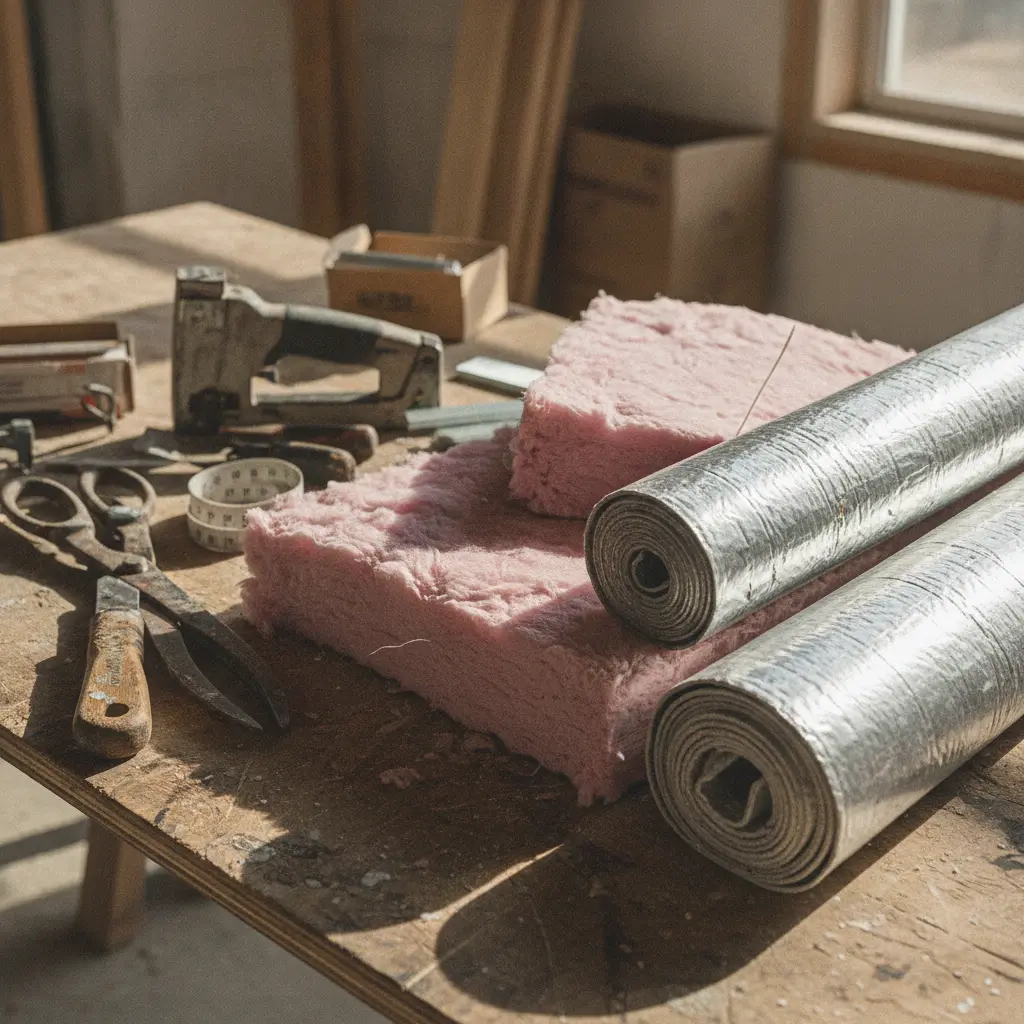
Our team in action — insulation professionals serving Orange
Why Blown-In Insulation Is a Critical Need in Orange, CA
Orange, CA sits within Southern California’s Climate Zone 8, a designation by the California Energy Commission that acknowledges the region’s unique weather patterns: hot, dry summers with average July highs of 88–95°F in inland Orange neighborhoods, mild but sometimes cold winters that can drop to the low 40s°F overnight between December and February, and significant diurnal temperature swings that can exceed 30°F in a single day during the fall months.
These climatic realities place enormous strain on home HVAC systems. A home in the Santiago Hills neighborhood of East Orange with inadequate attic insulation — say, an R-13 level left over from its 1978 construction — can lose up to 40% of its conditioned air through the attic alone. Upgrading to R-49 blown-in cellulose insulation in such a home has been shown in regional energy audits to reduce cooling costs by 20–30% annually, a significant saving given that Orange County residential electricity rates through Southern California Edison currently average around $0.28–$0.34 per kWh.
The Santa Ana Wind events — which occur frequently between October and March each year — are another Orange-specific factor. These hot, dry, offshore winds can rapidly desiccate existing insulation materials and exacerbate air infiltration through gaps and cracks in older building envelopes. Homes in hillside neighborhoods like Serrano Heights or along the Irvine Boulevard corridor often report a dramatic spike in heating and cooling costs following strong Santa Ana Wind periods, a direct signal that insulation integrity has been compromised.
Orange’s proximity to the Santa Ana River basin also means elevated humidity levels in crawl spaces and lower building cavities during the rainy season (typically November through April), which can degrade fiberglass batt insulation faster than in drier inland climates. Blown-in cellulose with a proper vapor retarder, or blown-in fiberglass in moisture-prone areas, offers superior long-term performance in these conditions.
Additionally, the Northridge Earthquake of January 17, 1994 — though centered in the San Fernando Valley — caused structural shifting in thousands of older Orange County homes, loosening previously installed batt insulation and creating air gaps that have never been properly corrected. Homeowners in neighborhoods like Orange Park Acres, which has a high concentration of homes built in the 1960s through 1980s, may find that their insulation has settled or shifted significantly since that event.
California’s increasingly aggressive energy efficiency mandates, including the 2022 update to Title 24 Part 6, have raised minimum R-value requirements and created financial incentive programs — including rebates through SoCalGas and Southern California Edison — that make the timing of blown-in insulation projects particularly advantageous right now for Orange homeowners.
Signs You Need Blown-In Insulation in Your Orange Home
Energy Bill Red Flags
- Monthly cooling bills exceeding $200–$250 during Orange’s summer months (June–September) in a typical 1,500–2,000 sq ft home
- Noticeable year-over-year increases in energy costs without a corresponding change in usage habits
- HVAC system running continuously during Santa Ana Wind events without maintaining target temperature
Physical and Structural Indicators
- Attic insulation that appears flat, compressed, or measures less than 10–12 inches in depth (indicating R-30 or less)
- Visible gaps or voids in existing attic insulation, especially around recessed lighting, HVAC ducts, or attic hatches
- Cold floors above a crawl space during winter months
- Ice-cold or extremely hot walls to the touch, indicating inadequately insulated wall cavities
Comfort and Indoor Air Quality Issues
- Rooms that are consistently 5°F or more warmer or cooler than the rest of the house
- Drafts near electrical outlets, baseboards, or window frames during Santa Ana Wind conditions
- Excessive dust accumulation, which often signals unconditioned air entering through insulation voids
- Allergy symptoms that worsen indoors, potentially caused by air infiltration bypassing filtration systems
Urgency note: If your home was built before 1980 and has never had an insulation upgrade, the probability of being significantly under-insulated by current California standards is extremely high. Contact Next Level Insulation of Orange at (714) 266-2070 for an assessment. Learn about insulation removal and replacement services
Blown-In Insulation Methods Used in Orange, CA
Cellulose Blown-In Insulation
Made from recycled paper products treated with fire retardant, cellulose is the most popular blown-in material in Orange County. It achieves an R-value of approximately R-3.2 to R-3.8 per inch, making it an efficient choice for attics requiring R-38 to R-49 levels per California code. Cellulose’s density helps reduce air infiltration and performs well in Orange’s variable humidity conditions. Best used in attic floor applications and dense-pack wall retrofits in older Orange homes.
Fiberglass Blown-In Insulation
Blown fiberglass offers an R-value of approximately R-2.2 to R-2.7 per inch and is highly resistant to moisture absorption — an important consideration for Orange crawl spaces and homes near the Santa Ana River basin where seasonal humidity is elevated. Fiberglass blown-in is often preferred for enclosed wall cavity applications and in areas where moisture control is a primary concern.
Mineral Wool (Rockwool) Blown-In Insulation
Mineral wool provides superior fire resistance and sound attenuation, offering approximately R-3.0 to R-3.3 per inch. It is particularly well-suited for multi-family residential buildings, commercial properties, and homes in Orange where wildfire risk mitigation is a priority. Its non-combustible nature makes it an excellent choice for attic applications in fire-adjacent zones near the Cleveland National Forest corridor east of Orange.
Dense-Pack Wall Insulation
A specialized technique where blown-in cellulose or fiberglass is compacted at high density (approximately 3.5 lbs per cubic foot for cellulose) into existing wall cavities through small drilled holes. This method is the go-to solution for retrofitting insulation into Orange’s older pre-1980 homes without requiring full wall demolition. Compare blown-in vs spray foam insulation options
Ready for Blown-In Insulation Cost? Get Your Free Estimate Today.
Next Level Insulation of Orange serves Orange and the surrounding area — we’ll be on-site within 24 hours.
📞 Call (714) 266-2070Blown-In Insulation Cost in Orange, CA: What to Expect
The cost of blown-in insulation in Orange, CA varies based on several key factors. Here is a realistic breakdown of what Orange homeowners typically invest:
Typical Cost Ranges
- Attic blown-in insulation (cellulose or fiberglass): $1.50–$3.50 per square foot installed, including material and labor. A typical 1,500 sq ft Orange ranch home attic runs approximately $2,200–$5,000 to bring from R-13 to R-49.
- Dense-pack wall insulation: $2.00–$5.00 per square foot, including patching. A 2,000 sq ft two-story Orange home with all exterior walls may range from $4,000–$9,000.
- Crawl space blown-in insulation: $1,800–$4,500 depending on access difficulty and square footage, often combined with crawl space encapsulation for best results.
- Combined air sealing and blown-in package: Most Orange homeowners invest $3,000–$8,000 for a comprehensive attic air sealing and blown-in insulation upgrade.
Orange-Specific Cost Factors
- Orange County labor rates are 15–25% higher than Inland Empire markets due to cost of living and contractor demand
- Older homes in Old Towne Orange may require insulation removal ($1.00–$2.00/sq ft additional) before new installation
- Available SCE and SoCalGas rebates can reduce net costs by $200–$600 for qualifying Orange homeowners
- Homes in hillside neighborhoods with limited attic access may carry an accessibility surcharge of $300–$700
Call (714) 266-2070 for a precise, itemized quote for your specific Orange property.
Blown-In Insulation Services Across Orange, CA Neighborhoods
Old Towne Orange
Homes in this historic district — many built between 1910 and 1950 — often feature original plaster walls, balloon-frame construction, and little to no attic insulation. Dense-pack and cellulose blown-in methods are ideal here, with careful attention to historic preservation requirements.
Orange Park Acres
This semi-rural neighborhood features large single-family homes built primarily in the 1960s–1980s, many with expansive attics and accessible crawl spaces. These properties frequently benefit most from comprehensive blown-in upgrades due to their size and age-related insulation deficiencies.
Santiago Hills and Serrano Heights
Newer master-planned communities built in the 1990s and 2000s — but still showing signs of thermal bridging and inadequate original insulation in wall assemblies. Blown-in wall retrofits are increasingly popular here due to rising energy costs.
Chapman Hills Corridor
Hillside properties along Chapman Avenue approaching the Anaheim Hills border often face challenging attic geometries and accessibility issues, requiring experienced crews and premium blown-in installation techniques. Learn about our full insulation installation services
Maintenance Tips for Blown-In Insulation in Orange, CA
- Annual visual inspection: Check attic insulation depth every fall before Orange’s rainy season begins (typically November) to confirm settled material hasn’t dropped below target R-value levels.
- Monitor after Santa Ana Wind events: Following strong Santa Ana Wind episodes (October–March), inspect attic hatch seals and check for new air infiltration signs such as drafts or dust accumulation.
- Control attic moisture: Ensure attic ventilation is clear and functional. Orange’s winter rains can introduce moisture into attic spaces, degrading cellulose performance over time if ventilation is obstructed.
- Seal new penetrations immediately: Whenever HVAC contractors, electricians, or plumbers work in your attic or crawl space, ensure all new penetrations are resealed with spray foam.
- Crawl space vapor barrier checks: If your Orange home has a crawl space, inspect the ground cover vapor barrier each spring for tears, displaced sections, or moisture accumulation.
- Professional reassessment every 10 years: Blown-in insulation can settle 10–20% over a decade. Schedule a depth and performance check to determine if a top-off installation is warranted.
- Pest prevention: Orange County’s year-round warm climate supports rodent activity. Check annually for signs of pest nesting or tunneling through blown-in material in accessible spaces.
Why Choose Next Level Insulation of Orange
Next Level Insulation of Orange is a locally rooted insulation contractor serving the Orange, CA community with a comprehensive range of services including blown-in insulation, spray foam insulation, attic insulation, crawl space insulation, crawl space encapsulation, and insulation removal and replacement.
Our team understands the unique thermal and climatic demands of Orange County’s Climate Zone 8 designation, the construction characteristics of Orange’s diverse housing stock from Old Towne bungalows to Santiago Hills contemporaries, and the specific California Title 24 energy code requirements that govern insulation projects in this region.
We provide detailed, transparent cost estimates with no hidden fees — giving Orange homeowners a complete picture of their blown-in insulation investment before a single dollar is committed. Our crews are trained in the latest installation techniques and safety protocols, and we coordinate directly with Southern California Edison and SoCalGas rebate programs to help you maximize available financial incentives.
For honest, expert blown-in insulation cost guidance in Orange, CA, call us at (714) 266-2070.
Frequently Asked Questions About Blown-In Insulation Cost in Orange, CA
How much does blown-in insulation cost for an average Orange, CA home?
For a typical 1,500–2,000 sq ft single-story Orange home, attic blown-in insulation to meet California’s Title 24 R-49 requirement generally costs between $2,000 and $5,500, depending on current insulation levels, material choice, air sealing needs, and attic accessibility. Dense-pack wall insulation adds to this range. Every home is different — call (714) 266-2070 for a property-specific quote.
Is blown-in or batt insulation more cost-effective for Orange homes?
In most Orange homes — particularly those built before 1990 with existing structures and irregular cavity shapes — blown-in insulation is more cost-effective on a performance-per-dollar basis. It fills gaps and voids that batt insulation leaves open, which is critical in Orange’s variable climate where air sealing directly impacts energy performance.
How long does a blown-in insulation installation take in Orange?
Most standard Orange residential attic blown-in projects are completed in a single day (4–8 hours including prep, air sealing, and installation). Larger homes, those requiring insulation removal first, or projects involving wall cavities may extend to 2 days.
Are there rebates available for blown-in insulation in Orange, CA?
Yes. Southern California Edison’s Energy Savings Assistance Program and SoCalGas rebate programs offer qualifying Orange homeowners rebates of $200–$600 or more for insulation upgrades that meet Title 24 performance thresholds. Income-qualified households may be eligible for even greater incentives. Our team helps you navigate these programs as part of our service.
Does Orange’s climate affect which blown-in insulation material I should choose?
Yes. Orange’s Mediterranean climate — with hot summers, mild winters, seasonal Santa Ana Winds, and moderate winter humidity — makes both cellulose and fiberglass blown-in materials viable options. Cellulose is preferred for attic applications due to its air-stopping density. Fiberglass is often better for crawl spaces or moisture-prone wall cavities. Mineral wool is recommended for fire-risk zones near the Cleveland National Forest corridor east of Orange. We assess your specific property to make the right recommendation.
How much does blown-in insulation settle over time in an Orange home?
Blown-in cellulose typically settles 10–20% over its first several years. Fiberglass settles less, approximately 5–10%. Reputable installers account for this by installing material to a “settled depth” target that achieves the specified R-value after settling is complete. We always install to California’s required post-settlement R-value levels.
Can blown-in insulation help reduce noise in my Orange neighborhood?
Yes. Dense-pack cellulose and mineral wool blown-in insulation both provide meaningful sound attenuation in addition to thermal performance. For Orange homeowners near the 22, 55, or 5 freeway corridors, or near the flight paths of John Wayne Airport, sound-dampening blown-in wall insulation can meaningfully reduce interior noise levels.
What is the R-value required by California code for attic insulation in Orange?
Orange falls within California Energy Commission Climate Zone 8. Current Title 24 requirements mandate a minimum of R-38 for attic insulation in existing homes and R-49 for new construction and major renovations. Most older Orange homes are significantly below these thresholds and benefit substantially from blown-in insulation upgrades. Learn more about attic insulation requirements
Get Your Blown-In Insulation Cost Estimate in Orange, CA Today
Don’t let inadequate insulation drive up your energy bills through another Orange summer or let the next Santa Ana Wind season catch your home unprepared. Next Level Insulation of Orange is ready to provide a thorough, honest, and detailed blown-in insulation cost estimate tailored specifically to your Orange, CA property — with no pressure and no obligation.
Whether you own a craftsman bungalow in Old Towne Orange, a ranch-style home in Orange Park Acres, or a newer residence in Santiago Hills, our experienced team has the local knowledge and technical expertise to deliver results that meet California’s Title 24 requirements and maximize your available utility rebates.
Call us now at (714) 266-2070 to schedule your free on-site assessment. You can also visit our office or reach out online to connect with an Orange insulation specialist today. Comfort, savings, and energy efficiency are just one call away.