
Insulation Replacement in El Monte, CA
Quality Insulation Replacement in El Monte, CA — Built to Last
Need insulation replacement in El Monte, CA? Next Level Insulation removes old, damaged insulation & installs code-compliant upgrades. Call (626) 469-7656 for a free quote.
- Licensed & Insured
- Locally Owned & Operated
- Free Inspection & Estimate
Request Your
Free EstimateInsulation replacement is the process of safely removing old, damaged, or underperforming insulation material from your home or commercial building and installing new, code-compliant insulation that restores thermal efficiency, indoor air quality, and energy savings. Unlike simply adding insulation on top of existing material, true replacement ensures that compromised insulation—whether soiled by moisture, rodents, mold, or age-related degradation—is fully eliminated before fresh material is installed.
In El Monte, CA, where summer temperatures routinely push past 95°F in the San Gabriel Valley and older housing stock from the 1950s and 1960s dominates many residential neighborhoods, deteriorated insulation is an especially common and costly problem. At Next Level Insulation of El Monte, our team specializes in complete insulation replacement services tailored to the unique climate, construction styles, and building codes of the greater El Monte area. Call us today at (626) 469-7656 to schedule your free assessment.
Understanding Insulation Replacement in El Monte, CA
Insulation replacement is more than a routine home improvement—it is a critical building science intervention that restores a structure’s ability to regulate temperature, manage moisture, and protect indoor air quality. To understand why replacement becomes necessary, it helps to know how insulation works and how it fails over time.
Most insulation materials—including fiberglass batts, blown-in cellulose, and mineral wool—rely on trapped air pockets to resist heat transfer. When those materials become compressed, wet, infested, or chemically degraded, the air pockets collapse and thermal resistance (measured in R-value) drops significantly. A roll of R-30 attic insulation that has been soaked by a roof leak or colonized by rodents may perform as poorly as R-10 or less, costing homeowners hundreds of dollars in unnecessary energy costs every year.
Historically, many El Monte homes built during the post-World War II suburban expansion of the late 1940s through the 1960s were insulated with materials that have long since exceeded their service life. Some older structures in the city even contain vermiculite or early-generation fiberglass batts installed without vapor barriers—materials that are not only ineffective today but may present health concerns. By the 1970s and 1980s, cellulose blow-in became popular in the San Gabriel Valley due to its cost-effectiveness, but cellulose is highly susceptible to moisture damage and rodent activity, both of which are prevalent in El Monte’s older residential zones.
Modern insulation replacement standards in California are governed by Title 24 of the California Building Code, which mandates minimum R-values that far exceed what older insulation in El Monte homes currently delivers. For attics, Title 24 requires at least R-38 in Climate Zone 9, which encompasses El Monte. Many homes in the city are still running on R-11 or R-19—less than half of what is required—making replacement not just beneficial but often legally necessary during renovation or resale.
Replacement projects in El Monte commonly address attic insulation, crawl space insulation, wall cavity insulation, and garage ceiling insulation, each presenting unique challenges based on the building’s age, construction type, and prior insulation history. Learn more about our attic insulation services
Why Insulation Replacement Is Needed in El Monte, CA
Extreme Heat in the San Gabriel Valley
El Monte sits in the eastern San Gabriel Valley, a region well known for its intense summer heat events. During the historic heat dome of September 2022, El Monte recorded temperatures exceeding 109°F—among the highest ever measured in the Los Angeles Basin. These extreme thermal conditions place enormous stress on insulation systems. Fiberglass batts installed in attic spaces that reach 140°F to 160°F during summer afternoons degrade faster than manufacturer estimates suggest, with binders weakening and material settling by as much as 30–40% over 15 to 20 years. When insulation settles and compresses, R-value drops precipitously, forcing air conditioning systems to work harder and increasing utility bills by an estimated 20–35%.
Moisture Intrusion and the Santa Ana Winds
While El Monte is generally dry, the city is not immune to moisture-related insulation damage. The powerful Santa Ana wind events that sweep through the San Gabriel Valley each fall and winter—sometimes reaching gusts of 60 to 80 mph—can force rain and debris beneath roof eaves and into attic spaces. The El Monte area also sits near the Rio Hondo and San Gabriel River corridors, where groundwater levels can be relatively high, contributing to crawl space moisture intrusion. Wet cellulose or fiberglass insulation loses up to 50% of its R-value when saturated and becomes an ideal breeding ground for mold species including Aspergillus and Stachybotrys, which degrade indoor air quality throughout the home.
Rodent and Pest Infestation
El Monte’s proximity to open green spaces along the San Gabriel River and the city’s dense older housing stock make it particularly vulnerable to rodent infestation. Roof rats, Norway rats, and mice are common throughout neighborhoods like Garvey, North El Monte, and South El Monte. Rodents nest in attic insulation, compressing and soiling fiberglass batts and cellulose with urine, feces, and nesting material. Infested insulation must be removed entirely—not supplemented—to eliminate biological contamination. Health agencies including the Los Angeles County Department of Public Health recommend full insulation replacement when rodent activity is confirmed.
Aging Housing Stock
Approximately 65% of El Monte’s residential properties were constructed before 1980, according to U.S. Census data. Many of these homes have never had their original insulation replaced. Buildings in the Garvey Avenue corridor and the historic downtown El Monte neighborhood frequently contain deteriorated insulation that is 40 to 60 years old—well beyond the recommended 20- to 30-year service life for most insulation types. As El Monte continues to see real estate activity, insulation replacement has become a standard disclosure item and a common requirement by buyers and inspectors alike.
California Title 24 Compliance
Any permitted renovation, addition, or HVAC replacement in El Monte triggers California Title 24 compliance requirements. Homeowners undertaking such projects are frequently required to upgrade insulation to current code minimums—R-38 in attics and R-19 in floors over crawl spaces in Climate Zone 9. Replacement, rather than addition, is often the only way to achieve code compliance when existing material is too degraded to serve as a proper base layer.
Signs You Need Insulation Replacement in El Monte
Energy and Comfort Indicators
- Energy bills that have increased 15% or more year-over-year without a corresponding increase in usage
- Rooms that feel noticeably hotter than others during El Monte’s summer heat events
- HVAC system running continuously during afternoons without reaching set temperature
- Cold floors in winter months, particularly in homes with crawl spaces along the Rio Hondo corridor
Visual and Structural Signs
- Visible gaps, thinning, or compressed batts in attic or crawl space areas
- Insulation that appears dark gray or black (indicating air filtration and soiling)
- Water stains or wet patches on insulation after rain or Santa Ana wind events
- Visible mold growth on insulation surfaces or surrounding wood framing
- Insulation depth in attic measuring less than 10 inches (indicating sub-code R-value)
Health and Safety Warning Signs
- Musty or ammonia-like odors in attic, crawl space, or living areas
- Evidence of rodent droppings, nesting material, or gnaw marks in insulated areas
- Increased allergy or respiratory symptoms among household members
- Discovery of older insulation materials (particularly vermiculite or early fiberglass without facing)
Urgency Note: If you discover rodent infestation or visible mold in your insulation, do not disturb the material. Contact Next Level Insulation of El Monte at (626) 469-7656 immediately for safe, professional removal.
Our Insulation Replacement Process in El Monte
Our insulation replacement process is designed to be thorough, safe, and efficient—minimizing disruption to your El Monte home while delivering maximum long-term performance.
Free On-Site Assessment (Day 1 – 1 to 2 Hours)
Our certified technician visits your property, inspects all insulated areas including attic, crawl space, and walls, and measures existing R-values using calibrated depth gauges and thermal imaging. We document current conditions with photos, test for moisture using a pin-type moisture meter, and identify any signs of rodent activity or mold. We provide a written assessment and quote before any work begins.
Pre-Work Preparation and Containment (Day of Service – 1 to 2 Hours)
Our crew protects your living spaces by sealing attic access points with protective sheeting and setting up commercial-grade air scrubbers with HEPA filtration. In El Monte’s older homes, where attic access is often tight or unconventional, we assess entry points and adjust equipment as needed to protect ceilings and hallways from dust and debris.
Safe Insulation Removal (Day of Service – 2 to 5 Hours)
Using commercial vacuum extraction equipment with truck-mounted or trailer-mounted units, we remove all old insulation material and bag it in sealed, heavy-duty disposal bags. For biologically contaminated material—common in El Monte’s older neighborhoods—our technicians wear full PPE including respirators rated N-100. All removed material is transported to a licensed disposal facility in compliance with Los Angeles County waste disposal regulations.
Sanitation and Sealing (Day of Service – 1 to 3 Hours)
After removal, we treat all affected surfaces with an EPA-registered antimicrobial and deodorizer spray, targeting mold spores and rodent-borne pathogens. We then air-seal all penetrations, gaps around pipes, electrical boxes, and recessed lights using spray foam or caulk—a critical step given El Monte’s older home construction where air leakage can account for 20–30% of energy loss.
New Insulation Installation (Day of Service or Day 2 – 2 to 4 Hours)
We install new insulation material suited to your home’s specific needs, achieving or exceeding California Title 24 R-value minimums for Climate Zone 9. Materials are selected based on location, moisture risk, and building type. Learn more about our blow-in insulation options
Quality Inspection and Documentation (Day of Service – 30 to 60 Minutes)
We conduct a post-installation depth check, photograph completed work, and provide you with a written completion report documenting installed R-values, materials used, and any areas of ongoing concern to monitor.
Final Walkthrough and Disposal Confirmation
We walk you through what was done, answer any questions, and confirm that all waste material has been removed from your property and will be disposed of in accordance with Los Angeles County regulations.
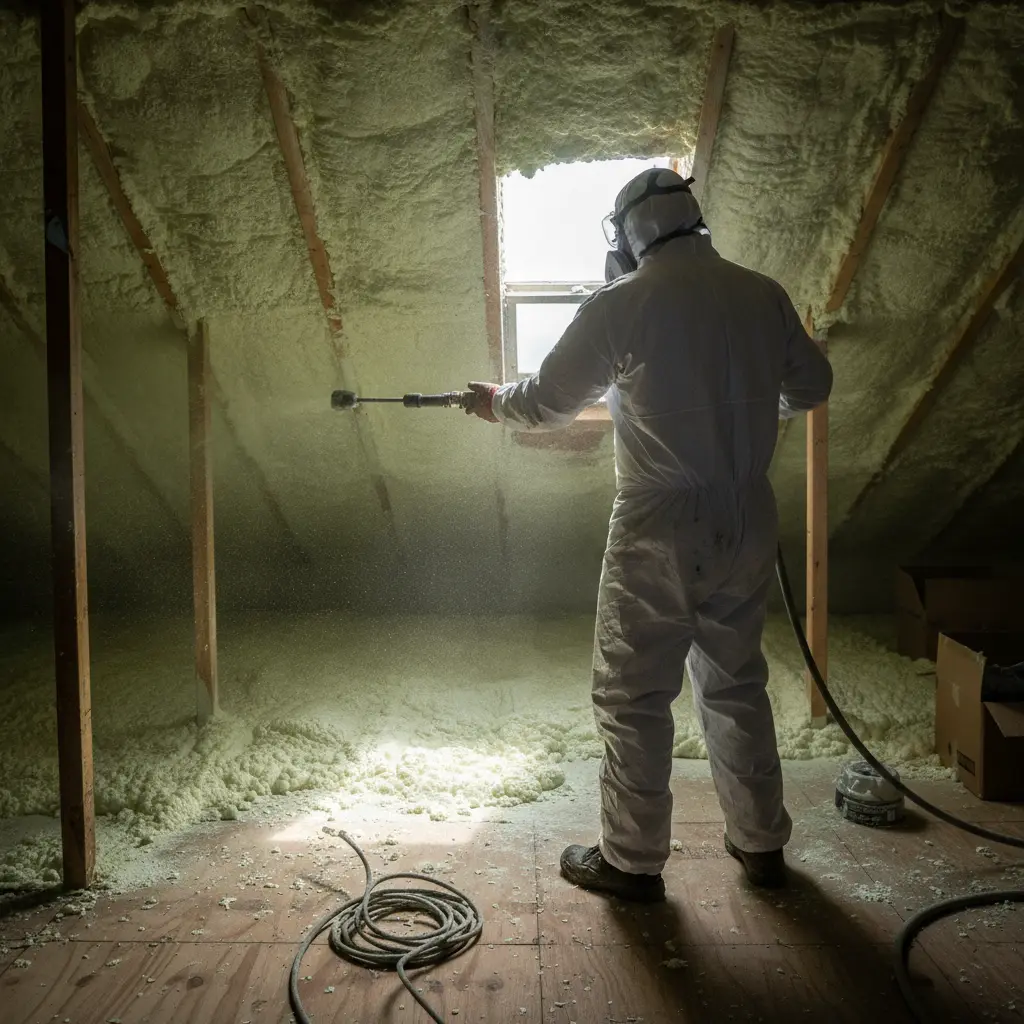
Our team in action — insulation professionals serving El Monte
Insulation Replacement Methods We Use in El Monte
1. Blown-In Fiberglass (Loose-Fill)
The most common choice for attic insulation replacement in El Monte, blown-in fiberglass achieves excellent coverage in irregular attic spaces and reaches R-38 to R-60 depending on installed depth. It resists moisture better than cellulose and does not provide a food source for rodents—making it ideal for homes in Garvey and North El Monte where rat activity is common. Installation typically takes two to four hours for a standard 1,200- to 1,800-square-foot attic. Explore our blow-in insulation services
2. Spray Foam Insulation
Open-cell or closed-cell spray polyurethane foam is used for areas requiring both insulation and air sealing simultaneously. Closed-cell spray foam, with an R-value of approximately R-6.5 per inch, is particularly effective in crawl spaces and rim joists in El Monte homes where moisture intrusion from groundwater is a concern. It also adds structural rigidity to older framing. Learn more about spray foam insulation
3. Fiberglass Batt Replacement
For wall cavities and floor systems exposed during renovation work, fiberglass batts cut to size provide a cost-effective replacement solution. Batts are used primarily when walls are open during remodel projects common in El Monte’s 1950s-era ranch homes undergoing kitchen or bathroom upgrades.
4. Cellulose Blow-In (Low-Moisture Zones Only)
Recycled cellulose remains a viable, eco-friendly option for dry attic applications where moisture risk is minimal and the primary concern is thermal performance. It achieves R-3.5 per inch and is treated with borate for fire and pest resistance. We typically recommend it for interior attic areas in El Monte’s newer neighborhoods where roof integrity is confirmed.
5. Crawl Space Encapsulation with Insulation
For El Monte homes with dirt crawl spaces—particularly those near the Rio Hondo flood plain—we combine vapor barrier encapsulation with rigid foam or spray foam insulation along the crawl space walls and floor, dramatically reducing moisture-related insulation failure. Explore our crawl space encapsulation services
Ready for Insulation Replacement? Get Your Free Estimate Today.
Next Level Insulation of El Monte serves El Monte and the surrounding area — we’ll be on-site within 24 hours.
📞 Call (626) 469-7656Insulation Replacement Cost in El Monte, CA
Understanding the cost of insulation replacement in El Monte helps homeowners budget accurately and avoid surprises. Costs vary based on the size of the area, type of insulation, level of contamination, and accessibility of the space.
Typical Cost Ranges
- Attic Insulation Removal + Replacement (1,000–1,500 sq ft attic): $1,800 – $3,500
- Attic Insulation Removal + Replacement (1,500–2,500 sq ft attic): $3,200 – $5,800
- Crawl Space Insulation Removal + Replacement: $1,500 – $3,000
- Crawl Space Encapsulation + Insulation (Full System): $3,500 – $7,000
- Spray Foam Insulation (per 1,000 sq ft, closed-cell): $2,000 – $4,500
- Wall Cavity Batt Replacement (per room, open walls): $400 – $1,200
Factors That Affect Your Cost in El Monte
- Rodent or Mold Contamination: Biohazard removal adds $300–$800 to the overall project cost due to PPE requirements and specialized disposal
- Attic Accessibility: Many El Monte homes from the 1950s and 1960s have low-pitch roofs with attic clearance of 18–24 inches, requiring additional labor time
- R-Value Target: Upgrading to R-49 or R-60 costs more than minimum code R-38 but delivers faster energy payback in El Monte’s hot climate
- Air Sealing: Adding comprehensive air sealing (recommended for older El Monte homes) adds $300–$700 but is often required for Title 24 compliance
Available Incentives
Southern California Edison and SoCalGas both offer rebates for qualifying insulation upgrades in the El Monte service area. Federal tax credits under the Inflation Reduction Act (IRA) may cover up to 30% of insulation and air sealing costs. Ask us about currently available programs when you call (626) 469-7656.
El Monte Neighborhoods We Serve
Garvey (Central El Monte)
The Garvey neighborhood along Garvey Avenue represents some of El Monte’s densest older housing stock, with many homes dating to the 1940s–1960s. These properties frequently have original blown-in insulation that has never been replaced and commonly show significant rodent activity. Low-slope roofs and tight attic access are standard challenges here.
North El Monte
Residential properties in North El Monte, bordering the 605 Freeway corridor, include a mix of 1960s–1980s construction. Homes here often have crawl spaces that experience elevated humidity due to proximity to the San Gabriel River wash. Crawl space insulation replacement combined with vapor barrier installation is our most common service call in this area.
South El Monte
South El Monte features a significant number of multi-family residential buildings—duplexes and small apartment complexes built in the 1970s—where insulation between units has degraded substantially, affecting both energy performance and sound transmission. We serve both residential and small commercial property owners throughout this area.
Historic Downtown El Monte
The oldest structures in El Monte’s downtown core date to the 1930s and 1940s. These homes may contain early insulation materials including horsehair or early mineral wool, in addition to health-concern materials. Full removal and modernization to Title 24 standards is almost universally recommended for properties in this area.
Insulation Maintenance Tips for El Monte Homeowners
- Inspect Your Attic Annually: Check insulation depth and condition each fall before Santa Ana wind season. Look for signs of compression, moisture, or pest activity.
- Keep Attic Vents Clear: El Monte’s dusty environment means soffit and ridge vents can clog with debris. Clean them annually to maintain proper airflow and prevent heat buildup that accelerates insulation degradation.
- Seal Roof Penetrations After Repairs: After any roofing work—common after strong Santa Ana events—have all pipe and vent penetrations re-sealed to prevent water intrusion into insulated areas.
- Monitor Crawl Space Moisture: Install a hygrometer in your crawl space and check monthly. Sustained relative humidity above 60% in a crawl space signals a moisture problem that will eventually damage insulation.
- Pest-Proof Your Home’s Exterior: Seal gaps in eaves, vents, and siding larger than ¼ inch to deter roof rats—a known insulation destroyer in the El Monte area.
- Check Insulation After HVAC Work: HVAC technicians working in attics frequently disturb and compress insulation. Inspect for displacement after any attic-access HVAC service call.
- Document Your Installation: Keep records of installed R-values and materials. This information is required during home sales in El Monte and speeds up Title 24 compliance verification.
Why Choose Next Level Insulation of El Monte
At Next Level Insulation of El Monte, we are a locally focused insulation contractor with deep familiarity with the specific building types, climate conditions, and regulatory requirements of El Monte and the greater San Gabriel Valley. We are not a national franchise dispatching unfamiliar crews—we are your neighbors, serving the same communities where we live and work.
Our technicians are trained in California Title 24 compliance requirements, ensuring that every insulation replacement we complete meets current El Monte building code standards. We use only materials certified by the California Department of Consumer Affairs and tested to meet Energy Star standards.
We provide transparent, itemized quotes before any work begins, with no hidden fees for standard removal and disposal. Our team is fully equipped to handle biohazard-level insulation removal—including rodent-contaminated and mold-affected material—with proper PPE and licensed disposal in compliance with Los Angeles County regulations.
Call us at (626) 469-7656 or contact us online to schedule your free assessment today. We offer flexible scheduling to accommodate El Monte homeowners and businesses.
Frequently Asked Questions About Insulation Replacement in El Monte, CA
How much does insulation replacement cost in El Monte, CA?
Insulation replacement in El Monte typically costs between $1,800 and $5,800 for a standard residential attic, depending on square footage, insulation type, and the presence of contamination from rodents or moisture. Crawl space replacement ranges from $1,500 to $7,000 depending on whether encapsulation is included. We provide free, on-site quotes with no obligation. Call (626) 469-7656 to get your specific estimate.
How long does insulation replacement take in an El Monte home?
Most residential insulation replacement projects in El Monte are completed in a single day. A 1,200- to 1,500-square-foot attic typically takes six to eight hours from start to finish, including removal, sanitation, and new installation. Larger projects or those requiring biohazard remediation may extend to two days. We will give you a clear timeline estimate during your free assessment.
Is it safe to stay home during insulation replacement?
For most standard replacement projects, you can remain in your home. Our team uses containment sheeting and commercial HEPA air scrubbers to prevent dust and particulates from entering living spaces. However, for projects involving mold remediation or confirmed rodent infestation, we may recommend temporarily vacating the immediate area near the work zone. We will advise you specifically based on your El Monte home’s conditions.
What R-value do I need for my El Monte attic?
El Monte is located in California Climate Zone 9. Under Title 24 of the California Building Code, attic insulation must achieve a minimum of R-38. For maximum energy savings given El Monte’s extreme summer heat—where attics can reach 160°F—we recommend upgrading to R-49 or R-60, which delivers faster payback through reduced cooling costs and qualifies for enhanced utility rebates from Southern California Edison.
Can I just add insulation on top of my old insulation?
In some cases, adding new insulation over existing material is acceptable—but only when the existing insulation is dry, undamaged, free of mold, and not contaminated by rodents. For the majority of older El Monte homes we assess, the existing insulation does not meet these conditions. Installing new insulation over wet, moldy, or contaminated material traps the problem and can void manufacturer warranties on new materials. Full removal is almost always the correct approach in El Monte’s older housing stock.
Do I need a permit for insulation replacement in El Monte?
Simple like-for-like insulation replacement generally does not require a permit in El Monte. However, if the project is connected to a broader renovation, HVAC replacement, or if it triggers California Title 24 compliance requirements, a permit may be necessary. We are familiar with the El Monte Building and Safety Division’s requirements and can advise you on permit needs during your assessment at no extra charge.
What should I do if I find rodent damage in my attic insulation?
Do not disturb the contaminated insulation or attempt to clean it yourself. Rodent droppings and urine can carry Hantavirus and other pathogens that become airborne when disturbed. Call Next Level Insulation of El Monte at (626) 469-7656 immediately. Our technicians use full N-100 respirators and protective suits for biohazard removal, and all contaminated material is sealed and disposed of in compliance with Los Angeles County health guidelines.
Are there rebates available for insulation replacement in El Monte?
Yes. Southern California Edison offers rebates for qualifying insulation upgrades, and SoCalGas provides incentives for qualifying home weatherization projects including insulation. Under the federal Inflation Reduction Act, homeowners may also claim a tax credit of up to 30% (maximum $1,200 per year) for insulation and air sealing improvements. We can help you identify applicable programs during your free estimate appointment.