

Batt Insulation in Burbank, CA
Energy-Saving Batt Insulation for Burbank, CA Homes — Licensed & Insured
Need batt insulation in Burbank, CA? Next Level Insulation offers expert installation, Title 24 compliance & free assessments. Call (818) 514-7541 today.
- Licensed & Insured
- Locally Owned & Operated
- Free Inspection & Estimate
Request Your
Free EstimateBatt insulation is one of the most widely used and cost-effective insulation solutions available for residential and commercial properties. Composed of flexible panels or rolls of fibrous material — typically fiberglass or mineral wool — batt insulation is designed to fit snugly between wall studs, floor joists, and ceiling rafters to create a thermal and acoustic barrier. At Next Level Insulation of Burbank, we specialize in professional batt insulation installation tailored to the specific demands of Burbank’s Mediterranean climate, aging housing stock, and energy-efficiency requirements set by the California Energy Commission’s Title 24 standards.
Burbank properties face unique insulation challenges — from the intense summer heat radiating off the Verdugo Mountains to older mid-century homes in the Magnolia Park neighborhood that were originally built with minimal insulation. Whether you’re upgrading a 1950s ranch-style home or insulating a new commercial build near the Burbank Media District, our team delivers precise, code-compliant batt insulation solutions that reduce energy bills and improve indoor comfort year-round. Call us today at (818) 514-7541 to schedule your free assessment.
Understanding Batt Insulation in Burbank
Batt insulation has been a cornerstone of American residential construction since the mid-20th century, introduced commercially in the 1930s and popularized during the post-World War II housing boom. During that era, Burbank saw explosive residential development as workers flooded into the San Fernando Valley to support nearby Lockheed Aircraft Corporation and the growing entertainment industry. Thousands of tract homes built between 1945 and 1970 in neighborhoods like Magnolia Park, Rancho District, and Chandler Estates used fiberglass batt insulation — or in many cases, no insulation at all — reflecting the construction standards of the time.
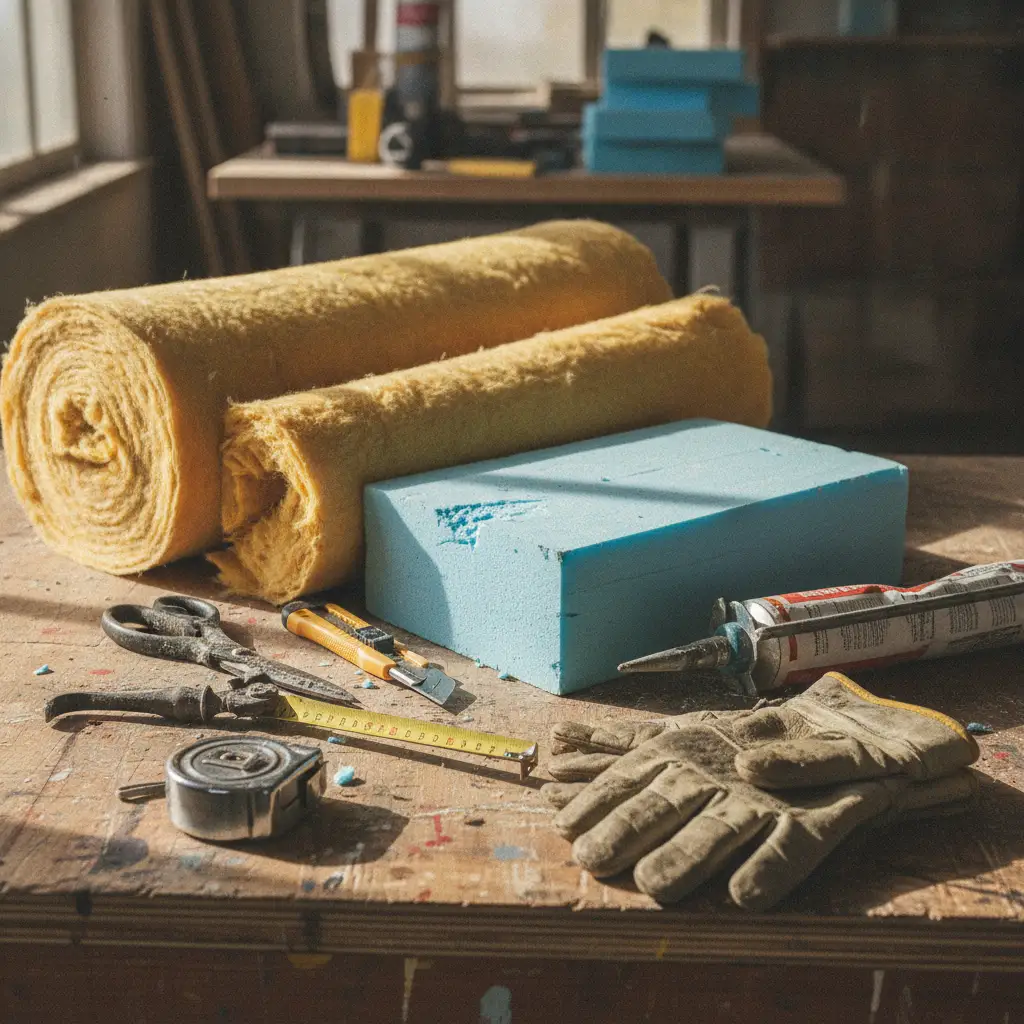
Batt insulation is manufactured in pre-cut panels or continuous rolls designed to fit standard framing dimensions of 16 or 24 inches on center. The most common materials include:
- Fiberglass Batts: Lightweight, non-combustible panels made from spun glass fibers. They are available in R-values ranging from R-11 to R-38 and are the most commonly installed type in Burbank homes.
- Mineral Wool (Rockwool) Batts: Made from volcanic rock or recycled slag, mineral wool batts offer superior fire resistance (rated to over 1,400°F), better soundproofing, and moisture resistance — making them increasingly popular for Burbank properties near the Burbank Airport flight path or in multi-family housing.
- Cotton (Denim) Batts: An eco-friendly option made from recycled denim fibers, favored by environmentally conscious homeowners in Burbank’s more upscale neighborhoods.
In California, Title 24 energy compliance mandates minimum R-values for new construction and significant renovations. In Burbank’s Climate Zone 9, exterior walls typically require a minimum of R-13, while attic assemblies must meet R-38 or higher. Batt insulation, when installed correctly without gaps, compression, or voids, performs at or above these thresholds and remains a code-approved solution for meeting California’s increasingly strict energy standards. Learn more about our attic insulation services
Batt insulation is appropriate for wood-framed walls, floors over unconditioned crawl spaces, attic floors between joists, and interior partition walls for soundproofing. Its affordability, availability, and ease of installation make it the go-to choice for both new construction projects near the Burbank Media District and retrofit upgrades in the established residential corridors along Olive Avenue and Glenoaks Boulevard.
Why Batt Insulation Is Needed in Burbank, CA
Extreme Summer Heat and the Urban Heat Island Effect
During the summer of 2021, Burbank recorded a high of 109°F on July 11 as part of a historic Pacific Northwest and Southern California heat dome event. The city’s urban heat island effect — intensified by dark asphalt surfaces, dense commercial development along San Fernando Boulevard, and limited tree canopy coverage compared to nearby La Cañada Flintridge — causes ambient temperatures in central Burbank to run 5–8°F higher than surrounding rural areas. Without adequate batt insulation in walls and attics, interior temperatures in uninsulated or under-insulated homes can climb 15–20°F above outdoor ambient temperatures, forcing air conditioning systems to work continuously and dramatically increasing energy costs.
Aging Housing Stock in Key Neighborhoods
A significant percentage of Burbank’s housing stock dates from the 1940s through the 1970s. In the Magnolia Park Historic District, craftsman bungalows and ranch-style homes frequently contain original fiberglass batts that have settled, compressed, or absorbed moisture over 50–70 years, reducing their effective R-value by as much as 40%. The Rancho District, with its concentration of post-war single-story homes, similarly suffers from degraded or absent wall insulation. Title 24 compliance upgrades during bathroom and kitchen remodels often reveal walls with zero insulation or R-7 batts where R-15 or higher is now required.
Burbank Airport Noise Corridor
Hollywood Burbank Airport (BUR), located in the northern portion of the city, generates consistent aircraft noise that affects neighborhoods including Burbank Hills, Northwest Burbank, and areas along Hollywood Way. Mineral wool batt insulation, with its superior sound transmission class (STC) ratings compared to standard fiberglass, is frequently specified for homes within the airport’s 65 dB Day-Night Level (DNL) noise contour zone. The Airport Authority has historically offered noise insulation program funding for qualifying properties, making batt insulation upgrades particularly financially accessible for affected homeowners.
Santa Ana Wind Events and Thermal Cycling
Burbank sits in a natural wind corridor that channels Santa Ana events — dry, hot, offshore winds that can reach 50–70 mph and drive temperatures above 95°F even in October and November. These events, which occurred with notable intensity in December 2017 (Thomas Fire conditions) and November 2019, cause rapid and extreme thermal cycling in building envelopes. Poorly installed or degraded batt insulation with air gaps allows infiltration of hot, dry air, desiccating interior spaces and stressing HVAC systems. Properly installed, vapor-appropriate batt insulation significantly reduces this infiltration effect. Explore our insulation removal and replacement services
Signs You Need Batt Insulation in Burbank
Energy Performance Issues
- Monthly electricity bills exceeding $250–$350 during Burbank summers (June–September) in a standard 1,500 sq. ft. home
- HVAC system running continuously without reaching the set thermostat temperature during heat events above 95°F
- Noticeable temperature differences of more than 3–5°F between rooms on the same floor
Physical and Structural Indicators
- Walls that feel warm to the touch during summer afternoons, particularly on south and west-facing exterior walls
- Visible settled, compressed, or water-stained batt insulation in accessible attic spaces
- Drafts detectable near electrical outlets on exterior walls, a common sign in Burbank’s older wood-framed homes
- Moisture staining or mold growth on interior drywall surfaces, suggesting vapor barrier failure in existing batts
Comfort and Noise Complaints
- Clearly audible aircraft noise from Burbank Airport flights inside living areas
- Traffic noise from Glenoaks Boulevard, Victory Boulevard, or I-5 penetrating interior spaces
- Cold floors during winter months, indicating missing or insufficient insulation in crawl spaces or floor joists
Urgent Warning Signs
- Pest infestations in attic batts — a serious health and fire hazard requiring immediate removal and replacement Learn about our insulation removal process
- Insulation older than 25–30 years with no record of prior upgrades
Our Batt Insulation Installation Process in Burbank
At Next Level Insulation of Burbank, we follow a structured, multi-step process designed to ensure every installation meets California Title 24 standards and addresses Burbank’s specific climate and building conditions.
Free On-Site Assessment (1–2 Hours)
Our technician visits your Burbank property to conduct a visual inspection and, where needed, a thermal imaging scan of exterior walls and attic spaces. We assess existing insulation R-values, check for moisture damage or pest activity, and identify air sealing opportunities. For homes in Burbank’s Title 24 compliance zones, we document current conditions against California Energy Code requirements.
Detailed Proposal and Material Selection (24–48 Hours)
Based on the assessment, we prepare a written proposal specifying the recommended R-value, material type (fiberglass, mineral wool, or cotton batt), and any vapor retarder requirements. For properties near Burbank Airport, we typically recommend mineral wool for its dual thermal and acoustic performance.
Site Preparation and Old Insulation Removal (Half Day to Full Day)
If existing insulation is degraded, contaminated, or insufficient, our team removes it safely — using HEPA-filtered vacuums and protective equipment where asbestos-era materials (pre-1980) may be present in older Burbank homes. Read more about our insulation removal services
Air Sealing (1–2 Hours)
Before batts are installed, we seal gaps, penetrations, and bypasses in the building envelope using low-expansion spray foam or caulk. This step is especially critical in Burbank’s older wood-framed homes where decades of settling have created gaps around top plates, electrical boxes, and plumbing penetrations.
Batt Installation (Half Day to Full Day per Zone)
Our installers cut and fit batts precisely to cavity dimensions without compression or gaps. In Burbank’s Climate Zone 9, we install batts with faced vapor retarders on the warm-in-winter side (interior) for wall applications, and unfaced batts for attic floors. All installations are performed to ASTM C665 standards.
Quality Inspection and Documentation (1–2 Hours)
A senior technician inspects all installed areas, checks for proper fit, confirms vapor retarder placement, and photographs completed work for your records and any Title 24 compliance documentation required by the City of Burbank Building and Safety Division.
Clean-Up and Final Walk-Through (30–60 Minutes)
We remove all material waste, restore any temporarily displaced fixtures, and walk you through the completed installation, explaining expected performance improvements and maintenance recommendations specific to your Burbank home.
Our team in action — insulation professionals serving Burbank
Batt Insulation Methods and Approaches We Use in Burbank
Standard Friction-Fit Batt Installation
The most common method for open-stud wall cavities in new construction or gut renovations. Batts are cut 1 inch wider than the cavity and compressed into place, using friction to hold them without fasteners. Used extensively in Burbank new builds in the Burbank Hills and Media District commercial corridor. Best suited for standard 3.5-inch (2×4) or 5.5-inch (2×6) framing.
Retrofit Injection Batt (InCYDE or Similar)
For closed existing walls in Burbank’s older Magnolia Park and Rancho District homes, we use drill-and-fill injection batt techniques where small holes are drilled between studs and loose-fill or injection-grade batt material is blown into the cavity without opening the drywall. This method preserves original interior finishes — critical for homes in Burbank’s historic overlay zones.
Attic Floor Batt Installation
For attics with accessible joist bays, batts are laid perpendicular to joists to cover thermal bridges. In Burbank attics where existing batts measure R-11 or R-13, we add a second layer of unfaced R-19 or R-25 batts cross-stacked to achieve the Title 24-required R-38 minimum. Learn more about attic insulation options
Crawl Space Floor Batt Installation
In Burbank homes with raised foundation crawl spaces — common in the Rancho District — batts are installed between floor joists with the vapor retarder facing up toward the conditioned space. Wire insulation supports (tiger claws) hold batts in place against gravity. Explore our crawl space insulation services
Acoustic Batt Installation for Noise Reduction
For properties in Burbank’s airport noise corridor or along high-traffic corridors, we install high-density mineral wool acoustic batts (typically 3-inch thick in standard 3.5-inch cavities) to maximize STC ratings without full cavity fill, leaving a deliberate air gap for additional sound decoupling.
Ready for Batt Insulation? Get Your Free Estimate Today.
Next Level Insulation of Burbank serves Burbank and the surrounding area — we’ll be on-site within 24 hours.
📞 Call (818) 514-7541Batt Insulation Cost in Burbank, CA
Understanding batt insulation costs in Burbank helps homeowners and property managers budget accurately. Pricing in Burbank reflects Southern California labor rates, Title 24 compliance requirements, and the specific challenges of the local housing stock.
Typical Price Ranges
- Attic Batt Insulation: $1.50–$3.00 per square foot installed, or $1,500–$4,500 for a typical 1,500–2,000 sq. ft. Burbank home attic
- Exterior Wall Batt Insulation (Open Cavity): $1.25–$2.50 per square foot, or $3,000–$7,500 for a full-home wall insulation during a renovation
- Crawl Space Floor Batt Insulation: $2.00–$4.00 per square foot installed, reflecting the more labor-intensive access conditions common in Burbank’s older raised-foundation homes
- Acoustic Mineral Wool Batt (Interior Walls): $2.00–$4.50 per square foot installed
Key Cost Factors in Burbank
- Existing insulation removal: Add $0.50–$1.50 per square foot if degraded batts must be removed first — a common scenario in Burbank homes built before 1975
- Accessibility: Low-slope attics or restricted crawl spaces in Burbank’s hillside properties increase labor time and cost
- Material grade: Mineral wool costs 15–25% more than standard fiberglass batts but offers better fire and acoustic performance
- Title 24 documentation: Nominal additional charge for compliance documentation required by the City of Burbank for permitted projects
California utility companies, including Southern California Edison (which serves Burbank residents), periodically offer rebates for qualifying insulation upgrades. Ask our team about current SCE rebate programs that can offset your project cost by $200–$1,000 depending on scope. View our detailed batt insulation cost guide
Burbank Neighborhoods We Serve
Magnolia Park Historic District
One of Burbank’s most architecturally significant neighborhoods, Magnolia Park features craftsman bungalows and Spanish colonial revival homes primarily built between 1920 and 1945. These properties typically lack wall insulation entirely or contain original fiberglass batts compressed to R-4 or less. We specialize in retrofit injection batt techniques that preserve period-correct interiors while bringing walls up to modern R-13+ performance standards.
Rancho District
The Rancho District’s concentration of post-war ranch homes from the 1950s and 1960s presents consistent insulation upgrade opportunities. Many properties have original R-11 attic batts that fall well below today’s required R-38 minimum. Our attic layering approach efficiently upgrades these homes without requiring a full removal.
Burbank Hills and Verdugo Woodlands
Hillside properties in upper Burbank face steeper attic pitches, more complex framing, and greater exposure to Santa Ana wind events. We bring specialized equipment and techniques for these challenging installations. Spray foam options for complex hillside geometries
Northwest Burbank (Airport Adjacency Zone)
Homes within the Hollywood Burbank Airport noise contour benefit significantly from our mineral wool acoustic batt packages, which address both thermal performance and FAA-regulated noise mitigation requirements simultaneously.
Batt Insulation Maintenance Tips for Burbank Homeowners
- Annual Attic Visual Inspection: Each fall before Burbank’s Santa Ana wind season, visually inspect accessible attic insulation for settling, compression, or moisture staining. Look for signs of pest activity, particularly roof rats — a known problem in Burbank’s older residential neighborhoods.
- Check for Water Intrusion After Rain Events: Burbank’s infrequent but sometimes intense winter rains (El Niño events can bring 15+ inches seasonally) can introduce moisture into attic batts through aged flashing or failed ridge vents. Inspect within 48 hours after significant rainfall.
- Maintain Proper Attic Ventilation: Burbank’s summer heat requires balanced attic ventilation (1:150 net free area ratio) to prevent heat buildup that degrades batt performance over time. Ensure soffit and ridge vents are clear of debris.
- Seal New Penetrations Promptly: Any new electrical, plumbing, or HVAC work that penetrates insulated cavities should be resealed immediately to prevent air bypass.
- Monitor HVAC Filter Load: A sudden increase in HVAC filter dust loading can indicate batt fiber migration from damaged insulation — schedule an inspection if filters clog faster than normal.
- Protect Crawl Space Vapor Barrier: If you have crawl space batt insulation, inspect the ground vapor barrier annually for tears or displacement that allows Burbank’s clay-rich soil moisture to migrate upward. Learn about crawl space encapsulation
- Document Your R-Values: Keep records of installed R-values and materials for future Title 24 compliance documentation if you undertake permitted renovations.
Why Choose Next Level Insulation of Burbank
Next Level Insulation of Burbank is a locally focused insulation contractor with deep familiarity with the specific building types, climate demands, and code requirements unique to Burbank and the surrounding San Fernando Valley communities. We are not a national franchise — we are a team that understands the difference between insulating a 1940s Magnolia Park bungalow and a new commercial build near the Media District, and we bring that context to every project.
Our technicians are trained in California Title 24 compliance requirements and maintain current knowledge of Southern California Edison’s rebate programs so your project can be structured to maximize available incentives. We carry full general liability insurance and adhere to all City of Burbank Building and Safety Division permit requirements for insulation work that requires inspection.
We offer a comprehensive service menu that extends well beyond batt insulation — including spray foam insulation, blow-in insulation, insulation removal and replacement, and crawl space encapsulation — meaning we can address your entire building envelope in a single, coordinated engagement. Call us at (818) 514-7541 to speak with a local expert.
Frequently Asked Questions About Batt Insulation in Burbank, CA
How much does batt insulation cost in Burbank, CA?
Batt insulation in Burbank typically costs between $1.25 and $4.00 per square foot installed, depending on the area of the home (attic, walls, or crawl space), the material type (fiberglass vs. mineral wool), and whether old insulation removal is required. A typical full-attic upgrade for a 1,600 sq. ft. Burbank home runs $1,800–$4,000. Southern California Edison rebates can reduce out-of-pocket costs by $200–$1,000 for qualifying installations.
What R-value do I need for batt insulation in Burbank?
Burbank falls in California’s Climate Zone 9. Under Title 24, attic insulation must meet a minimum of R-38 (R-49 is recommended for maximum energy savings during Burbank’s 100°F+ summers). Exterior walls require a minimum of R-13 for 2×4 framing or R-20 for 2×6 framing. Interior partition walls used for acoustic purposes typically use R-15 or higher mineral wool batts.
How long does batt insulation installation take in a typical Burbank home?
An attic batt insulation upgrade in a standard 1,500–2,000 sq. ft. Burbank home typically takes one full day including prep and clean-up. A full-home wall insulation during a gut renovation can take two to three days. Retrofit injection batt for closed walls may take an additional half-day per floor of the home.
Do I need a permit for batt insulation in Burbank?
Permit requirements from the City of Burbank Building and Safety Division depend on the scope of work. Attic insulation upgrades without structural changes typically do not require a permit, but wall insulation work associated with a larger renovation may trigger Title 24 compliance documentation. Our team identifies permit requirements during the initial assessment and handles all necessary documentation.
Is batt insulation appropriate for Burbank’s older homes?
Yes, with proper technique. For homes in Magnolia Park, the Rancho District, and other pre-1970 Burbank neighborhoods with existing closed walls, injection batt or careful retrofit installation preserves original finishes while achieving modern performance standards. We assess each property individually to determine the most appropriate approach.
Can batt insulation help with airport noise near Burbank Airport?
High-density mineral wool batt insulation provides significantly better acoustic performance than standard fiberglass batts. For homes in Northwest Burbank within the Hollywood Burbank Airport noise contour, we recommend 3-inch or full-cavity mineral wool batts in exterior walls for maximum STC ratings. This can reduce perceived aircraft noise by 8–12 decibels in treated rooms.
How do I know if my existing batt insulation needs to be replaced?
Key indicators include visible settling or compression (reducing effective R-value by up to 40%), moisture staining or mold growth, pest contamination (particularly rodent nesting, which is common in Burbank’s older attics), insulation age exceeding 25–30 years, and rising energy bills. Our free on-site assessment includes a thermal imaging inspection that can identify degraded insulation invisible to the naked eye. Read about our removal and replacement process
Do you serve areas outside Burbank?
Yes. In addition to Burbank, we serve Studio City, Sherman Oaks, North Hollywood, Sun Valley, Toluca Lake, Universal City, Valley Village, Monterey Park, Hollywood, Beverly Hills, Glendale, Pasadena, Alhambra, Culver City, East Los Angeles, South Pasadena, La Cañada Flintridge, San Gabriel, and West Hollywood. Call us at (818) 514-7541 to confirm service availability for your specific address.
Get Your Free Batt Insulation Assessment in Burbank Today
Don’t let Burbank’s extreme summer heat, Santa Ana wind events, or aging insulation drain your budget and compromise your comfort another season. Next Level Insulation of Burbank is ready to assess your property, recommend the right batt insulation solution for your specific Burbank home or commercial building, and deliver a professional installation that meets California Title 24 standards.
Whether you’re in Magnolia Park, the Rancho District, Burbank Hills, or anywhere across the greater Burbank area, our team is available now to help you take your home’s energy performance to the next level.
Call us today at (818) 514-7541 to schedule your free, no-obligation on-site assessment. We serve all Burbank neighborhoods and the surrounding San Fernando Valley communities. Schedule your free assessment online