

Attic Insulation Cost in Los Angeles, CA
Transparent Attic Insulation Cost Pricing for Los Angeles, CA Homeowners — Free Estimates
Discover attic insulation costs in Los Angeles, CA. Next Level Insulation offers transparent pricing, R-value upgrades, and rebate support. Call (323) 765-3939 today.
- Licensed & Insured
- Locally Owned & Operated
- Free Inspection & Estimate
Request Your
Free EstimateUnderstanding attic insulation cost in Los Angeles is the first step toward making a smart, energy-efficient investment in your home. Attic insulation refers to the thermal barrier installed in your attic space that regulates indoor temperatures, reduces energy consumption, and protects your living space from the extreme heat cycles unique to the greater Los Angeles basin.
Los Angeles homeowners face a distinct set of climate challenges — from scorching San Fernando Valley summers that regularly push past 100°F to cooler coastal microclimates in areas like Culver City and West Hollywood. These wide temperature swings demand properly installed, correctly rated insulation that performs year-round. Old or insufficient insulation in an LA home isn’t just uncomfortable — it can add hundreds of dollars to your annual utility bills.
At Next Level Insulation of Los Angeles, we specialize in providing transparent, accurate cost estimates and professional insulation services tailored specifically to Los Angeles homes and building types. Call us today at (323) 765-3939 to schedule your free assessment.
Understanding Attic Insulation Cost in Los Angeles
Attic insulation cost encompasses more than just the material itself — it includes labor, existing insulation removal if needed, air sealing, and any preparatory work specific to your home’s attic structure. In Los Angeles, these costs are shaped by a unique combination of housing stock, climate demands, and local labor markets that differ significantly from other major U.S. cities.
Los Angeles County contains one of the most diverse housing inventories in the country. Homes built in the post-World War II boom of the late 1940s through the 1960s — which constitute a large percentage of neighborhoods like Monterey Park, Alhambra, and South Gate — were often constructed with minimal insulation by today’s standards, or with materials like vermiculite or early fiberglass batts that have degraded significantly over the decades. These older structures frequently require complete insulation removal before new materials can be installed, which adds to the overall project cost.
California’s Title 24 Building Energy Efficiency Standards set minimum R-value requirements for attic insulation. In Los Angeles’s Climate Zone 9 and 10 designations, the California Energy Commission recommends attic insulation with a minimum R-value of R-38, with many energy efficiency experts recommending R-49 to R-60 for optimal performance in inland areas like Pasadena and Glendale where summer heat is most intense.
The history of insulation in Southern California reflects the region’s rapid postwar growth. As millions of residents moved to LA in the 1950s and 1960s, homes were built quickly and often with cost-cutting measures on insulation. By the 1970s energy crisis, awareness grew, but many homes were never retrofitted. Today, those same homes — now 50 to 70 years old — represent the majority of insulation upgrade projects we handle across Los Angeles.
Whether you own a 1950s ranch-style bungalow in Huntington Park, a 1970s apartment building in East Los Angeles, or a newer construction home in Culver City, understanding the factors that drive attic insulation cost in Los Angeles helps you make an informed, confident decision about your home improvement investment.
Signs You Need Attic Insulation Replacement or Upgrade in Los Angeles
Energy Performance Indicators
- LADWP or Southern California Edison bills consistently higher than neighboring comparable homes
- Air conditioning running continuously during summer months without achieving target temperatures
- Noticeable temperature differences between the top floor and ground floor of your home — more than 3–5°F suggests insulation failure
- HVAC system cycling on and off frequently, indicating it cannot maintain set temperatures
Physical and Structural Signs
- Visible insulation in the attic that appears flattened, discolored, wet, or sparse — original insulation in LA homes from the 1950s and 1960s often compacted to less than 3 inches of effective coverage
- Presence of old vermiculite or gray, granular insulation material (associated with asbestos contamination common in pre-1980 LA construction)
- Pest infestations such as rodents or insects that have compromised insulation material — a common issue across older neighborhoods in East Los Angeles and Maywood
- Water staining or mold growth on existing insulation from past roof leaks
Comfort and Indoor Quality Issues
- Rooms directly below the attic feeling significantly hotter in summer or colder in winter
- Drafts or inconsistent airflow throughout the home
- Excessive dust accumulation, which can indicate air infiltration through an unsealed attic
If you recognize two or more of these signs, contact Next Level Insulation of Los Angeles at (323) 765-3939 for a prompt professional evaluation.
Our Attic Insulation Process in Los Angeles
Our proven process is specifically adapted to the realities of Los Angeles homes — from aging post-war structures to modern builds navigating California’s strict Title 24 energy codes.
Free In-Home Assessment (Day 1 — 60 to 90 Minutes)
Our technician conducts a thorough attic inspection, measuring current insulation depth and R-value, checking for moisture damage, identifying pest activity, and evaluating attic ventilation. We also assess whether any hazardous materials such as asbestos or vermiculite are present — critical in homes built before 1980 across neighborhoods like Walnut Park and Huntington Park.
Detailed Cost Estimate and Material Recommendation (Day 1–2)
Based on your home’s square footage, current insulation status, and LA climate zone requirements, we provide a detailed written estimate with itemized costs. We recommend the appropriate R-value and insulation type for your specific home and location within Los Angeles County.
Hazardous Material Abatement if Required (Day 2–5, if applicable)
For homes with suspected asbestos-containing insulation — prevalent in pre-1978 construction common throughout South Gate, Commerce, and Bell Gardens — we coordinate certified abatement before any new insulation work begins, ensuring full regulatory compliance.
Existing Insulation Removal (Half Day to Full Day)
Using commercial-grade vacuum equipment, our team safely removes degraded, contaminated, or insufficient existing insulation. All material is bagged and disposed of in accordance with Los Angeles County waste management regulations.
Air Sealing (2–4 Hours)
Before new insulation is installed, our technicians seal all attic penetrations, gaps around pipes, recessed lighting fixtures, and attic hatches. Air sealing is required by California Title 24 for permitted work and dramatically improves insulation performance — often reducing energy loss by 20–30% on its own.
New Insulation Installation (Half Day to Full Day)
Depending on the recommended method — blown-in, batt, or spray foam — our installation team installs insulation to the specified R-value, ensuring even coverage throughout the attic floor. For LA’s inland communities, we typically target R-49 to R-60 for maximum performance against summer heat gain.
Final Inspection and Documentation (1–2 Hours)
We conduct a post-installation inspection, confirm final R-value depth measurements, and provide documentation for utility rebate programs offered through LADWP and Southern California Edison — both of which offer incentives for qualifying insulation upgrades.
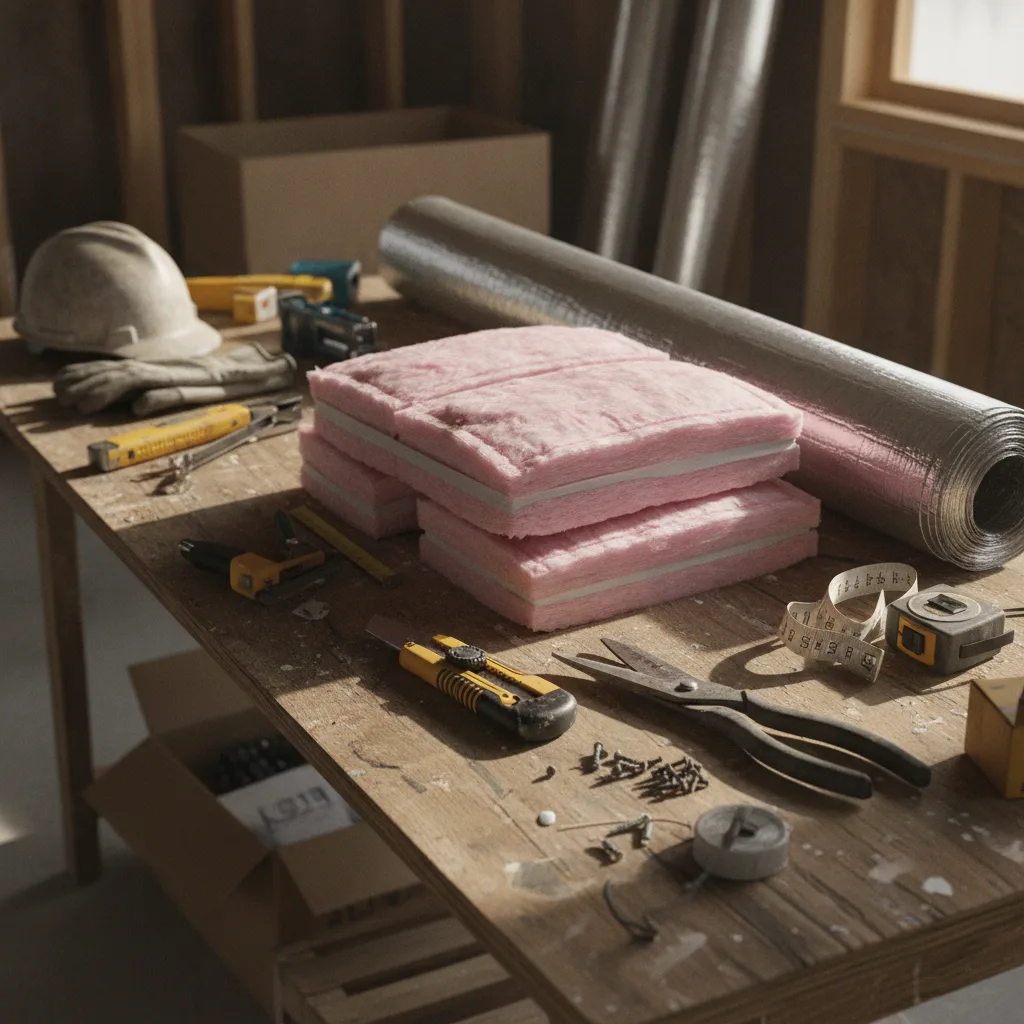
Our team in action — insulation professionals serving Los Angeles
Insulation Methods and Approaches for Los Angeles Attics
Blown-In (Loose-Fill) Insulation
Blown-in cellulose or fiberglass insulation is the most commonly used method for attic floors in Los Angeles. It is ideal for existing homes with irregular joist spacing or obstructions — common in older homes throughout Alhambra, Monterey Park, and South Pasadena. Blown-in insulation conforms to every gap and void, providing superior coverage. Cellulose, made from recycled paper treated with fire retardant, is particularly popular in LA due to its eco-friendly composition and effective performance in the region’s dry climate.
Fiberglass Batt Insulation
Batt insulation is well-suited for attics with standard, accessible joist spacing. It offers a cost-effective solution for newer homes in areas like Culver City and West Hollywood where construction is more uniform. However, batts can leave gaps in irregular spaces, making professional installation critical for achieving rated R-values.
Spray Foam Insulation
Spray foam — both open-cell and closed-cell — provides the highest R-value per inch and serves double duty as an air and moisture barrier. Learn more about our spray foam insulation services. It is the preferred choice for unvented attic assemblies and homes in coastal areas like Culver City where marine layer moisture is a concern. Closed-cell spray foam is also applied to attic rooflines in homes being converted to conditioned attic spaces.
Insulation Removal and Replacement
For homes with heavily contaminated, compacted, or pest-damaged insulation — widespread in the 50-to-70-year-old housing stock throughout East Los Angeles, Maywood, and Bell — complete insulation removal followed by full replacement is the recommended approach. This ensures the new insulation performs at its rated R-value without being compromised by degraded underlying material.
Crawl Space Insulation and Encapsulation
Many older LA homes have crawl spaces in addition to unconditioned attics. Crawl space insulation and encapsulation services address moisture and thermal issues at the foundation level, working in tandem with attic insulation for comprehensive home energy performance.
Ready for Attic Insulation Cost? Get Your Free Estimate Today.
Next Level Insulation of Los Angeles serves Los Angeles and the surrounding area — we’ll be on-site within 24 hours.
📞 Call (323) 765-3939Attic Insulation Cost in Los Angeles: What to Expect
Los Angeles attic insulation costs vary based on several key factors. Below is a transparent breakdown of typical price ranges for homeowners in the greater LA area.
Typical Cost Ranges
- Blown-in attic insulation installation (materials and labor): $1,500 – $3,500 for a typical 1,000–1,500 sq. ft. attic
- Fiberglass batt insulation: $1,200 – $2,800 for a comparable attic space
- Spray foam insulation (open-cell): $2,500 – $5,500 depending on coverage area and depth
- Closed-cell spray foam: $4,000 – $8,000+ for full attic roofline application
- Insulation removal (before replacement): $800 – $2,500 depending on existing material volume and contamination
- Asbestos abatement (pre-1980 homes): $1,500 – $4,000+ depending on extent, managed by certified contractors
Key Cost Factors in Los Angeles
- Attic size and accessibility: Low-slope rooflines common in 1950s ranch homes in Downey and South Gate can increase labor time and cost
- Current insulation condition: Complete removal versus topping off existing insulation significantly impacts total cost
- Target R-value: Achieving R-49 or R-60 (recommended for inland LA communities) requires more material than minimum code compliance
- Air sealing requirements: Older homes with extensive penetrations require more sealing labor
- Local labor market: Los Angeles labor rates are higher than the national average, reflecting in installation costs
Available Rebates
LADWP and Southern California Edison both offer rebates for qualifying insulation upgrades — potentially reducing your net cost by $200–$800 or more. We provide documentation to support your rebate applications. Learn more about our full attic insulation services.
Los Angeles Neighborhoods We Serve
Pasadena and South Pasadena
These communities feature a mix of early 20th century Craftsman bungalows and mid-century modern homes. Pasadena’s inland location means summer attic temperatures can exceed 150°F, making high R-value insulation essential. Many pre-1950 Craftsman homes have shallow attic access that requires specialized blown-in equipment.
East Los Angeles and Maywood
Dense residential communities with a high concentration of 1940s–1960s construction. Many homes still contain original insulation that has compacted significantly. Pest-related insulation damage from rodent activity is particularly prevalent in these neighborhoods.
Culver City and West Hollywood
These westside communities experience marine layer moisture cycling that accelerates insulation degradation. Moisture-resistant materials like closed-cell spray foam or treated cellulose are frequently recommended here alongside air sealing for optimal performance.
Glendale and Alhambra
Suburban communities with diverse housing stock spanning from 1920s Craftsman homes to 1980s townhomes. Glendale’s hillside homes often have complex attic geometries requiring custom insulation approaches. Both cities offer strong LADWP rebate incentives for qualifying upgrades.
We also serve Commerce, Downey, Huntington Park, Bell, Bell Gardens, Montebello, South Gate, Walnut Park, Cudahy, and all surrounding communities. View our complete service area list.
Attic Insulation Maintenance Tips for Los Angeles Homeowners
Proper maintenance extends the life and performance of your attic insulation, particularly in Los Angeles’s demanding climate environment.
- Inspect annually after Santa Ana wind events: Strong Santa Ana winds can dislodge attic ventilation components and allow debris or moisture intrusion that compromises insulation. Post-Santa Ana inspections (typically October through February) are recommended.
- Check for roof leaks after winter rain events: LA’s winter rain season (November through March) is the primary risk period for roof leaks that saturate insulation. Inspect attic insulation after significant rainfall events exceeding 1 inch.
- Monitor for rodent activity: Roof rats and mice are endemic throughout Los Angeles County. Seal all attic entry points and check insulation annually for signs of nesting or tunneling, which destroys thermal performance.
- Maintain attic ventilation: Ensure soffit vents and ridge vents remain unobstructed. Blocked ventilation in LA’s hot summers accelerates insulation degradation and increases attic temperatures beyond design limits.
- Avoid compressing insulation during attic storage: Compressed insulation loses R-value. If you use your attic for storage, install walkboards above insulation to prevent compression damage.
- Schedule a professional inspection every 7–10 years: Insulation effectiveness diminishes over time. Regular professional assessment ensures you’re maintaining California Title 24 compliance and optimal energy performance.
- Take advantage of LADWP energy audits: LADWP offers free home energy assessments that include attic insulation evaluation — a valuable tool for LA homeowners tracking insulation performance over time.
Why Choose Next Level Insulation of Los Angeles
When it comes to attic insulation cost and installation in Los Angeles, working with a contractor who truly understands the local housing stock, climate demands, and regulatory landscape makes a decisive difference in the quality and value of your project.
Next Level Insulation of Los Angeles is a locally based insulation contractor serving communities throughout Los Angeles County. Our technicians have direct, hands-on experience with the full range of Los Angeles housing — from pre-war Craftsman bungalows in South Pasadena to post-war ranch homes in Downey to modern construction in Culver City. We understand the specific challenges posed by LA’s diverse climate zones, from the intense heat of the San Gabriel Valley communities to the marine moisture conditions of the westside.
We provide transparent, itemized cost estimates with no hidden fees. Our team is knowledgeable about California Title 24 energy efficiency standards and can provide the documentation needed for LADWP and Southern California Edison rebate applications, ensuring you receive every dollar of incentive available to you.
We offer a full range of insulation services including insulation installation, blow-in insulation, attic insulation, spray foam, crawl space encapsulation, and insulation removal and replacement — giving you a single trusted contractor for every insulation need.
Call us at (323) 765-3939 to speak with our team today.
Frequently Asked Questions: Attic Insulation Cost in Los Angeles
How much does attic insulation cost in Los Angeles?
Attic insulation in Los Angeles typically costs between $1,500 and $5,500 for most residential projects, depending on attic size, insulation type, current conditions, and target R-value. Homes requiring full removal of old insulation before new installation will fall toward the higher end of this range. Spray foam applications can exceed $8,000 for large or complex attics.
What R-value is required for attic insulation in Los Angeles?
California’s Title 24 Energy Standards require a minimum of R-38 for attic insulation in Los Angeles’s designated climate zones (primarily Zone 9 and Zone 10). However, energy efficiency experts and most professional contractors — including our team — recommend R-49 to R-60 for homes in inland communities like Pasadena, Glendale, and Alhambra where summer heat gain is most extreme.
How long does attic insulation installation take in Los Angeles?
For most Los Angeles homes, the installation phase itself is completed in one day. Projects requiring full removal of existing insulation typically take one to two days total. Homes with asbestos abatement requirements may extend the overall project timeline to one to two weeks, including abatement and clearance testing periods.
Does Los Angeles have rebates for attic insulation?
Yes. Both LADWP (for customers within the City of Los Angeles service area) and Southern California Edison (for surrounding communities including Pasadena, Glendale, and others) offer rebates for qualifying insulation upgrades. Rebate amounts vary by program and year, but can offset $200–$800 or more of your project cost. Next Level Insulation of Los Angeles provides all necessary documentation to support your rebate application.
Do I need to remove my old attic insulation before adding new insulation in Los Angeles?
Not always. If existing insulation is in good condition and free of moisture damage, pest activity, or hazardous materials, new insulation can often be blown in over the top to bring the total depth up to the required R-value. However, for many older LA homes — particularly those built before 1975 in communities like Maywood, Bell, and Commerce — removal is strongly recommended due to compaction, contamination, or the presence of potentially hazardous materials.
My home was built in the 1950s in South Gate. Does it likely have asbestos insulation?
Homes built between the 1930s and late 1970s in Los Angeles County may contain asbestos-containing materials, including certain types of loose-fill insulation (particularly vermiculite, which was commonly used through the 1980s). If your South Gate or similarly aged LA home has not had its insulation tested, we recommend a professional assessment before any disturbance or removal work begins.
What is the best type of attic insulation for Los Angeles’s climate?
For most Los Angeles attics, blown-in cellulose or fiberglass provides an excellent balance of performance, cost, and coverage. For homes in coastal communities like Culver City and West Hollywood where moisture is a concern, or for unvented attic assemblies, spray foam (open-cell or closed-cell) offers superior moisture resistance and air sealing. Our team will recommend the optimal solution based on your home’s specific location, construction type, and budget.
How often should attic insulation be replaced in Los Angeles?
Quality blown-in or batt insulation in a well-maintained attic typically lasts 20–30 years. However, in Los Angeles, factors like pest damage, roof leaks during winter rain seasons, and the extreme thermal cycling from summer heat events can shorten effective lifespans. We recommend professional inspection every 7–10 years, with replacement as needed based on observed conditions and current R-value measurements.
Get Your Free Attic Insulation Cost Estimate in Los Angeles Today
Don’t let an under-insulated attic drive up your LADWP or SoCal Edison bills through another brutal LA summer. Whether you own a mid-century home in Alhambra, a Craftsman bungalow in South Pasadena, or a newer property in Culver City, Next Level Insulation of Los Angeles is ready to provide a transparent, no-obligation cost estimate tailored to your home and your specific location within Los Angeles County.
Our experienced team handles every step — from initial assessment and hazardous material evaluation through professional installation and rebate documentation. We serve Pasadena, Glendale, East Los Angeles, West Hollywood, Downey, Huntington Park, South Gate, and all surrounding communities throughout greater Los Angeles.
Call us now at (323) 765-3939 to speak with a local insulation expert, or contact us online to schedule your free in-home attic insulation assessment. The right insulation at the right price starts with one call to Next Level Insulation of Los Angeles.