

Insulation Installation Cost in Chula Vista, CA
Transparent Insulation Installation Cost Pricing for Chula Vista, CA Homeowners — Free Estimates
Get accurate insulation installation cost in Chula Vista, CA. Next Level Insulation serves all South Bay neighborhoods. Call (619) 789-4273 for a free estimate.
- Licensed & Insured
- Locally Owned & Operated
- Free Inspection & Estimate
Request Your
Free EstimateUnderstanding insulation installation cost in Chula Vista, CA is the first step toward a more comfortable, energy-efficient home. Insulation installation refers to the professional process of selecting, preparing, and applying thermal and acoustic insulating materials throughout residential and commercial structures — including attics, walls, crawl spaces, and floors — to regulate indoor temperatures and reduce energy consumption.
Chula Vista’s unique coastal climate, characterized by marine layer mornings, warm inland afternoons, and mild but humid winters, creates distinct thermal performance demands that differ significantly from inland San Diego communities. Homes along the western corridors near the bay experience different moisture dynamics than properties in eastern master-planned communities like Eastlake or Otay Ranch.
At Next Level Insulation of Chula Vista, our team brings deep local knowledge to every project. We understand the building types, climate zones, and neighborhood-specific challenges that define insulation needs across the South Bay. Call us today at (619) 789-4273 for a detailed cost estimate tailored to your property.
Understanding Insulation Installation Cost in Chula Vista
Insulation installation cost encompasses far more than simply purchasing rolls of fiberglass and stapling them to rafters. It is a comprehensive investment that includes material procurement, labor, site preparation, removal of degraded existing insulation, air sealing, and post-installation verification of thermal performance. The cost structure reflects the complexity of each project, the type of insulation selected, the accessibility of the installation area, and regional labor and material market rates.
Historically, Chula Vista’s residential construction boom followed several distinct waves. The post-World War II era produced tract homes primarily in the western sections of the city — areas now characterized by older wood-frame construction with minimal insulation standards compared to modern California building codes. The 1980s and 1990s saw rapid expansion into the Eastlake and Bonita corridors, with homes built under tighter Title 24 energy standards but now reaching the age where original insulation degrades. The 2000s master-planned communities in eastern Chula Vista — Otay Ranch, Windingwalk, and Eastlake Greens — represent newer construction that still benefits from insulation upgrades and air sealing improvements.
California’s Title 24 energy code, which governs minimum insulation R-values across climate zones, places Chula Vista primarily in Climate Zone 7 — a designation that mandates specific performance thresholds for ceiling, wall, and floor assemblies. Homes built before 1978 in neighborhoods like Castle Park or the L Street corridor frequently fall far short of these modern standards, making professional insulation installation not just a comfort upgrade but a code-compliance and resale-value improvement.
The prevalence of slab-on-grade foundations in western Chula Vista and raised foundations with crawl spaces in hillside properties near Bonita and Spring Valley means that insulation needs vary significantly even within a few miles. Stucco exteriors common throughout South Bay communities present specific wall cavity access challenges that influence labor costs and method selection. Understanding these local construction realities is essential to generating an accurate insulation installation cost estimate in Chula Vista.
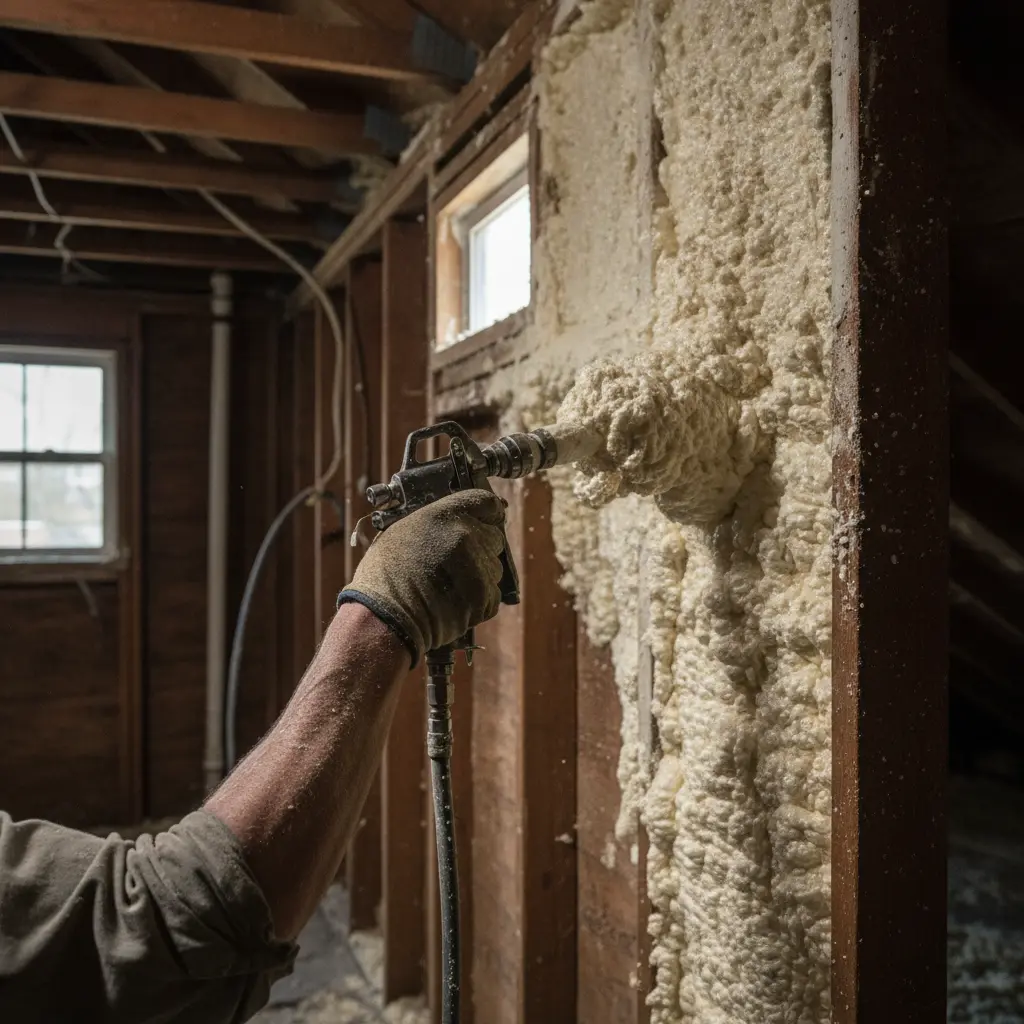
Our team in action — insulation professionals serving Chula Vista
Why Insulation Installation Is Needed in Chula Vista, CA
Chula Vista’s position between San Diego Bay and the coastal mountain foothills creates a microclimate that places unique and persistent stress on building envelopes. The city sits in California Climate Zone 7, a designation that reflects the marine-influenced temperature patterns that define daily life across the South Bay. Summer afternoons regularly reach 85–95°F in eastern neighborhoods like Eastlake Greens and Otay Ranch, while marine layer mornings can keep western communities near Third Avenue below 65°F well into midday. This daily temperature swing — often 25–30°F within a single 24-hour period — creates continuous expansion and contraction cycles in building materials that accelerate insulation degradation over time.
Moisture infiltration is a critical and often underestimated driver of insulation failure in Chula Vista. The Chula Vista coastal zone experiences average relative humidity levels of 70–80% during winter months, particularly in neighborhoods west of Interstate 805 such as Castle Park, Otay, and the Broadway Corridor. This persistent humidity saturates older fiberglass batt insulation, reducing its effective R-value by as much as 40% when moisture content exceeds 1% by weight. Homes with inadequate vapor barriers in crawl spaces — a common condition in the hillside properties of Bonita and La Presa — are particularly vulnerable to this degradation pathway.
The Santa Ana wind events that periodically affect Chula Vista — most dramatically during the October and November fire weather seasons — drive hot, dry air through building envelopes at high velocity. During the October 2007 Harris Fire, which burned through communities east of Chula Vista toward Otay, air infiltration rates in poorly insulated homes spiked dramatically, forcing HVAC systems to work at 150–200% of their normal capacity. Homes with proper insulation and air sealing demonstrated measurably lower indoor temperature increases during this event.
SDG&E utility data consistently shows that Chula Vista residential customers pay among the highest per-unit electricity costs in California, with average summer cooling costs for inadequately insulated homes ranging from $180 to $320 per month. Properly installed attic insulation with R-38 to R-60 values — as recommended for Climate Zone 7 — can reduce these costs by 25–40% annually. The Chula Vista Climate Action Plan, adopted in 2017 and updated in 2021, specifically identifies residential insulation upgrades as a priority measure for reducing the city’s carbon emissions from the building sector, creating additional incentive programs that influence project costs.
Neighborhoods like Eastlake Greens and Rolling Hills Ranch, built predominantly in the late 1990s and early 2000s, now contain homes where the original blown-in attic insulation has settled by 30–50% from its installed depth, substantially reducing effective R-values. Identifying and addressing this settling is a core component of professional insulation assessment in the region.
Signs You Need Insulation Installation in Chula Vista
Temperature and Comfort Indicators
- Rooms near the street-facing west walls feel significantly warmer than interior rooms during afternoon heat
- Indoor temperatures rise more than 5°F above the thermostat setting during summer afternoons in Eastlake or Otay Ranch properties
- HVAC system runs continuously for more than 20 minutes per cycle without reaching set temperature
- Noticeable temperature variation of more than 3–4°F between floors or between rooms on the same floor
Energy and Utility Bill Indicators
- SDG&E monthly bills consistently 20% or more above neighborhood average for comparable square footage
- Year-over-year energy costs increasing despite no change in usage habits or household size
- HVAC equipment requires servicing more frequently than the manufacturer’s recommended interval
Physical and Structural Indicators
- Attic insulation depth measuring less than 10 inches when visually inspected through the hatch
- Visible mold, discoloration, or musty odors in crawl spaces beneath homes in Spring Valley or Bonita
- Drafts detectable near electrical outlets, window frames, or recessed lighting fixtures
- Insulation material that appears yellow-gray, compressed, or crumbling — indicating age-related degradation common in pre-1990 Chula Vista construction
Urgency Indicators
- Pest activity (rodents, insects) found within insulation material — a health hazard requiring immediate removal and replacement
- Water staining on attic insulation following winter rain events, indicating roof or flashing failures
Insulation Methods and Approaches We Use in Chula Vista
Blown-In Attic Insulation
The most commonly recommended method for Chula Vista attics, blown-in cellulose or fiberglass achieves consistent coverage over irregular framing and around obstructions typical in South Bay tract homes. Target depth for Climate Zone 7 is R-38 to R-60, requiring 10–16 inches of settled material. Cost ranges from $1.00 to $2.00 per square foot installed. Learn more about blow-in insulation services
Spray Foam Insulation
Open-cell and closed-cell spray foam are preferred for crawl spaces, rim joists, and areas where air sealing and thermal resistance must be achieved simultaneously. Closed-cell foam’s vapor resistance makes it especially valuable in moisture-prone crawl spaces beneath Bonita and Spring Valley hillside properties. Cost ranges from $1.50 to $4.50 per square foot depending on foam type and thickness. Explore our spray foam insulation options
Fiberglass Batt Insulation
Best suited for open wall cavities during renovation projects or new construction additions, fiberglass batts offer predictable R-values in standard framing configurations. Cost ranges from $0.50 to $1.50 per square foot installed.
Crawl Space Encapsulation
A comprehensive moisture management system that combines vapor barriers, insulation, and sealed vents to transform open crawl spaces into conditioned or semi-conditioned zones. Essential for homes in La Presa and Bonita where ground moisture levels are elevated. Discover crawl space encapsulation solutions
Insulation Removal and Replacement
Required when existing material is contaminated, pest-damaged, or too degraded to augment. Full removal precedes installation of any new system. Read about our insulation removal process
Ready for Insulation Installation Cost? Get Your Free Estimate Today.
Next Level Insulation of Chula Vista serves Chula Vista and the surrounding area — we’ll be on-site within 24 hours.
📞 Call (619) 789-4273Insulation Installation Cost in Chula Vista, CA
Insulation installation cost in Chula Vista varies based on project scope, material type, property size, and site conditions. The following ranges reflect current South Bay labor and material market rates as of 2024.
Typical Cost Ranges
- Attic Blown-In Insulation: $1,200–$3,500 for average 1,200–1,800 sq ft Chula Vista home
- Crawl Space Insulation: $1,500–$4,000 depending on access difficulty and moisture remediation needs
- Crawl Space Encapsulation: $3,000–$8,000 for full encapsulation systems
- Spray Foam (Closed-Cell): $2,000–$6,000 for targeted application zones
- Full Home Insulation Upgrade: $5,000–$15,000+ for comprehensive attic, wall, and crawl space treatment
- Insulation Removal Only: $500–$2,500 depending on material volume and contamination level
Location-Specific Cost Factors in Chula Vista
Several factors specific to Chula Vista influence final project costs. Homes in eastern communities like Eastlake Greens with two-story construction incur higher attic access labor. Properties near the bay corridor with elevated moisture readings require additional vapor management materials. Pest-damaged insulation — more prevalent in older western Chula Vista neighborhoods — adds removal and remediation costs of $300–$800 above standard removal rates.
SDG&E’s Energy Savings Assistance Program and California’s Energy Upgrade CA rebates can offset costs by $500–$2,000 for qualifying Chula Vista homeowners. Call (619) 789-4273 for a detailed, no-obligation written estimate.
Neighborhoods We Serve in and Around Chula Vista
Eastlake Greens
Built primarily between 1990 and 2005, Eastlake Greens homes feature tile roofs, two-story construction, and blown-in attic insulation that has settled significantly over two decades. Our team frequently addresses R-value deficits of 40–50% below original installation depth in this community. Insulation services in Eastlake Greens
Bonita
Bonita’s hillside properties, many built in the 1970s and 1980s on raised foundations, present crawl space moisture challenges driven by seasonal groundwater fluctuation in the Sweetwater River watershed. Crawl space encapsulation is a priority service in this area.
National City
Dense urban housing stock in National City includes pre-1960 construction with minimal or absent wall insulation, making targeted spray foam and blown-in treatments cost-effective upgrades for long-term energy savings. Insulation services in National City
Chula Vista (Western Corridors)
The Broadway, Third Avenue, and L Street corridors feature post-war construction with original insulation that is decades past functional lifespan. Full removal and replacement projects are among our most common engagements in this zone.
Imperial Beach
Coastal humidity in Imperial Beach accelerates insulation degradation faster than any other South Bay community. We adapt our material selections and vapor barrier specifications to address the elevated moisture environment unique to this beachside community. Insulation services in Imperial Beach
Insulation Maintenance Tips for Chula Vista Homeowners
- Inspect attic insulation depth annually: Use a ruler through the access hatch each fall — before marine layer season intensifies — to verify you maintain at least 10–13 inches of blown-in coverage for R-38 performance in Climate Zone 7.
- Check crawl space vapor barriers after winter rains: Chula Vista’s winter storm events can shift or puncture vapor barriers. Inspect after any rainfall exceeding 0.5 inches, which occurs several times each season.
- Look for pest evidence in attic spaces: Roof rat activity, common throughout South Bay communities, creates insulation tunneling that destroys R-value. Address any evidence immediately.
- Seal HVAC penetrations annually: Ductwork passing through attic floors creates air bypass points. Inspect and reseal with mastic or foam each year.
- Monitor indoor humidity during summer: If indoor relative humidity exceeds 55% despite air conditioning, vapor infiltration through the building envelope may indicate insulation or sealing failures.
- Clear attic ventilation pathways: Soffit and ridge vents blocked by insulation reduce attic airflow, trapping summer heat and moisture — a common issue in older Chula Vista homes with low-slope rooflines.
- Schedule professional assessment every 7–10 years: Even well-installed insulation benefits from periodic professional evaluation as building materials age and settle.
Why Choose Next Level Insulation of Chula Vista
Next Level Insulation of Chula Vista is a locally operated insulation company serving the South Bay and greater San Diego region. Our team works exclusively in the communities we know — from the coastal humidity challenges of Imperial Beach and western Chula Vista to the inland heat demands of Eastlake Greens and Otay Ranch. This focused geographic expertise means our cost estimates are accurate, our material recommendations are climate-appropriate, and our installation methods account for the specific building types, construction eras, and environmental conditions present throughout the region.
We provide transparent, itemized written estimates before any work begins — no surprises, no hidden fees. Every project is completed using commercial-grade equipment and materials that meet or exceed California Title 24 Climate Zone 7 performance standards. Our team stays current with SDG&E rebate programs and California Energy Commission guidelines so we can help Chula Vista homeowners maximize their return on every insulation investment.
To discuss your project and receive an accurate insulation installation cost estimate for your Chula Vista property, call us at (619) 789-4273. Schedule your free estimate today
Frequently Asked Questions About Insulation Installation Cost in Chula Vista
How much does attic insulation installation cost in Chula Vista?
For a typical Chula Vista home with 1,200–1,800 square feet of attic space, blown-in attic insulation installation costs between $1,200 and $3,500. Factors that influence this range include existing insulation condition, attic accessibility, chosen R-value target, and whether air sealing is included. Homes in Eastlake Greens with two-story construction or complex framing may fall at the higher end of this range.
Is insulation installation more expensive in Chula Vista than elsewhere in San Diego County?
Chula Vista insulation costs are generally comparable to the broader San Diego metro market. However, the prevalence of older construction in western neighborhoods and the moisture management requirements specific to coastal South Bay properties can add cost complexity not seen in drier inland communities like El Cajon or Santee. Crawl space work in Bonita and Spring Valley, for example, often requires additional vapor management materials that increase project totals.
How long does an insulation installation project take?
A standard attic insulation project for a single-family home in Chula Vista takes one full day, including assessment, any necessary removal, air sealing, and installation. Larger projects involving crawl spaces, walls, and full encapsulation systems typically require two to three days. We schedule around your household’s routine and provide a clear timeline before beginning.
What R-value do I need for my Chula Vista home?
California’s Title 24 energy code places Chula Vista in Climate Zone 7. For attics, the minimum recommended R-value is R-38, though R-49 to R-60 provides better performance and payback given SDG&E’s electricity rates. Wall cavities typically target R-13 to R-21 depending on framing depth. Our assessment will identify exactly what your property currently achieves and what upgrades will provide the best return.
Are there rebates available for insulation installation in Chula Vista?
Yes. SDG&E’s Energy Savings Assistance Program offers rebates and, in some cases, free insulation for qualifying income-eligible Chula Vista homeowners. Energy Upgrade CA also provides incentives for projects that meet whole-home energy improvement thresholds. Additionally, the Chula Vista Climate Action Plan supports local rebate coordination through the City’s sustainability office. We help customers identify and apply for all applicable programs.
Do I need to remove old insulation before adding new insulation?
Not always. If existing insulation is dry, pest-free, and structurally intact, new material can often be blown in over the top to bring R-values up to current standards. However, homes with moisture damage, rodent contamination, or vermiculite-based materials (found in some pre-1980 Chula Vista construction) require full removal before new installation. Our assessment will make this determination clearly.
How does Chula Vista’s coastal climate affect insulation performance?
Marine humidity reduces the effective R-value of moisture-absorbing insulation types like standard fiberglass batts. Homes west of Interstate 805 in Chula Vista experience higher sustained humidity than eastern communities, making moisture-resistant materials and proper vapor barriers especially important. This climate factor is a key reason why our material recommendations for western Chula Vista properties often differ from those we make for Eastlake or Otay Ranch homes just a few miles east.
What is crawl space encapsulation and why is it relevant in Chula Vista?
Crawl space encapsulation involves sealing the crawl space completely with heavy-duty vapor barriers, insulating the perimeter walls, and closing off exterior vents to create a conditioned or semi-conditioned space. It is particularly relevant in Chula Vista’s hillside communities — Bonita, La Presa, and portions of Spring Valley — where seasonal groundwater elevation and high ambient humidity drive moisture into home foundations, degrading insulation and creating conditions for mold growth.
Get Your Free Insulation Installation Cost Estimate in Chula Vista Today
If you’re ready to understand exactly what insulation installation will cost for your Chula Vista home or commercial property, Next Level Insulation of Chula Vista is ready to help. We serve all of Chula Vista including Eastlake Greens, Bonita, and the western neighborhood corridors — as well as Imperial Beach, National City, Spring Valley, La Mesa, Lemon Grove, and communities throughout the South Bay and greater San Diego region.
Our assessments are thorough, our estimates are written and itemized, and our installations are backed by our commitment to California Title 24 compliance and honest, professional service. Don’t let rising SDG&E bills or uncomfortable indoor temperatures continue costing you money. Contact us today.
Call us now at (619) 789-4273 or submit your project details online for a free estimate. We look forward to bringing your home’s insulation to the next level.