

Spray Foam Insulation Cost in Burbank, CA
Transparent Spray Foam Insulation Cost Pricing for Burbank, CA Homeowners — Free Estimates
Find out what spray foam insulation costs in Burbank, CA. Get local pricing, open-cell vs closed-cell breakdowns & a free estimate. Call (818) 514-7541.
- Licensed & Insured
- Locally Owned & Operated
- Free Inspection & Estimate
Request Your
Free EstimateUnderstanding spray foam insulation cost in Burbank, CA is the first step toward making a smart investment in your home or commercial property. Spray foam insulation is a high-performance sealing and insulating material that expands on contact, filling gaps, cracks, and cavities to create an airtight thermal envelope. Unlike traditional batt or blown-in products, spray foam delivers both air sealing and insulation in a single application.
Burbank’s unique combination of hot, dry summers, occasional cold snaps from the San Gabriel Mountains, and its dense stock of mid-century residential and commercial buildings creates a specific set of energy-efficiency challenges that spray foam is particularly well suited to address. Properties near the Burbank Studios corridor, Magnolia Park, and the Rancho neighborhood all experience distinct thermal and moisture dynamics that influence overall project cost.
At Next Level Insulation of Burbank, we provide transparent, detailed cost assessments so Burbank property owners know exactly what they’re paying for and why. Call us today at (818) 514-7541 to schedule a free estimate.
Understanding Spray Foam Insulation Cost in Burbank
Spray foam insulation is composed of two liquid chemical components — polyol resin and isocyanate — that are combined under pressure at the spray tip. The mixture expands rapidly to 30–60 times its liquid volume, conforming to every surface irregularity and hardening into a rigid or semi-rigid foam depending on the formulation used.
There are two primary types: open-cell spray foam, which cures into a softer, spongy material with an R-value of approximately R-3.5 to R-3.8 per inch, and closed-cell spray foam, which cures into a dense, rigid material achieving R-6 to R-7 per inch while also acting as a vapor barrier. The choice between them significantly affects the overall cost of a Burbank project.
Historically, spray foam technology emerged in the 1970s as the construction industry searched for superior alternatives to fiberglass batts in the wake of the 1973 oil embargo. By the 1990s, advances in blowing agents made the product safer and more accessible. In California, the adoption curve accelerated after Title 24 energy codes were tightened in 2005 and again in 2013 and 2019, pushing builders and retrofit contractors in cities like Burbank toward higher-performance insulation systems.
Burbank’s building inventory is dominated by post-World War II construction — particularly the 1945–1975 era when the city expanded rapidly to house workers at Lockheed Aircraft and the major film studios. These structures were built under energy codes that, by today’s standards, are considered almost non-existent. Single-family ranch homes in the Magnolia Park Historic District, multi-unit apartment complexes along Victory Boulevard, and light industrial buildings near the Burbank Airport corridor all share one common trait: under-insulated assemblies that spray foam retrofits are specifically designed to remedy.
Commercial and industrial properties in Burbank’s Media District — home to Warner Bros., Disney, and NBC Universal adjacency — frequently require specialized spray foam applications in metal building roofs and tilt-up concrete walls, both of which carry their own cost considerations. Learn more about our spray foam insulation services
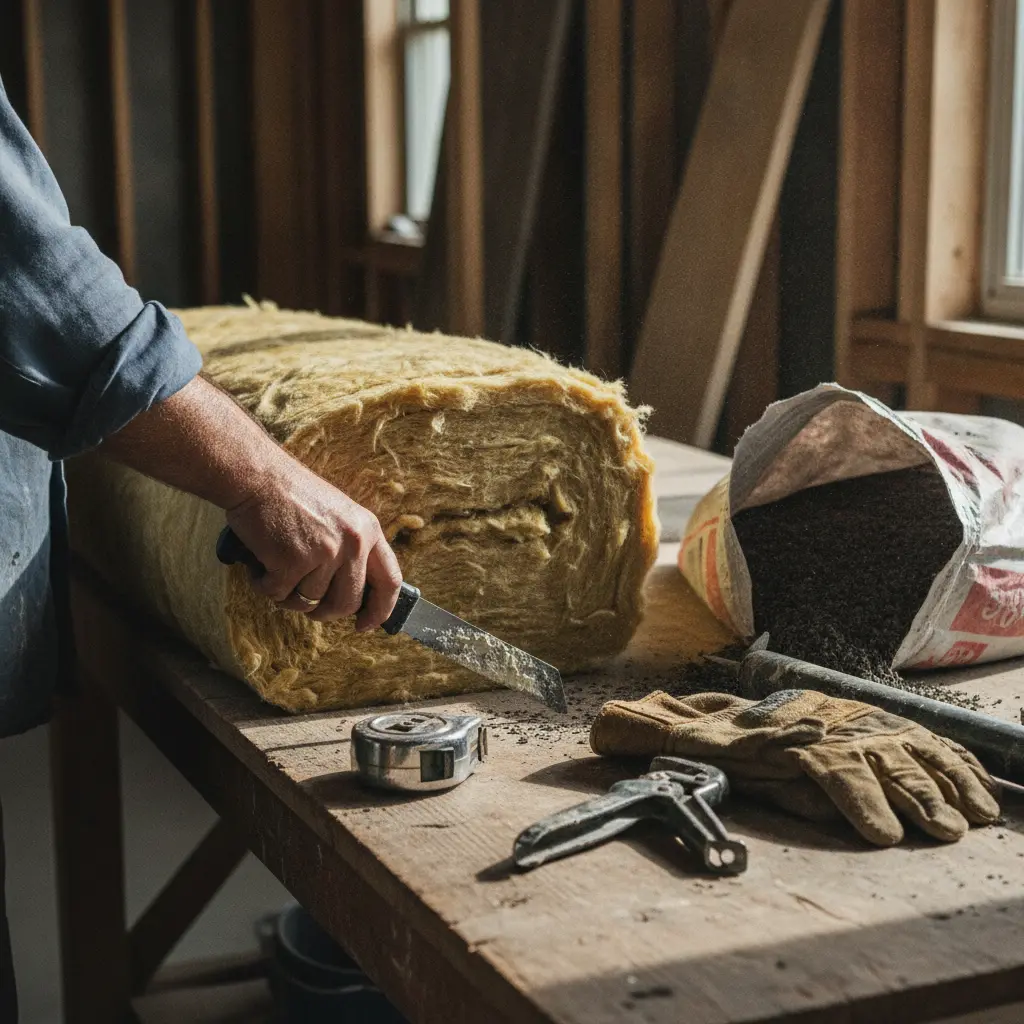
Our team in action — insulation professionals serving Burbank
Why Spray Foam Insulation Is Needed in Burbank, CA
Burbank sits in the eastern end of the San Fernando Valley, an inland basin that produces some of the most extreme temperature swings in the greater Los Angeles area. While coastal communities like Santa Monica rarely exceed 85°F, Burbank regularly records summer highs above 100°F — the city hit 114°F during the September 2022 heat event, one of the most severe in California history. That extreme thermal load puts enormous pressure on under-insulated attic assemblies, where temperatures can exceed 150°F and radiate downward into living spaces, driving up cooling costs by 20–30%.
The San Fernando Valley’s Mediterranean climate, classified as a Csb/Csa hybrid under the Köppen system, produces not only brutal summers but also surprisingly cold winter nights. During the January 2023 cold snap, Burbank recorded overnight lows below 37°F for five consecutive nights — conditions that expose gaps in attic insulation, crawl space floors, and rim joists that were never designed for such thermal stress.
Local soil conditions also play a role. The alluvial soils beneath Burbank — deposited over millennia by the Los Angeles River and its tributaries — retain moisture differently than coastal clay soils. In crawl spaces beneath homes in the Rancho neighborhood and parts of the Chandler Estates area, ground moisture migrates upward year-round. Without proper spray foam encapsulation, this moisture condenses on floor joists, promotes mold growth, and degrades wood framing — a combination that makes crawl space insulation a higher-urgency need here than in drier inland communities.
The 1971 Sylmar Earthquake (6.6 magnitude) and the 1994 Northridge Earthquake (6.7 magnitude) both affected Burbank structures significantly. Post-quake retrofits often disturbed or partially removed original insulation in attics and walls, leaving gaps that have never been properly addressed. Homes in the Burbank Hills and the Lakeside Golf Club neighborhoods that underwent foundation bolting and cripple-wall bracing frequently have compromised insulation in those exact cripple-wall cavities — a problem closed-cell spray foam resolves while simultaneously adding structural rigidity.
Air quality is another Burbank-specific driver. The city has historically struggled with particulate pollution from the I-5 and SR-134 interchange near Downtown Burbank. An airtight spray foam envelope keeps outdoor PM2.5 particulates from infiltrating through wall penetrations and attic bypasses — a benefit that goes beyond energy savings for families with respiratory sensitivities.
Wildfire smoke infiltration, particularly during Santa Ana wind events in October and November, represents a newer but growing concern. During the November 2019 Easy Fire and the 2020 fire season, Burbank residents experienced days of hazardous air quality. Spray foam’s air-sealing properties reduce smoke infiltration rates by measurable amounts, providing a tangible indoor air quality benefit during these increasingly frequent events. Explore our attic insulation solutions for Burbank homes
Signs You Need Spray Foam Insulation in Burbank
Energy Performance Indicators
- Monthly SoCal Edison bills exceeding $250–$350 during Burbank summer months (June–September) for a typical 1,500–2,000 sq ft home
- HVAC system running continuously during afternoons when outdoor temperatures exceed 95°F
- Noticeable temperature differences of 5°F or more between upstairs and downstairs rooms
- Drafts near electrical outlets, recessed lights, or where walls meet the ceiling
Moisture and Air Quality Symptoms
- Musty odors in the crawl space or lower levels, especially after winter rains
- Visible condensation on interior walls during January and February cold nights
- Smoke or dust infiltration into the home during Santa Ana wind events
- Increased allergy symptoms that correlate with outdoor air quality days
Structural and Visual Warning Signs
- Visible daylight through gaps in attic rim joists or cripple walls
- Existing fiberglass batts that are sagging, compressed, or discolored with moisture staining
- Pest entry points along the foundation sill plate or roof eave areas
Urgency Indicators
If your home was built before 1978, has never received an insulation upgrade, or shows active moisture damage in the crawl space or attic, scheduling an assessment promptly will prevent compounding structural damage and escalating energy costs. Learn about our insulation removal and replacement services
Spray Foam Methods and Approaches for Burbank Properties
Closed-Cell Spray Foam (2-lb Density)
The preferred choice for Burbank crawl spaces, rim joists, and exterior-facing walls. At R-6.5 per inch, a 3-inch application achieves R-19.5 — meeting and exceeding California’s Title 24 requirements for Climate Zone 9, which covers Burbank. Its vapor-barrier properties make it ideal for the moisture-laden alluvial soils beneath Rancho and Chandler Estates homes. Cost: $1.50–$3.00 per board foot installed.
Open-Cell Spray Foam (0.5-lb Density)
Best suited for interior attic applications in Burbank’s hot climate where vapor barriers are not required and sound dampening is a priority — particularly in homes near the SR-134 freeway or the Hollywood Burbank Airport flight path. At R-3.7 per inch, a 5.5-inch application in a 2×6 rafter bay achieves approximately R-20. Cost: $0.44–$0.65 per board foot installed.
Flash-and-Batt Hybrid Method
A 1–2 inch closed-cell foam layer is sprayed directly onto the sheathing, followed by fiberglass or mineral wool batt fill. This combines the air-sealing and vapor-control benefits of closed-cell foam with the cost efficiency of batt insulation. Popular in Burbank’s Magnolia Park Historic District where homeowners want energy upgrades without the cost of full closed-cell fill. Cost: $0.85–$1.50 per sq ft combined.
Crawl Space Encapsulation with Spray Foam
Closed-cell foam is applied to the interior of foundation walls and rim joists, combined with a heavy-duty ground vapor barrier. Particularly recommended for Burbank homes built on pier-and-beam foundations in low-lying areas near the Los Angeles River channel. Discover our crawl space encapsulation services
Ready for Spray Foam Insulation Cost? Get Your Free Estimate Today.
Next Level Insulation of Burbank serves Burbank and the surrounding area — we’ll be on-site within 24 hours.
📞 Call (818) 514-7541Spray Foam Insulation Cost in Burbank, CA — What to Expect
Spray foam insulation costs in Burbank are influenced by several interconnected factors. Here is a transparent breakdown to help you budget accurately.
Typical Price Ranges
- Open-cell spray foam: $0.44–$0.65 per board foot (approximately $1.25–$1.85 per sq ft at standard 3-inch thickness)
- Closed-cell spray foam: $1.50–$3.00 per board foot (approximately $4.50–$9.00 per sq ft at 3-inch thickness)
- Full attic encapsulation (1,500 sq ft attic floor): $2,800–$6,500 depending on access difficulty and existing conditions
- Crawl space encapsulation (800 sq ft): $3,200–$7,000 including vapor barrier
- Rim joist sealing only: $500–$1,200 for a typical Burbank single-family home
Burbank-Specific Cost Factors
Labor rates: Los Angeles County labor costs run 15–25% higher than the national average due to prevailing wage dynamics and contractor demand. Permit fees: City of Burbank permit fees for insulation work typically range from $85–$250 depending on project scope. Removal costs: If existing damaged insulation must be removed first, add $1.00–$2.50 per sq ft for removal and disposal. Access difficulty: Burbank’s common crawl space clearances of 18–24 inches add crew time compared to full-height basement installations.
California utility rebates through SoCal Edison’s Energy Efficiency Programs can offset $0.10–$0.25 per sq ft of qualifying insulation work. We assist clients with rebate paperwork at no additional charge. View our full insulation installation services
Burbank Neighborhoods We Serve
Magnolia Park Historic District
Homes in Magnolia Park date primarily from the 1920s–1950s, featuring original plaster-and-lath walls and uninsulated attics. The neighborhood’s canopy of mature trees provides partial shading, but original roof assemblies lack any meaningful R-value. Flash-and-batt and attic spray foam applications are the most common requests here.
Rancho (South Burbank)
The Rancho neighborhood, developed in the 1950s–1970s along the Burbank–Glendale border, features large ranch-style homes with extensive crawl space foundations. Ground moisture from proximity to the Los Angeles River’s Tujunga Wash tributary makes crawl space encapsulation a frequent and urgent need in this area.
Burbank Hills and Stough Canyon Area
Hillside properties above Glenoaks Boulevard experience amplified wind exposure and greater diurnal temperature swings than valley floor homes. Structures here often have vented roof assemblies that allow extreme attic heat to build up, making closed-cell attic encapsulation particularly cost-effective.
Downtown Burbank and Victory Boulevard Corridor
Multi-family and mixed-use buildings along Victory Boulevard and San Fernando Boulevard represent a significant commercial spray foam market. Tilt-up and masonry construction common in this corridor benefits from exterior or interior closed-cell foam applications. Explore blow-in insulation alternatives for your property
Spray Foam Insulation Maintenance Tips for Burbank Homeowners
- Annual visual inspection: Walk your attic and crawl space once per year — ideally in October before winter rains — to check for foam separation, pest intrusion holes, or moisture staining near the foam surface.
- Monitor crawl space humidity: Install a wireless humidity sensor in your crawl space. Sustained readings above 60% RH in a Burbank crawl space indicate vapor barrier failure or a new moisture intrusion source.
- Seal new penetrations promptly: Any new electrical, plumbing, or HVAC penetrations through foam-sealed assemblies should be resealed with compatible foam or caulk immediately to prevent air bypass.
- Check HVAC ductwork connections: Burbank’s summer heat accelerates duct sealant degradation. Inspect accessible duct connections in attic spray foam encapsulations every 2–3 years.
- After seismic events: Following any earthquake above 4.0 magnitude — a regular occurrence near Burbank given the Verdugo Fault proximity — inspect foam-sealed rim joists and cripple walls for cracking or separation.
- Keep crawl space vents closed if encapsulated: An encapsulated crawl space is designed to be conditioned, not vented. Ensure vents remain sealed after encapsulation to prevent the system from working against itself during Burbank’s humid winter months.
- Clean gutters before rainy season: Overflowing gutters can introduce water to sill plates adjacent to spray foam applications; keep gutters clear each October to protect your insulation investment.
Why Choose Next Level Insulation of Burbank
Next Level Insulation of Burbank is a locally based insulation contractor with deep knowledge of Burbank’s specific building stock, climate conditions, and municipal permitting requirements. We are not a national franchise dispatching unfamiliar crews — we are based in the community we serve, and our technicians know the difference between a Rancho crawl space and a Burbank Hills attic before they ever pull up to your address.
We serve not only Burbank but also surrounding communities including Glendale, Pasadena, Studio City, Sherman Oaks, North Hollywood, Toluca Lake, Universal City, Valley Village, Hollywood, Beverly Hills, Culver City, East Los Angeles, South Pasadena, La Cañada Flintridge, San Gabriel, West Hollywood, Alhambra, Sun Valley, and Monterey Park — giving us a regional perspective on how Burbank’s conditions compare and what solutions work best here.
We provide detailed written estimates, assist with SoCal Edison rebate paperwork, and coordinate all required Burbank Building and Safety permits. Our goal is complete transparency on cost and process from the first phone call to the final sign-off.
Call us at (818) 514-7541 to schedule your free Burbank property assessment. Learn more about crawl space insulation options
Frequently Asked Questions About Spray Foam Insulation Cost in Burbank
How much does spray foam insulation cost for an average Burbank home?
For a typical 1,500–2,000 sq ft single-family home in Burbank, a full attic spray foam application runs $2,800–$6,500 depending on whether open-cell or closed-cell foam is used. Crawl space encapsulation adds $3,200–$7,000. Many Burbank homeowners invest $4,000–$9,000 total for a comprehensive attic and crawl space package that brings the home into Title 24 compliance.
Is closed-cell or open-cell foam better for Burbank’s climate?
Both have their place. Closed-cell is preferred for crawl spaces, rim joists, and any assembly with moisture exposure risk — common in Burbank’s alluvial soil zones. Open-cell is well-suited for interior attic encapsulations where vapor permeability is acceptable and sound control near the SR-134 or Hollywood Burbank Airport is a priority. We assess your specific property conditions and recommend the right product for each assembly.
Does spray foam insulation require a permit in Burbank?
It depends on the scope. Rim joist sealing and minor gap filling typically do not require a permit. Full attic encapsulations and crawl space conversions from vented to conditioned space generally do require a permit from the City of Burbank Building and Safety Division at 150 N. Third Street. We handle permit coordination on your behalf as part of our service.
How long does spray foam insulation last in Burbank’s climate?
Properly installed closed-cell and open-cell spray foam have an expected service life of 80+ years and do not degrade, sag, or compress over time the way fiberglass batts do. Burbank’s dry climate actually extends the material’s performance life compared to humid coastal environments. Annual visual inspections are recommended to catch any pest or mechanical damage early.
Will spray foam insulation help with the Santa Ana wind-driven wildfire smoke infiltration?
Yes. Spray foam’s primary function as an air sealant significantly reduces the infiltration rate of outdoor air — and the particulates carried in it. During events like the 2019 Easy Fire or the 2020 fire season, Burbank homes with airtight spray foam envelopes experienced measurably lower indoor PM2.5 concentrations compared to homes with leaky fiberglass insulation. It’s a meaningful indoor air quality benefit for a Burbank-specific concern.
How long does a spray foam installation take for a typical Burbank house?
Most residential applications are completed in one day. An attic encapsulation alone takes 4–6 hours. A combined attic and crawl space project typically takes 6–10 hours. We schedule all Burbank projects to minimize disruption, and the cured foam is safe for re-occupancy within 24 hours of application.
Are there rebates available for spray foam insulation in Burbank?
Yes. Burbank residents served by SoCal Edison may qualify for Energy Efficiency rebates of $0.10–$0.25 per sq ft on qualifying insulation upgrades. Additionally, the federal Inflation Reduction Act’s 25C tax credit provides up to 30% of project costs (capped at $1,200 per year) for qualifying insulation improvements. We assist clients with both rebate applications and provide the documentation needed for federal tax credit claims.
Does spray foam add structural value to older Burbank homes?
Closed-cell spray foam adds measurable racking strength to wall assemblies — a documented benefit in seismic retrofit literature. For Burbank homes that underwent cripple-wall bracing after the 1994 Northridge Earthquake, adding closed-cell foam to those same cripple-wall cavities provides an additional layer of structural reinforcement while simultaneously solving the insulation gap problem left by post-quake retrofit work.
Get Your Free Spray Foam Insulation Estimate in Burbank Today
Whether you own a post-war ranch home in Magnolia Park, a hillside property above Glenoaks Boulevard, or a commercial building in the Burbank Media District, Next Level Insulation of Burbank is ready to provide a detailed, no-obligation cost assessment tailored to your property’s specific conditions.
Stop overpaying on your SoCal Edison bill every summer. Stop letting Burbank’s extreme heat, cold snaps, and wildfire smoke degrade your indoor comfort. Our team is local, knowledgeable, and committed to transparent pricing from the first call to the final inspection.
Call us now at (818) 514-7541 to schedule your free on-site assessment. We serve Burbank and all surrounding communities including Glendale, Pasadena, Studio City, Sherman Oaks, North Hollywood, Toluca Lake, Hollywood, Beverly Hills, and beyond. Let’s bring your property to the next level. Schedule your free insulation assessment today