

Closed Cell Spray Foam Insulation in Burbank, CA
Energy-Saving Closed Cell Spray Foam Insulation for Burbank, CA Homes — Licensed & Insured
Expert closed cell spray foam insulation in Burbank, CA. Serving Magnolia Park, Rancho District & beyond. Free estimates. Call (818) 514-7541 today.
- Licensed & Insured
- Locally Owned & Operated
- Free Inspection & Estimate
Request Your
Free EstimateClosed cell spray foam insulation is a high-density, two-component polyurethane insulation system that expands on application to form a rigid, air-impermeable barrier with an R-value of approximately 6.0 to 7.0 per inch — the highest of any commercially available insulation material. Unlike open cell foam, the closed cellular structure resists moisture vapor, adds structural rigidity to wall cavities and roof decks, and delivers a continuous thermal envelope that eliminates the air leakage pathways common in older Burbank construction.
Burbank’s position in the eastern San Fernando Valley means residents deal with intense summer heat radiating off the Verdugo Mountains, wildfire smoke infiltration events, and aging building stock ranging from 1940s bungalows near Downtown Burbank to mid-century commercial buildings along San Fernando Boulevard. Next Level Insulation of Burbank brings specialized knowledge of these local conditions to every closed cell spray foam project. Call us today at (818) 514-7541 to schedule a free assessment.
Understanding Closed Cell Spray Foam Insulation in Burbank
Closed cell spray polyurethane foam (ccSPF) was developed in the mid-20th century as a derivative of rigid polyurethane board insulation, evolving into spray-applied form through advances in two-component mixing technology during the 1970s and 1980s. By the 1990s, building scientists had documented its superiority in climates with significant temperature swings and moisture-vapor challenges, leading to widespread adoption in California’s Title 24 energy code compliance pathway.
The chemistry is straightforward: two liquid components — an isocyanate (the “A” side) and a polyol resin blend (the “B” side) — are heated, pressurized, and combined at the spray gun tip. The mixture expands rapidly to roughly 30 to 40 times its original liquid volume, then cures within seconds into a rigid foam matrix. Because each individual cell in the cured foam is closed and filled with an insulating gas rather than air, the material achieves both exceptional thermal resistance and a very low vapor permeance, typically less than 1.0 perm at 2 inches of thickness.
In Burbank specifically, the building stock shapes how and where closed cell foam is most valuable. The city’s residential neighborhoods — from the craftsman bungalows of the Rancho District near Hollywood Way to the post-war tract homes of the Magnolia Park neighborhood — were largely built before California’s energy codes required meaningful insulation. Many of these structures have 2×4 stud walls with little to no existing insulation, cathedral ceiling sections over additions, and unconditioned attic spaces exposed to the intense thermal loading of a Burbank summer afternoon, where attic temperatures routinely exceed 150°F.
Commercial and light-industrial properties along Empire Avenue and the media production corridors near Warner Bros. Studios face unique demands: large roof spans, metal deck construction, and the need to maintain precise interior climate control for sensitive production equipment. Closed cell foam applied directly to the underside of metal roof decks addresses all three challenges simultaneously — thermal control, vapor control, and structural reinforcement — in a single pass of material.
Understanding these building typologies is essential to selecting the right insulation approach, which is why Next Level Insulation of Burbank conducts a thorough building assessment before specifying any ccSPF system. Learn more about our full spray foam insulation services
Why Closed Cell Spray Foam Insulation Is Needed in Burbank, CA
Extreme Thermal Swings in the Eastern San Fernando Valley
Burbank sits at the confluence of the San Fernando Valley and the Verdugo Mountains, a geography that produces dramatic diurnal temperature swings. On a peak summer day, Burbank Airport (BUR) weather station data shows downtown Burbank regularly reaching 100°F to 105°F, while overnight lows can drop to the low 60s — a single-day swing of 40 degrees or more. During the September 2022 heat event, Burbank recorded temperatures of 109°F, among the highest reliably recorded in its modern history. Attic spaces in homes along Glenoaks Boulevard and Olive Avenue reached 155°F to 160°F during that event, measured by thermal imaging surveys.
Standard fiberglass batt insulation installed in 1950s-era homes — common in the Rancho District and Magnolia Park neighborhoods — has an R-value of approximately R-11 to R-15 in a 2×4 wall cavity. That is profoundly inadequate against a 105°F exterior air mass combined with radiant heat loading from a dark roof surface. California Title 24-2022 now requires wall assemblies to achieve R-20 or higher in Climate Zone 9, which encompasses Burbank. Closed cell foam at just 3 inches delivers R-19 to R-21, meeting code in the same cavity depth that previously held underperforming batts.
Wildfire Smoke Infiltration
Burbank’s proximity to fire-prone hillsides — including the Verdugo Hills and the Angeles National Forest ridgeline visible from Glenoaks Canyon — creates recurring wildfire smoke infiltration events. During the 2017 La Tuna Fire, which burned approximately 7,200 acres in the Verdugo Mountains directly adjacent to Burbank, residents throughout the Burbank Hills neighborhood and along Kenneth Road reported hazardous indoor air quality even with windows closed. Smoke infiltration studies show that leaky building envelopes — those with an air changes per hour at 50 Pascals (ACH50) rating above 7 — allow significant particle penetration. Closed cell foam, because it seals every penetration and cavity gap during application, can reduce a building’s ACH50 rating from the typical 8–12 range found in pre-1970 Burbank homes to below 3, dramatically reducing smoke infiltration during future fire events.
Moisture and Humidity Challenges
While Burbank is semi-arid, its proximity to the Los Angeles Basin means marine layer humidity events are common from May through August — the “May Gray / June Gloom” pattern. Crawl space foundations common in Burbank’s older residential neighborhoods, particularly around the Downtown Burbank area and near Victory Boulevard, trap ground moisture that migrates upward through uninsulated floor assemblies. Closed cell foam’s low vapor permeance stops this moisture drive, protecting floor framing from long-term decay and reducing interior humidity loads.
Aging Building Stock Energy Waste
The City of Burbank has actively promoted energy efficiency through its Burbank Water and Power (BWP) utility programs. BWP data indicates that residential customers in zip codes 91501 and 91506 — covering Downtown Burbank and Magnolia Park — have among the highest per-square-foot energy consumption in the utility’s service territory, a direct consequence of the age and insulation status of the housing stock. Retrofitting with closed cell spray foam is one of the highest-impact interventions available for these older structures. Explore our attic insulation solutions for Burbank homes
Signs You Need Closed Cell Spray Foam Insulation in Burbank
Thermal Comfort Indicators
- Rooms facing south or west along Magnolia Boulevard feel unbearably hot by mid-afternoon despite air conditioning running continuously
- Second-floor bedrooms in Burbank craftsman homes remain 10°F or more warmer than the first floor on summer evenings
- Cathedral ceiling sections over additions or sunrooms feel cold in January mornings and hot in August afternoons
- Warm or cold spots on interior wall surfaces when touched during temperature extremes
Energy Bill Indicators
- Burbank Water and Power cooling bills exceeding $180–$220 per month during July–September for a home under 1,500 square feet
- HVAC system running almost continuously on peak heat days without maintaining setpoint temperature
- Noticeable increase in energy costs year over year without a corresponding increase in usage
Indoor Air Quality Indicators
- Detectable smoke odor indoors during wildfire events in the Verdugo Hills even with all windows closed
- Dust accumulation in rooms far from registers, indicating air infiltration through wall and ceiling cavities
- Musty odors emanating from crawl spaces beneath older Burbank bungalows, indicating moisture infiltration
Urgency Indicators
- Visible condensation on interior wall surfaces during winter mornings — a sign of moisture-laden air moving through an uninsulated envelope
- Ice dams or unusual moisture staining at eaves on older Burbank homes with low-slope roofing
Our Closed Cell Spray Foam Installation Process in Burbank
On-Site Assessment and Diagnostic (Day 1, 1–2 Hours)
A Next Level Insulation of Burbank technician visits your property to conduct a visual inspection, thermal imaging scan, and blower door test when applicable. We document existing insulation conditions, identify air leakage pathways, and note any building-specific concerns — such as knob-and-tube wiring present in many pre-1950 Burbank homes, which requires special handling protocols before foam installation.
Scope Development and Proposal (1–2 Business Days)
Based on the assessment, we prepare a detailed written scope specifying foam thickness by assembly type, expected R-value, and compliance with California Title 24-2022 requirements for Climate Zone 9. We identify Burbank Water and Power rebate eligibility, which can offset project costs.
Pre-Installation Preparation (Day of Installation, 1–2 Hours)
Surfaces are cleared of debris and existing loose insulation where necessary. All electrical boxes, plumbing penetrations, and adjacent finished surfaces are masked with protective sheeting. Ventilation is established — critical in Burbank’s warm climate, where ambient temperatures affect the reaction rate and yield of ccSPF chemistry.
Equipment Calibration and Material Conditioning (30–60 Minutes)
Our proportioning equipment is calibrated to account for Burbank’s ambient temperature and humidity on the day of installation. A/B component drums are temperature-conditioned to manufacturer specifications (typically 70°F–80°F), which is easily achieved in Burbank’s climate but requires monitoring during unusually cold January mornings.
Spray Foam Application (2–6 Hours Depending on Scope)
Closed cell foam is applied in lifts of approximately 2 inches per pass to manage exothermic heat buildup. Technicians wear full PPE including supplied-air respirators throughout this phase. Occupants and pets must vacate the premises for a minimum of 24 hours after application.
Trimming, Inspection, and Thermal Imaging Verification (1–2 Hours)
After cure, foam is trimmed flush with framing members where required by code. A post-installation thermal scan confirms complete coverage with no voids or thin spots.
Final Documentation and Rebate Assistance (1 Business Day)
We provide a completion certificate, installation photos, and assistance completing any applicable Burbank Water and Power energy efficiency rebate paperwork. Need old insulation removed first? See our insulation removal service
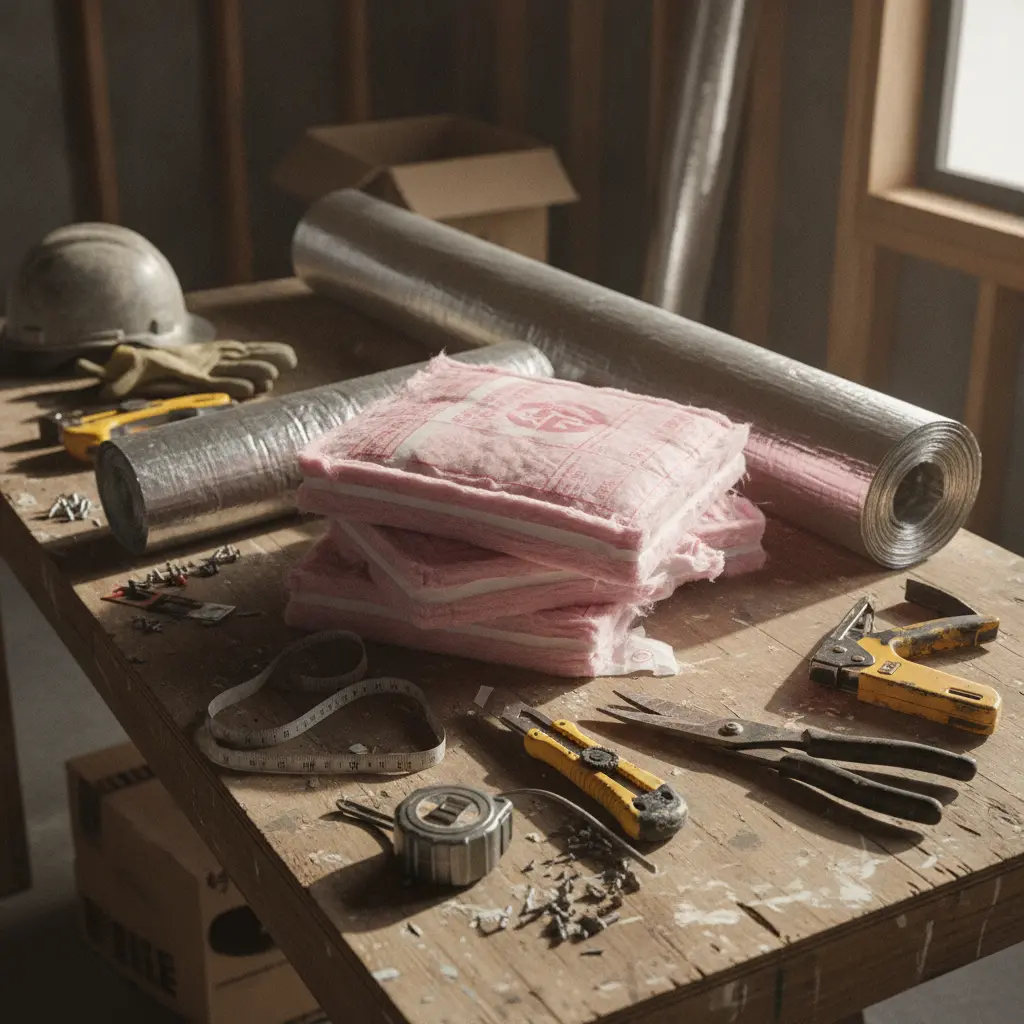
Our team in action — insulation professionals serving Burbank
Closed Cell Spray Foam Methods and Approaches Used in Burbank
1. Full-Cavity Fill in 2×4 and 2×6 Stud Walls
Applied to exterior wall cavities in uninsulated or under-insulated Burbank homes, particularly prevalent in the Rancho District and Magnolia Park neighborhoods. At 3.5 inches in a 2×4 cavity, ccSPF delivers approximately R-21 to R-24, exceeding Title 24-2022 minimum requirements for Climate Zone 9. This method is ideal during gut renovations or additions where wall cavities are exposed.
2. Unvented (Hot) Roof Assembly Application
Applied directly to the underside of roof sheathing, converting a vented attic to an unvented conditioned space. Particularly effective in Burbank’s mid-century ranch homes and commercial buildings along Empire Avenue, where existing ventilation pathways are inadequate. California Energy Code allows unvented roof assemblies when ccSPF is applied at the code-required thickness, moving the HVAC system inside the thermal envelope and dramatically reducing duct losses.
3. Crawl Space Rim Joist and Foundation Wall Sealing
Targets the rim joist — the single leakiest component in most Burbank bungalow foundations — with 2–3 inches of ccSPF. Combined with crawl space encapsulation, this method eliminates the primary moisture and air infiltration pathway in raised-foundation homes common throughout Downtown Burbank and the Olive Avenue corridor.
4. Metal Building and Commercial Roof Deck Application
Applied to the interior face of metal roof decks in Burbank’s production and light-industrial buildings, particularly near the media corridor along Alameda Avenue. Eliminates thermal bridging through steel purlins and prevents condensation on cold metal surfaces during January marine layer events.
5. Hybrid Assemblies (ccSPF + Blown-In Fiber)
Where budget constraints exist, a 2-inch ccSPF air barrier layer is installed first, followed by blown-in cellulose or fiberglass to achieve total target R-value. This hybrid approach satisfies both the air sealing and thermal requirements of Title 24-2022 at a lower material cost. Learn about our blow-in insulation service
Ready for Closed Cell Spray Foam Insulation? Get Your Free Estimate Today.
Next Level Insulation of Burbank serves Burbank and the surrounding area — we’ll be on-site within 24 hours.
📞 Call (818) 514-7541Closed Cell Spray Foam Insulation Cost in Burbank, CA
Understanding the cost of closed cell spray foam insulation in Burbank requires looking at both material and labor variables specific to the Los Angeles market.
Typical Price Ranges
- Residential wall cavity fill: $1.75 to $3.00 per board foot installed (one board foot = one square foot at one inch thick). A typical 1,400-square-foot Burbank ranch home with 2×4 exterior walls requires approximately 1,500–2,000 board feet, placing total cost in the $2,600–$6,000 range for walls alone.
- Unvented attic/roof deck application: $2.00 to $3.50 per board foot. A 1,200-square-foot attic floor area converted to an unvented assembly at 4 inches typically costs $9,600–$16,800.
- Crawl space rim joist sealing: $1,200 to $3,500 for a typical Burbank bungalow with 800–1,200 linear feet of rim joist perimeter.
- Commercial roof deck application: $2.50 to $4.00 per board foot depending on deck accessibility and required thickness.
Factors Affecting Cost in Burbank
- Existing insulation removal: Pre-installation removal of deteriorated fiberglass or blown-in material adds $1.00–$2.00 per square foot
- Access difficulty: Tight crawl spaces beneath older Burbank craftsman homes or high-pitch roofs add labor hours
- Los Angeles prevailing wage: Labor costs in LA County are generally 15–25% higher than national averages
- Burbank Water and Power rebates: BWP offers insulation rebates of up to $0.10 per square foot for qualifying installations, partially offsetting project cost
Contact Next Level Insulation of Burbank at (818) 514-7541 for a specific written estimate. Considering full insulation replacement? See our replacement services
Neighborhoods in Burbank We Serve
Magnolia Park
This predominantly residential neighborhood along and near Magnolia Boulevard features a high concentration of 1940s–1950s small-lot California ranch homes and Spanish Revival bungalows. Most were built with minimal or no wall insulation and single-pane windows. Closed cell foam retrofit projects here frequently involve open-wall renovations triggered by kitchen remodels or bathroom updates, making the timing ideal for insulating wall cavities simultaneously.
Rancho District
Located near Hollywood Way and the Burbank Airport corridor, the Rancho District includes some of Burbank’s oldest residential stock, with homes dating to the 1920s and 1930s. Knob-and-tube wiring is present in many properties, requiring licensed electrical assessment before ccSPF installation. These homes benefit enormously from rim joist and floor assembly sealing given their raised-foundation construction.
Burbank Hills / Verdugo Woodlands
Hillside properties in this area face both the highest wildfire smoke risk in Burbank and the greatest solar gain due to south and west-facing exposures on sloped lots. Unvented roof assemblies using closed cell foam are particularly valuable here, where wildfire ember intrusion through vented soffits poses both air quality and fire risk concerns.
Downtown Burbank
The mixed-use corridor along San Fernando Boulevard and Olive Avenue includes older multi-family residential buildings from the 1960s–1970s that lack modern envelope performance. We serve both residential units and the commercial ground-floor spaces in these buildings. See how attic insulation improves Burbank multi-family buildings
Maintenance Tips for Closed Cell Spray Foam Insulation in Burbank
- Annual visual inspection after wildfire season (October–November): Check spray foam surfaces in attics for any discoloration or damage from elevated temperatures during fire events. Burbank’s proximity to the Verdugo Hills means attic temperatures during nearby fires can spike significantly.
- Inspect foam surfaces every 2–3 years for UV exposure: Any ccSPF exposed to sunlight in open attic or exterior applications must be covered with a thermal barrier per California Fire Code. Confirm coatings remain intact.
- Check crawl space vapor barriers annually: In Burbank’s Rancho District and Downtown corridor, ground moisture levels fluctuate seasonally. Inspect polyethylene vapor barriers for tears or shifting.
- Verify HVAC duct integrity after converting to conditioned attic: When attic becomes conditioned space, ducts and air handlers should be inspected for leaks — previously acceptable duct losses now affect conditioned space directly.
- Blower door re-test every 5 years: Confirm air sealing performance has not degraded due to structural settlement common in older Burbank homes on expansive soils.
- Monitor Burbank Water and Power bills: A sudden unexplained increase in cooling costs after installation may indicate a new air leakage pathway introduced by renovation work elsewhere in the building.
- Keep foam surfaces covered per code: Never remove drywall or thermal barrier coverings over spray foam without re-installing an approved covering promptly. California building code requires a 15-minute thermal barrier in occupied spaces.
Why Choose Next Level Insulation of Burbank
Next Level Insulation of Burbank is a locally focused insulation contractor serving Burbank and the surrounding San Fernando Valley and greater Los Angeles communities. Our technicians understand the specific building typologies, climate conditions, and regulatory requirements that define insulation work in Burbank — from the aging craftsman bungalows of Magnolia Park to the commercial media production facilities near Warner Bros. Studios on Alameda Avenue.
We work within the Burbank Water and Power utility service territory and help customers identify and apply for available energy efficiency rebates to reduce out-of-pocket project costs. Our team stays current with California Title 24-2022 energy code requirements specific to Climate Zone 9, ensuring every closed cell spray foam installation meets or exceeds current standards.
We offer free on-site assessments for all Burbank properties, with no obligation. Our service area covers not only Burbank but also Studio City, Sherman Oaks, North Hollywood, Glendale, Pasadena, Beverly Hills, Hollywood, and communities across greater Los Angeles.
Call us at (818) 514-7541 to speak directly with a Burbank insulation specialist. Explore our crawl space insulation services
Frequently Asked Questions: Closed Cell Spray Foam Insulation in Burbank
How much does closed cell spray foam insulation cost in Burbank, CA?
In Burbank, closed cell spray foam typically costs between $1.75 and $3.50 per board foot installed, depending on application type, accessibility, and scope. A whole-home retrofit for an average 1,400-square-foot Burbank ranch home can range from $8,000 to $25,000 depending on which assemblies are being addressed. Burbank Water and Power rebates may reduce eligible costs. Call (818) 514-7541 for a free site-specific estimate.
Is closed cell spray foam better than open cell for Burbank’s climate?
For most Burbank applications, yes. Burbank’s Climate Zone 9 designation means both summer heat and vapor drive from ground moisture are significant concerns. Closed cell foam’s combination of high R-value per inch and low vapor permeance makes it the superior choice for attic decks, crawl space assemblies, and exterior wall retrofits. Open cell foam’s higher permeance can allow moisture to accumulate in assemblies where vapor drive is a concern.
How long does a closed cell spray foam installation take in a typical Burbank home?
For a standard single-family home in Burbank — say, a 1,400-square-foot ranch in Magnolia Park — an attic unvented assembly conversion typically requires one full installation day. Wall cavity work done during a renovation may add a partial day. Occupants must vacate for a minimum of 24 hours after application. Full cure is achieved within 24–72 hours depending on ambient conditions.
Will closed cell spray foam help with wildfire smoke infiltration from the Verdugo Hills?
Yes, significantly. Closed cell foam’s primary function as an air barrier directly addresses smoke infiltration. By sealing the building envelope to below 3 ACH50 (compared to 8–12 ACH50 in typical pre-1970 Burbank homes), ccSPF dramatically reduces the rate at which outdoor smoke particles enter the living space during events like the 2017 La Tuna Fire or other Verdugo Hills fire incidents.
Does Burbank require a permit for closed cell spray foam insulation installation?
The City of Burbank Building Division requires permits for insulation work when it is part of a permitted renovation or when an attic assembly conversion (from vented to unvented) is being performed. Next Level Insulation of Burbank assists customers in determining permit requirements for their specific project and can coordinate with the Burbank Building Division on your behalf.
Can closed cell spray foam be installed in my existing walls without opening them up?
Not directly — ccSPF requires open cavities to be sprayed. However, for existing closed walls, injection foam (a different material) can be used. We recommend ccSPF when wall cavities are already open due to renovation, or for attics and crawl spaces where direct access exists. Discuss your specific situation with our team for the right recommendation.
Does closed cell spray foam qualify for Burbank Water and Power rebates?
Burbank Water and Power’s energy efficiency program includes insulation rebates for qualifying residential customers. Eligibility depends on current insulation levels, the type of assembly being insulated, and compliance with installation standards. Our team is familiar with BWP rebate requirements and will identify applicable incentives during your project assessment.
How does closed cell spray foam perform during Burbank’s Santa Ana wind events?
Exceptionally well. Santa Ana wind events — which affect Burbank with hot, dry air from the northeast, sometimes exceeding 60 mph gusts through the Verdugo Mountain passes — create significant positive and negative pressure differentials across building envelopes. Closed cell foam’s rigid, air-impermeable structure resists wind-driven air infiltration far more effectively than batt insulation, reducing both comfort disruption and wildfire ember intrusion risk during these events.
Get a Free Closed Cell Spray Foam Quote in Burbank Today
If your Burbank home or commercial property is struggling with high energy bills, uneven temperatures, wildfire smoke infiltration, or moisture problems, closed cell spray foam insulation from Next Level Insulation of Burbank is the highest-performance solution available. We serve all Burbank neighborhoods including Magnolia Park, the Rancho District, Burbank Hills, and Downtown Burbank, as well as surrounding communities throughout the San Fernando Valley and greater Los Angeles.
Our free on-site assessments include a thermal analysis and identification of all available Burbank Water and Power rebates. There is no obligation and no pressure — just expert, local knowledge applied to your specific building.
Call us now at (818) 514-7541 to schedule your free assessment. Our team is standing by to help you achieve a more comfortable, energy-efficient, and smoke-resilient building in Burbank, CA.