

Spray Foam Insulation in Burbank, CA
Energy-Saving Spray Foam Insulation for Burbank, CA Homes — Licensed & Insured
Need spray foam insulation in Burbank, CA? Next Level Insulation of Burbank provides expert installation for homes & businesses in Climate Zone 9. Call (818) 514-7541.
- Licensed & Insured
- Locally Owned & Operated
- Free Inspection & Estimate
Request Your
Free EstimateSpray foam insulation is a high-performance insulating material that expands on contact to seal gaps, cracks, and cavities throughout your home or commercial building. Unlike traditional batt insulation, spray foam creates both a thermal barrier and an air seal in a single application — making it one of the most efficient insulation solutions available today.
In Burbank, CA, where summer temperatures routinely climb above 100°F in the San Fernando Valley heat corridor and dry Santa Ana winds strain HVAC systems for months at a time, proper insulation is not a luxury — it is essential. Burbank’s mix of post-war bungalows, mid-century commercial buildings near the Media District, and newer construction near Downtown Burbank creates a wide range of insulation needs that demand local expertise.
At Next Level Insulation of Burbank, our team is trained specifically in the insulation challenges unique to this region. Whether you need a full attic upgrade or targeted air sealing in a crawl space, we deliver precision results. Call us today at (818) 514-7541 for a free assessment.
Understanding Spray Foam Insulation
Spray polyurethane foam (SPF) insulation has been used in residential and commercial construction since the 1970s, but the technology has advanced dramatically over the past two decades. Today’s spray foam products are formulated to deliver precise R-values, resist moisture intrusion, and remain structurally stable across decades of thermal cycling — a critical quality in a climate like Burbank’s where daily temperature swings between night and day can exceed 30°F.
Spray foam comes in two primary forms: open-cell and closed-cell. Open-cell spray foam is lighter, more flexible, and provides excellent sound dampening — making it a popular choice for interior walls and ceilings in Burbank’s residential neighborhoods where traffic noise from I-5 and Hollywood Way can penetrate older construction. Closed-cell spray foam is denser, offers a higher R-value per inch (approximately R-6 to R-7 per inch compared to open-cell’s R-3.5 to R-4), and acts as a vapor barrier — ideal for crawl spaces, exterior walls, and roof assemblies exposed to Burbank’s periodic marine layer moisture intrusion.
In the greater Los Angeles area, building codes have increasingly favored high-efficiency insulation standards under California’s Title 24 Energy Code. Burbank structures — particularly those in the flat grid neighborhoods south of Magnolia Boulevard and the hillside homes near Wildwood Canyon — often fall short of current Title 24 requirements, especially in attics and below-floor spaces. Spray foam insulation is one of the most effective tools for bringing these structures into compliance while dramatically reducing monthly energy costs.
Commercial properties in Burbank’s Media District, home to studios such as Warner Bros. and NBC Universal-adjacent facilities, also benefit from spray foam’s ability to create climate-controlled environments that protect sensitive equipment and reduce energy overhead. Understanding which foam type, density, and application method fits your specific building is what separates a quality installation from a costly mistake — and it is exactly where local knowledge matters most.
Why Spray Foam Insulation Is Needed in Burbank, CA
Extreme Heat and the Urban Heat Island Effect
The City of Burbank’s extensive pavement coverage — including the Bob Hope Airport tarmac, the sprawling media campus parking lots, and densely developed commercial corridors along Victory Boulevard — contributes to a measurable urban heat island effect. Studies conducted by the California Air Resources Board have recorded surface temperatures in the San Fernando Valley floor exceeding ambient air temperatures by 8°F to 12°F during peak summer months. This means homes in neighborhoods like Magnolia Park and the Rancho district experience sustained radiant heat loads that conventional fiberglass batts simply cannot address adequately. Spray foam’s superior R-value and air-sealing capability are specifically suited to combating this radiant heat transfer through attic decks and roof assemblies.
Santa Ana Wind Events and Air Infiltration
Burbank is particularly exposed to Santa Ana wind events, which funnel through the Verdugo and San Gabriel mountain passes and have been recorded at sustained speeds of 40–60 mph in the foothills near Wildwood Canyon Road and the Stough Canyon Nature Center. These wind events drive massive air infiltration through the envelope of older buildings. A single Santa Ana event can pressurize a poorly sealed attic and push unconditioned air throughout living spaces, spiking heating and cooling costs and carrying fine particulate matter and allergens inside. Spray foam’s monolithic air barrier stops this infiltration at the source.
Aging Housing Stock
A significant portion of Burbank’s residential housing was constructed between 1940 and 1970 — particularly in the Equestrian District and the neighborhoods surrounding George Izay Park. These homes were built to older codes that did not require meaningful insulation in walls or attics. Many still contain original compressed or degraded fiberglass batts, or no insulation at all in wall cavities. The California Energy Commission estimates that homes built before 1978 in Climate Zone 9 lose up to 40% of their conditioned air through the building envelope. Spray foam insulation, combined with attic insulation services, is the most efficient path to correcting these decades-old deficiencies.
Wildfire Smoke and Air Quality
Burbank’s proximity to fire-prone hillsides in the Verdugo Mountains means residents regularly deal with wildfire smoke events — as experienced during the 2017 La Tuna Fire, the largest fire in Los Angeles city history at that time, which burned over 7,000 acres directly north of Burbank. During smoke events, an uninsulated or poorly sealed home acts as a conduit for smoke infiltration. Spray foam’s complete air sealing capability creates a meaningful defense against smoke and fine particulate penetration, protecting both residents and property.
Signs You Need Spray Foam Insulation in Burbank
Energy and Comfort Indicators
- Monthly SoCal Gas or LADWP electric bills that spike above seasonal averages — particularly during July and August when Burbank temperatures exceed 100°F
- Rooms that feel noticeably hotter or colder than the thermostat setting, especially upper-floor bedrooms in Burbank bungalows with attic heat soak
- HVAC systems running continuously without reaching the set temperature during Santa Ana wind events
- Uneven temperatures between street-facing and alley-facing rooms along Burbank’s flat grid neighborhoods
Physical and Structural Signs
- Visible gaps, cracks, or daylight visible around attic hatch frames, recessed lighting, or top-plate penetrations
- Moisture staining or condensation on interior walls or ceilings, particularly in homes near the Burbank Channel or low-lying areas near the Los Angeles River flood plain
- Collapsed, shifted, or discolored insulation visible in the attic
- Drafts detectable near electrical outlets on exterior walls
Urgency Indicators
- Evidence of rodent or pest intrusion through insulation — a known problem in older Burbank properties near Chandler Bikeway and the Metrolink corridor
- Musty odors emanating from crawl spaces beneath homes in the Rancho or Equestrian District
Our Spray Foam Insulation Process in Burbank
Free On-Site Assessment (1–2 Hours)
Our technician visits your Burbank property and conducts a thorough walkthrough of all insulated and uninsulated zones — attic, walls, crawl space, rim joists, and garage ceiling. We identify problem areas unique to your building type, note existing insulation condition, and check for signs of air leakage or moisture intrusion. This assessment is always complimentary.
Blower Door Testing (Optional, 1 Hour)
For properties pursuing Title 24 compliance or utility rebates through LADWP’s residential energy efficiency program, we offer blower door diagnostic testing to quantify your home’s current air infiltration rate and establish a baseline for post-installation verification.
Surface Preparation (2–4 Hours)
Before any foam is applied, we remove existing degraded insulation where required (see our insulation removal service), clean substrate surfaces, mask off electrical fixtures, HVAC equipment, and any surfaces not intended for treatment. In Burbank’s older homes with original knob-and-tube wiring, we coordinate with your electrician prior to any enclosed cavity insulation work.
Spray Foam Application (4–8 Hours Depending on Scope)
Our trained applicators apply spray foam at manufacturer-specified temperatures — a detail that matters significantly in Burbank, where early-morning applications during winter months must account for substrate temperatures that can affect foam adhesion and expansion ratios. We apply foam in controlled lifts to prevent excessive exothermic heat buildup, ensuring proper cure and consistent R-value throughout.
Cure Time and Ventilation (2–24 Hours)
After application, the treated area must remain ventilated and unoccupied during initial cure. In Burbank’s warmer months, full off-gassing typically completes within 2–4 hours. We provide clear re-entry guidance specific to your project.
Inspection and Quality Check (1 Hour)
We inspect all treated surfaces for voids, incomplete coverage, and adhesion quality before closing any access panels or framing.
Final Documentation
We provide a project completion report documenting installed R-values, foam type and brand, and application zones — useful for LADWP rebate submissions and resale disclosures.
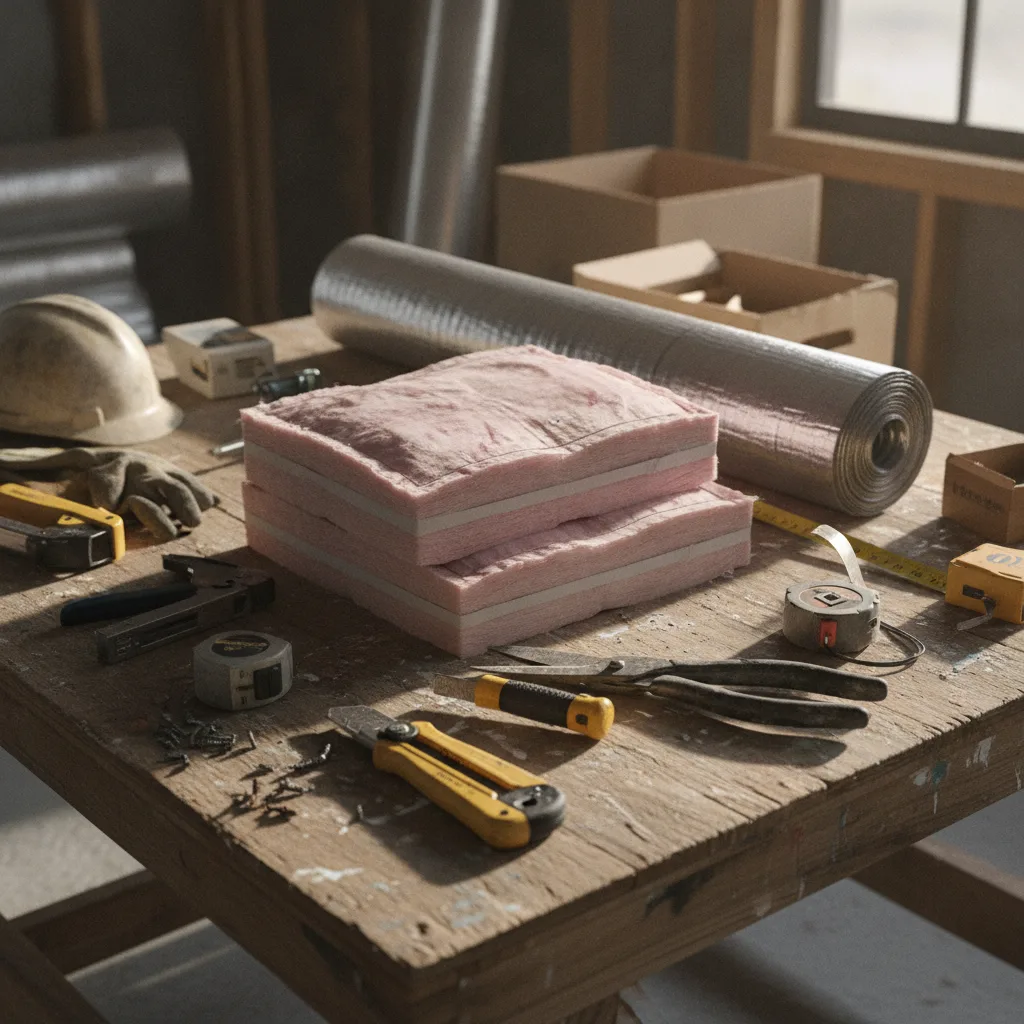
Our team in action — insulation professionals serving Burbank
Spray Foam Insulation Methods We Use in Burbank
Closed-Cell Spray Foam
The premium choice for Burbank’s exterior applications. With an R-value of approximately R-6.5 per inch, closed-cell foam is applied to exterior wall cavities, roof decks, and crawl space walls. Its vapor-barrier properties make it the correct choice for crawl spaces in the low-lying neighborhoods near the Los Angeles River drainage basin, where ground moisture is a persistent issue. Also used in the underside of Burbank hillside home floor assemblies exposed to outdoor air. crawl space encapsulation often incorporates closed-cell foam as the primary moisture and thermal barrier.
Open-Cell Spray Foam
A cost-effective solution for interior applications where vapor drive is not a concern. Commonly used in attic rafter bays in Burbank homes converting from vented to conditioned attic assemblies, interior partition walls for sound control near the Burbank Media District, and garage ceilings above living spaces.
Flash and Batt Hybrid Method
A popular approach for Burbank’s older wood-frame homes where budget and wall cavity depth are considerations. A thin flash coat (1–2 inches) of closed-cell foam is applied first to seal and create a vapor retarder, followed by conventional batt insulation to complete the assembly R-value. Efficient and cost-effective for large-scale wall cavity projects.
Injection Foam for Existing Walls
For finished walls in Burbank’s mid-century homes where opening walls is not practical, we use injection foam — a slower-expanding foam pumped through small drilled ports to fill cavities without demolition. Ideal for the Magnolia Park Historic District and similar character neighborhoods where preserving original wall finishes is a priority.
Ready for Spray Foam Insulation? Get Your Free Estimate Today.
Next Level Insulation of Burbank serves Burbank and the surrounding area — we’ll be on-site within 24 hours.
📞 Call (818) 514-7541Spray Foam Insulation Cost in Burbank, CA
Understanding the cost of spray foam insulation in Burbank requires looking at several project-specific variables. Below are current market ranges based on typical Burbank residential and commercial projects.
Typical Cost Ranges
- Open-Cell Spray Foam: $1.00–$1.50 per board foot installed (one square foot at one inch thickness). A typical Burbank single-story attic of 1,200 square feet treated at 5 inches averages $6,000–$9,000.
- Closed-Cell Spray Foam: $1.75–$3.00 per board foot installed. A 1,200 sq ft crawl space treated at 2 inches averages $4,200–$7,200.
- Flash and Batt Hybrid: $1.25–$2.00 per square foot of wall area, depending on cavity depth and accessibility.
- Injection Foam (existing walls): $2.50–$5.00 per square foot of wall area, reflecting the labor-intensive drilling and patching process.
Burbank-Specific Cost Factors
Labor costs in the Burbank/Los Angeles market run approximately 15–20% higher than national averages due to California prevailing wage standards and regional contractor demand. Homes in the Burbank Hills or hillside areas near Glenoaks Canyon may carry a 10–15% access surcharge due to limited staging areas. Existing insulation removal, if required, adds $1.00–$2.00 per square foot. LADWP residential rebates of up to $0.15 per kWh in verified energy savings are available and can offset project costs meaningfully. See our insulation replacement page for bundled pricing on removal and reinstallation projects.
Burbank Neighborhoods We Serve
Magnolia Park
This charming historic district is characterized by craftsman bungalows and Spanish Colonial Revival homes built primarily between 1920 and 1945. These properties almost universally lack adequate wall insulation and often retain original redwood framing that requires careful preparation before foam application. We treat many homes in Magnolia Park using injection foam to preserve original plaster walls.
Rancho District and Equestrian District
The large lot residential properties in Burbank’s Rancho and Equestrian neighborhoods often include expansive crawl spaces and detached structures such as stables and workshops. Post-war construction here commonly features raised floor assemblies with no underfloor insulation, making crawl space insulation a high-priority project.
Downtown Burbank and Media District
Mixed-use and commercial buildings in this zone, many constructed in the 1980s and 1990s, face insulation challenges related to flat roof assemblies and large glass curtain wall perimeters. Closed-cell foam applied to roof decks and mechanical chase walls provides substantial energy savings for commercial tenants.
Burbank Hills / Verdugo Woodlands
Hillside homes in this area face unique challenges: limited attic access, steep pitch roof assemblies, and direct exposure to Verdugo Mountain wind events. We specialize in tight-access attic applications for this neighborhood type.
Maintaining Your Spray Foam Insulation in Burbank
- Annual Visual Inspection: Check attic and crawl space foam surfaces each fall before Burbank’s rainy season (November–March) for any signs of separation, cracking, or pest intrusion.
- HVAC Filter Changes: With a properly sealed envelope, your HVAC system operates under less load — maintain filter changes every 60–90 days to protect the system and air quality.
- Pest Monitoring: Spray foam is not a food source, but rodents can tunnel through it. Check entry points annually, especially in older Burbank properties near green belt corridors.
- Post-Santa Ana Inspection: After significant wind events, inspect exterior foam applications for debris impact or UV degradation on exposed surfaces (exposed foam requires UV coating).
- Crawl Space Moisture Checks: Following winter rains, inspect crawl space foam for moisture accumulation on adjacent surfaces — a sign of drainage issues requiring correction.
- Avoid Penetration Damage: Coordinate with plumbers, electricians, or HVAC contractors before any drilling or cutting through foam-insulated assemblies to maintain air sealing continuity.
- Recoating Exposed Foam: Any closed-cell foam left exposed to direct sunlight (such as in open carports) should be recoated with an intumescent or UV-protective coating every 5–7 years.
Why Choose Next Level Insulation of Burbank
Next Level Insulation of Burbank is a locally focused insulation contractor serving Burbank and the surrounding San Fernando Valley and greater Los Angeles communities. Our team understands the specific challenges of insulating in California Building Climate Zone 9 — from the radiant heat loads of Burbank’s sun-exposed rooftops to the air infiltration demands of homes near the Verdugo Mountain wind corridors.
We provide a full spectrum of insulation services under one roof, including blow-in insulation, attic insulation, crawl space encapsulation, and complete insulation removal and replacement — meaning you never need multiple contractors to complete a full building envelope project.
Our team stays current with California Title 24 requirements, LADWP rebate program eligibility criteria, and manufacturer specifications for every product we install. We take pride in transparent, itemized estimates with no hidden fees, and we communicate clearly at every stage of your project. Call us at (818) 514-7541 to speak directly with a Burbank insulation specialist.
Frequently Asked Questions About Spray Foam Insulation in Burbank, CA
How much does spray foam insulation cost in Burbank, CA?
In Burbank, open-cell spray foam typically ranges from $1.00 to $1.50 per board foot, while closed-cell spray foam runs $1.75 to $3.00 per board foot. A complete attic insulation project for a typical 1,500 sq ft Burbank home averages between $5,000 and $12,000 depending on foam type, current insulation condition, and attic accessibility. LADWP rebates may reduce your out-of-pocket cost.
How long does spray foam insulation last in a Burbank home?
Properly installed spray foam insulation — both open-cell and closed-cell — is designed to last the lifetime of the building without significant degradation. Unlike fiberglass batts, spray foam does not sag, compress, or absorb moisture over time. In Burbank’s dry inland climate, closed-cell foam in particular can remain structurally intact and effective for 80+ years.
Will spray foam insulation help with wildfire smoke in Burbank?
Yes. One of the most significant benefits of spray foam’s air-sealing capability is its ability to dramatically reduce smoke infiltration during wildfire events — a real concern in Burbank given the city’s proximity to the Verdugo Mountains and the burn history of events like the 2017 La Tuna Fire. A tightly sealed spray foam envelope can reduce indoor air quality impacts during smoke events significantly compared to an unsealed home.
Is spray foam insulation safe for my family after installation?
Yes, once properly cured. During application and for a short period afterward (typically 2–24 hours depending on ambient temperature and ventilation), the space should remain unoccupied. After full cure, spray foam is inert and does not off-gas. Our team follows all California OSHA and EPA guidelines for applicator safety and occupant re-entry timing.
Does Burbank require a permit for spray foam insulation?
In most cases, insulation-only projects do not require a permit from the City of Burbank Community Development Department. However, if your project involves enclosing a previously vented attic (converting to a conditioned attic assembly), or if structural modifications are involved, a building permit may be required. We will advise you based on your specific project scope during the assessment.
Can spray foam insulation help my Burbank home qualify for LADWP rebates?
Yes. The Los Angeles Department of Water and Power offers energy efficiency rebates under its Residential Direct Install and Home Energy Improvement programs. Projects that demonstrate verified reductions in heating and cooling energy use — which spray foam insulation consistently delivers — may qualify for rebates. We provide the project documentation needed to support rebate applications.
How does Burbank’s climate affect which type of spray foam I should choose?
Burbank’s Climate Zone 9 designation — characterized by hot, dry summers and mild, occasionally wet winters — generally favors closed-cell foam for exterior and below-grade applications where vapor control and maximum R-value per inch are priorities. Open-cell foam is well-suited to interior applications, attic rafter bays in conditioned attic conversions, and soundproofing applications. During your free assessment, we will recommend the optimal foam type for each zone of your specific building.
How long does a spray foam insulation installation take in Burbank?
Most residential spray foam projects in Burbank are completed within one to two days. A single-story attic application typically takes four to six hours of active spray time, with preparation and cure time extending the full process to a full day. Larger projects involving multiple zones — attic, crawl space, and walls — may require two days. We schedule projects to minimize disruption and provide clear re-entry timelines.
Get a Free Spray Foam Insulation Estimate in Burbank Today
If your Burbank home or commercial property is struggling with high energy bills, uneven temperatures, smoke infiltration, or aging insulation, Next Level Insulation of Burbank is ready to help. Our team brings local expertise in Burbank’s unique Climate Zone 9 conditions, aging housing stock, and Santa Ana wind exposure to every project we undertake.
We offer free, no-obligation on-site assessments with clear, itemized estimates — no pressure, no surprises. Whether you need spray foam for a single attic space or a complete building envelope upgrade across multiple zones, we have the equipment, training, and local knowledge to deliver results you can measure in comfort and savings.
Call us now at (818) 514-7541 to schedule your free assessment. We proudly serve Burbank and surrounding communities throughout the greater Los Angeles area.