

Crawl Space Encapsulation Cost in Chula Vista, CA
Transparent Crawl Space Encapsulation Cost Pricing for Chula Vista, CA Homeowners — Free Estimates
Discover crawl space encapsulation costs in Chula Vista, CA. Next Level Insulation offers free estimates for South Bay homes. Call (619) 789-4273 today.
- Licensed & Insured
- Locally Owned & Operated
- Free Inspection & Estimate
Request Your
Free EstimateCrawl space encapsulation is the process of sealing your home’s crawl space with heavy-duty vapor barriers, moisture-resistant insulation, and proper ventilation controls to protect your foundation, air quality, and energy efficiency. In Chula Vista, CA, the combination of coastal humidity from the San Diego Bay, Pacific marine layer, and the region’s clay-heavy soils creates uniquely demanding conditions for crawl spaces beneath single-family homes, older ranch-style properties, and hillside builds throughout the area.
At Next Level Insulation of Chula Vista, we specialize in crawl space encapsulation solutions tailored specifically to the microclimates, soil profiles, and housing stock found throughout Chula Vista and the greater South Bay region. Whether you’re managing moisture intrusion in a mid-century Bonita home or upgrading an Eastlake Greens property, our team delivers expert assessments and professional encapsulation designed to last. Call us today at (619) 789-4273 to schedule your inspection.
Understanding Crawl Space Encapsulation in Chula Vista
Crawl space encapsulation refers to the comprehensive sealing of the crawl space environment beneath a structure. Unlike basic vapor barriers that simply lay plastic sheeting on the ground, full encapsulation involves lining the floor, walls, and sometimes the ceiling of the crawl space with thick polyethylene or reinforced barriers—typically 10 to 20 mil in thickness—sealing all vents, and installing drainage systems or dehumidification equipment to create a controlled, conditioned environment.
The practice of crawl space encapsulation gained widespread attention in the early 2000s when building science researchers began documenting the “stack effect”—the natural movement of air (and the moisture, mold spores, and radon it carries) from the ground floor upward through the living space. The Environmental Protection Agency and building science organizations began recommending encapsulation as a best practice, particularly in humid and semi-humid climates.
In Southern California, many homeowners and even contractors long assumed that Chula Vista’s Mediterranean climate meant crawl spaces were not a serious concern. This assumption proved costly. Chula Vista’s winter and spring months routinely bring moisture-laden air off the Pacific and San Diego Bay, particularly along low-lying corridors near Third Avenue, the Sweetwater River basin, and neighborhoods like Otay Ranch, which sit atop expansive soils that retain and release moisture seasonally.
Chula Vista’s residential housing stock spans a wide range of construction eras. Many properties built before 1980 feature raised foundations with open vented crawl spaces—a design standard that is now understood to invite moisture problems in coastal and near-coastal environments. Tract homes constructed in the 1990s and 2000s in communities like Eastlake Greens and Rolling Hills Ranch may also have crawl spaces that lack modern moisture management systems. Even newer builds can experience ground moisture vapor migration due to Chula Vista’s regional soil conditions.
Encapsulation transforms these vulnerable open spaces into clean, dry, semi-conditioned zones that protect structural timbers, reduce heating and cooling loads, and improve indoor air quality for every room above.
Why Crawl Space Encapsulation Is Needed in Chula Vista, CA
Coastal Humidity and Marine Layer Intrusion
Chula Vista sits approximately 5 to 8 miles east of the San Diego Bay and roughly 4 miles north of the US-Mexico border. The city’s proximity to the Pacific Ocean means the marine layer—a dense, cool fog bank laden with moisture—regularly pushes inland during the June Gloom season (May through July) and during winter storm systems. Relative humidity in Chula Vista commonly registers between 70% and 90% in the early morning hours during peak marine layer events. This sustained ambient moisture infiltrates vented crawl spaces with ease, condensing on cold surfaces like soil, pier blocks, and wooden joists.
Expansive Clay Soils and Seasonal Moisture Cycling
Much of Chula Vista sits on Diablo clay and similar expansive clay soil formations common to the South Bay. These soils shrink and swell dramatically with moisture changes—expanding up to 10% or more in volume when wet and contracting when dry. This seasonal cycling, particularly during El Niño years like 2022–2023 when San Diego County recorded above-average rainfall, causes constant ground vapor emission beneath foundations. The resulting moisture vapor migrates directly into crawl spaces, elevating humidity levels and accelerating wood rot and mold development.
Sweetwater River Floodplain and Low-Lying Areas
Neighborhoods near the Sweetwater River corridor—including portions of Bonita and southern Chula Vista—sit in low-lying zones where groundwater tables are elevated and drainage is slower. Homes in these areas frequently see moisture intrusion beneath their foundations after rainfall events, with standing water or saturated soil remaining beneath crawl spaces for days or weeks following storms. FEMA Flood Zone maps designate portions of this corridor as Zone AE, indicating measurable flood risk that directly impacts crawl space conditions.
Aging Vented Crawl Space Designs in Older Neighborhoods
Pre-1980 homes in Chula Vista’s older neighborhoods—including the areas near Third Avenue Village, F Street corridors, and historic sections of Bonita—were built with standard open-vent crawl space designs that were code-compliant at the time. Building science research over the past two decades has clearly demonstrated that vented crawl spaces in humid coastal climates consistently perform worse than sealed, encapsulated alternatives, showing higher moisture levels, greater structural wood decay rates, and lower energy efficiency.
Chula Vista’s Urban Heat Island and Temperature Differentials
As Chula Vista has developed eastward toward Otay Ranch and Eastlake Greens, urban heat island effects have intensified overnight temperature differentials. Cool ground temperatures contrasting with warmer daytime air create condensation cycles within crawl spaces—a phenomenon that encapsulation directly addresses by eliminating the open exchange of exterior air with the crawl space environment.
Signs You Need Crawl Space Encapsulation in Chula Vista
Moisture and Water Issues
- Visible standing water or saturated soil beneath your home after winter rains
- White mineral deposits (efflorescence) on concrete piers or foundation walls
- Condensation dripping from pipes or joists in the crawl space
- Musty, earthy odors rising from floor vents or through hardwood floors
Structural Warning Signs
- Sagging, soft, or spongy floors—especially in kitchens and bathrooms above the crawl space
- Visible wood rot, darkening, or discoloration on floor joists and subfloor panels
- Cracks developing in drywall or door frames that correlate with seasonal moisture changes
Indoor Air Quality and Comfort Indicators
- Increased allergy symptoms or respiratory irritation among household members
- Visible mold growth on baseboards or lower wall sections
- Drafty floors during Chula Vista’s winter months despite heating system operation
- Unusually high energy bills linked to conditioned air escaping through the floor system
Urgency Indicators
If you observe active wood rot, visible mold colonies, or pest activity (subterranean termites are prevalent throughout San Diego County, including Chula Vista), treat these as urgent conditions requiring immediate professional assessment. Contact Next Level Insulation of Chula Vista at (619) 789-4273 for priority scheduling.
Our Crawl Space Encapsulation Process in Chula Vista
At Next Level Insulation of Chula Vista, we follow a systematic, proven encapsulation process adapted to the specific conditions found throughout Chula Vista’s diverse neighborhoods and soil environments.
Comprehensive Crawl Space Inspection (1–2 Hours)
Our technicians perform a thorough visual inspection of your crawl space, documenting moisture levels with calibrated hygrometers, identifying wood decay, mold presence, existing insulation condition, and drainage patterns. We photograph all conditions and assess soil type and groundwater indicators specific to your property’s location within Chula Vista.
Debris Removal and Cleanup (2–4 Hours)
We clear all debris, remove deteriorated existing vapor barriers, and extract any damaged insulation. For Chula Vista properties near clay soil zones, we pay special attention to soil leveling to ensure proper barrier contact and drainage slope.
Mold Remediation and Wood Treatment (If Required, 1–2 Days)
If mold or wood decay is identified during inspection, we coordinate appropriate treatment prior to encapsulation. This step protects the integrity of the encapsulation system and is especially common in pre-1980 Chula Vista homes with long-standing moisture exposure.
Drainage System Installation (If Required, 4–8 Hours)
For Chula Vista properties in low-lying areas near the Sweetwater River basin or with confirmed groundwater intrusion, we install interior perimeter drainage channels and sump pump systems before barrier installation to prevent water accumulation beneath the sealed membrane.
Vapor Barrier Installation (4–8 Hours)
We install a reinforced 12 to 20 mil polyethylene vapor barrier across the crawl space floor, lapping it up foundation walls and securing it with adhesive and mechanical fasteners. All seams are overlapped a minimum of 12 inches and sealed with moisture-resistant tape. Vent openings are sealed per California Energy Code requirements.
Wall Insulation Application (2–4 Hours)
Closed-cell spray foam or rigid foam board insulation is applied to crawl space walls to thermally decouple the space from exterior temperature fluctuations common in Chula Vista’s coastal climate. Learn more about our crawl space insulation services
Dehumidification and Final Inspection (1–2 Hours)
We install a crawl space dehumidifier sized to your space’s square footage and humidity load, set drainage to a condensate pump or gravity drain, and conduct a final walkthrough inspection with moisture readings documented for your records. Total project timeline for a standard Chula Vista crawl space ranges from one to three days.
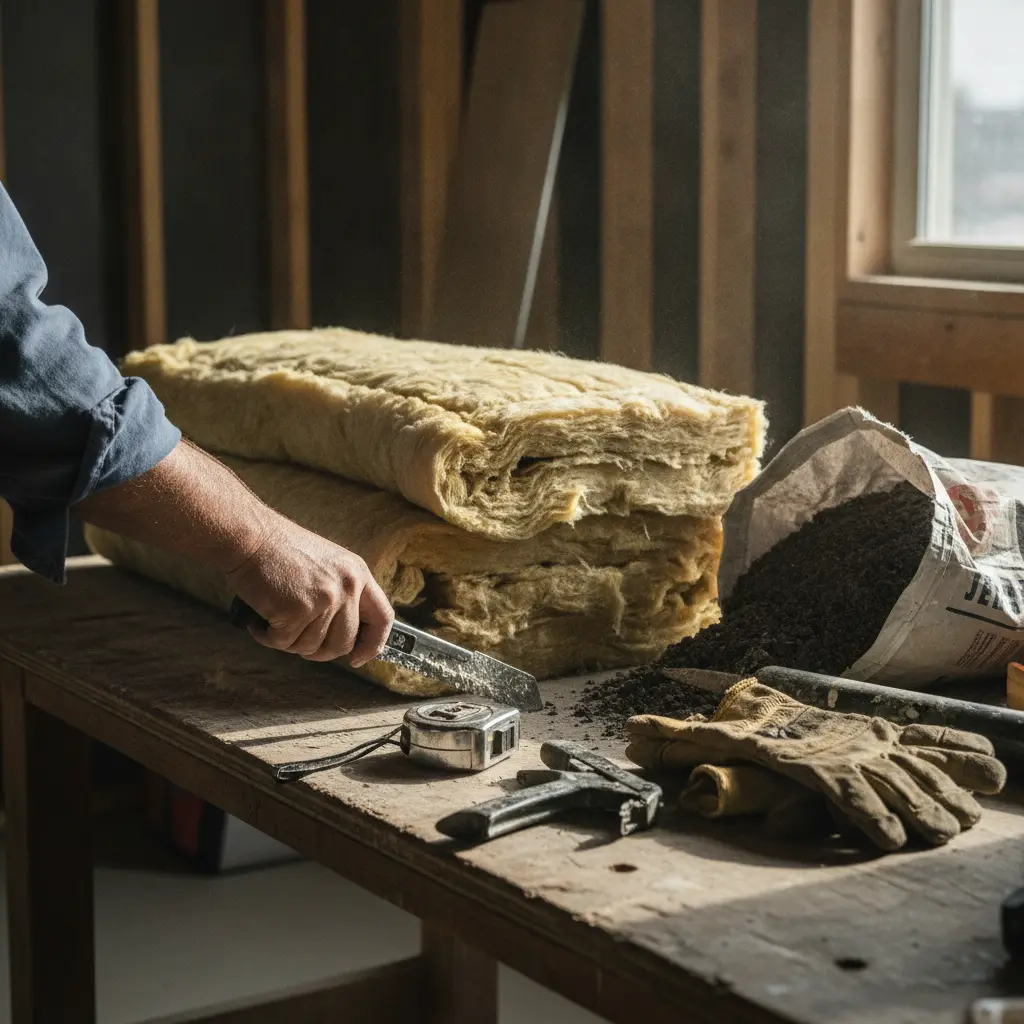
Our team in action — insulation professionals serving Chula Vista
Crawl Space Encapsulation Methods and Approaches
Full Encapsulation with Conditioned Air Supply
The most comprehensive approach, this method seals all vents, installs a heavy-duty floor and wall barrier, and supplies a small amount of conditioned air from the HVAC system into the crawl space. This maintains temperature and humidity at near-living-space levels. Recommended for Chula Vista homes with HVAC equipment or ductwork located in the crawl space, which is common in mid-century ranch-style homes throughout Bonita and older Chula Vista neighborhoods.
Full Encapsulation with Dedicated Dehumidifier
For homes where introducing conditioned air to the crawl space is impractical, a standalone crawl space dehumidifier maintains controlled humidity levels. This is the most common approach for Chula Vista properties and works effectively across all soil conditions, including the expansive clay soils prevalent in eastern Chula Vista communities like Otay Ranch.
Partial Encapsulation with Enhanced Vapor Barrier
For budget-conscious homeowners or properties with lower moisture risk profiles, partial encapsulation focuses on high-quality ground barrier installation and vent reduction without full dehumidification. Appropriate for elevated, well-drained Chula Vista hillside properties with good natural air movement. Explore our full insulation installation services
Spray Foam Encapsulation Integration
In crawl spaces where structural cavities, pipe chases, and wall penetrations create complex sealing challenges, closed-cell spray foam serves as both an air barrier and insulator applied directly to rim joists, sill plates, and wall surfaces. Learn about our spray foam insulation solutions
Drainage-First Encapsulation for High Water Table Areas
For Chula Vista properties in flood-adjacent zones near the Sweetwater River, we implement active drainage infrastructure before barrier installation to ensure water that does enter cannot pool beneath the encapsulation membrane.
Ready for Crawl Space Encapsulation Cost? Get Your Free Estimate Today.
Next Level Insulation of Chula Vista serves Chula Vista and the surrounding area — we’ll be on-site within 24 hours.
📞 Call (619) 789-4273Crawl Space Encapsulation Cost in Chula Vista, CA
Understanding the cost of crawl space encapsulation in Chula Vista helps homeowners plan and budget appropriately. Pricing varies based on crawl space size, access difficulty, moisture conditions, and the scope of work required.
Typical Cost Ranges
- Basic vapor barrier installation only: $1,500–$3,500 for crawl spaces up to 1,000 sq ft
- Standard full encapsulation (barrier + wall insulation + vent sealing): $3,500–$7,000 for 1,000–1,500 sq ft
- Full encapsulation with dehumidifier: $5,500–$10,000 for average Chula Vista homes
- Full encapsulation with drainage system + dehumidifier: $8,000–$15,000+ for high moisture or flood-adjacent properties
- Per square foot average: $5–$12 per sq ft depending on scope
Factors Affecting Cost in Chula Vista
- Crawl space height: Low-clearance crawl spaces (under 18 inches) common in older Chula Vista homes require additional labor time
- Soil conditions: Expansive Diablo clay soils may require grading or leveling prior to barrier installation
- Pre-existing damage: Mold remediation or wood treatment adds $500–$3,000 depending on extent
- Access points: Limited access hatches increase labor costs by 10–20%
- Dehumidifier capacity: Commercial-grade units for larger Chula Vista properties cost $800–$1,800 for equipment alone
Chula Vista homeowners should also consider long-term savings: properly encapsulated crawl spaces typically reduce heating and cooling costs by 15–25% annually and significantly reduce the risk of costly structural repairs from moisture damage. Call (619) 789-4273 for a free, no-obligation cost estimate. View all crawl space encapsulation services
Chula Vista Neighborhoods We Serve
Eastlake Greens
Homes in Eastlake Greens were predominantly built between the late 1980s and early 2000s. Many feature raised foundations with crawl spaces designed under older building standards. The neighborhood’s eastern location places it closer to inland clay soil formations, making seasonal moisture cycling a primary encapsulation driver.
Bonita
Bonita features a significant number of larger custom homes and mid-century ranch-style properties, many with expansive crawl spaces adjacent to the Sweetwater River corridor. Elevated groundwater during wet years and dense riparian vegetation contribute to higher crawl space humidity levels than many other Chula Vista areas. Crawl space encapsulation services near Bonita
Otay Ranch
As one of Chula Vista’s newer master-planned communities, Otay Ranch homes built since the mid-1990s still face crawl space moisture challenges due to the region’s clay soil composition and summer humidity events. Newer construction does not eliminate the need for encapsulation in this area.
Third Avenue Village Area and Downtown Chula Vista
Some of Chula Vista’s oldest housing stock—dating to the 1920s through 1960s—surrounds the historic Third Avenue corridor. These older homes present the most complex encapsulation challenges, with deteriorated original vapor barriers, low-clearance crawl spaces, and decades of accumulated moisture damage requiring careful remediation before encapsulation.
We also serve National City, Imperial Beach, La Mesa, Spring Valley, Lemon Grove, La Presa, and San Diego communities including North Park, Hillcrest, and University Heights. View all service areas
Crawl Space Encapsulation Maintenance Tips for Chula Vista Homeowners
Maintaining your encapsulation system protects your investment and ensures continued performance through Chula Vista’s seasonal moisture cycles.
- Annual crawl space inspection: Schedule a professional inspection each fall before Chula Vista’s winter rain season begins, typically in October or November, to catch any barrier damage or moisture infiltration early.
- Dehumidifier maintenance: Clean or replace dehumidifier filters every 3–6 months and verify drainage lines are flowing freely. Check settings after the June Gloom season, when ambient humidity spikes.
- Monitor humidity levels: Install a hygrometer in your crawl space and aim to maintain relative humidity below 55% year-round. If readings consistently exceed 65%, contact a professional.
- Check vent seals annually: Ensure sealed vents have not shifted or been damaged by pest activity. Subterranean termites active throughout Chula Vista can compromise foam sealants.
- Inspect barrier seams after heavy rainfall: Following significant storm events—common during El Niño years—visually check accessible barrier seams for separation or pooling beneath the membrane.
- Maintain exterior grading: Ensure soil around your home’s foundation slopes away from the structure at a minimum 6-inch drop per 10 feet to reduce ground water entry into the crawl space.
- Address plumbing leaks immediately: A single slow drip from crawl space plumbing can saturate your vapor barrier and promote mold growth within days in Chula Vista’s climate.
Why Choose Next Level Insulation of Chula Vista
Next Level Insulation of Chula Vista is a locally operated insulation and encapsulation company with deep knowledge of South Bay conditions, housing stock, and the specific moisture challenges Chula Vista homeowners face across every neighborhood—from the Sweetwater River corridor to the hillside communities of Eastlake Greens and Otay Ranch.
Our team brings hands-on expertise across the full spectrum of crawl space solutions: from basic vapor barrier upgrades to comprehensive encapsulation systems incorporating drainage, dehumidification, and spray foam air sealing. We do not apply one-size-fits-all solutions. Every crawl space in Chula Vista is assessed individually, and our recommendations are always based on your property’s specific soil conditions, moisture data, and structural configuration.
We serve residential and commercial clients throughout Chula Vista, National City, Bonita, Imperial Beach, Spring Valley, La Mesa, Lemon Grove, La Presa, and the broader San Diego region, including North Park, Hillcrest, South Park, and University Heights. Our commitment is to deliver encapsulation systems that perform reliably through Chula Vista’s seasonal extremes—from June Gloom marine layer to El Niño rainfall events.
Call (619) 789-4273 today to speak with a Chula Vista crawl space specialist and schedule your free assessment. Contact Next Level Insulation of Chula Vista
Frequently Asked Questions: Crawl Space Encapsulation Cost in Chula Vista
How much does crawl space encapsulation cost in Chula Vista, CA?
In Chula Vista, crawl space encapsulation typically costs between $3,500 and $10,000 for a standard residential project, with costs reaching $15,000 or more for larger crawl spaces or those requiring drainage systems. The per-square-foot cost generally ranges from $5 to $12 depending on scope, materials, and site conditions including soil type and access difficulty.
Is crawl space encapsulation worth it in Chula Vista’s climate?
Yes. Chula Vista’s coastal humidity, marine layer events, expansive clay soils, and proximity to the Sweetwater River basin create ideal conditions for crawl space moisture problems. Encapsulation prevents wood rot, mold growth, and energy loss—delivering long-term savings on energy bills (typically 15–25% reduction) and avoiding structural repair costs that can far exceed encapsulation investment.
How long does crawl space encapsulation take in Chula Vista?
Most standard Chula Vista residential encapsulation projects are completed in one to three days. Larger crawl spaces, those requiring drainage system installation, or properties with pre-existing mold or wood damage may require additional time for remediation before encapsulation can proceed.
Do I need a permit for crawl space encapsulation in Chula Vista?
Permit requirements in Chula Vista depend on the scope of work. Vent sealing that affects your home’s mechanical ventilation system may require a permit from the City of Chula Vista Development Services Department. Our team will advise you on applicable permit requirements during your initial assessment.
What is the difference between a vapor barrier and full encapsulation?
A vapor barrier is simply a plastic sheeting layer placed on the crawl space floor. Full encapsulation includes a heavier-duty barrier on both the floor and walls, sealed vents, and typically a dehumidification system. In Chula Vista’s climate, full encapsulation consistently outperforms basic vapor barriers in controlling moisture year-round.
Can crawl space encapsulation help with mold problems in my Chula Vista home?
Encapsulation directly addresses the moisture conditions that cause mold to grow. However, active mold colonies must be professionally remediated before encapsulation is installed. Attempting to seal over existing mold without remediation will trap spores and allow continued growth beneath the barrier.
How do I find a crawl space encapsulation contractor near me in Chula Vista?
Look for a contractor with specific experience in South Bay and Chula Vista properties, knowledge of local soil conditions, and a proven process that includes moisture assessment, not just barrier installation. Next Level Insulation of Chula Vista specializes in exactly these conditions. Call us at (619) 789-4273 or visit our service page for scheduling. Crawl space encapsulation services in Chula Vista
Does crawl space encapsulation prevent termite damage in Chula Vista?
Encapsulation does not replace termite treatment but does reduce the moist, dark wood conditions that attract subterranean termites—one of the most destructive pest threats in Chula Vista and throughout San Diego County. A drier, sealed crawl space is significantly less inviting to termites and other wood-destroying organisms.
Get Your Free Crawl Space Encapsulation Estimate in Chula Vista Today
Don’t let Chula Vista’s coastal humidity, expansive clay soils, or marine layer moisture silently damage your home’s foundation, flooring, and air quality. Next Level Insulation of Chula Vista is ready to assess your crawl space, provide transparent cost estimates, and deliver a professional encapsulation solution built for South Bay conditions.
Whether you’re in Bonita, Eastlake Greens, Otay Ranch, or the historic Third Avenue corridor, our team brings local knowledge and technical expertise to every project. We also serve National City, Imperial Beach, Spring Valley, La Mesa, Lemon Grove, La Presa, and San Diego neighborhoods including Hillcrest, North Park, and University Heights.
Call (619) 789-4273 today to speak with a crawl space specialist and schedule your free, no-obligation assessment. Protect your home—starting from the ground up. Schedule your free crawl space inspection now