

Crawl Space Encapsulation Cost in Burbank, CA
Transparent Crawl Space Encapsulation Cost Pricing for Burbank, CA Homeowners — Free Estimates
Get accurate crawl space encapsulation cost in Burbank, CA. Next Level Insulation offers free estimates, expert installation, and local pricing from $1,500. Call (818) 514-7541.
- Licensed & Insured
- Locally Owned & Operated
- Free Inspection & Estimate
Request Your
Free EstimateCrawl space encapsulation is the process of sealing your home’s crawl space with a heavy-duty vapor barrier, insulation, and moisture control systems to protect your property from ground moisture, mold, pests, and energy loss. For Burbank homeowners, this service is particularly critical given the region’s unique Mediterranean climate, expansive soil conditions, and aging housing stock that spans from post-war bungalows to mid-century ranch homes.
At Next Level Insulation of Burbank, we specialize in full crawl space encapsulation solutions tailored to the specific conditions found throughout Burbank and the greater San Fernando Valley. From homes nestled near the Verdugo Mountains to properties in the flatlands near Magnolia Park, our team understands how local soil behavior, seasonal moisture swings, and temperature differentials impact your crawl space. Call us today at (818) 514-7541 to receive a detailed, no-obligation cost estimate for crawl space encapsulation at your Burbank property.
Understanding Crawl Space Encapsulation in Burbank
Crawl space encapsulation involves transforming an open, vented crawl space into a sealed, conditioned environment. The process typically includes installing a polyethylene vapor barrier (commonly 12 to 20 mils thick) across the floor and walls of the crawl space, sealing foundation vents, adding insulation to the walls, and in many cases installing a dehumidifier or drainage system to actively manage moisture levels. The goal is to create a clean, dry, and thermally stable zone beneath your home.
Historically, building codes in California and across the United States mandated vented crawl spaces under the assumption that airflow would naturally dry out ground moisture. Research over the past three decades has demonstrated that vented crawl spaces in many climates actually introduce more moisture than they expel—particularly in regions like Burbank where overnight humidity levels rise significantly even during dry summer months. This led to updated building science standards embracing encapsulation as a superior strategy.
In Burbank specifically, a large percentage of the residential housing stock was built between 1940 and 1975. Many of these homes feature original wood-framed crawl spaces with either no vapor barrier or a thin, degraded plastic sheet that no longer provides meaningful protection. Neighborhoods like Rancho, Magnolia Park, and the streets surrounding Burbank High School contain dense concentrations of these mid-century homes, making crawl space encapsulation one of the most commonly requested services in the area.
Modern encapsulation systems are designed to last 20 years or more when properly installed and maintained. They integrate seamlessly with your home’s HVAC system, improving indoor air quality by preventing the “stack effect”—a phenomenon where air from the crawl space migrates upward through floors and into living areas. For Burbank residents concerned about air quality, allergens, or energy efficiency, encapsulation represents one of the highest-return home improvements available.
Learn more about our crawl space insulation services
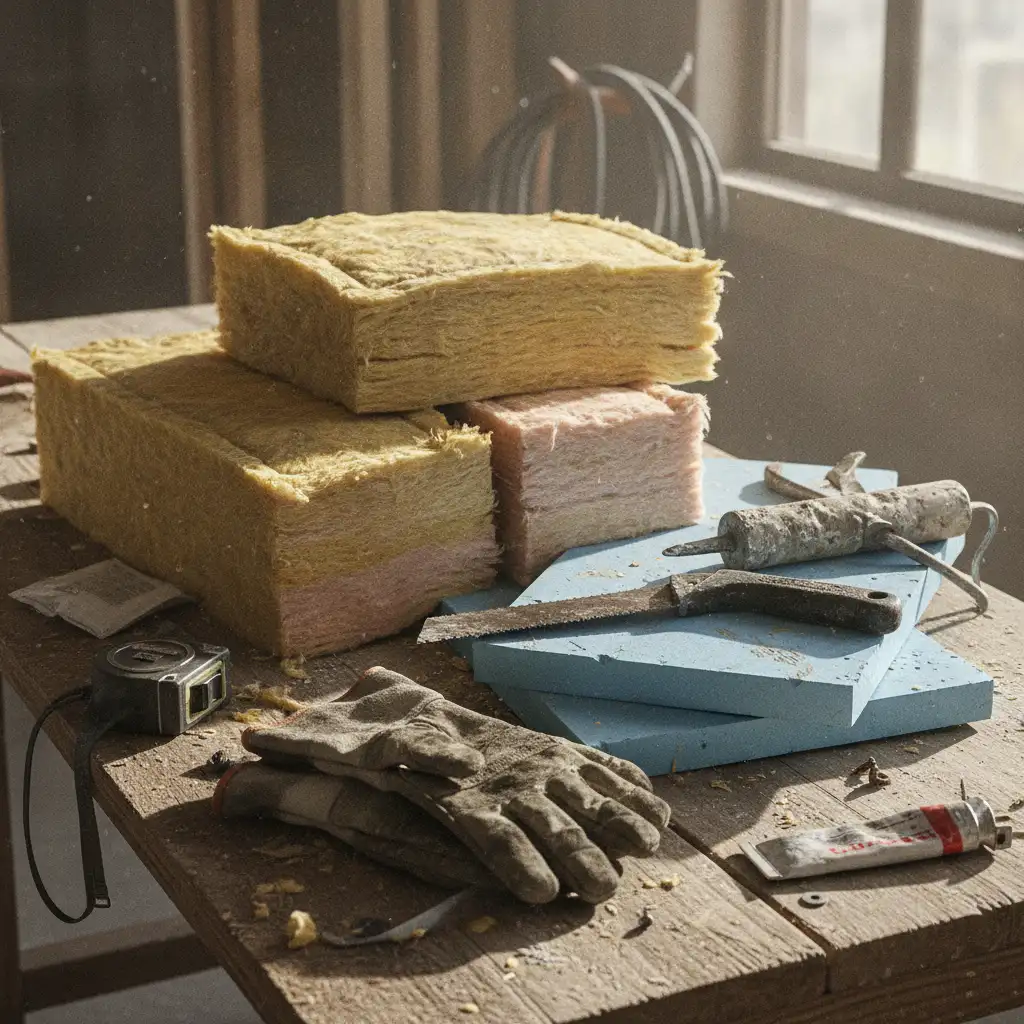
Our team in action — insulation professionals serving Burbank
Why Crawl Space Encapsulation Is Needed in Burbank, CA
Expansive Clay and Adobe Soils
Much of Burbank sits on a blend of alluvial soils and adobe clay deposits carried down from the Verdugo Mountains over millennia. Adobe clay is notorious for its expansive behavior: it swells when wet and shrinks when dry, a cycle that causes foundation shifting, cracking, and the creation of gaps where ground moisture can enter crawl spaces. After the heavy El Niño rainfall events of 2016–2017, which brought over 21 inches of rain to the Burbank area in a single season, many homeowners discovered significant moisture intrusion in crawl spaces that had previously appeared dry. This soil-driven moisture wicking is continuous and independent of surface rainfall.
Mediterranean Climate Moisture Cycles
Burbank experiences a semi-arid Mediterranean climate with hot, dry summers and cool, wet winters. Overnight relative humidity in the San Fernando Valley regularly climbs to 70–85% during winter months, and even summer nights can see humidity above 60% due to the marine layer pushed inland from the Pacific. These humidity swings mean crawl spaces experience repeated wet-dry cycles that degrade wood framing, encourage mold colonization on joists and subfloors, and attract wood-destroying organisms including subterranean termites—a species particularly active in Los Angeles County’s soils.
Santa Ana Wind Events and Pressure Differentials
Santa Ana wind events, which occur most frequently between October and March, create significant negative pressure differentials in homes. During these events—with gusts recorded at Burbank Bob Hope Airport exceeding 60 mph in notable events like November 2019 and January 2021—air is drawn from the lowest pressure zones of a home, including the crawl space. This draws unconditioned, potentially mold-spore-laden air directly into living spaces. Encapsulation eliminates this pathway by removing the moisture source at its origin.
Proximity to the Los Angeles River Channel
Properties in South Burbank near the Los Angeles River channel and the Disney-adjacent industrial corridor experience elevated groundwater influence, particularly during wet years. Homes within several blocks of the river corridor—including streets in the Rancho neighborhood—have historically shown higher rates of crawl space moisture damage, requiring more robust encapsulation systems with active drainage and dehumidification components.
Aging Vented Crawl Spaces
The majority of Burbank’s single-family homes were permitted under older building codes that required foundation vents at a ratio of 1 square foot of vent area per 150 square feet of crawl space floor area. Modern encapsulation best practices—and updated California Building Code Section R408—now support sealed crawl spaces. Many Burbank homes still operate under the old vented design, making them candidates for full encapsulation upgrades.
Signs You Need Crawl Space Encapsulation in Burbank
Moisture and Mold Indicators
- Musty or earthy odors inside your home, especially near floor level
- Visible mold or dark staining on crawl space joists or subfloor decking
- Condensation or standing water visible beneath your home after rain events
- White efflorescence (mineral deposits) on foundation walls indicating water migration
Structural and Pest Warnings
- Soft, spongy, or bouncy floor sections above the crawl space
- Sagging or warped hardwood or laminate flooring
- Evidence of subterranean termite mud tubes on foundation walls or wood members
- Rodent droppings or insulation displacement in the crawl space
Energy and Comfort Symptoms
- Cold floors during Burbank’s winter months despite heating system operation
- Unexplained spikes in utility bills, particularly gas bills during winter
- Allergy symptoms or respiratory irritation worsening indoors
- Humidity levels above 55% consistently measured inside living areas
If you notice two or more of these symptoms, schedule an inspection immediately. Delayed encapsulation allows mold and wood rot to progress, significantly increasing remediation costs. Schedule a crawl space inspection today
Crawl Space Encapsulation Methods We Use in Burbank
Full Perimeter Encapsulation with 20-Mil Barrier
Our most comprehensive solution, recommended for Burbank homes with significant moisture history, adobe soil contact, or properties near drainage channels. The 20-mil reinforced barrier resists punctures from soil movement and provides a 25-year rated lifespan. This method is standard for homes in the Rancho neighborhood and South Burbank properties with Los Angeles River proximity.
Standard 12-Mil Encapsulation
Appropriate for Burbank homes in drier microclimates such as properties in the Verdugo Woodlands foothills or the Country Club neighborhood, where soil moisture drive is lower. This option provides excellent protection at a lower cost point while still meeting California Building Code requirements.
Spray Foam Wall Insulation Encapsulation
Closed-cell spray foam applied to foundation walls at 2 inches or greater provides both a moisture barrier and a high R-value insulation layer (R-12 or greater per 2 inches). This method is ideal for Burbank homes where floor-level energy loss is a primary concern, effectively addressing cold floor complaints common during Burbank’s December–February cool season.
Active Encapsulation with Dehumidification
For crawl spaces with documented high vapor drive or seasonal standing water, a passive barrier alone is insufficient. We install a complete active system including a commercial-grade dehumidifier, condensate drainage, and a sump pump if needed. This approach is the recommended standard for Burbank properties that experienced water intrusion during the atmospheric river events of January–March 2023.
Hybrid Encapsulation and Ventilation Conversion
For homes where full sealed-space conversion is restricted by appliance configurations, we implement a hybrid approach that dramatically reduces moisture while maintaining required ventilation paths. Explore all our encapsulation solutions
Ready for Crawl Space Encapsulation Cost? Get Your Free Estimate Today.
Next Level Insulation of Burbank serves Burbank and the surrounding area — we’ll be on-site within 24 hours.
📞 Call (818) 514-7541Crawl Space Encapsulation Cost in Burbank, CA
Understanding crawl space encapsulation cost in Burbank requires accounting for several property-specific variables. Below are the typical price ranges our clients encounter in the Burbank market.
Typical Price Ranges
- Basic 12-Mil Vapor Barrier Only: $1,500 – $3,500 for crawl spaces up to 1,000 sq ft
- Standard Full Encapsulation (12–20 Mil + Wall Insulation): $4,000 – $8,000 for average Burbank homes (1,200–1,800 sq ft crawl space)
- Premium Encapsulation with Dehumidification: $7,000 – $15,000+ for larger or high-moisture properties
- Mold Remediation Add-On: $500 – $4,000 depending on severity and affected surface area
- Crawl Space Insulation Removal and Replacement: $1,000 – $3,500 as a standalone or combined service
Key Cost Factors in Burbank
- Crawl Space Access and Height: Many Burbank mid-century homes have crawl spaces with only 18–24 inches of clearance, requiring more labor time and specialized equipment
- Existing Damage: Mold remediation, pest damage repair, or structural wood treatment add to base costs
- Barrier Thickness: 20-mil barrier costs approximately 30–40% more than 12-mil but offers significantly greater longevity
- Dehumidifier Sizing: Commercial-grade units sized for larger Burbank homes range from $800 to $2,000 in equipment cost alone
- Local Labor Rates: Burbank and greater Los Angeles labor markets reflect higher rates than national averages, typically 15–25% above the national mean
Call (818) 514-7541 for a precise, itemized quote specific to your Burbank property. Request a free cost estimate
Burbank Neighborhoods We Serve
Magnolia Park
One of Burbank’s most beloved historic districts, Magnolia Park features a dense concentration of Craftsman bungalows and Spanish Colonial Revival homes built between 1920 and 1945. These properties frequently have low-clearance crawl spaces with original redwood sill plates. Moisture management in this neighborhood focuses on adobe soil vapor drive and aging original vapor barriers that have degraded to near non-functional status.
Rancho Neighborhood
Located in South Burbank adjacent to the Los Angeles River corridor, Rancho homes—mostly post-WWII ranch-style construction—experience the highest rates of groundwater influence of any Burbank neighborhood. Active encapsulation systems with sump pumps are standard recommendations for properties here.
Verdugo Woodlands
This hillside neighborhood bordering the Verdugo Mountains features homes on graded lots with varied soil exposure. While drier than valley-floor properties, slope drainage during winter rains can direct significant water toward foundation perimeters. Homes here benefit from encapsulation combined with exterior French drain systems.
Country Club Estates
Featuring larger homes built in the 1950s through 1970s near the Burbank Country Club, this area has well-established soils but aging crawl spaces with original vent-based designs that are now candidates for full sealed-space conversion. View all service areas we cover
Crawl Space Maintenance Tips for Burbank Homeowners
- Annual Inspections: Schedule a visual crawl space inspection every 12 months, ideally in April after winter rains have concluded, to check barrier integrity and moisture readings.
- Monitor Dehumidifier Drains: If your encapsulation system includes a dehumidifier, check the condensate drain monthly during summer months when the unit works hardest.
- Post-Rain Checks: After any rainfall event exceeding 1 inch—common during Burbank’s January–March rainy season—perform a quick visual inspection for standing water or barrier displacement.
- Maintain Exterior Drainage: Ensure gutters are cleaned before the November rainy season and that downspouts direct water at least 6 feet away from your foundation.
- Check Foundation Vent Seals: Verify sealed vents remain intact, especially after Santa Ana wind events that can stress exterior components.
- Pest Monitoring: Include crawl space inspection in your annual termite inspection given Burbank’s high subterranean termite activity, particularly following wet winters.
- Barrier Integrity: Look for tears, punctures, or lifted barrier edges—address any issues promptly to prevent localized moisture intrusion from expanding.
Why Choose Next Level Insulation of Burbank
Next Level Insulation of Burbank is a locally focused insulation and encapsulation company serving homeowners throughout Burbank and the greater San Fernando Valley. Our technicians have hands-on experience with the specific soil conditions, housing types, and moisture challenges unique to Burbank’s neighborhoods—from the adobe clay flats of Magnolia Park to the hillside drainage patterns of Verdugo Woodlands.
We bring expertise across the full spectrum of encapsulation needs: from basic vapor barrier installation to complex active systems with commercial dehumidification and drainage. Our work is performed in compliance with California Title 24 energy standards and California Building Code Section R408 requirements for crawl space moisture management.
We serve homeowners not only in Burbank but throughout Studio City, Sherman Oaks, North Hollywood, Toluca Lake, Glendale, Pasadena, Beverly Hills, West Hollywood, and surrounding communities. Every project begins with a thorough inspection and an honest, itemized cost estimate—no pressure, no surprises.
Reach our team directly at (818) 514-7541 or submit an online inquiry to get started. Explore our full insulation services
Frequently Asked Questions: Crawl Space Encapsulation Cost in Burbank
How much does crawl space encapsulation cost in Burbank, CA?
In Burbank, crawl space encapsulation typically costs between $4,000 and $12,000 for a complete system in an average single-family home. Basic vapor barrier installation starts around $1,500–$3,500, while full encapsulation with wall insulation and dehumidification can reach $12,000–$15,000 for larger or higher-moisture properties. Burbank’s aging housing stock and labor market rates contribute to costs that are typically 15–25% above national averages.
How long does crawl space encapsulation take in Burbank?
Most standard Burbank crawl space encapsulation projects are completed in 1 to 3 days. Smaller homes with straightforward access and no existing mold or damage may be done in a single day. Larger homes, properties requiring mold remediation, or complex active drainage systems may require 3 to 5 days total.
Is crawl space encapsulation worth the cost for Burbank homes?
Yes. Given Burbank’s expansive adobe clay soils, seasonal moisture cycling, and concentration of mid-century homes with degraded or absent vapor barriers, encapsulation provides a strong return on investment. Homeowners typically report 15–25% reductions in heating and cooling costs, elimination of musty odors, and improved indoor air quality. Encapsulation also protects structural wood from moisture-driven rot, preventing far more costly repairs down the line.
Does Burbank require a permit for crawl space encapsulation?
A building permit is generally not required for basic vapor barrier replacement in Burbank. However, if the project involves converting from a vented to a sealed crawl space—which affects combustion air calculations for gas appliances—a permit may be required. Our team handles all permit inquiries and ensures compliance with the City of Burbank’s building requirements.
What type of vapor barrier is best for Burbank’s soil conditions?
For most Burbank properties, we recommend a minimum 12-mil reinforced polyethylene barrier. For homes in South Burbank near the Los Angeles River corridor or properties on adobe clay soils with documented high vapor drive, a 20-mil reinforced barrier is the preferred standard. The thicker barrier better resists puncture from soil movement associated with Burbank’s expansive clay.
Do I need a dehumidifier with my crawl space encapsulation in Burbank?
Not always. Many Burbank properties in drier microclimates—such as the foothills near Verdugo Woodlands—function well with a properly installed passive barrier system. However, properties near the Los Angeles River corridor, those with documented seasonal standing water, or homes that experienced moisture intrusion during recent atmospheric river events (such as January–March 2023) benefit significantly from active dehumidification. Our inspection process includes moisture readings that determine whether active systems are needed.
Can crawl space encapsulation reduce my Burbank utility bills?
Yes. By eliminating the stack effect—where cold, damp air from the crawl space is drawn into living areas—encapsulation reduces the load on your heating and cooling systems. Burbank homeowners with properly encapsulated and insulated crawl spaces typically report 15–25% reductions in energy costs, with the greatest savings occurring during Burbank’s June–September cooling season and December–February heating period.
How long does a crawl space encapsulation system last in Burbank?
A properly installed 12-mil barrier has a rated lifespan of 15–20 years. A 20-mil reinforced system is rated for 25 years or more. With annual inspections and prompt repair of any punctures or seal failures, many encapsulation systems in Burbank function effectively for 20–30 years. Dehumidifiers and mechanical components typically require service every 3–5 years and replacement every 10–15 years.
Get Your Crawl Space Encapsulation Cost Estimate in Burbank Today
If you are a Burbank homeowner dealing with moisture, mold, cold floors, or rising energy bills, your crawl space may be the source of the problem. Next Level Insulation of Burbank provides thorough crawl space inspections and honest, detailed cost estimates for encapsulation services tailored to your specific property, soil conditions, and budget.
Do not wait for moisture damage to escalate. Wood rot, mold growth, and structural deterioration become exponentially more expensive the longer they are left unaddressed in Burbank’s unique climate conditions.
Call us now at (818) 514-7541 to schedule your inspection. We serve Burbank, Studio City, Sherman Oaks, North Hollywood, Glendale, Toluca Lake, Pasadena, Beverly Hills, and communities throughout the greater Los Angeles area. Request a free crawl space evaluation online