

Insulation Removal in Burbank, CA
Energy-Saving Insulation Removal in Burbank, CA for Burbank, CA Homes — Licensed & Insured
Need insulation removal in Burbank, CA? Next Level Insulation offers expert removal, sanitization & replacement. Call (818) 514-7541 for a free estimate today.
- Licensed & Insured
- Locally Owned & Operated
- Free Inspection & Estimate
Request Your
Free EstimateInsulation removal is the professional process of safely extracting old, damaged, or contaminated insulation material from your home or commercial building — including attics, crawl spaces, and walls — before new insulation is installed. In Burbank, CA, where summer temperatures regularly climb above 100°F in the San Fernando Valley heat corridor and aging housing stock from the 1940s through 1970s still contains degraded or even hazardous materials, proper insulation removal is not a DIY project. It requires specialized equipment, protective protocols, and deep knowledge of local building conditions.
At Next Level Insulation of Burbank, we bring over 20 years of hands-on experience serving Burbank homeowners and business owners. Our certified technicians handle every removal job with precision — from blown-in cellulose extraction in post-war bungalows to fiberglass batt removal in 1960s ranch homes near the Burbank Airport corridor. We protect your property, your health, and your investment from start to finish. Call us today at (818) 514-7541 for a free estimate.
Understanding Insulation Removal
Insulation removal refers to the systematic extraction and disposal of thermal or acoustic insulation materials that have reached the end of their functional life. Unlike insulation installation, removal involves containment of particulates, careful bagging and disposal in compliance with local waste regulations, and thorough cleaning of the cavity before new material is placed.
Historically, American homes built before 1980 frequently used materials we now know to be problematic. Vermiculite attic insulation — often contaminated with asbestos — was marketed heavily in California throughout the 1950s and 1960s. Loose-fill fiberglass and cellulose insulation from the same era degrades significantly after 30 to 40 years, losing its R-value and becoming a harbor for moisture and pests. In Burbank specifically, the rapid postwar housing expansion of the late 1940s and 1950s — driven by the booming aerospace and entertainment industries centered around Lockheed and Warner Bros. — produced thousands of homes that are now 70 to 80 years old. Many of these properties still contain their original insulation, which has long since passed its effective service life.
Burbank’s housing stock spans a wide range of building types: single-family Craftsman bungalows in the Magnolia Park neighborhood, mid-century modern ranch homes throughout Burbank Hills, multi-unit apartment buildings along Olive Avenue, and commercial structures near the Media District. Each building type presents unique removal challenges. Older wood- framed homes may have settled insulation that has compressed to a fraction of its original thickness. Commercial flat-roof buildings may have spray foam or rigid foam board that requires mechanical removal. Apartment complexes with shared wall cavities require additional care to avoid disrupting neighboring units.
Modern insulation removal uses industrial-grade vacuum systems — typically with 23-horsepower or greater motors — that create negative pressure inside the attic or crawl space, pulling loose-fill material through long flexible hoses into sealed collection bags outside the home. This process minimizes airborne particulate contamination and protects occupants throughout the removal process.
Why Insulation Removal Is Needed in Burbank, CA
Extreme Heat Cycling in the San Fernando Valley
Burbank sits in the eastern arm of the San Fernando Valley, a geography that creates an intense urban heat island effect. Attic temperatures in Burbank homes during July and August routinely reach 140°F to 160°F — far beyond the temperature thresholds that cause fiberglass batts to sag and cellulose to compress. The National Weather Service recorded Burbank’s all-time high of 114°F on September 6, 2020, during the historic Labor Day heat event that broke records across Los Angeles County. Repeated thermal cycling at these extremes degrades insulation binders and reduces R-values by as much as 40% over a 20-year period in valley floor locations.
Santa Ana Wind Events and Wildfire Smoke Infiltration
The Burbank Hills on the city’s northern and western edges channel powerful Santa Ana wind events directly into residential neighborhoods. During major wind events — such as the Palisades-adjacent winds in January 2025 that reached gusts of 100+ mph in nearby mountain passes — fine particulate matter and ash infiltrate poorly sealed attics. The 2017 La Tuna Fire, which burned over 7,000 acres in the Verdugo Mountains immediately north of Burbank, deposited smoke particulates throughout homes in Sun Valley and the northern Burbank neighborhoods. Smoke-saturated insulation retains odors permanently and must be fully removed rather than simply covered with new material.
Rodent Activity in Burbank’s Urban Neighborhoods
Burbank’s proximity to the Los Angeles River corridor and its mature tree canopy make it a high-activity zone for roof rats and Norway rats — species that burrow into attic insulation to nest. The Los Angeles County Vector Control District has identified Burbank as a persistently elevated-risk zone for rodent activity. Rat urine and feces saturate insulation with ammonia compounds and hantavirus risk, rendering the material completely unsafe. Neighborhoods like Magnolia Park, Burbank Hills, and the area surrounding Brace Canyon Park report particularly high rates of rodent-related insulation damage.
Aging Building Stock and Outdated Materials
Burbank’s median home age is approximately 60 years. Homes built in the 1950s and 1960s along streets like Glenoaks Boulevard, Hollywood Way, and in the Rancho neighborhood frequently contain original blown-in insulation with an effective R-value that has dropped to R-5 or below — far short of California’s Title 24 requirement of R-38 for attics. In some cases, our technicians have discovered vermiculite insulation in homes in the Golden State and Country Club neighborhoods, requiring asbestos testing and specialized abatement protocols before standard removal can proceed.
Moisture Intrusion from Rare but Damaging Rain Events
While Burbank averages only about 15 inches of rainfall per year, atmospheric river events like those of January and February 2023 — which brought over 10 inches of rain in a three-week period — caused widespread roof leaks in aging homes. Water-damaged insulation loses virtually all thermal resistance and becomes a mold incubation environment within 48 to 72 hours.
Signs You Need Insulation Removal
Energy Performance Indicators
- Monthly electricity bills exceeding $250–$400 during Burbank’s summer cooling season despite normal usage
- HVAC system running continuously during afternoon hours without reaching the set thermostat temperature
- Noticeable hot spots on upper-floor ceilings or cold drafts along exterior walls in winter
Visual and Physical Symptoms
- Visible dark staining, clumping, or compression of attic insulation when viewed from the access hatch
- Insulation depth measuring less than 10 inches (indicating R-value well below code minimum)
- Presence of rodent droppings, nesting material, or tunneling channels within the insulation layer
- Water stains or discoloration on insulation batts beneath roof decking
Health and Safety Warning Signs
- Persistent musty odors in upper rooms, particularly after rain events
- Visible mold growth on attic rafters or decking adjacent to insulation
- Unexplained allergy symptoms or respiratory irritation that worsen indoors
- Home was built before 1980 and insulation has never been professionally assessed
Urgency Indicators
If your home experienced the 2017 La Tuna Fire smoke event, recent storm water intrusion, or you suspect vermiculite or asbestos-containing materials, treat removal as an urgent priority rather than a deferred maintenance item.
Our Insulation Removal Process
Next Level Insulation follows a structured, safety-first process developed over 20 years of work in Burbank and surrounding Los Angeles communities. Here is what to expect from start to finish.
Free On-Site Assessment (1–2 Hours)
Our technician inspects your attic, crawl space, or wall cavities. We measure existing insulation depth, assess material type, check for rodent evidence, moisture damage, and potential hazardous materials. For homes built before 1980 in neighborhoods like Magnolia Park or Burbank Hills, we may recommend asbestos sampling before proceeding.
Hazardous Material Testing, If Required (2–5 Business Days)
If vermiculite or other suspect materials are found, we coordinate with a licensed California-certified asbestos consultant. Samples are sent to an accredited laboratory. This step is non-negotiable for the safety of your family and our crew.
Containment and Preparation (1–2 Hours on Job Day)
We seal the attic access hatch with negative-pressure barriers, protect your interior with drop cloths and floor runners, and position our industrial vacuum system — typically a truck-mounted unit parked in your driveway — with hoses running up to 150 feet to reach attic spaces throughout your home.
Mechanical Removal (2–8 Hours Depending on Square Footage)
Loose-fill material is vacuumed out through our industrial system. Batt insulation is hand-removed, double-bagged in 6-mil poly bags, and sealed. A typical 1,500-square-foot Burbank attic requires approximately 3 to 5 hours for complete removal.
Attic Cleaning and Sanitization (1–2 Hours)
After material removal, we HEPA-vacuum remaining debris, sanitize surfaces with an EPA-registered antimicrobial solution, and seal any identified rodent entry points with hardware cloth and foam — a step critical in Burbank’s rodent-active urban environment.
Disposal and Documentation (Same Day)
All removed material is transported to a licensed California waste disposal facility in compliance with Los Angeles County regulations. We provide you with a written completion report documenting what was removed, quantities, and disposal confirmation.
New Insulation Installation (Same Day or Scheduled Separately)
We can install new insulation immediately following removal or schedule it at your convenience. We recommend upgrading to a minimum of R-38 per California Title 24 standards, with R-49 recommended for Burbank’s Climate Zone 9 classification.
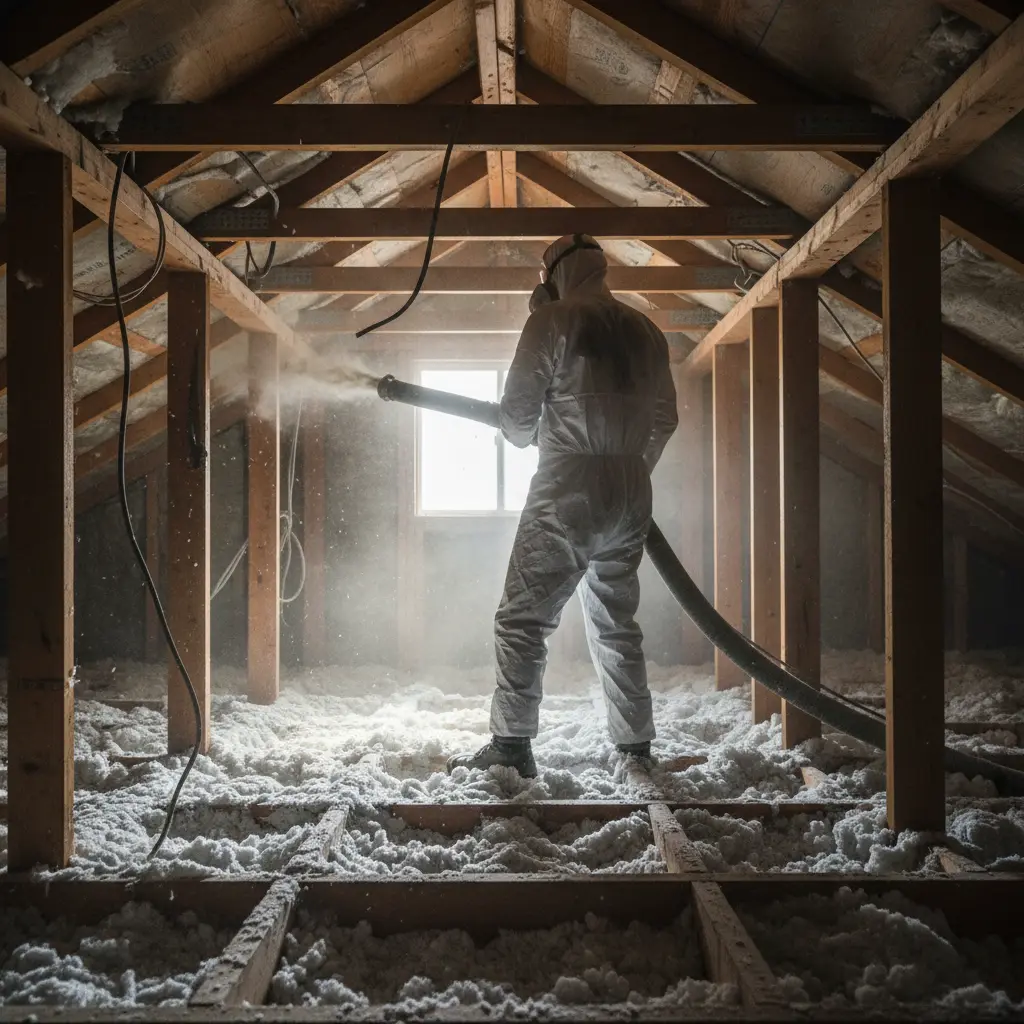
Our team in action — insulation professionals serving Burbank
Insulation Removal Methods We Use
Industrial Vacuum Extraction
The most common method for Burbank attics containing blown-in fiberglass or cellulose. Our truck-mounted vacuum systems generate 23,000+ CFM airflow, rapidly clearing even heavily compacted material. Ideal for the low-slope attics common in Burbank’s ranch-style homes where crew movement space is limited.
Manual Batt Removal
Used when fiberglass or mineral wool batts are present between attic joists or in wall cavities. Technicians wearing full PPE — Tyvek suits, N100 respirators, and nitrile gloves — hand-remove each batt, bag it immediately, and pass it to the exterior. Common in Burbank’s 1960s tract homes along Alameda Avenue and in the Rancho neighborhood.
Spray Foam Removal
Closed-cell and open-cell spray foam requires mechanical scraping and cutting using oscillating tools and specialty blades. This labor-intensive method is required when refoaming commercial roofs near the Burbank Media District or when closed-cell foam has been improperly applied in residential attics.
Asbestos-Safe Abatement Procedures
For pre-1980 homes where testing confirms asbestos-containing materials, we follow California Division of Occupational Safety and Health (Cal/OSHA) asbestos removal protocols. This includes negative-air-pressure containment, HEPA filtration, and certified disposal. We coordinate with licensed asbestos abatement contractors as required by California law.
Wet Removal for Mold-Contaminated Material
When insulation is mold-infested, wet removal techniques suppress airborne spore release during extraction. This method is particularly relevant for Burbank homes that experienced water intrusion during the January 2023 atmospheric river events.
Ready for Insulation Removal? Get Your Free Estimate Today.
Next Level Insulation of Burbank serves Burbank and the surrounding area — we’ll be on-site within 24 hours.
📞 Call (818) 514-7541Insulation Removal Cost in Burbank, CA
Understanding insulation removal cost helps Burbank homeowners budget appropriately and avoid surprises. Pricing varies based on several local factors specific to Los Angeles County and the San Fernando Valley market.
Typical Price Ranges
- Standard attic insulation removal (1,000–1,500 sq ft): $800–$1,500
- Large attic removal (1,500–2,500 sq ft): $1,500–$2,800
- Crawl space insulation removal: $600–$1,200 depending on accessibility
- Wall cavity insulation removal (per room): $300–$700
- Rodent decontamination and sanitization (added to removal): $400–$900
- Asbestos testing (before removal): $200–$500 per sample area
Factors That Affect Your Burbank Removal Cost
Attic accessibility: Many Burbank homes built in the 1950s have extremely low-pitch rooflines with attic clearances of 18 to 30 inches, requiring additional labor time. Rodent contamination level: Heavy infestations requiring full sanitization add $400 to $900 to the base cost. Material type: Vermiculite or asbestos-suspect materials require abatement protocols that can add $1,500 to $4,000+ depending on quantity. Home age and access points: Older Craftsman-era homes in Magnolia Park may have limited attic access, increasing labor hours.
Bundled Removal and Reinstallation Savings
When you combine insulation removal with new insulation installation, Next Level Insulation offers bundled pricing that saves Burbank homeowners 10% to 15% compared to booking services separately. Contact us at (818) 514-7541 for a precise, no-obligation estimate tailored to your specific property.
Burbank Neighborhoods We Serve
Magnolia Park
This charming neighborhood of 1920s through 1940s Craftsman bungalows and Spanish Colonial Revival homes features original wood-frame construction with minimal attic clearance. Many homes still contain original blown-in rock wool or early fiberglass — materials that are long overdue for removal and replacement.
Burbank Hills
Hillside homes in the Verdugo Mountain foothills face unique challenges: steep roof pitches, difficult attic access, and heightened wildfire smoke infiltration risk from the adjacent Verdugo Mountains. Post-La Tuna Fire (2017) insulation assessment and removal is still relevant for many properties in this area.
Rancho / Downtown Burbank
Mid-century homes throughout the Rancho neighborhood and near Downtown Burbank on Olive Avenue were built during the 1950s and 1960s aerospace boom. These homes frequently contain original blown-in fiberglass that has compressed to less than half its original thickness.
Media District / Airport Adjacent
Commercial properties and multi-family buildings near the Burbank Airport and Media District often require removal of spray foam or rigid board insulation during tenant improvement projects — a specialty service we provide to property managers throughout this corridor.
We also serve Studio City, Sherman Oaks, North Hollywood, Sun Valley, Toluca Lake, Glendale, Pasadena, and Beverly Hills.
Maintenance Tips to Protect Your New Insulation in Burbank
After professional insulation removal and reinstallation, follow these location-specific maintenance practices to protect your investment in Burbank’s demanding climate:
- Seal rodent entry points annually: Before each fall, inspect your roofline, fascia boards, and soffit vents for gaps larger than a quarter-inch — the entry threshold for roof rats common in Burbank’s urban neighborhoods.
- Check attic ventilation after Santa Ana wind events: High winds can dislodge attic vent covers and allow debris infiltration. Inspect vents after major wind events, particularly October through December when Santa Ana conditions peak.
- Inspect for moisture after heavy rainfall: Following atmospheric river events, check your attic within 24 hours for signs of water intrusion at ridge vents, roof penetrations, and chimney flashings.
- Maintain attic ventilation ratio: California Building Code requires a minimum 1:150 ventilation ratio. Ensure soffit and ridge vents remain unobstructed by new insulation.
- Schedule professional insulation inspections every 5–7 years: Burbank’s extreme heat cycling accelerates material degradation faster than milder coastal climates.
- Keep HVAC equipment serviced: A well-maintained system puts less thermal stress on your insulation layer and extends its effective service life.
- Avoid attic storage on top of insulation: Compressed insulation in low-clearance Burbank attics loses R-value rapidly when boxes or equipment are placed on it.
Why Choose Next Level Insulation of Burbank?
Next Level Insulation is Burbank’s trusted insulation removal contractor — and for good reason. With over 20 years of experience working specifically in the San Fernando Valley, we understand the unique challenges that Burbank’s climate, building stock, and pest environment create for homeowners and property managers.
Our technicians are trained in California-specific building codes, including Title 24 energy compliance standards for Climate Zone 9. We use industrial-grade equipment sized for real Burbank attics — not rental-shop vacuums that leave behind 20% of the material. Every job includes a full written report and photo documentation so you know exactly what was removed from your property.
We serve not just Burbank but the entire greater Los Angeles area, including Studio City, Sherman Oaks, Glendale, Pasadena, and Beverly Hills. Whether you need attic insulation, spray foam insulation, or complete removal and replacement, our team delivers results that take your home’s energy efficiency to the next level.
Call us today at (818) 514-7541 to schedule your free on-site estimate. We answer calls seven days a week.
Frequently Asked Questions About Insulation Removal in Burbank, CA
How much does insulation removal cost in Burbank, CA?
Most Burbank homeowners pay between $800 and $2,800 for attic insulation removal, depending on square footage, material type, and contamination level. Rodent decontamination adds $400 to $900. Asbestos-containing materials require abatement protocols that add $1,500 to $4,000 or more. We provide free, itemized estimates with no obligation.
How long does insulation removal take in a typical Burbank home?
A standard 1,200 to 1,600 square foot Burbank attic typically takes 4 to 8 hours for complete removal and cleaning in a single day. Larger homes or heavily contaminated attics may require a second day. We can often complete removal and new insulation installation within the same week.
Do I need to leave my home during insulation removal?
For standard fiberglass or cellulose removal, occupants can remain in the home since our negative-pressure containment system prevents particulate spread into living areas. However, for mold remediation, asbestos abatement, or rodent decontamination, we strongly recommend that all occupants — especially children and pets — vacate for the duration of the work.
My Burbank home was built in 1958. Should I be worried about asbestos in my insulation?
Homes built between 1940 and 1978 in Burbank may contain asbestos-containing materials, particularly vermiculite attic insulation. If your home has a gravelly, pebble-like gray or silver insulation material in the attic, do not disturb it. Contact us to arrange professional sampling and laboratory testing before any removal work begins.
Can insulation removal help with rodent problems in my Burbank home?
Yes — and it is often the most important step. Simply trapping rodents without removing contaminated insulation leaves behind ammonia-saturated material that attracts new rodents. Our full removal and sanitization process eliminates the scent trail and nesting material, combined with sealing all entry points, giving you a lasting solution rather than a temporary fix.
Does insulation removal qualify for any California energy rebates?
Insulation removal alone typically does not qualify for rebates, but when bundled with qualifying new insulation installation, Burbank residents may be eligible for Southern California Edison (SCE) rebates and Los Angeles County energy efficiency programs. We help our customers identify applicable incentives during the estimate process.
What is the difference between insulation removal and insulation replacement?
Insulation removal is the extraction of existing material. Insulation replacement refers to the complete process of removal followed by installation of new material. Many contractors offer “top-off” services where new insulation is added on top of old — but in Burbank, where rodent contamination, smoke infiltration, and heat-degraded material are common, we strongly recommend full removal before reinstallation in most cases.
Do you serve areas near Burbank, like Glendale or Studio City?
Absolutely. Next Level Insulation serves the entire greater Los Angeles area, including Studio City, Glendale, Sherman Oaks, North Hollywood, Sun Valley, Toluca Lake, Universal City, Hollywood, Beverly Hills, Pasadena, and many more communities. Call us at (818) 514-7541 to confirm service availability at your address.
Ready to Schedule Insulation Removal in Burbank, CA?
Don’t let old, degraded, or contaminated insulation drain your energy dollars or compromise your family’s health. Whether you’re dealing with rodent damage in Magnolia Park, heat- degraded insulation in a Burbank Hills hillside home, or suspect materials in a postwar ranch house, Next Level Insulation of Burbank is ready to help.
Call us today at (818) 514-7541 to schedule your free, no-obligation on-site estimate. Our team is available seven days a week, and we can often schedule assessments within 24 to 48 hours. You can also reach us through our contact page to submit your project details online.
Take your home’s energy efficiency to the next level — starting with a clean slate.