

Rockwool Insulation in Santa Clarita, CA
Energy-Saving Rockwool Insulation for Santa Clarita, CA Homes — Licensed & Insured
Need Rockwool insulation in Santa Clarita, CA? Next Level Insulation offers expert fire-resistant mineral wool installation. Free estimates. Call (661) 582-0187.
- Licensed & Insured
- Locally Owned & Operated
- Free Inspection & Estimate
Request Your
Free EstimateRockwool insulation — also known as mineral wool or stone wool insulation — is a premium, fire-resistant insulation material made from volcanic basalt rock and recycled slag. Designed to withstand extreme temperatures, repel moisture, and deliver superior soundproofing, Rockwool has become one of the most trusted insulation solutions for homes and businesses throughout the Santa Clarita Valley.
Santa Clarita’s unique climate presents real challenges for homeowners: scorching summers that routinely push past 100°F in neighborhoods like Canyon Country, dry Santa Ana wind events that accelerate fire spread, and wide diurnal temperature swings that degrade standard insulation over time. Rockwool is specifically engineered to handle these conditions.
At Next Level Insulation of Santa Clarita, our experienced team installs Rockwool insulation in new construction and existing homes across the Santa Clarita Valley. Whether you need attic insulation, wall cavity insulation, or a full insulation replacement, we bring local knowledge and professional craftsmanship to every project. Call us today at (661) 582-0187 to schedule your free assessment.
Understanding Rockwool Insulation
Rockwool insulation is manufactured by melting basalt rock and steel mill slag at temperatures exceeding 2,900°F, then spinning the molten material into dense fibrous batts or boards. The resulting product is dimensionally stable, non-combustible, and naturally resistant to moisture absorption — properties that set it apart from traditional fiberglass or cellulose insulation.
Developed in the early 20th century and refined through decades of building science research, Rockwool (sold under brands such as ROCKWOOL and Thermafiber) has been widely used in commercial construction for fire-rated wall assemblies, industrial facilities, and high-performance residential buildings. Over the last decade, its adoption in California residential construction has grown dramatically, driven by the state’s increasingly strict Title 24 energy codes and wildfire-hardening mandates.
In terms of performance metrics, Rockwool typically delivers an R-value of approximately R-3.0 to R-3.3 per inch, comparable to fiberglass. However, its real advantage lies in its additional performance characteristics:
- Fire resistance: Rockwool does not ignite and can withstand temperatures up to 2,150°F, making it invaluable in fire-prone communities.
- Sound attenuation: Its dense fiber structure absorbs sound energy, reducing airborne noise transmission by up to 45 decibels — ideal for homes near the 14 Freeway corridor.
- Moisture resistance: Rockwool repels water and does not support mold or mildew growth, an important quality given the humidity spikes that accompany late-summer monsoon moisture in the Santa Clarita Valley.
- Dimensional stability: Unlike fiberglass batts, Rockwool does not sag or settle over time, maintaining its stated R-value for decades.
Rockwool is suitable for virtually every area of a home, including attics, exterior walls, interior partition walls for sound control, crawl spaces, basement rim joists, and around HVAC equipment. It is compatible with wood-frame, steel-frame, and masonry construction — all of which appear throughout Santa Clarita’s diverse housing stock, from the 1960s ranch homes of Saugus to the newer planned communities of Stevenson Ranch built in the 1990s and 2000s.
Because it contains no formaldehyde and is made from recycled materials, Rockwool also contributes to LEED certification and CalGreen compliance, both of which are increasingly relevant for new construction and major renovations in Los Angeles County.
Why Rockwool Insulation Is Needed in Santa Clarita, CA
Extreme Heat and Wide Temperature Swings
Santa Clarita regularly records summer high temperatures between 100°F and 110°F, with the National Weather Service logging multiple excessive heat warnings per season at the Newhall and Canyon Country monitoring stations. At the same time, clear desert nights can drop temperatures by 30°F to 40°F between afternoon highs and early morning lows. This daily thermal cycling causes standard fiberglass insulation to compress and degrade faster than manufacturers’ ratings predict. Rockwool’s rigid, stone-based fiber structure resists thermal compression, maintaining consistent R-values even under repeated expansion and contraction stress.
Santa Ana Wind Events and Wildfire Risk
The Santa Ana winds that funnel through the Santa Clara River corridor and down the San Francisquito Canyon are among the strongest and driest in Southern California, with sustained gusts regularly reaching 50–70 mph and relative humidity dropping below 10%. These conditions were directly responsible for the Tick Fire of October 2019, which burned over 4,500 acres across Castaic and the Newhall area and forced evacuations throughout the 28000 zip code. The Sand Fire of July 2016 burned 41,432 acres in the surrounding area, threatening communities in Canyon Country and Sand Canyon Road neighborhoods.
California’s SB 12 and AB 38 legislation, along with Los Angeles County’s updated Defensible Space ordinances, now encourage or require fire-resistant building materials in high fire hazard severity zones — and much of northern Santa Clarita falls within such zones. Rockwool’s non-combustible composition makes it one of the most effective passive fire-hardening upgrades a homeowner can make.
Older Housing Stock with Degraded Insulation
A significant portion of Santa Clarita’s residential housing was constructed between 1965 and 1990, particularly in Newhall, Saugus, and the original Valencia master plan communities developed by Newhall Land. Homes built during this era typically used 3.5-inch R-11 fiberglass batts in exterior walls and R-19 or lower in attics — far below California’s current Title 24 requirements of R-38 in attics and R-13 minimum in walls. After 30 to 50 years, that original fiberglass insulation has often settled, been contaminated by rodent activity from the abundant local wildlife including ground squirrels and rats, or simply lost a significant portion of its original R-value.
Freeway and Traffic Noise
The Interstate 5 and State Route 14 interchange — known locally as “the 14 freeway split” — runs directly through the heart of Santa Clarita. Thousands of homes in Canyon Country, Saugus, and Newhall sit within a half-mile of freeway noise sources that generate sustained exterior sound levels of 65–75 decibels. Rockwool’s superior sound absorption compared to fiberglass makes it the preferred choice for homeowners in these corridors seeking meaningful noise reduction alongside thermal performance.
Title 24 Energy Compliance
Los Angeles County’s enforcement of California’s Title 24 Part 6 energy standards has intensified with each code cycle. Homeowners undertaking permitted additions, re-roofing projects, or HVAC replacements in Santa Clarita are increasingly required to bring insulation up to current standards. Rockwool’s combination of high R-value density and fire-rating compliance makes it a streamlined solution for meeting both energy and fire codes in a single installation.
Signs You Need Rockwool Insulation in Santa Clarita
Energy Performance Indicators
- Monthly summer electricity bills consistently exceeding $250–$350 for a typical 1,800–2,400 sq. ft. home in Canyon Country or Saugus
- Your HVAC system runs continuously during July and August heat events without reaching the thermostat setpoint
- Noticeable temperature differences of 5°F or more between upstairs and downstairs living areas
- Rooms on the south or west side of the home feel dramatically hotter than the rest of the house during afternoon hours
Physical Insulation Condition
- Visible fiberglass batts in attic or crawl space that appear flattened, discolored, or contaminated with rodent droppings
- Insulation that is wet, clumped, or shows signs of mold growth — common after roof leaks during winter rain events in the Santa Clarita Valley
- Missing insulation sections in attic or wall cavities discovered during renovation work
- Attic insulation depth measuring less than 10 inches (indicating R-value below current Title 24 minimums)
Comfort and Indoor Air Quality
- Persistent drafts near exterior walls or window frames during Santa Ana wind events
- Unusual dust accumulation that may indicate air infiltration through unsealed insulation cavities
- Audible freeway or neighborhood noise that disrupts sleep or daily activity
Safety and Fire Hardening
- Your home sits within a High or Very High Fire Hazard Severity Zone per CAL FIRE mapping
- Existing attic insulation is cellulose — a combustible material that increases fire spread risk
Our Rockwool Insulation Installation Process
At Next Level Insulation of Santa Clarita, we follow a structured, quality-controlled process for every Rockwool insulation project. Here is what to expect from start to finish.
Free In-Home Assessment (1–2 Hours)
Our certified insulation specialist visits your home and conducts a thorough evaluation of existing insulation conditions, air sealing deficiencies, and potential moisture issues. We assess attic, wall, and crawl space conditions and document current R-values. For homes in Castaic or Stevenson Ranch near fire hazard zones, we also note fire-rating requirements relevant to your property.
Detailed Project Proposal (24–48 Hours)
We provide a written, itemized proposal covering materials, labor, and timeline. We identify which areas qualify for Rockwool batts versus boards, and where complementary services like spray foam insulation may be needed to address air sealing at penetrations and rim joists.
Insulation Removal (If Required) (Half Day to Full Day)
When replacing degraded fiberglass or contaminated cellulose, our crew performs professional insulation removal using HEPA-equipped vacuum systems. This is especially important in older Newhall and Saugus homes where rodent contamination is common. Removed material is bagged and disposed of per Los Angeles County waste regulations.
Air Sealing and Prep (2–4 Hours)
Before Rockwool installation begins, we seal all penetrations, gaps around top plates, and attic bypasses using appropriate foam or caulk. This step is critical in Santa Clarita’s climate — unaddressed air gaps can reduce effective R-value by 20–40% regardless of insulation type.
Rockwool Installation (Half Day to Full Day)
Our installers cut and friction-fit Rockwool batts or boards to the precise dimensions of your wall cavities, attic rafter bays, or crawl space framing. Rockwool’s semi-rigid structure allows it to fill cavities completely without gaps. For attic insulation applications, we layer to achieve target R-values of R-38 to R-60 per current Title 24 recommendations for Climate Zone 9, which covers Santa Clarita.
Quality Inspection and Documentation (1 Hour)
A project supervisor conducts a final walkthrough, verifying coverage, confirming R-values, and documenting the completed installation with photographs. We provide you with a written completion certificate and material data sheets for permit records.
Post-Installation Support
We remain available for follow-up questions and can coordinate with your HVAC contractor or building inspector if the project is part of a permitted renovation. Our team is reachable at (661) 582-0187.
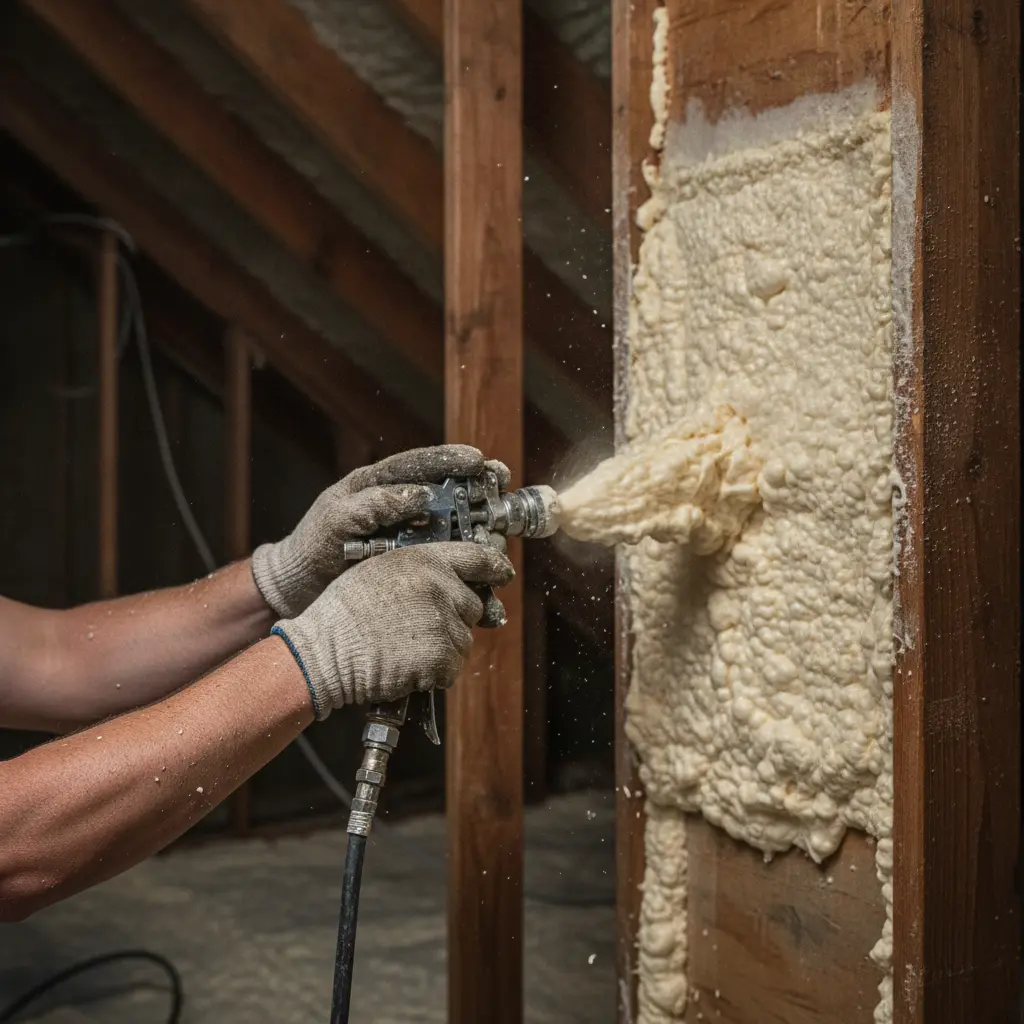
Our team in action — insulation professionals serving Santa Clarita
Rockwool Installation Methods and Approaches
Friction-Fit Batt Installation
The most common method for new construction and open-wall renovation projects. Rockwool Safe’n’Sound or Comfortbatt products are cut to width and pressed between studs or rafters, where their semi-rigid density holds them in place without staples. This approach is used throughout Canyon Country and Valencia new construction projects and in open-wall remodels across Santa Clarita’s older neighborhoods.
Continuous Rigid Board Installation
Rockwool COMFORTBOARD 80 or 110 rigid boards are installed as continuous exterior insulation on wall sheathings, eliminating thermal bridging through studs. This method is increasingly specified for additions and re-siding projects in fire hazard zones, as it adds both R-value and a non-combustible exterior layer without the combustibility risk of foam board alternatives.
Attic Layer Installation
For attic insulation upgrades in existing homes, Rockwool batts are installed perpendicular to existing framing in two overlapping layers to achieve R-38 or R-60 targets. This is the recommended approach for Stevenson Ranch and Valencia homes built in the 1990s that have 4–6 inches of degraded original insulation.
Crawl Space and Rim Joist Application
For crawl space insulation and rim joist applications, Rockwool batts are cut to fit between floor joists or pressed into rim joist cavities. Rockwool’s moisture resistance makes it preferable to fiberglass in crawl spaces where ground moisture is a concern, which is relevant in lower-elevation areas near the Santa Clara River corridor.
Combination Approach with Spray Foam
For maximum air tightness, we frequently combine Rockwool batts with a thin layer of spray foam insulation at penetrations, top plates, and electrical boxes before Rockwool installation. This hybrid approach delivers both the fire performance of mineral wool and the superior air sealing of foam, meeting the strictest Title 24 requirements.
Ready for Rockwool Insulation? Get Your Free Estimate Today.
Next Level Insulation of Santa Clarita serves Santa Clarita and the surrounding area — we’ll be on-site within 24 hours.
📞 Call (661) 582-0187Rockwool Insulation Cost in Santa Clarita, CA
Understanding the investment involved in Rockwool insulation helps homeowners in Santa Clarita plan their projects accurately. Below are typical cost ranges based on our experience in the local market.
Typical Cost Ranges
- Attic Rockwool insulation (existing home, per square foot): $2.50–$4.50/sq. ft. installed, including removal of old insulation if needed
- Exterior wall Rockwool batts (open wall, per square foot): $1.75–$3.25/sq. ft. installed
- Crawl space Rockwool installation: $3.00–$5.50/sq. ft. depending on access and crawl space height
- Rim joist Rockwool installation: $500–$1,500 for a typical single-family home perimeter
- Full attic insulation replacement (1,500–2,000 sq. ft. attic): $3,500–$7,500 depending on existing conditions and target R-value
Factors That Affect Your Cost
- Existing insulation removal: Homes in Newhall or Saugus with rodent-contaminated fiberglass add $500–$1,500 to total project costs
- Attic accessibility: Older homes with low-pitch roofs or restricted hatch access require additional labor
- Target R-value: Achieving R-60 versus R-38 requires more material and labor
- Combination with air sealing: Adding comprehensive air sealing typically adds $300–$800 to a project but significantly improves energy savings
- Local labor market: Santa Clarita’s position within the Los Angeles County construction market means labor rates are generally 10–15% higher than in inland Riverside County markets
Available Incentives
Southern California Edison and SoCalGas offer rebates for qualifying insulation upgrades through their Energy Upgrade California programs. Homeowners may also qualify for the federal 25C Energy Efficient Home Improvement Tax Credit, which covers 30% of insulation costs up to $1,200 annually. Ask our team for current rebate eligibility guidance when you call (661) 582-0187.
Santa Clarita Neighborhoods We Serve
Newhall and Canyon Country
Two of Santa Clarita’s oldest communities, Newhall and Canyon Country feature substantial housing stock from the 1960s and 1970s. Homes in these areas — many with original R-11 wall insulation and R-19 attic insulation — are prime candidates for full insulation replacement with Rockwool. Canyon Country’s proximity to the 14 Freeway also makes acoustic insulation a top priority for many residents.
Valencia and Stevenson Ranch
Developed primarily between 1985 and 2005, Valencia and Stevenson Ranch homes feature more modern construction but often have fiberglass insulation that has degraded over 20–35 years. Stevenson Ranch’s position adjacent to CAL FIRE-designated Very High Fire Hazard Severity Zones makes Rockwool’s fire-resistant properties especially relevant.
Castaic and Northridge (Adjacent Service Area)
Castaic’s newer developments and rural residential properties present unique insulation challenges due to extended utility runs and high wind exposure. We also serve Northridge and surrounding communities, where post-1994 Northridge earthquake retrofits created attic and crawl space access points that may have disrupted original insulation continuity.
Porter Ranch and Granada Hills
Upscale communities in Porter Ranch and Granada Hills feature larger homes with complex rooflines and extensive attic areas. These properties benefit significantly from Rockwool’s premium performance and are frequently part of whole-home energy upgrade projects. Blow-in insulation is also available for hard-to-reach cavities in these homes.
Maintenance Tips for Your Rockwool Insulation in Santa Clarita
- Annual attic inspection: Visually inspect your attic each fall before Santa Ana wind season begins. Look for displaced batts, evidence of rodent activity, or roof leak staining that could compromise insulation performance.
- Seal new penetrations promptly: Any new electrical, plumbing, or HVAC penetrations through insulated walls or ceilings should be air-sealed immediately to prevent thermal bypass.
- Monitor crawl space moisture: After winter rain events — the Santa Clarita Valley averages 14–16 inches of annual precipitation — inspect crawl space insulation for moisture intrusion and consider crawl space encapsulation if groundwater or condensation is recurring.
- Check attic ventilation: Rockwool performs best when attic ventilation is functioning correctly. Blocked soffit vents — common in homes with blown-in insulation drifting over vents — reduce the effectiveness of all insulation types.
- Rodent exclusion: Santa Clarita’s open space areas adjacent to the Angeles National Forest bring ground squirrels and rats into residential neighborhoods. Install rodent exclusion mesh at attic vents and foundation openings to protect insulation from contamination.
- Post-fire inspection: If your property was near a wildfire or experienced ember wash during a Santa Ana event, have insulation inspected even if no structural damage occurred — heat intrusion can affect attic insulation integrity.
- Schedule professional re-assessment every 10 years: Building science standards and Title 24 requirements evolve. A professional reassessment ensures your insulation continues to meet current standards and identifies any degradation.
Why Choose Next Level Insulation of Santa Clarita
Next Level Insulation of Santa Clarita is a locally focused insulation company with deep roots in the Santa Clarita Valley. We understand the specific challenges that Canyon Country homeowners face during summer heat events, the fire hardening priorities of Stevenson Ranch residents, and the noise concerns of families living near the 14 Freeway corridor — because these are our neighbors.
Our team provides a comprehensive range of insulation services beyond Rockwool installation, including spray foam insulation, attic insulation, blow-in insulation, crawl space encapsulation, crawl space insulation, insulation removal, and insulation replacement. This breadth of services means we can address every insulation need in your home with a single, trusted contractor.
We approach every project with transparency — providing itemized written proposals, documenting completed work with photographs, and explaining exactly what we are installing and why. Our goal is not simply to complete a job, but to genuinely improve the comfort, safety, and energy efficiency of your home for years to come.
Call us at (661) 582-0187 to schedule your free in-home assessment.
Frequently Asked Questions About Rockwool Insulation in Santa Clarita
How much does Rockwool insulation cost in Santa Clarita, CA?
Rockwool insulation installation in Santa Clarita typically ranges from $1.75 to $5.50 per square foot installed, depending on the application area, existing insulation conditions, and target R-value. A full attic insulation replacement for a typical Santa Clarita home generally falls between $3,500 and $7,500. We provide free, itemized estimates — call (661) 582-0187 to schedule yours.
Is Rockwool better than fiberglass insulation for Santa Clarita homes?
For most Santa Clarita homes, yes. Rockwool offers superior fire resistance — critical given the city’s wildfire exposure — better sound attenuation for homes near the 14 or 5 freeway corridors, and greater long-term dimensional stability in the extreme thermal cycling conditions of the Santa Clarita Valley. It also resists moisture and does not support mold growth, making it a better performer in crawl spaces and areas prone to occasional roof leaks.
How long does Rockwool insulation last?
Rockwool insulation is extremely durable and does not significantly degrade under normal conditions. Its stone-based composition resists settling, moisture absorption, and thermal degradation, and it is expected to maintain its performance for the life of the building — often 50 years or more. This compares favorably to fiberglass, which can lose 20–40% of its effective R-value over 20–30 years in attic environments.
Will Rockwool insulation help lower my electricity bill in the Santa Clarita summer heat?
Yes, significantly. Properly installed attic Rockwool insulation reducing heat gain during Santa Clarita’s 100°F+ summer days can lower cooling energy consumption by 15–25%. Many of our customers in Saugus and Canyon Country report monthly electricity bill reductions of $50–$150 during summer months following attic insulation upgrades.
How long does Rockwool installation take?
Most residential Rockwool insulation projects in Santa Clarita are completed in one to two days. Attic-only installations typically take a half day to a full day. Projects requiring insulation removal followed by new Rockwool installation generally require one to two full days. We provide project-specific timelines in our written proposals.
Is Rockwool insulation required in fire hazard zones in Santa Clarita?
Rockwool is not universally mandated, but many areas of northern Santa Clarita — including portions of Castaic, Canyon Country, and areas near Sand Canyon Road — fall within CAL FIRE High or Very High Fire Hazard Severity Zones where fire-resistant building materials are strongly encouraged or required for new construction and major renovations under Chapter 7A of the California Building Code. Rockwool’s non-combustible nature makes it one of the most practical ways to meet these requirements.
Can Rockwool be installed over existing insulation?
In some cases, yes. Rockwool can be laid over existing insulation that is in good condition — not contaminated, compressed, or moisture-damaged. However, for homes in Newhall, Saugus, or other older Santa Clarita neighborhoods where original fiberglass has been in place for 30+ years, we typically recommend full removal and replacement to address underlying air sealing issues and rodent contamination before installing new Rockwool.
Do you serve areas outside Santa Clarita proper?
Yes. We serve communities throughout the greater Santa Clarita Valley and neighboring areas including Castaic, Stevenson Ranch, Newhall, Canyon Country, Porter Ranch, Granada Hills, Northridge, Chatsworth, Canoga Park, Mission Hills, Sylmar, North Hills, Simi Valley, and San Fernando. Contact us at (661) 582-0187 to confirm service availability for your specific address.
Get Your Free Rockwool Insulation Estimate in Santa Clarita Today
Whether you are a Canyon Country homeowner facing sky-high summer cooling bills, a Stevenson Ranch resident looking to fire-harden your home, or a Valencia property owner whose 30-year-old insulation is long overdue for replacement — Next Level Insulation of Santa Clarita is ready to help.
Our team provides free, no-obligation in-home assessments throughout Santa Clarita and the surrounding communities. We will evaluate your current insulation, explain exactly what Rockwool can do for your specific home, and provide a transparent, itemized estimate with no surprises.
Call us now at (661) 582-0187 to schedule your free assessment. We are proud to serve the Santa Clarita Valley and surrounding communities with professional, locally informed insulation solutions.