

Crawl Space Encapsulation in Santa Clarita, CA
Professional Crawl Space Encapsulation in Santa Clarita, CA in Santa Clarita, CA — Licensed, Insured & Locally Owned
Need crawl space encapsulation in Santa Clarita, CA? Next Level Insulation offers expert service, free estimates & 20+ years experience. Call (661) 582-0187 today!
- Licensed & Insured
- Locally Owned & Operated
- Free Inspection & Estimate
Request Your
Free EstimateCrawl space encapsulation is the process of sealing your home’s crawl space with a heavy-duty vapor barrier, insulation, and moisture control systems to create a clean, dry, and energy-efficient environment beneath your home. In Santa Clarita, CA, where summer temperatures routinely exceed 100°F and seasonal weather shifts create significant moisture fluctuations, an unprotected crawl space can become a source of mold, wood rot, pest infiltration, and skyrocketing energy bills.
At Next Level Insulation of Santa Clarita, we bring over 20 years of hands-on experience delivering professional crawl space encapsulation services throughout the Santa Clarita Valley and surrounding communities. Our team understands the unique structural and environmental challenges that local homes face — from the expansive clay soils of Canyon Country to the older housing stock in Newhall. Whether you’re dealing with moisture intrusion, rising energy costs, or structural concerns, we provide high-quality, cost-effective solutions tailored to your property. Call us today at (661) 582-0187 for a free estimate.
Understanding Crawl Space Encapsulation
Crawl space encapsulation is a comprehensive moisture management and energy efficiency strategy that involves sealing every surface of a home’s crawl space — walls, floors, and vents — with a continuous vapor barrier, typically ranging from 12 to 20 mils in thickness. The goal is to transform an open, vented crawl space into a controlled, conditioned environment that resists moisture, pests, air pollutants, and thermal loss.
Historically, building codes in California and across the United States required crawl spaces to be vented to the outside, based on the theory that outdoor air would naturally dry out any accumulated moisture. Research over the past three decades has largely overturned this assumption. Studies from institutions including Oak Ridge National Laboratory have demonstrated that vented crawl spaces in warm, semi-arid climates like Santa Clarita’s can actually introduce more moisture and conditioned-air loss than they prevent — particularly during monsoonal summer humidity events when outdoor dew points spike.
In Santa Clarita, the prevalence of crawl space foundations is significant. Neighborhoods such as Newhall, Simi Valley adjacent areas, and older sections of Canyon Country feature a large proportion of homes built between the 1950s and 1990s that were constructed on raised foundations with vented crawl spaces. These homes, many of which have never had their crawl spaces professionally inspected, are particularly vulnerable to moisture accumulation, wood rot, and rodent infestation.
Modern encapsulation systems go far beyond simply laying plastic sheeting on a dirt floor. A complete installation includes a sealed, reinforced vapor barrier adhered to crawl space walls and floors, sealed foundation vents, insulated walls, a drainage system if groundwater is present, and in some cases a dedicated dehumidifier to maintain humidity levels below 55% — the threshold above which mold growth accelerates.
Encapsulation is appropriate for virtually all residential building types found in Santa Clarita, including single-family homes, multi-family residences, and manufactured homes with pier-and-beam foundations. It is especially critical for homes situated near drainage channels, on lower terrain, or on expansive clay soils common to the eastern portions of the Santa Clarita Valley.
Why Crawl Space Encapsulation Is Needed in Santa Clarita, CA
Extreme Temperature Swings
Santa Clarita sits in an inland valley where the Mediterranean climate produces dramatic temperature variations. During summer months, temperatures regularly reach 105°F to 112°F — with the region recording an all-time high of 121°F during the historic September 6, 2020 heat event. Winter nights, by contrast, can drop to the high 20s°F. These extreme fluctuations cause wooden floor joists and structural beams in crawl spaces to expand and contract repeatedly, opening gaps where moisture and outside air can penetrate. Without encapsulation, this cycle accelerates wood degradation and compromises structural integrity over time.
Santa Ana Wind Events and Moisture Whiplash
The famous Santa Ana winds, which typically arrive between October and March, drive outdoor humidity levels in Santa Clarita to extremely low levels — sometimes below 5% relative humidity. These periods are followed by the Northern Pacific storm systems that can deliver 3 to 6 inches of rainfall in a single event. This “moisture whiplash” cycle causes soil under homes to expand and contract, particularly in areas like Canyon Country and Saugus where Modelo Formation soils — a shrink-swell clay — are prevalent. When wet soil swells beneath a crawl space, moisture vapor is driven upward directly into wood framing and subfloor assemblies.
Proximity to Drainage Infrastructure
The Santa Clara River corridor and its tributary drainage channels run through significant portions of the Santa Clarita Valley. Homes in Stevenson Ranch, portions of Newhall, and areas adjacent to the Bouquet Canyon drainage experience seasonal groundwater table fluctuations of 2 to 4 feet depending on annual rainfall. During wet years — such as the 2022–2023 season when Santa Clarita received over 200% of its average annual rainfall — crawl spaces in low-lying areas experienced significant moisture intrusion that compromised insulation and promoted mold growth.
Fire Recovery and Rebuilt Homes
The Tick Fire of October 2019 burned over 4,600 acres in and around Canyon Country, resulting in dozens of rebuilds. Post-fire reconstructed homes, as well as older homes in the fire-affected zones, often need crawl space encapsulation as part of comprehensive moisture and air quality remediation strategies, particularly given the disturbed soil conditions left in the aftermath of wildfire and subsequent heavy rainfall.
Older Housing Stock
Newhall, one of the oldest established communities in the Santa Clarita Valley, features numerous homes built in the 1950s through 1970s with original, degraded vapor barriers — often simple 4-mil polyethylene sheeting that has deteriorated significantly over decades. These homes are among the highest-priority candidates for modern encapsulation upgrades.
Signs You Need Crawl Space Encapsulation
Moisture and Water Indicators
- Visible standing water or puddles in the crawl space after rainfall
- Efflorescence (white mineral deposits) on foundation walls indicating water migration
- Rust stains on metal fasteners or HVAC components within the crawl space
- Condensation forming on pipes, ductwork, or the underside of the subfloor
Biological and Air Quality Concerns
- Musty or earthy odors emanating from floor vents, floor registers, or interior spaces
- Visible mold colonies on wood joists, vapor barriers, or insulation batts
- Increased allergy or respiratory symptoms among household occupants
- Evidence of rodent nesting, droppings, or disturbed insulation — a common issue in Santa Clarita where roof rats and ground squirrels frequently colonize crawl spaces
Structural and Energy Warning Signs
- Soft, spongy, or bouncy floor surfaces indicating wood rot in subfloor panels or joists
- Hardwood flooring that warps, cups, or develops gaps between boards
- Unexplained increases of 15% or more in heating or cooling energy costs
- Uncomfortable drafts along floor-level areas during Santa Ana wind events
Urgency Indicator: If you observe visible mold exceeding 10 square feet or significant structural wood decay, treat this as an urgent situation requiring immediate professional assessment to prevent accelerating damage and health risks.
Our Crawl Space Encapsulation Process in Santa Clarita
Next Level Insulation of Santa Clarita follows a systematic, thorough encapsulation process designed to address the specific conditions found in Santa Clarita Valley homes. Here is what you can expect from start to finish:
Comprehensive Inspection and Assessment (1–2 Hours)
Our certified technicians perform a full visual and moisture assessment of your crawl space, measuring humidity levels, identifying moisture sources, documenting mold or pest activity, and evaluating the condition of existing insulation, vapor barriers, and structural components. We use calibrated moisture meters to assess wood moisture content — in Santa Clarita, we look for readings above 19%, which indicates active risk for fungal decay.
Debris Removal and Remediation (Half Day to Full Day)
We remove all old, degraded insulation, damaged vapor barriers, and debris — including rodent nesting materials common in Santa Clarita crawl spaces. If mold is present, we coordinate safe remediation before encapsulation begins to prevent sealing contaminants inside the space.
Foundation Vent Sealing (2–4 Hours)
Existing foundation vents are sealed with rigid foam insulation and airtight covers, transitioning your crawl space from an “open” to a “closed” conditioned system. This step is critical in Santa Clarita, where vent openings allow both Santa Ana wind-driven debris and summer humidity spikes to enter the crawl space freely.
Vapor Barrier Installation (Half Day to Full Day)
We install a reinforced, 20-mil polyethylene vapor barrier across all floor surfaces, lapping up crawl space walls and secured with mechanical fasteners and encapsulation tape. All seams are overlapped by a minimum of 12 inches and sealed. Pier wraps are installed around any interior support columns.
Wall Insulation Installation (2–4 Hours)
Crawl space perimeter walls are insulated with closed-cell spray foam or rigid foam board insulation to an R-value appropriate for Santa Clarita’s climate zone (Zone 3B), typically targeting R-13 to R-19 on foundation walls.
Drainage and Humidity Control (1–2 Hours, if applicable)
For homes near the Santa Clara River drainage corridors or in low-lying areas of Stevenson Ranch or Newhall, we install interior drainage channels and a sump pump system as needed, along with a dedicated crawl space dehumidifier set to maintain relative humidity below 55%.
Final Inspection and Documentation (1 Hour)
We perform a post-installation walkthrough, take final humidity and moisture readings, and provide you with a written report documenting all work completed. Most complete projects are finished within one to two days.
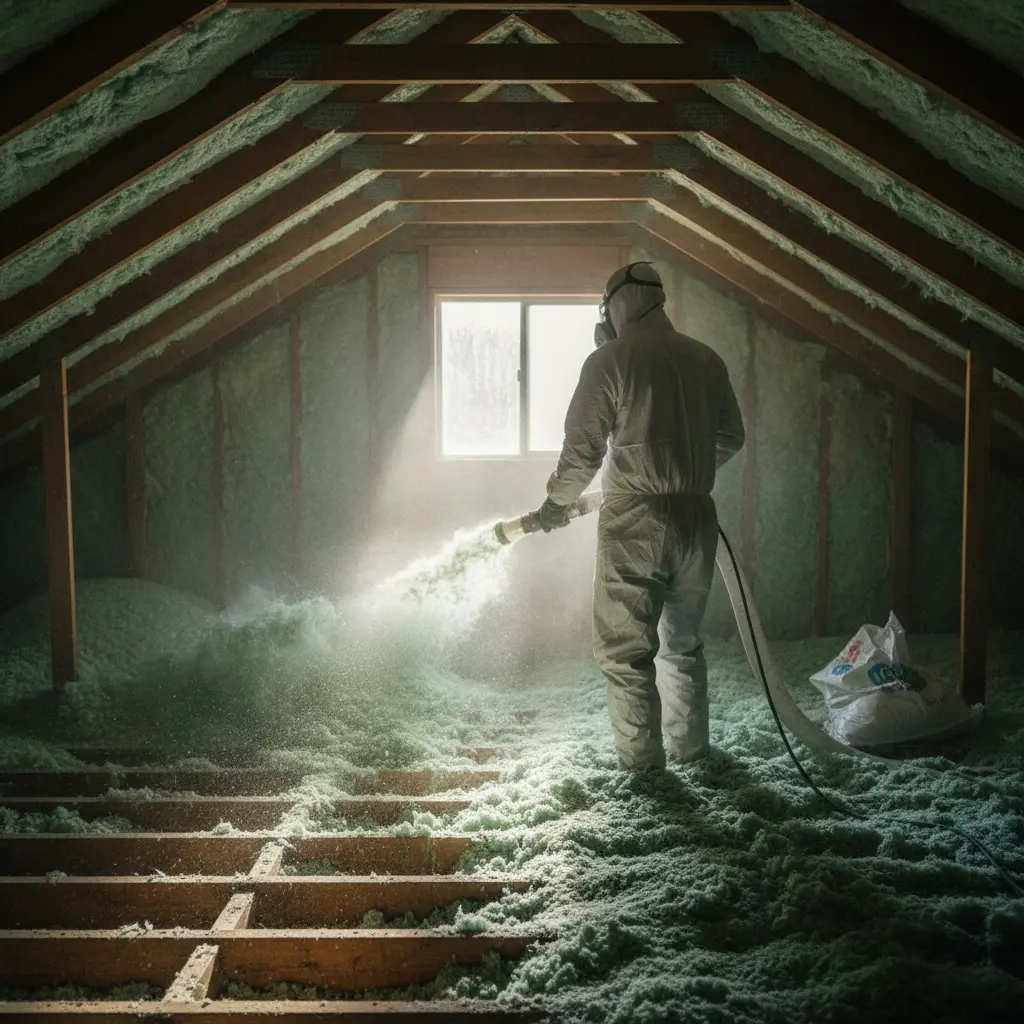
Our team in action — insulation professionals serving Santa Clarita
Crawl Space Encapsulation Methods and Approaches
Full Encapsulation with Conditioned Air
The most comprehensive approach, this method seals the crawl space completely and introduces a small amount of conditioned air from the home’s HVAC system or a dedicated dehumidifier to maintain stable temperature and humidity. Recommended for homes in Santa Clarita’s lower elevation zones near drainage channels and for properties with a history of moisture intrusion. This method typically achieves relative humidity levels below 50% year-round.
Vapor Barrier Only (Budget Encapsulation)
A 20-mil reinforced vapor barrier is installed across crawl space floors and partway up walls without full vent sealing or dedicated dehumidification. Suitable for homes in drier, elevated neighborhoods like Porter Ranch or Chatsworth where groundwater is not a significant concern and existing ventilation rates are manageable.
Spray Foam Perimeter Encapsulation
Closed-cell spray foam is applied directly to crawl space walls and rim joists, creating an air-impermeable thermal and moisture barrier. This approach is especially effective for older Newhall and Canyon Country homes with irregular masonry foundation walls where sheet goods are difficult to fit precisely. Closed-cell spray foam also provides structural reinforcement to aging foundation wall assemblies.
Drainage Board and Sump Integration
For homes with documented groundwater infiltration — particularly relevant after high-rainfall years like 2022–2023 — a dimple-mat drainage board is installed beneath the vapor barrier to channel water to a centrally located sump pump. This method is combined with full encapsulation for complete moisture control in the most challenging Santa Clarita sites.
Hybrid Insulation and Encapsulation
Combines vapor barrier installation with fiberglass or mineral wool batt insulation between floor joists for enhanced thermal performance. This approach works well for homes seeking both moisture control and improved floor comfort — a common request from homeowners in Stevenson Ranch’s newer housing tracts.
Ready for Crawl Space Encapsulation? Get Your Free Estimate Today.
Next Level Insulation of Santa Clarita serves Santa Clarita and the surrounding area — we’ll be on-site within 24 hours.
📞 Call (661) 582-0187Crawl Space Encapsulation Cost in Santa Clarita, CA
Understanding the cost of crawl space encapsulation in Santa Clarita helps homeowners budget appropriately and evaluate proposals from contractors. Pricing varies based on crawl space size, accessibility, existing conditions, and the scope of work required.
Typical Price Ranges
- Basic Vapor Barrier Installation: $1,500 – $3,500 for a standard 1,000–1,500 sq ft crawl space with straightforward access and minimal existing damage.
- Full Encapsulation (Barrier + Vent Sealing + Wall Insulation): $4,000 – $8,000 for most Santa Clarita single-family homes, depending on square footage and complexity.
- Full Encapsulation with Dehumidifier: $6,000 – $12,000, including a commercial-grade dehumidifier (typically adding $1,200 – $2,500 to the base cost).
- Drainage System Integration: An additional $2,000 – $5,000 for interior drain channels and sump pump installation in high-moisture situations.
- Mold Remediation (if required prior to encapsulation): $500 – $3,000+ depending on extent of contamination.
Santa Clarita-Specific Cost Factors
Several local conditions affect pricing in Santa Clarita. Homes with low crawl space clearance — common in 1960s-era Newhall construction where clearances can be as little as 18 inches — require additional labor time and may increase costs by 10–20%. Homes near the Santa Clara River with active groundwater challenges require more extensive drainage solutions. Additionally, homes in fire-affected zones like eastern Canyon Country may require soil testing before encapsulation, adding $300–$600 to project costs.
Most Santa Clarita homeowners see a return on their encapsulation investment through energy savings of 10–25% on annual HVAC costs, as well as avoided expenses from moisture damage, pest remediation, and structural repairs. Call us at (661) 582-0187 for a no-obligation free estimate tailored to your specific property.
Crawl Space Encapsulation Service Areas Near Santa Clarita
Newhall
One of Santa Clarita’s oldest communities, Newhall features a large concentration of homes built between the 1940s and 1970s on raised foundations with severely degraded original vapor barriers. These properties frequently require complete removal of old materials before modern 20-mil encapsulation systems can be installed. Insulation services in Newhall
Canyon Country
Homes in Canyon Country sit on Modelo Formation clay soils that experience significant shrink-swell activity. This geological condition creates ongoing moisture migration challenges that make full encapsulation with integrated humidity control essential. The 2019 Tick Fire also disturbed significant soil in eastern Canyon Country, affecting drainage patterns beneath many homes. Insulation services in Canyon Country
Stevenson Ranch
A master-planned community developed primarily in the 1990s and early 2000s, Stevenson Ranch homes are generally in good structural condition but benefit from encapsulation to improve energy efficiency and protect subfloor assemblies as the housing stock ages. Many residents here seek hybrid encapsulation and insulation packages for maximum comfort. Insulation services in Stevenson Ranch
We also proudly serve Castaic, Porter Ranch, Granada Hills, Sylmar, Mission Hills, Chatsworth, Simi Valley, Northridge, North Hills, Canoga Park, and San Fernando.
Crawl Space Maintenance Tips for Santa Clarita Homeowners
After encapsulation, ongoing maintenance ensures your crawl space continues to perform at its best through Santa Clarita’s demanding climate cycles:
- Inspect After Major Rainfall Events: Following storms — particularly the intense atmospheric river events that hit Santa Clarita in winter months — perform a visual inspection or have a professional check for any water infiltration through the encapsulation system.
- Monitor Dehumidifier Operation: If your system includes a dehumidifier, check it monthly. Empty or check drain line function and clean the filter every 30–60 days. Target interior humidity levels of 45–55%.
- Inspect Vent Seals Annually: Santa Ana winds and seismic activity (Santa Clarita is near the San Andreas and Northridge fault systems) can shift sealed vent covers over time. Check annually for gaps or displacement.
- Check Vapor Barrier Integrity Every Two Years: Look for punctures, tears, or areas where the barrier has pulled away from walls or seams have separated.
- Control Exterior Drainage: Ensure gutters, downspouts, and yard grading direct water away from the foundation — a particularly important practice during El Niño years when Santa Clarita receives above-average precipitation.
- Schedule Professional Inspections Every 3–5 Years: A professional inspection ensures all components remain in optimal condition and catches any developing issues before they become costly repairs.
- Pest Monitoring: Given Santa Clarita’s active rodent populations, check the crawl space access hatch and barrier perimeter for signs of pest activity annually.
Why Choose Next Level Insulation of Santa Clarita
When it comes to crawl space encapsulation in Santa Clarita, CA, homeowners deserve a contractor who truly understands the unique conditions of the Santa Clarita Valley — not a national franchise operating from a generic playbook.
Next Level Insulation of Santa Clarita brings over 20 years of experience serving homes throughout the region. Our technicians are intimately familiar with local soil conditions, including the Modelo Formation clays of Canyon Country and the alluvial soils near the Santa Clara River corridor. We understand how Santa Ana wind events, summer heat extremes, and atmospheric river rainfall cycles affect moisture dynamics beneath Santa Clarita homes differently than homes in coastal or inland empire locations.
We use only premium-grade materials — including reinforced 20-mil vapor barriers, closed-cell spray foam, and commercial-grade dehumidification equipment — to ensure your encapsulation system delivers lasting performance. Our team takes the time to explain every step of the process, provide transparent written estimates, and answer your questions honestly.
We proudly serve homeowners throughout Santa Clarita, Newhall, Canyon Country, Stevenson Ranch, Castaic, Porter Ranch, Simi Valley, and neighboring communities. Contact us today for your free crawl space inspection and estimate. You can also reach us directly at (661) 582-0187.
Frequently Asked Questions About Crawl Space Encapsulation in Santa Clarita, CA
How much does crawl space encapsulation cost in Santa Clarita, CA?
In Santa Clarita, a basic vapor barrier installation typically costs $1,500–$3,500, while a full encapsulation system with vent sealing, wall insulation, and dehumidification ranges from $6,000–$12,000. Factors such as crawl space size, accessibility, soil conditions (particularly in clay-heavy Canyon Country), and the need for mold remediation or drainage systems affect final pricing. We provide free, no-obligation estimates for all Santa Clarita area properties.
How long does crawl space encapsulation take?
Most residential crawl space encapsulation projects in Santa Clarita are completed within one to two days. Homes with more complex conditions — such as those requiring mold remediation, drainage system installation, or challenging access in lower-clearance 1960s-era Newhall homes — may take two to three days.
Will encapsulation help with my high summer energy bills in Santa Clarita?
Yes, significantly. Santa Clarita’s extreme summer temperatures — regularly exceeding 105°F — create intense thermal pressure on homes with unprotected crawl spaces. Encapsulation reduces conditioned air loss through the subfloor and eliminates the moisture that degrades insulation effectiveness. Most Santa Clarita homeowners report 10–25% reductions in annual HVAC costs after encapsulation.
Do I need a permit for crawl space encapsulation in Santa Clarita?
In most cases, standard crawl space encapsulation does not require a building permit in the City of Santa Clarita or unincorporated Los Angeles County areas of the valley. However, if structural repairs are performed in conjunction with encapsulation, a permit may be required. We advise clients on permit requirements specific to their project during the initial inspection.
Is crawl space encapsulation worth it if I’m planning to sell my Santa Clarita home?
Absolutely. A properly encapsulated crawl space is a strong selling point in the Santa Clarita real estate market, where home inspectors routinely flag moisture intrusion and degraded crawl space conditions. Buyers and their inspectors are highly familiar with the moisture challenges of local homes, and a documented, professionally installed encapsulation system can support a stronger asking price and smoother transaction.
My Santa Clarita home is near the Santa Clara River. Do I need a drainage system as well?
Homes in close proximity to the Santa Clara River drainage corridor — particularly in lower-lying sections of Newhall and Stevenson Ranch — frequently benefit from an integrated drainage system alongside encapsulation. During high-rainfall years like 2022–2023, groundwater table levels in these areas rise significantly. We assess groundwater risk during our initial inspection and recommend drainage integration only when genuinely necessary.
How do I know if my existing crawl space vapor barrier needs to be replaced?
If your vapor barrier was installed more than 15–20 years ago, it is likely a thin 4-mil or 6-mil polyethylene sheet that has degraded significantly. Signs of failure include visible tears, crumbling plastic material, mold growth on or under the barrier, and persistent moisture odors in your home. Many Santa Clarita homes built before 1990 fall into this category and are excellent candidates for a modern 20-mil reinforced encapsulation upgrade.
Can crawl space encapsulation help with rodents in my Santa Clarita home?
Yes. A properly sealed encapsulation system significantly reduces entry points for rodents, including roof rats and ground squirrels — two species commonly reported by Santa Clarita homeowners. Encapsulation seals foundation vents and gaps that serve as primary rodent entry points. We also offer rodent-proof insulation solutions that provide an additional layer of protection against pest intrusion.
Get a Free Crawl Space Encapsulation Estimate in Santa Clarita, CA
Don’t let moisture, mold, or energy loss compromise your home’s comfort, health, and value. Next Level Insulation of Santa Clarita is ready to help you protect your home with professional crawl space encapsulation designed for the unique demands of the Santa Clarita Valley climate and geology.
Whether you’re in Newhall, Canyon Country, Stevenson Ranch, Castaic, or anywhere throughout the Santa Clarita Valley, our experienced team is standing by to provide a thorough inspection and a transparent, competitive estimate — completely free of charge.
Call us today at (661) 582-0187 or submit a contact request online and a member of our team will follow up with you promptly. Take your home’s protection to the next level — with Next Level Insulation of Santa Clarita.