

Crawl Space Encapsulation Cost in Santa Clarita, CA
Transparent Crawl Space Encapsulation Cost Pricing for Santa Clarita, CA Homeowners — Free Estimates
Discover crawl space encapsulation costs in Santa Clarita, CA. Next Level Insulation provides expert encapsulation for local soil and climate conditions. Call (661) 582-0187.
- Licensed & Insured
- Locally Owned & Operated
- Free Inspection & Estimate
Request Your
Free EstimateCrawl space encapsulation is the process of sealing your home’s crawl space with heavy-duty vapor barriers, insulation, and moisture control systems to protect your foundation, indoor air quality, and energy efficiency. In Santa Clarita, CA — where the Santa Clara River basin, hot desert summers, and seasonal rain events create uniquely challenging moisture and soil conditions — proper crawl space encapsulation is not a luxury. It is a fundamental home protection investment.
At Next Level Insulation of Santa Clarita, we specialize in delivering expert crawl space encapsulation solutions tailored to the specific climate, soil types, and building stock of the Santa Clarita Valley. Whether your home sits in Canyon Country, Newhall, or Stevenson Ranch, our team understands the local factors that drive moisture intrusion, pest activity, and energy loss beneath your floors. We provide transparent, detailed cost information so you can make an informed decision before any work begins. Call us today at (661) 582-0187 for a free estimate.
Understanding Crawl Space Encapsulation in Santa Clarita
Crawl space encapsulation refers to the comprehensive sealing of the crawl space beneath a home using polyethylene vapor barriers (typically 12 to 20 mil thickness), rigid foam board insulation, sealed vents, drainage systems, and sometimes a dehumidifier. The goal is to create a conditioned or semi-conditioned environment beneath the home that resists moisture, pests, mold, and temperature extremes.
Historically, building codes through the mid-20th century encouraged “vented” crawl spaces, under the assumption that outside air would carry moisture away. However, research conducted over the past three decades — including studies published by the U.S. Department of Energy’s Oak Ridge National Laboratory — has demonstrated that vented crawl spaces in climates like Southern California’s often introduce more moisture than they remove. Hot, humid summer air flowing into a cooler crawl space creates condensation, which leads to wood rot, mold growth, and structural degradation.
Santa Clarita’s housing inventory reflects this history clearly. The city grew rapidly during two distinct periods: the post-World War II suburban expansion of the 1950s and 1960s, which produced thousands of single-story ranch-style homes with shallow vented crawl spaces, and the major master-planned community boom of the 1980s and 1990s that brought tracts in Stevenson Ranch, Valencia, and Canyon Country. Many of these homes were built with crawl space foundations rather than slab foundations, particularly in hillside areas where grading made slab construction impractical.
Today, encapsulation is recognized as the gold standard for crawl space management. Unlike simple vapor barriers that are placed loosely on the ground, full encapsulation involves sealing walls, floors, and sometimes the ceiling of the crawl space in a continuous, puncture-resistant system. This transforms the crawl space from a liability into a clean, dry, inspectable area that actually contributes to overall home performance.
For Santa Clarita homeowners, encapsulation is especially relevant given the valley’s soil composition, seasonal precipitation patterns, and the age of much of the existing housing stock. Learn more about our crawl space insulation services to understand how encapsulation works alongside proper insulation for maximum benefit.
Why Crawl Space Encapsulation Is Needed in Santa Clarita, CA
Santa Ana Wind Events and Pressure Cycling
The Santa Clarita Valley sits at the northern edge of the greater Los Angeles Basin and is directly exposed to Santa Ana wind events that funnel through the Newhall Pass. During major Santa Ana events — such as the December 2017 wind event that preceded the Thomas Fire and produced gusts exceeding 80 mph in the Sylmar and Granada Hills corridors — pressure differentials between the exterior and the interior of homes drive outside air aggressively into crawl space vents. This rapid pressure cycling pulls dust, allergens, and variable humidity levels into the crawl space environment repeatedly throughout the fall and winter seasons.
Expansive Clay Soils in Canyon Country and Newhall
Much of Santa Clarita’s soil profile, particularly in Canyon Country along Soledad Canyon Road and in Newhall near the San Gabriel Fault corridor, consists of expansive Montmorillonite clay. This soil type expands up to 30% in volume when saturated and contracts sharply during dry periods. This repeated expansion and contraction — particularly during wet winters like 2022–2023, when Santa Clarita received over 24 inches of rain between October and March — creates ground movement that stresses pier foundations, shifts vapor barriers, and opens gaps where moisture and pests can penetrate.
Seasonal Moisture from the Santa Clara River Floodplain
Homes near the Santa Clara River and its tributaries — particularly in the Newhall and Valencia flatlands — sit above soil with high seasonal water table fluctuations. During heavy precipitation years, subsurface moisture rises to within inches of crawl space floors. The 2023 atmospheric river events pushed groundwater levels in parts of Santa Clarita to levels not seen since the 1993–1995 El Niño cycle, leaving many homes with standing water or saturated soil directly beneath the crawl space vapor barrier.
Temperature Extremes and Condensation Cycles
Santa Clarita experiences summer highs routinely exceeding 100°F — the Newhall area recorded 109°F during the August 2020 heat event — alongside winter overnight lows that regularly dip below 35°F from December through February. This extreme temperature swing creates daily condensation cycles in vented crawl spaces, as cold nighttime air meets warm subfloor surfaces. Over months and years, this condensation saturates wood floor joists, promotes mold colonization, and degrades insulation effectiveness by 30–50%.
Post-Northridge Earthquake Legacy Foundations
The January 17, 1994 Northridge Earthquake, centered just 15 miles south of Santa Clarita, damaged or shifted thousands of crawl space foundations across the valley. Many homes in older Newhall, Canyon Country, and San Fernando neighborhoods received foundation repairs in 1994–1996 that sealed some but not all penetration points. Decades later, these partial repairs have aged and created new pathways for moisture and pests beneath the structure.
Signs You Need Crawl Space Encapsulation in Santa Clarita
Moisture and Mold Indicators
- Musty or earthy odors noticeable inside the home, particularly in rooms on the ground floor
- Visible white or black mold growth on floor joists, subfloor sheathing, or existing vapor barrier material
- Condensation or water droplets on pipes, ducts, or the underside of the subfloor
- Standing water or mud visible in the crawl space after winter rain events
Structural Warning Signs
- Soft, bouncy, or sagging floors — particularly common in 1960s and 1970s Newhall ranch homes
- Wood joists that appear darkened, discolored, or visibly rotted
- Cracks in drywall near floor level that appear or worsen after wet winters
- Doors and windows that stick or refuse to latch properly, indicating floor system movement
Energy and Comfort Indicators
- Noticeably cold floors during winter months despite heating system operation
- Higher-than-expected utility bills during summer cooling season
- Uneven temperatures between rooms on the ground floor
Pest Activity
- Evidence of rodent nesting, droppings, or damaged insulation in the crawl space
- Termite mud tubes on foundation walls or wood members
Our Crawl Space Encapsulation Process in Santa Clarita
At Next Level Insulation of Santa Clarita, we follow a structured, proven process designed specifically for the soil conditions, building types, and climate of the Santa Clarita Valley.
Comprehensive Crawl Space Inspection (Day 1 — 1 to 2 Hours)
Our technicians conduct a thorough visual and moisture-measurement inspection of your crawl space. We document existing vapor barriers, insulation condition, moisture levels using calibrated hygrometers, wood moisture content using pin meters, and any visible mold, pest activity, or structural damage. In Santa Clarita homes with clay-heavy soil, we pay special attention to evidence of soil heaving and pier displacement.
Debris Removal and Old Material Extraction (Day 1 — 2 to 4 Hours)
We remove all existing old vapor barrier material, deteriorated batt insulation, debris, and contaminated material from the crawl space. For homes in Canyon Country and Newhall with rodent activity history, we follow safe removal protocols and bag all material for proper disposal. Learn more about our professional insulation removal services.
Mold Remediation and Wood Treatment (Day 1 to Day 2)
If mold is present on wood surfaces, we apply EPA-registered antimicrobial treatments to affected joists and sheathing. We allow appropriate drying time — typically 24 hours — before proceeding with encapsulation materials.
Ground Vapor Barrier Installation (Day 2 — 3 to 5 Hours)
We install a minimum 12-mil reinforced polyethylene vapor barrier across the entire crawl space floor, overlapping seams by at least 12 inches and sealing all joints with moisture-resistant tape. In areas with expansive clay soil common to Canyon Country, we use 20-mil reinforced barriers for added puncture resistance during soil movement cycles.
Wall Encapsulation and Vent Sealing (Day 2 — 2 to 3 Hours)
We extend the vapor barrier up foundation walls and secure it to the sill plate. All existing vents are permanently sealed with rigid foam inserts and spray foam at the perimeter, converting the crawl space from a vented to an unvented encapsulated system per California Energy Code Section 150.0(d).
Insulation Installation (Day 2 to Day 3)
Depending on your home’s needs, we install rigid foam board insulation or spray foam insulation on crawl space walls and, where applicable, the subfloor above. Explore our spray foam insulation options for maximum air sealing performance.
Final Inspection and Documentation (Day 3 — 1 Hour)
We conduct a post-installation moisture reading, photograph all completed work, and walk you through the completed crawl space. We provide written documentation of all materials used and installation specifications for your records and future home sale disclosures.
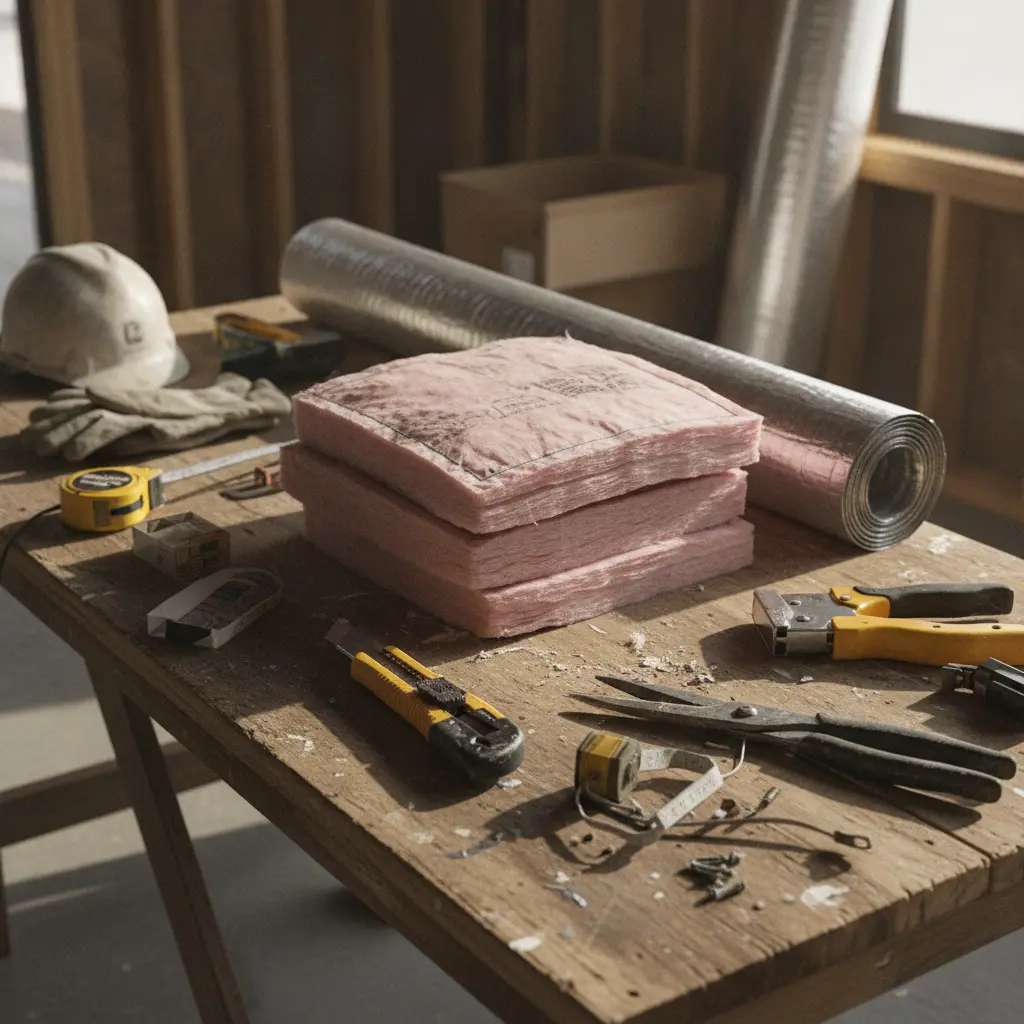
Our team in action — insulation professionals serving Santa Clarita
Crawl Space Encapsulation Methods and Approaches
Full Perimeter Encapsulation (Most Recommended for Santa Clarita)
This method involves covering both the crawl space floor and all foundation walls with vapor barrier material, sealing all vents, and treating the crawl space as a conditioned space. This approach is ideal for Santa Clarita homes on expansive clay soils and is the most effective at managing the valley’s seasonal moisture swings. It is the method we recommend for the majority of homes in Canyon Country, Newhall, and Stevenson Ranch.
Floor-Only Vapor Barrier Installation (Budget Entry Option)
For homes with mild moisture conditions and newer, intact vented foundations, a ground-only 12-mil to 20-mil vapor barrier can provide basic moisture control. This approach is less comprehensive but serves as an effective interim solution or upgrade path for homeowners working within tighter budgets.
Encapsulation with Mechanical Dehumidification
In Santa Clarita homes near the Santa Clara River floodplain or in low-lying areas of Valencia and Newhall, encapsulation alone may be insufficient during high-rainfall years. We install crawl space-rated dehumidifiers (typically 70-pint to 90-pint capacity) that maintain relative humidity below 55% year-round, actively controlling the moisture environment regardless of exterior conditions.
Spray Foam Wall and Rim Joist Encapsulation
For maximum air sealing performance — particularly in older Newhall homes built before 1980 with deteriorated rim joist areas — we apply closed-cell spray foam directly to foundation walls and rim joists. This provides both moisture control and significant R-value improvement in a single application. See how attic insulation complements crawl space work for whole-home efficiency.
Ready for Crawl Space Encapsulation Cost? Get Your Free Estimate Today.
Next Level Insulation of Santa Clarita serves Santa Clarita and the surrounding area — we’ll be on-site within 24 hours.
📞 Call (661) 582-0187Crawl Space Encapsulation Cost in Santa Clarita, CA
Understanding the cost of crawl space encapsulation in Santa Clarita requires accounting for several local variables. Below are current typical price ranges based on Santa Clarita market conditions.
Typical Cost Ranges
- Basic vapor barrier only (12-mil, floor coverage): $1,500 – $3,000 for a standard 1,000–1,500 sq ft crawl space
- Full encapsulation (floor + walls + vent sealing): $4,000 – $8,000 for a 1,000–1,500 sq ft crawl space
- Full encapsulation with dehumidifier: $6,000 – $12,000 depending on crawl space size and dehumidifier capacity
- Spray foam wall encapsulation: $5,000 – $10,000 depending on linear footage of foundation walls
- Mold remediation add-on (if required): $500 – $3,000 depending on severity and area affected
Key Cost Factors in Santa Clarita
- Crawl space height: Many Canyon Country and Newhall homes have low-clearance crawl spaces (18 to 24 inches), which increases labor time and cost by 15–25%.
- Access difficulty: Limited or single-point access hatches add labor cost for material transport.
- Existing damage: Mold remediation, rodent cleanup, or debris removal prior to encapsulation adds to total project cost.
- Soil conditions: Expansive clay areas may require heavier-gauge barrier materials, increasing material costs.
- Crawl space size: Larger homes in Stevenson Ranch or Porter Ranch with 2,000+ sq ft crawl spaces will fall at the higher end of cost ranges.
Call us at (661) 582-0187 for a no-obligation on-site estimate with itemized pricing specific to your home’s crawl space conditions.
Santa Clarita Neighborhoods We Serve
Canyon Country
Canyon Country homes, many built between 1965 and 1985 along Soledad Canyon Road and Sierra Highway, sit above expansive Montmorillonite clay soils that are particularly reactive to seasonal moisture changes. These properties frequently show evidence of vapor barrier displacement and pier movement. We adapt our encapsulation specifications to use 20-mil reinforced barriers in this area as standard practice.
Newhall
Newhall contains some of Santa Clarita’s oldest residential structures, with many homes dating to the 1940s and 1950s. These properties often have original single-layer vapor barriers — or none at all — combined with pier-and-beam foundations showing 70-plus years of wear. Full perimeter encapsulation with mold remediation is frequently required in this neighborhood.
Stevenson Ranch
Stevenson Ranch was developed primarily in the 1990s with larger floor plans and crawl spaces in hillside lots. Despite being newer construction, these homes often have vented crawl spaces that predate modern encapsulation standards and benefit significantly from conversion to sealed systems, particularly given their proximity to the Santa Susana Mountains and exposure to seasonal fog and marine influence from the Ventura County corridor.
Castaic and Valencia
We also proudly serve Castaic, Valencia, and surrounding communities throughout the Santa Clarita Valley. See our full crawl space encapsulation service page for complete service area details.
Crawl Space Encapsulation Maintenance Tips for Santa Clarita Homeowners
- Inspect annually after winter rain season: Each spring — particularly following high-rainfall winters like 2022–2023 — visually inspect your crawl space for standing water, barrier displacement, or new mold growth.
- Check vent seals after Santa Ana wind events: High-velocity winds can stress vent plugs and seals. Inspect sealed vents each November before wind season intensifies.
- Monitor dehumidifier function: If your encapsulation includes a dehumidifier, check the drainage line and filter every 3 months and service the unit annually.
- Keep gutters and downspouts clear: Santa Clarita’s brief but intense rain events can overwhelm clogged gutters, directing water toward the foundation perimeter and into the crawl space.
- Maintain 6-inch soil clearance at the foundation: Soil graded against the foundation accelerates moisture intrusion into the crawl space, especially in clay-heavy Canyon Country soils.
- Check for pest entry points: Rodents can chew through even heavy-duty vapor barriers. Inspect the perimeter annually for new gaps or gnaw marks.
- Document moisture readings: Use a basic hygrometer to record crawl space humidity quarterly. Readings consistently above 60% indicate the need for system adjustment or dehumidifier installation.
Why Choose Next Level Insulation of Santa Clarita
Next Level Insulation of Santa Clarita is a locally focused insulation and encapsulation company built specifically to serve the Santa Clarita Valley and surrounding communities. We are not a large national franchise dispatching unfamiliar technicians to your neighborhood — we are a team that understands the specific soil conditions of Canyon Country, the foundation types common to Newhall’s older housing stock, and the seasonal moisture patterns that affect Stevenson Ranch hillside properties.
Our technicians are trained in California Energy Code compliance for crawl space systems, ensuring that all encapsulation work meets or exceeds current state standards for moisture control and energy efficiency. We use only commercial-grade materials rated for Southern California’s temperature extremes and UV exposure conditions.
We offer fully transparent, itemized pricing with no hidden fees. Every project begins with a detailed on-site inspection and written estimate so you know exactly what you are investing in before any work begins. Our service area covers the entire Santa Clarita Valley including Castaic, Porter Ranch, Northridge, Simi Valley, Chatsworth, and San Fernando.
Call us at (661) 582-0187 to schedule your free crawl space assessment today.
Frequently Asked Questions: Crawl Space Encapsulation Cost in Santa Clarita
How much does crawl space encapsulation typically cost in Santa Clarita?
In Santa Clarita, full crawl space encapsulation — including vapor barrier, wall coverage, and vent sealing — typically costs between $4,000 and $8,000 for a standard 1,000 to 1,500 square foot crawl space. Homes with low clearance, expansive clay soil conditions, or existing mold damage will fall toward the higher end of that range. Basic vapor barrier-only installations can start as low as $1,500 to $3,000.
Does the type of soil under my Santa Clarita home affect the encapsulation cost?
Yes, significantly. Many Canyon Country and Newhall properties sit above expansive Montmorillonite clay soils that shift seasonally. These conditions require heavier-gauge vapor barrier material (20-mil vs. standard 12-mil) and more careful seam sealing, which adds to both material and labor costs. We assess soil conditions during our initial inspection and recommend the appropriate specification for your specific location.
How long does crawl space encapsulation take to complete?
Most Santa Clarita crawl space encapsulation projects are completed in 2 to 3 days. Smaller crawl spaces with minimal preparation needs may be finished in a single long day, while larger crawl spaces or those requiring mold remediation first may extend to 3 to 4 days total.
Will crawl space encapsulation lower my energy bills?
Yes. Encapsulation reduces air infiltration through the floor system, which accounts for a measurable portion of heating and cooling energy loss in Santa Clarita homes. The Department of Energy estimates that air sealing and crawl space conditioning can reduce HVAC energy consumption by 15–25% in homes with previously vented crawl spaces. Given Santa Clarita’s summer temperatures regularly exceeding 100°F, the cooling season savings are particularly notable.
Is crawl space encapsulation required by California building code?
California Energy Code (Title 24) does not universally require encapsulation as a retrofit for existing homes, but it does establish standards for crawl space moisture control and insulation in new construction and significant renovations. If you are selling your home in Santa Clarita, encapsulation documentation can be a positive disclosure item and may be required if a home inspection reveals moisture or mold conditions that a lender’s underwriter flags.
Can I encapsulate my crawl space myself to save money?
DIY vapor barrier installation is technically possible for homeowners with accessible, clean crawl spaces, but full encapsulation — including vent sealing, wall coverage, and proper seam sealing — requires professional-grade materials and technical knowledge of California Energy Code requirements. Improperly sealed crawl spaces can trap moisture rather than eliminate it, accelerating the damage you were trying to prevent. For Santa Clarita’s challenging soil and climate conditions, professional installation is strongly recommended.
What happens if I don’t encapsulate my crawl space?
Without encapsulation, Santa Clarita homes are exposed to progressive moisture damage that includes wood rot in floor joists, mold colonization that degrades indoor air quality, pest infestation from moisture-attracted rodents and termites, and declining floor insulation performance. Over 10 to 20 years, the cost of repairing structural damage caused by uncontrolled crawl space moisture routinely exceeds $15,000 to $40,000 — far more than the cost of proactive encapsulation.
Do you offer crawl space insulation in addition to encapsulation?
Yes. Next Level Insulation of Santa Clarita offers complete crawl space insulation services, including blow-in insulation, spray foam insulation, and crawl space insulation as standalone services or in combination with encapsulation for comprehensive crawl space performance improvement.
Get Your Free Crawl Space Encapsulation Estimate in Santa Clarita Today
Don’t let Santa Clarita’s expansive clay soils, seasonal rain events, or extreme temperature swings silently damage your home’s foundation and structural integrity. Next Level Insulation of Santa Clarita provides expert crawl space encapsulation services with honest, transparent pricing and materials chosen specifically for the conditions of the Santa Clarita Valley.
Our team serves Canyon Country, Newhall, Stevenson Ranch, Valencia, Castaic, Simi Valley, Northridge, Chatsworth, Porter Ranch, and all surrounding communities. Whether you need a basic vapor barrier upgrade or a complete encapsulation system with dehumidification, we have the local expertise to protect your home.
Call us now at (661) 582-0187 to schedule your free, no-obligation crawl space inspection and receive a detailed written estimate. Protect your home — starting from the ground up.