

Ceiling Insulation in Simi Valley, CA
Energy-Saving Ceiling Insulation for Simi Valley, CA Homes — Licensed & Insured
Need ceiling insulation in Simi Valley, CA? Next Level Insulation offers expert installation, blown-in, spray foam & more. Call (805) 774-1832 for a free estimate.
- Licensed & Insured
- Locally Owned & Operated
- Free Inspection & Estimate
Request Your
Free EstimateCeiling insulation is a thermally protective barrier installed between your living space and the roof or attic above, designed to reduce heat transfer, lower energy bills, and improve year-round indoor comfort. In Simi Valley, CA, where summer temperatures routinely climb past 100°F in neighborhoods like Wood Ranch and Berylwood, and where the Santa Ana wind events drive sharp overnight temperature swings, an underperforming ceiling is one of the most costly oversights a homeowner can make.
At Next Level Insulation of Simi Valley, we specialize in ceiling insulation solutions engineered for the specific climate demands of Simi Valley and the surrounding Ventura County region. Whether you own a 1970s ranch-style home in Devonshire Country Estates or a newer build near Rancho Simi Community Park, our team delivers precision installation, honest assessments, and results you can feel from day one. Call us at (805) 774-1832 to schedule a free evaluation today.
Understanding Ceiling Insulation
Ceiling insulation refers to any insulating material installed at the plane of the ceiling — either between the ceiling drywall and the attic floor joists, or directly against the roof deck in the case of cathedral or vaulted ceilings. Its primary role is to resist the movement of heat: keeping conditioned air inside during Simi Valley’s blazing summers and retaining warmth during the cooler, windswept winters that come off the Santa Susana Mountains.
Historically, older Simi Valley homes built during the city’s rapid residential expansion of the late 1960s and 1970s were often insulated with fiberglass batts rated at R-11 or R-19 — values that fall significantly below today’s California Title 24 Energy Code recommendations of R-38 to R-60 for attic and ceiling assemblies in Climate Zone 9, which covers most of Simi Valley. Over decades, those early materials compress, settle, absorb moisture, and lose their effectiveness, leaving thousands of local homes with inadequate thermal protection.
Ceiling insulation matters across all building types common to Simi Valley. Single-family tract homes in Bridle Path, split-level properties near Corriganville Park, and multi-unit condominiums along Tapo Canyon Road all experience heat gain and heat loss primarily through the ceiling plane — research consistently shows that 25–30% of a home’s thermal energy escapes through an uninsulated or under-insulated ceiling. Modern insulation materials include blown-in fiberglass, blown-in cellulose, spray polyurethane foam (open-cell and closed-cell), and rigid foam board, each with distinct R-value profiles, moisture resistance characteristics, and installation requirements suited to different ceiling types and performance goals.
Understanding which product and which installation method is appropriate for your specific Simi Valley home requires a trained eye — one familiar with the local construction eras, the Ventura County permit process, and the microclimatic variables that distinguish a hillside property from a valley-floor home just two miles away. Learn more about our attic insulation services
Why Ceiling Insulation Is Needed in Simi Valley, CA
Simi Valley’s climate presents a demanding and specific set of challenges that make ceiling insulation not just a comfort upgrade but a functional necessity. The city sits within the NOAA-designated Inland Valley climate sub-region of Southern California, where the absence of coastal marine influence produces temperature extremes that exceed those found in nearby coastal communities by 10°F to 20°F during peak summer months. The Simi Valley floor, nestled between the Santa Susana Mountains to the south and the Tierra Rejada Valley to the north, acts as a natural heat basin, with KCAL weather station data regularly recording afternoon highs of 103°F to 107°F during July and August heat events.
The Woolsey Fire of November 2018 and the Easy Fire of October 2019 both impacted areas immediately adjacent to Simi Valley, and the resulting landscape changes — reduced vegetation, altered soil composition, and increased particulate matter — have measurably affected local temperature regulation at the ground level. Homes in the northwestern sections of Simi Valley, particularly those near the Rocketdyne/Brandeis-Bardin area, now experience elevated radiant heat loads during fire season recovery periods.
Santa Ana wind events, which typically occur between October and March and can drive sustained winds of 40–60 mph through the Santa Susana Pass and the Simi Hills, create rapid pressure and temperature fluctuations that compromise the thermal envelope of poorly insulated homes. During a strong Santa Ana event, an attic space in Simi Valley can reach 140°F or higher, with heat radiating directly downward through the ceiling into living areas — making a functioning ceiling insulation system the primary line of defense against this phenomenon.
Local geology also plays a role. Simi Valley is situated on alluvial fan deposits and weathered sandstone formations that retain daytime heat and release it slowly overnight — a process known as thermal mass radiation. Homes built on slab foundations in the Erringer Road corridor and the Sequoia Avenue neighborhoods absorb this ground heat, which, combined with attic heat gain, creates a compounding thermal burden on HVAC systems that are already working overtime.
Water intrusion is another Simi Valley-specific concern. Despite low annual rainfall averages of approximately 14 inches, the region’s periodic atmospheric river events — like the January 2023 storms that dropped over 6 inches in 72 hours — can drive moisture into aging attic spaces, saturating and compressing existing fiberglass batt insulation. Compressed insulation loses R-value proportionally, meaning a batt originally rated R-19 can degrade to an effective R-10 or lower after moisture exposure. Our insulation removal services address damaged or degraded ceiling insulation effectively.
Signs You Need Ceiling Insulation in Simi Valley
Energy and Comfort Indicators
- Utility bills from Southern California Edison that spike dramatically between June and September, often increasing 40–70% over spring baseline costs
- Rooms on the top floor or directly beneath the attic that feel significantly warmer than ground-floor rooms during Simi Valley’s summer heat events
- Your HVAC system running continuously during afternoon hours without reaching the thermostat set point
- Noticeable cold drafts near ceiling edges during Santa Ana wind events in fall and winter
Physical and Structural Signs
- Visible insulation in the attic that appears flat, matted, or discolored — a sign of compression or moisture damage
- Water stains on ceiling drywall following rainfall events, indicating moisture has penetrated and potentially damaged insulation layers
- Insulation depth in the attic measuring less than 10–12 inches of blown-in material, which typically indicates inadequate R-value for Simi Valley’s Climate Zone 9 requirements
Urgency Indicators
- Presence of vermiculite or other legacy insulation materials in homes built before 1980 — these may contain asbestos and require professional testing and removal
- Rodent activity in the attic, which destroys insulation integrity and creates health hazards
- Insulation that has not been inspected or replaced in more than 20 years
Our Ceiling Insulation Process in Simi Valley
Free In-Home Assessment (Day 1 — 60 to 90 Minutes)
Our certified technician visits your Simi Valley property and conducts a thorough inspection of your existing ceiling insulation, attic ventilation, air sealing condition, and any signs of moisture or pest intrusion. We use a thermal imaging camera to identify hotspots and cold zones invisible to the naked eye. We also document your existing insulation depth and calculate your current effective R-value compared to California Title 24 requirements for your specific home type.
Written Proposal and Material Recommendation (Day 1–2)
Based on the assessment, we provide a detailed written proposal specifying the recommended insulation type, target R-value, and estimated project timeline. We explain why each recommendation suits your specific Simi Valley home — whether that means blown-in cellulose for a 1970s Wood Ranch tract home or closed-cell spray foam for a vaulted ceiling in a newer Bridle Path property.
Permit Coordination (Day 2–5 if Required)
Certain ceiling insulation projects in Ventura County require building permits, particularly when combined with attic air sealing or HVAC modifications. We handle all coordination with the Simi Valley Building and Safety Division on your behalf, ensuring full compliance with local codes.
Attic Preparation and Air Sealing (Installation Day, Hours 1–2)
Before any new insulation is installed, our crew seals all attic bypasses — gaps around recessed lighting, plumbing penetrations, and HVAC chases. Air sealing is a critical and often overlooked step; unsealed bypasses can reduce the effective performance of new insulation by up to 40%.
Old Insulation Removal if Necessary (Installation Day, Hours 2–4)
If existing insulation is damaged, contaminated, or inadequate, we perform complete removal using industrial vacuum equipment with HEPA filtration. Learn more about our insulation removal services
New Insulation Installation (Installation Day, Hours 3–6)
We install your selected insulation product to the specified depth and R-value, verifying coverage with depth rulers and post-installation thermal imaging. Most Simi Valley residential ceiling projects are completed in a single day.
Final Inspection and Documentation (End of Installation Day)
We conduct a post-installation walkthrough with the homeowner, photograph the completed work for our records, and provide documentation of the installed R-value — a requirement for many California utility rebate programs through SoCalGas and SCE.
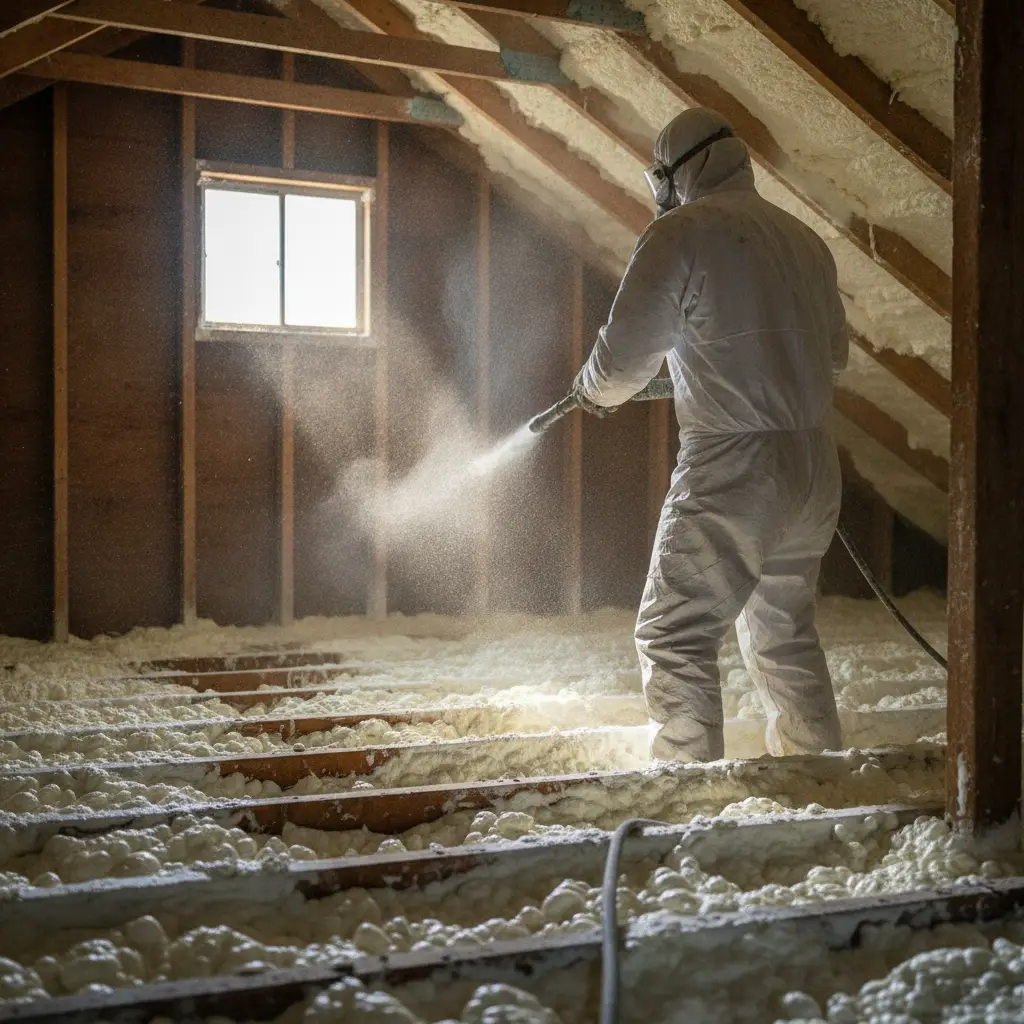
Our team in action — insulation professionals serving Simi Valley
Ceiling Insulation Methods and Approaches
Blown-In Fiberglass
Blown-in fiberglass is the most commonly installed ceiling insulation method in Simi Valley’s residential market. Lightweight glass fibers are pneumatically blown into attic spaces to a uniform depth, typically achieving R-38 to R-60 depending on installed thickness. It is ideal for open attic floors in the 1970s and 1980s tract homes that dominate Simi Valley neighborhoods like Berylwood and Simi Valley Knolls. It is non-combustible and resistant to the moisture fluctuations common during Ventura County’s atmospheric river events. Explore our blow-in insulation services
Blown-In Cellulose
Made from recycled paper treated with borate fire retardant, blown-in cellulose offers a slightly higher density than fiberglass, providing better air resistance in older, leakier attic assemblies. It is a strong choice for Simi Valley homes with irregular joist spacing or obstructions that make batt installation impractical.
Spray Foam Insulation (Open-Cell and Closed-Cell)
For cathedral ceilings, vaulted ceilings, and roof deck applications where traditional blown-in methods are not feasible, spray polyurethane foam provides both insulation and air sealing in a single application. Closed-cell foam at 2 inches achieves approximately R-12, with full applications reaching R-24 to R-40. This method is particularly valuable for Simi Valley hillside homes where roof geometry prevents conventional attic access. Learn more about our spray foam insulation services
Batt Insulation Replacement
For accessible ceiling cavities during renovation work, pre-cut fiberglass or mineral wool batts offer a cost-effective upgrade path. Mineral wool batts are especially suited to Simi Valley properties in wildfire interface zones due to their superior fire-resistance ratings.
Ready for Ceiling Insulation? Get Your Free Estimate Today.
Next Level Insulation of Simi Valley serves Simi Valley and the surrounding area — we’ll be on-site within 24 hours.
📞 Call (805) 774-1832Ceiling Insulation Cost in Simi Valley, CA
Understanding the cost of ceiling insulation in Simi Valley requires considering multiple variables specific to your property, existing conditions, and target performance level.
Typical Cost Ranges
- Blown-In Fiberglass or Cellulose (attic top-up to R-38): $1,200–$2,500 for a typical 1,500–2,000 sq ft Simi Valley home
- Full Blown-In Installation with Air Sealing (R-49 to R-60): $2,500–$4,500 depending on attic access complexity and existing insulation condition
- Spray Foam for Cathedral or Vaulted Ceilings: $3.00–$7.00 per square foot installed, depending on foam type and required thickness
- Insulation Removal plus Full Replacement: $3,500–$7,000+ for a standard Simi Valley ranch-style home, including debris disposal
Simi Valley-Specific Cost Factors
Homes in elevated areas of Simi Valley — particularly hillside properties in Wood Ranch or near the Tierra Rejada Road corridor — often involve more complex attic access and additional labor time, increasing project costs by 10–20% compared to flat-lot valley-floor homes. Homes built before 1980 may require asbestos testing before insulation work can begin, adding $300–$600 to the project scope.
Available Rebates
Southern California Edison and SoCalGas both offer rebates for qualifying insulation upgrades under their Energy Efficiency Programs. Rebates of $0.10–$0.20 per square foot are commonly available for upgrades reaching R-38 or higher, potentially reducing your net cost by $200–$600. We assist all Simi Valley clients in documenting installations for rebate applications. Contact us at (805) 774-1832 for a detailed estimate.
Simi Valley Neighborhoods We Serve
Wood Ranch
Developed primarily in the 1980s and 1990s, Wood Ranch homes feature larger square footage and more complex rooflines with multiple ceiling planes. Many properties here have aging batt insulation approaching 30–40 years old, well past optimal performance life. The elevated terrain also exposes these homes to stronger wind exposure during Santa Ana events.
Berylwood
One of Simi Valley’s original tract developments from the late 1960s, Berylwood homes are characterized by simple gable roofs and open attic access — ideal candidates for blown-in insulation top-ups. Original insulation in these homes rarely exceeds R-11, representing a significant performance gap relative to current Title 24 standards.
Bridle Path
This equestrian-oriented neighborhood features larger lots with custom and semi-custom homes built across multiple decades. Cathedral and vaulted ceilings are common here, making spray foam or specialized batt installations the preferred solution for ceiling insulation upgrades.
Devonshire Country Estates
Hillside properties in Devonshire face the dual challenge of elevated heat exposure and wildfire interface zone requirements. Mineral wool and closed-cell spray foam are preferred materials here for their combined thermal and fire-resistance properties.
Ceiling Insulation Maintenance Tips for Simi Valley Homeowners
- Inspect attic insulation depth annually — Use a ruler to verify depth has not settled below your target R-value, particularly after heavy rainfall seasons common to Ventura County’s atmospheric river years.
- Check attic ventilation every spring — Blocked soffit or ridge vents cause heat buildup that accelerates insulation degradation. Simi Valley’s summer heat makes this especially critical.
- Seal attic access hatches — An unsealed attic hatch is a major thermal bypass. Install a pre-made insulated hatch cover rated for R-10 minimum.
- Monitor for rodent activity — Roof rats are common in Simi Valley’s foothill areas. Rodents nest in and destroy insulation rapidly. Quarterly inspection of attic perimeter sealing is recommended.
- Inspect for moisture after significant rainfall events — Following storms, check attic spaces for signs of water intrusion, wet insulation, or mold growth on roof sheathing.
- Keep recessed lights on sealed housings — Older can lights are major air leakage points. Replace with IC-rated, airtight fixtures to maintain ceiling insulation performance.
- Schedule a professional insulation audit every 10 years — Insulation materials degrade over time, and building codes change. A decade-interval professional review ensures your Simi Valley home stays energy-code compliant.
Why Choose Next Level Insulation of Simi Valley
Next Level Insulation of Simi Valley is a locally focused insulation contractor with deep familiarity with the construction history, climate conditions, and building code landscape of Simi Valley and Ventura County. We are not a national franchise operating from a distant call center — we are a team rooted in this community, serving homeowners from Chatsworth to Camarillo and everywhere in between.
Our technicians understand the nuances that matter in Simi Valley specifically: the difference in insulation needs between a 1968 Berylwood tract home and a 2005 Wood Ranch estate, the wildfire interface zone requirements near the Simi Hills, and the Title 24 compliance standards enforced by the Ventura County Building Department. We carry full liability insurance and operate in compliance with California contractor licensing requirements.
We also pride ourselves on transparent, itemized pricing with no hidden fees — you will know exactly what you are getting before any work begins. Our service area covers all of Simi Valley and extends to Thousand Oaks, Moorpark, Camarillo, Santa Clarita, Woodland Hills, and beyond. Call (805) 774-1832 to speak with a local insulation expert today. Schedule your free ceiling insulation assessment
Frequently Asked Questions About Ceiling Insulation in Simi Valley, CA
How much does ceiling insulation cost in Simi Valley, CA?
Most ceiling insulation projects in Simi Valley range from $1,200 to $4,500 for blown-in fiberglass or cellulose installations, depending on home size, existing insulation condition, and target R-value. Spray foam applications for vaulted or cathedral ceilings typically run $3.00–$7.00 per square foot. Homes requiring old insulation removal before new installation will see higher overall costs. Call (805) 774-1832 for a free, no-obligation estimate specific to your property.
What R-value does ceiling insulation need to meet in Simi Valley?
Simi Valley falls within California Building Climate Zone 9. California’s Title 24 Energy Code requires new residential ceiling insulation to achieve a minimum of R-38, with R-49 or R-60 recommended for maximum energy performance given Simi Valley’s extreme summer heat exposure. Many older Simi Valley homes have existing insulation at R-11 to R-19 — far below current standards.
How long does ceiling insulation installation take in Simi Valley?
Most residential ceiling insulation projects in Simi Valley are completed in a single day, typically 4–8 hours depending on home size and the complexity of air sealing work required. Larger homes or projects requiring old insulation removal may extend to two days. We provide a clear timeline estimate in our written proposal before any work begins.
Do I need a permit for ceiling insulation in Simi Valley?
In many cases, straightforward insulation top-up projects do not require a permit from the Simi Valley Building and Safety Division. However, projects involving spray foam on the roof deck, changes to HVAC penetrations, or work combined with structural modifications may require permitting. We assess permit requirements during our initial evaluation and handle all coordination if permits are needed.
Can ceiling insulation help reduce my SCE utility bills in Simi Valley’s summer heat?
Yes — upgrading ceiling insulation to R-38 or higher is one of the most cost-effective energy improvements available to Simi Valley homeowners. Studies by the Department of Energy indicate that proper attic and ceiling insulation can reduce heating and cooling costs by 15–20%. For a Simi Valley home spending $300–$400 per month on summer cooling, that represents savings of $45–$80 per month during peak season, with payback periods typically ranging from 3–6 years.
Is my Simi Valley home’s old insulation a health risk?
Homes built in Simi Valley before 1980 may contain vermiculite insulation in attic spaces, which can be contaminated with asbestos. Additionally, old fiberglass or cellulose that has been saturated by moisture or disturbed by rodents can harbor mold spores and allergens. We always recommend professional testing before disturbing suspect materials. Our team is trained in safe handling and removal procedures compliant with California EPA guidelines.
What is the best ceiling insulation for Simi Valley’s wildfire interface zones?
For homes in Simi Valley’s Very High Fire Hazard Severity Zones — particularly properties near the Simi Hills, the Santa Susana Mountains, and areas adjacent to the Ronald Reagan Presidential Library corridor — we recommend mineral wool batts or closed-cell spray foam. Both materials are non-combustible and provide both thermal insulation and an additional layer of fire resistance compared to standard fiberglass.
Do you serve areas outside of Simi Valley?
Yes. Next Level Insulation of Simi Valley serves a broad service area throughout Ventura and Los Angeles counties, including Thousand Oaks, Moorpark, Camarillo, Oxnard, Woodland Hills, Calabasas, Santa Clarita, Chatsworth, Agoura Hills, Westlake Village, Oak Park, North Hollywood, Beverly Hills, Malibu, San Fernando, Fillmore, Santa Paula, and Port Hueneme. View our complete service area
Get Your Free Ceiling Insulation Estimate in Simi Valley Today
You don’t have to keep paying inflated energy bills or suffering through Simi Valley’s 100°F+ summers in an uncomfortable home. Next Level Insulation of Simi Valley is ready to assess your ceiling insulation, identify performance gaps, and deliver a tailored solution that meets California Title 24 standards and your budget.
Whether you’re in Wood Ranch, Berylwood, Bridle Path, or anywhere across Simi Valley and the surrounding region, our team is your local ceiling insulation expert. Call us at (805) 774-1832 to schedule your free, no-obligation in-home assessment. We’ll inspect your attic, measure your current R-value, and give you an honest, itemized quote — no pressure, no surprises.
Request your free ceiling insulation assessment online or call (805) 774-1832 today.