

Insulation Replacement in Burbank, CA
Quality Insulation Replacement in Burbank, CA in Burbank, CA — Built to Last
Need insulation replacement in Burbank, CA? Next Level Insulation offers expert removal & reinstall services. Free estimates. Call (818) 514-7541 today!
- Licensed & Insured
- Locally Owned & Operated
- Free Inspection & Estimate
Request Your
Free EstimateInsulation replacement is the process of removing degraded, contaminated, or ineffective insulation materials from your home or commercial property and installing fresh, high-performance insulation to restore optimal thermal and acoustic performance. In Burbank, CA — where summer temperatures routinely climb above 100°F in neighborhoods like Magnolia Park and where San Fernando Valley heat inversions trap warm air for weeks at a time — aging insulation is not just an inconvenience; it’s a direct drain on your energy budget.
At Next Level Insulation of Burbank, we bring over 20 years of hands-on experience replacing insulation in single-family homes, mid-century bungalows, commercial studios, and multi-family complexes throughout Burbank and the greater Los Angeles basin. Our certified technicians assess your existing insulation, identify failure points specific to the local climate, and install solutions engineered to last. Call us today at (818) 514-7541 for a free, no-obligation estimate.
Understanding Insulation Replacement
Insulation replacement goes beyond simply adding new material on top of old. It involves a complete removal of existing insulation — whether fiberglass batts, blown-in cellulose, or deteriorated spray foam — followed by a thorough inspection of the substrate, air sealing of penetrations, and installation of new insulation rated to current California Title 24 energy code requirements. This full-cycle process ensures your home operates as a sealed thermal envelope rather than a leaky shell.
Historically, Burbank’s residential building stock was largely constructed between the 1940s and 1970s to house workers employed at the Lockheed Corporation plant (which operated in the city for decades) and the growing entertainment industry anchored by Warner Bros. and NBC Studios. Homes built during that era were insulated with materials that carried R-values far below what California now mandates — many attics received only R-11 fiberglass batts, compared to the R-38 minimum required today under Title 24 for Climate Zone 9, which encompasses Burbank.
Cellulose insulation popular in 1960s–1980s retrofits settles over time, losing up to 20% of its stated R-value within 15 to 20 years. Fiberglass batts installed without vapor management in Burbank’s Mediterranean climate absorb ambient moisture during December–February rain cycles, compressing fibers and reducing thermal resistance. Meanwhile, rodent activity in the brushy hillside corridors between Burbank and the Verdugo Mountains frequently contaminates attic insulation with droppings and nesting debris, demanding full replacement rather than a simple top-up.
Whether you own a classic 1950s ranch home on Kenneth Road, a Toluca Lake Tudor revival, or a modern commercial building near the Burbank Empire Center, understanding what insulation replacement entails empowers you to make informed decisions about material choice, R-value targets, and installation methodology — all of which directly affect your monthly Southern California Gas and LADWP electric bills.
Why Insulation Replacement Is Needed in Burbank, CA
Extreme Heat Cycling
The National Weather Service recorded a high of 114°F at Burbank Bob Hope Airport on September 6, 2020, during the historic Labor Day heat event — one of the most extreme temperature spikes in recorded San Fernando Valley history. Attic spaces in unshaded single-story homes routinely exceed 150°F during peak summer afternoons. This intense heat cycling causes fiberglass batt facing to delaminate, spray foam to micro-crack, and batt batts to shift out of cavities over repeated expansion-and-contraction cycles. An attic that reached 150°F fifty times in a single decade has experienced thermal stress equivalent to decades of use in a milder climate like San Francisco’s.
Santa Ana Wind Events and Particulate Infiltration
Burbank experiences some of Southern California’s most forceful Santa Ana wind events, with gusts recorded above 70 mph funneling through the Newhall Pass and Verdugo Mountains corridor. These winds drive fine particulate matter, including combustion byproducts from the 5 Freeway corridor and wildfire ash from the Angeles National Forest fires (most recently the Bobcat Fire of September 2020 and the La Tuna Fire of September 2017, which burned 7,194 acres on the slopes directly above Burbank’s hillside neighborhoods), deep into attic and wall cavities. Ash and soot contamination degrades cellulose insulation chemically and reduces its fire-retardant borate treatments over time.
Seismic Activity and Structural Shifting
The 1994 Northridge Earthquake (magnitude 6.7) caused widespread structural movement throughout Burbank, opening gaps between wall plates and top plates that allow conditioned air to escape around insulation batts. Even smaller events on the nearby Hollywood Fault and Sierra Madre Fault System create micro-shifts that compromise air barriers adjacent to insulation, rendering R-values effectively lower than their ratings suggest.
Verdugo Hills Wildlife Corridors
Burbank’s hillside neighborhoods — including Burbank Hills and the areas bordering Wildwood Canyon State Park — sit adjacent to active wildlife corridors. Roof rats, squirrels, and opossums routinely enter attic spaces, nesting in and urinating on insulation. California Department of Public Health guidelines recommend full insulation removal and replacement when rodent infestation is confirmed, as contaminated material poses a hantavirus risk. This is one of the most common insulation replacement drivers we encounter at Next Level Insulation.
Title 24 Compliance and Real Estate Transactions
California’s Title 24 Building Energy Efficiency Standards, updated in their 2022 cycle, require Climate Zone 9 attics to achieve a minimum R-38. Many Burbank properties listed for sale or undergoing permitted renovations trigger mandatory upgrades from legacy R-11 or R-19 insulation, making replacement not just advisable but legally required before a permit will close.
Signs You Need Insulation Replacement in Burbank
Energy Performance Indicators
- LADWP electric bills that spike above $300–$400/month during July–September despite moderate thermostat settings
- HVAC system running continuously for more than 20 minutes per cycle during summer afternoons
- Rooms in your Burbank home that are 8°F or more warmer than the thermostat reading
Physical and Visual Symptoms
- Visible attic insulation that appears flat, gray-brown, or compressed below 3.5 inches (indicating R-11 or less)
- Moisture staining, mold growth, or musty odor in attic spaces following Burbank’s winter rain season (December–February)
- Rodent droppings, nesting debris, or chewed batt material visible in attic or crawl space
- Wildfire ash or soot deposits on insulation surface following nearby fire events
Structural and Age-Related Triggers
- Home built before 1980 with original, never-replaced insulation
- Recent permitted remodel or sale transaction requiring Title 24 compliance upgrade
- Post-earthquake inspection revealing gaps between insulation and framing members
If you recognize two or more of these symptoms, contact Next Level Insulation at (818) 514-7541 for a diagnostic inspection before energy losses compound further.
Our Insulation Replacement Process in Burbank
We follow a structured, seven-step process refined over 20+ years of working in Burbank homes and commercial properties. Every step is adapted to the specific conditions of your property and the local climate demands of the eastern San Fernando Valley.
Free On-Site Assessment (Day 1 — 60–90 minutes)
A certified Next Level Insulation technician inspects your attic, walls, and crawl space using thermal imaging and moisture meters calibrated to Southern California ambient humidity levels. We document existing R-values, identify contamination, and flag Title 24 compliance gaps.
Detailed Written Estimate (Within 24–48 Hours)
You receive a line-item quote specifying removal scope, disposal fees, recommended insulation type, target R-value, and projected energy savings based on current LADWP rate tiers.
Permit Coordination (1–5 Business Days, If Required)
For projects requiring a City of Burbank building permit — including full attic replacements tied to permitted remodels — we handle all permit applications through the Burbank Building and Safety Division, located at 150 N. Third Street.
Contamination Removal and Disposal (Half-Day to Full Day)
Old insulation is vacuumed out using commercial-grade negative-pressure equipment and HEPA-filtered containment to prevent fiber or particulate migration into living spaces. Rodent-contaminated material is bagged and disposed of per California Department of Public Health protocols.
Substrate Inspection and Air Sealing (2–4 Hours)
With the insulation cleared, we inspect framing for signs of moisture damage or seismic shifting, then air-seal all penetrations — top plates, plumbing chases, recessed lights, and attic hatch frames — using low-VOC foam sealant appropriate for California’s South Coast AQMD air quality requirements.
New Insulation Installation (Half-Day to Full Day)
We install the agreed insulation system — blown-in fiberglass, mineral wool batts, or open/closed-cell spray foam — to the specified R-value, typically R-38 or higher for Burbank attics per Climate Zone 9 Title 24 standards.
Final Inspection and Documentation (1–2 Hours)
We conduct a post-installation thermal scan, provide you with a Certificate of Installation documenting achieved R-values, and submit any required inspection paperwork to the City of Burbank Building Division.
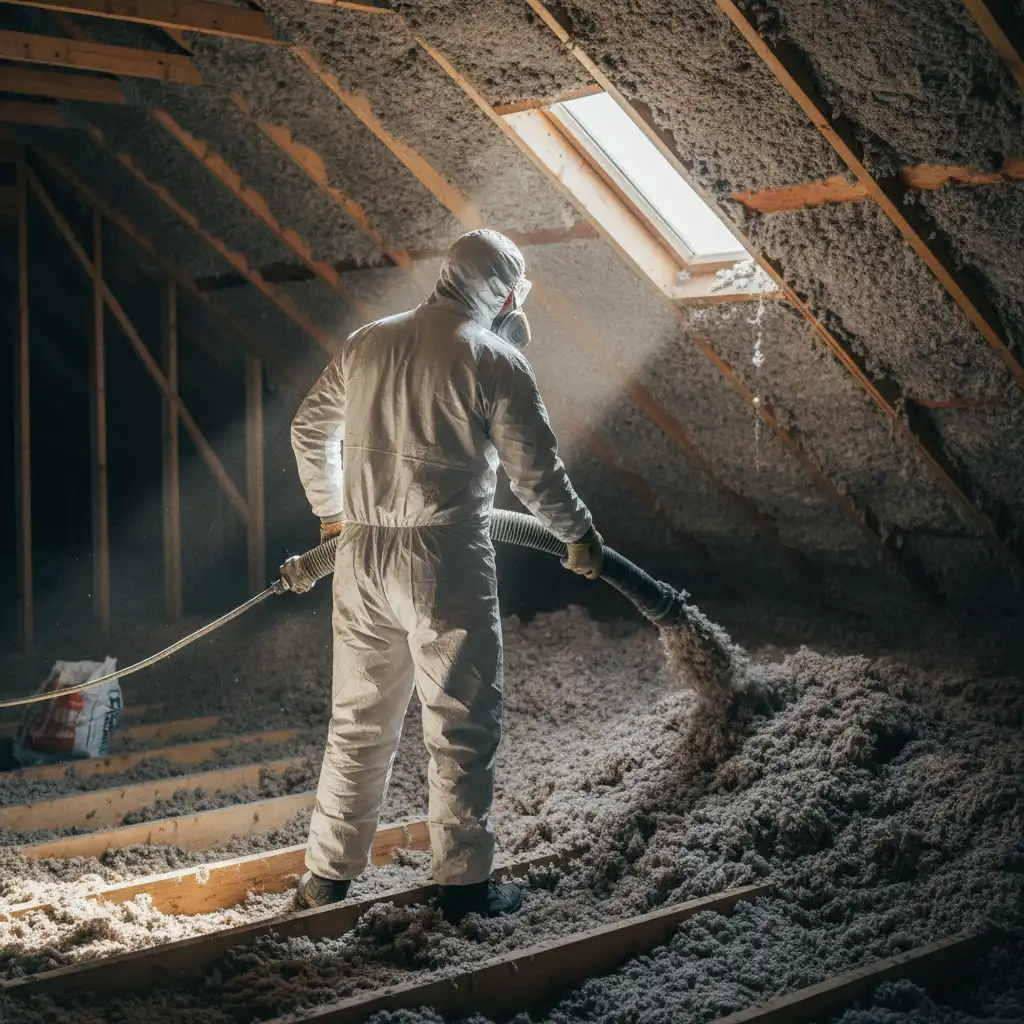
Our team in action — insulation professionals serving Burbank
Insulation Replacement Methods We Use in Burbank
Blown-In Fiberglass (Loose-Fill)
The most common method for Burbank attic replacements. Machine-blown fiberglass achieves uniform coverage across complex framing layouts common in 1950s–1970s ranch homes and delivers R-38 at approximately 10–12 inches depth. Ideal for attics with limited headroom — a frequent constraint in post-war Burbank bungalows — because it conforms to irregular joist spacing without cutting or fitting.
Mineral Wool (Rockwool) Batts
Preferred for wall cavity replacements and applications near the Burbank hillside fire risk zones. Mineral wool is non-combustible to 1,400°F, provides excellent sound attenuation — a meaningful benefit for properties near the 5 and 134 freeways — and resists moisture absorption better than fiberglass in wall assemblies exposed to occasional Burbank rain-driven wind.
Closed-Cell Spray Polyurethane Foam (ccSPF)
Applied at 1.5–2 inches per pass, ccSPF achieves R-6.5 per inch and provides a Class II vapor retarder — critical in Burbank hillside homes where temperature differentials between living space and attic can drive moisture into wall cavities. Used in specialty applications: roof decks, rim joists, and unvented attic assemblies where maximum thermal performance in minimal depth is required.
Open-Cell Spray Foam
At R-3.7 per inch, open-cell foam is cost-effective for large-volume attic applications requiring air sealing and modest R-value simultaneously. Suited to Burbank commercial properties, studio back-lot buildings, and residential bonus rooms where both thermal and acoustic performance are priorities.
Rodent-Proof TAP (Thermal Acoustical Pest Control) Insulation
A specially treated blown-in cellulose infused with borate compounds that deter rodent nesting. Recommended for Burbank hillside properties with documented rodent histories, offering an integrated pest-deterrent layer alongside R-38 thermal performance. Learn more about our rodent-proof insulation services
Ready for Insulation Replacement? Get Your Free Estimate Today.
Next Level Insulation of Burbank serves Burbank and the surrounding area — we’ll be on-site within 24 hours.
📞 Call (818) 514-7541Insulation Replacement Cost in Burbank, CA
Understanding what drives insulation replacement pricing helps Burbank homeowners budget accurately and avoid surprises. Below are typical cost ranges based on our project history in Burbank and the surrounding San Fernando Valley.
Typical Price Ranges
- Attic insulation removal only (avg. 1,200 sq ft attic): $800–$1,500
- Attic removal + blown-in fiberglass reinstall to R-38: $2,500–$4,500
- Attic removal + closed-cell spray foam (unvented assembly): $5,000–$9,000
- Wall cavity replacement (per 1,000 sq ft of wall area): $3,000–$6,500
- Rodent-contaminated full attic replacement with TAP: $3,000–$5,500
- Commercial building attic replacement (5,000+ sq ft): $10,000–$25,000+
Key Cost Factors in Burbank
- Accessibility: Burbank hillside homes with low-pitch roofs or cramped attic access (under 24 inches) add 15–25% to labor costs.
- Contamination level: Rodent or mold remediation prior to reinstall adds $500–$2,000 depending on extent.
- Permit fees: City of Burbank building permit fees for insulation projects typically run $150–$450.
- Material choice: Spray foam commands a 40–60% premium over blown-in fiberglass but delivers superior air sealing and longevity.
Burbank homeowners may also qualify for a federal residential energy tax credit of up to 30% (IRS Form 5695) and LADWP rebates of up to $0.10 per square foot for qualifying insulation upgrades. Call (818) 514-7541 for a free itemized estimate specific to your property. Request your free insulation replacement estimate
Burbank Neighborhoods We Serve
Magnolia Park
This centrally located Burbank neighborhood is dense with 1940s–1960s California ranch homes and Craftsman bungalows that commonly retain original fiberglass batt insulation well below current R-value standards. Overhead canopy from mature street trees shades roofs but traps moisture in attic spaces during winter rains, accelerating batt compression.
Burbank Hills / Wildwood Canyon Area
Homes perched along the Verdugo Mountains foothills face the highest rodent and wildfire ash infiltration risk in the city. Post-La Tuna Fire (2017) rebuilds and retrofit projects in this area frequently require full attic replacement with fire-resistant mineral wool or rodent-proof TAP insulation.
Downtown Burbank / Media District
The commercial corridor near Warner Bros. Studios and Burbank Town Center includes mid-rise office buildings and sound stages built in the 1980s–1990s with aging fiberglass board insulation. Acoustic insulation replacement is a priority for media-adjacent tenants sensitive to sound transmission.
Toluca Lake and Toluca Woods
This upscale enclave on Burbank’s southern border features larger 1930s–1950s Spanish Colonial and Tudor revival homes with complex roof geometries. These properties often require custom spray foam applications to address irregular attic cavities while meeting Title 24 compliance for real estate transactions. Insulation services in Toluca Lake
Insulation Maintenance Tips for Burbank Homeowners
- Annual attic inspection (every September–October): Before Burbank’s hottest late-season heat events pass and winter rains begin, visually inspect attic insulation depth and look for signs of shifting or compression.
- Check attic vents after Santa Ana wind events: High-velocity winds can dislodge soffit vent baffles, allowing blown-in insulation to block ventilation channels and create moisture buildup.
- Inspect for rodent entry points each spring: Walk your roofline and inspect fascia boards, vents, and eave gaps — particularly on hillside-facing elevations — and seal any openings larger than ¼ inch.
- Monitor LADWP bills for seasonal anomalies: A sudden 20% or greater increase in cooling costs during a comparable weather period year-over-year is a reliable early indicator of insulation degradation.
- Keep attic hatch weatherstripped: Burbank’s temperature swings between winter nights (40s°F) and summer days (100°F+) make an unsealed attic hatch one of the largest air leakage points in your home’s envelope.
- Clear insulation from HVAC equipment clearance zones: Ensure blown-in insulation remains at least 3 inches from recessed light fixtures rated IC (Insulation Contact) and away from attic-mounted HVAC unit service panels.
- Document your R-value certification: Keep your installation certificate on file for Title 24 compliance documentation during future permits or real estate transactions with the City of Burbank.
Why Choose Next Level Insulation of Burbank
Next Level Insulation has served Burbank and the greater Los Angeles basin for over 20 years, accumulating deep familiarity with the specific climate conditions, building eras, and regulatory requirements that define insulation work in the eastern San Fernando Valley. Our technicians are trained in California Title 24 compliance documentation, LADWP rebate qualification procedures, and the unique demands of insulating properties adjacent to Burbank’s wildfire interface zones.
We specialize in the full spectrum of insulation services — attic insulation, house insulation, roof insulation, spray foam insulation, ceiling insulation, sound insulation, fiberglass insulation, and rodent-proof insulation — meaning you never need a second contractor to complete your project. View all our insulation services
Every project begins with a free, detailed on-site assessment. We provide transparent, line-item pricing with no hidden surcharges and work with you to maximize available LADWP rebates and federal tax credits. Our goal is straightforward: take your home’s energy efficiency to the next level. Call us at (818) 514-7541 to get started today.
Frequently Asked Questions About Insulation Replacement in Burbank, CA
How much does insulation replacement cost in Burbank, CA?
For a typical Burbank single-family home with a 1,200 square foot attic, full insulation replacement — including removal, disposal, and reinstall to R-38 with blown-in fiberglass — ranges from $2,500 to $4,500. Spray foam applications run $5,000–$9,000. Rodent-contaminated attics requiring remediation before reinstall typically add $500–$2,000 to the base price. Exact costs depend on accessibility, contamination level, and material choice.
How long does insulation replacement take in a Burbank home?
Most residential attic replacement projects in Burbank are completed within one to two days. Day one typically covers removal, disposal, and air sealing; day two covers new insulation installation. Larger commercial projects or whole-home replacements involving walls and crawl spaces may require three to five days. Permit-required projects add one to five business days for City of Burbank Building and Safety approval.
Do Burbank homes really need R-38 attic insulation?
Yes. Burbank falls within California’s Climate Zone 9, and Title 24 mandates a minimum attic R-value of R-38 for new installations and permitted retrofits. Given that Burbank attic temperatures routinely exceed 140–150°F in summer, R-38 also represents a practical performance floor for meaningful HVAC cost reduction — not merely a regulatory checkbox.
Is insulation replacement necessary after the La Tuna or Bobcat wildfires?
If your Burbank property is in a hillside neighborhood that experienced significant ash fall during these events — particularly areas bordering Wildwood Canyon, Stough Canyon, or the Verdugo Mountains foothills — a professional inspection is strongly recommended. Wildfire ash chemically degrades cellulose insulation’s borate fire retardants and, when combined with moisture, can accelerate corrosion of metal ductwork. Full replacement is often warranted.
Can I find insulation replacement near me in Burbank?
Absolutely. Next Level Insulation is based in Burbank and serves all Burbank neighborhoods — from Magnolia Park and Toluca Lake to the Burbank Hills — as well as surrounding communities including Studio City, Sherman Oaks, North Hollywood, Glendale, Pasadena, and Alhambra. Call (818) 514-7541 for same-week assessment scheduling.
Does Burbank require a permit for insulation replacement?
Not all insulation replacements require a permit in Burbank. Direct like-for-like replacements of existing insulation in non-permitted remodels typically do not. However, insulation work tied to an addition, HVAC replacement, re-roofing, or other permitted project will require insulation to meet current Title 24 standards with a building permit from Burbank’s Building and Safety Division. We handle all permit applications on your behalf.
How do I know if my Burbank home’s insulation has rodent contamination?
Key indicators include visible droppings in the attic, a strong ammonia odor when the attic hatch is opened, shredded or clumped insulation forming nest mounds, and grease-trail marks along rafters. If you observe any of these signs, do not disturb the material — contact us for a professional assessment. Contaminated insulation requires removal under California DPH hantavirus safety protocols, not simply a top-up.
What rebates are available for insulation replacement in Burbank?
Burbank residents served by LADWP may qualify for insulation rebates under the LADWP Home Improvement Incentive Program. Federal tax credits under IRS Section 25C (Inflation Reduction Act) provide up to 30% of project cost, capped at $1,200 per year for qualifying insulation and air sealing work. We provide all necessary documentation — including R-value certificates and ENERGY STAR product data sheets — to support your rebate and tax credit claims.
Get Your Free Insulation Replacement Estimate in Burbank Today
Don’t let degraded, contaminated, or code-deficient insulation cost you another summer of sky-high LADWP bills and an overworked HVAC system. Next Level Insulation of Burbank is ready to assess your property, explain your options in plain language, and deliver a high-performance insulation replacement solution tailored to Burbank’s demanding climate conditions.
Call us now at (818) 514-7541 to schedule your free on-site assessment. We serve all Burbank neighborhoods and surrounding communities including Studio City, Sherman Oaks, North Hollywood, Glendale, Pasadena, Alhambra, Toluca Lake, and beyond. Fast response, transparent pricing, and lasting results — that’s the Next Level Insulation difference. Contact us online for a free insulation replacement estimate