

Rockwool Insulation in Simi Valley, CA
Energy-Saving Rockwool Insulation for Simi Valley, CA Homes — Licensed & Insured
Need Rockwool insulation in Simi Valley, CA? Next Level Insulation offers expert installation for homes & businesses. Call (805) 774-1832 for a free estimate today.
- Licensed & Insured
- Locally Owned & Operated
- Free Inspection & Estimate
Request Your
Free EstimateRockwool insulation — also known as mineral wool or stone wool insulation — is one of the most effective thermal and acoustic insulation materials available for residential and commercial properties. Made from volcanic basalt rock and recycled slag, Rockwool is engineered to withstand extreme temperatures, resist moisture, and deliver superior sound dampening in environments like Simi Valley where hot, dry summers, Santa Ana wind events, and wildfire smoke exposure create demanding performance requirements.
At Next Level Insulation of Simi Valley, we specialize in Rockwool insulation installation tailored specifically to the building stock, climate conditions, and local code requirements of Simi Valley, CA. Whether you own a mid-century ranch home in Wood Ranch, a newer construction townhome near the Ronald Reagan Presidential Library, or a light commercial building along Tapo Canyon Road, our team delivers precise, code-compliant Rockwool installations designed to reduce your energy bills and increase interior comfort year-round. Call us today at (805) 774-1832 to schedule your free assessment.
Understanding Rockwool Insulation
Rockwool insulation is a category of mineral fiber insulation manufactured by melting basalt rock and industrial slag at temperatures exceeding 2,900°F, then spinning the molten material into dense, interlocking fiber batts, boards, or loose-fill. The resulting product is dimensionally stable, non-combustible, and hydrophobic — meaning it actively repels water rather than absorbing it the way traditional fiberglass batts can.
The material was first developed in Europe in the early 20th century and gained widespread adoption in Scandinavian countries where thermal performance and fire resistance were non-negotiable. In the United States, Rockwool (marketed under brand names including ROCKWOOL, Roxul, and Safe’n’Sound) expanded significantly in the residential construction market after California’s evolving Title 24 energy codes began demanding higher continuous R-values and stricter air barrier standards throughout the 2000s and 2010s.
In the Ventura County and greater Los Angeles region — where Simi Valley sits at approximately 1,000 feet elevation in the Simi Hills — Rockwool has become an increasingly preferred solution for several reasons:
- Fire Resistance: Rockwool does not burn, does not melt, and does not emit toxic fumes. It maintains structural integrity at temperatures above 1,800°F — a critical advantage in a region classified by CAL FIRE as a Very High Fire Hazard Severity Zone (VHFHSZ).
- Acoustic Control: Simi Valley’s growing density and proximity to the 118 Freeway corridor makes sound transmission a real concern for homeowners. Rockwool’s dense fiber matrix provides a Sound Transmission Class (STC) rating far superior to standard fiberglass batts.
- Moisture Resistance: Unlike spray foam or cellulose, Rockwool does not retain moisture when exposed to condensation or minor water intrusion — important in homes with crawl spaces in lower-elevation areas like the Alamo Street corridor and Royal Avenue neighborhoods.
- Thermal Performance: Rockwool batts typically deliver R-15 in a standard 2×4 wall cavity and R-23 in a 2×6 cavity, meeting or exceeding California’s Title 24 Climate Zone 8 and Zone 10 requirements applicable to most Simi Valley structures.
Rockwool can be installed in walls, attics, floors, crawl spaces, and around mechanical systems, making it one of the most versatile insulation solutions available to Simi Valley homeowners and contractors alike.
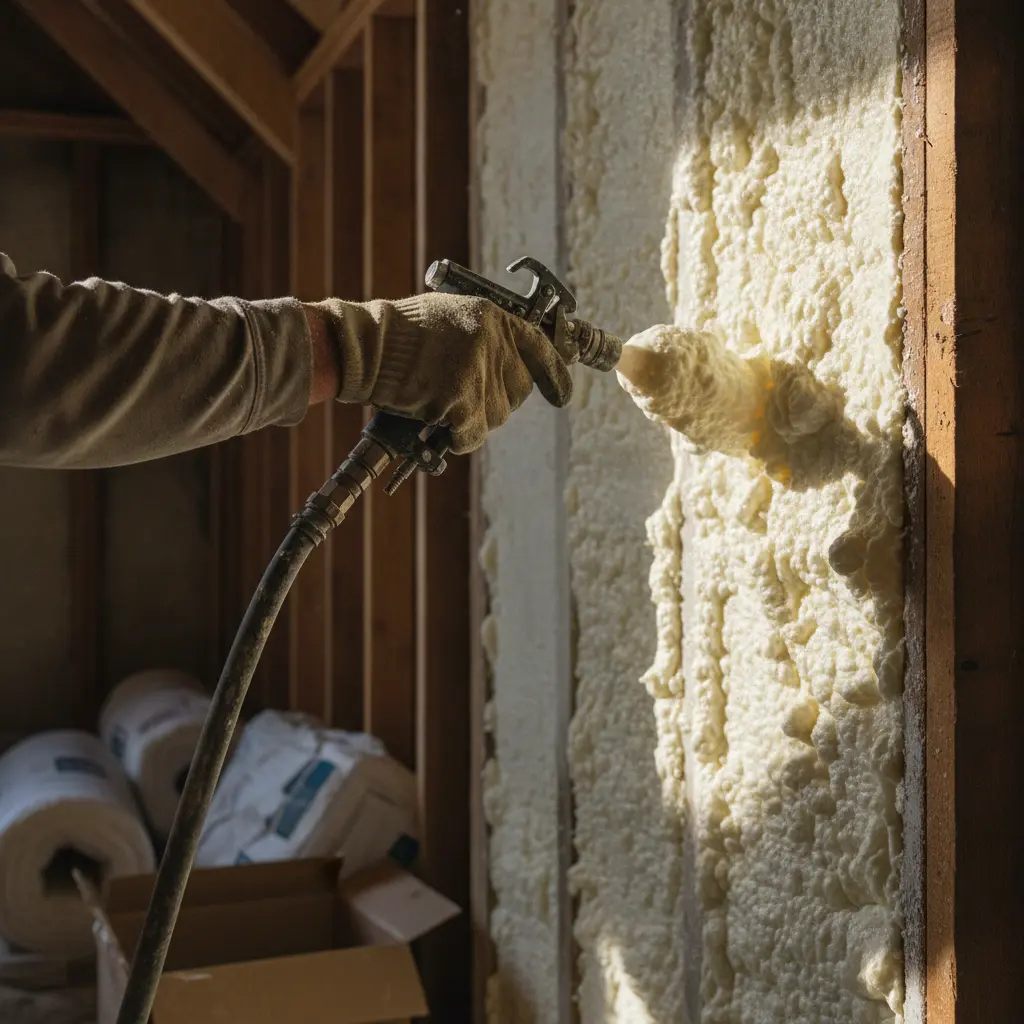
Our team in action — insulation professionals serving Simi Valley
Why Rockwool Insulation Is Needed in Simi Valley, CA
Santa Ana Wind Events and Wildfire Risk
Simi Valley is directly in the path of the Santa Ana wind corridor that funnels through the Santa Susana Pass and along the 118 Freeway. Wind events in late October through February routinely reach sustained speeds of 40–60 mph, with gusts recorded above 80 mph during major events. The Easy Fire of October 2019 burned more than 1,700 acres in the hills directly north of Simi Valley, including areas near Wood Ranch Parkway, and forced thousands of residents to evacuate. The Simi Fire of 2003 destroyed over 100,000 acres across Ventura County. These events underscore the critical need for non-combustible insulation materials inside homes located in or adjacent to the Wildland-Urban Interface (WUI) zones that cover significant portions of Simi Valley’s northern and western hillside neighborhoods.
Rockwool’s Class A fire rating and non-melting composition make it the responsible choice for any home in these fire-risk areas, providing an additional passive fire barrier within wall assemblies and attic spaces.
Aging Housing Stock and Energy Code Gaps
A large share of Simi Valley’s residential housing was constructed between 1960 and 1985 during the city’s rapid suburban expansion. Neighborhoods like Sycamore Park, Tapo Canyon Estates, and Valley View Terrace contain thousands of homes built with minimal wall insulation — often just R-11 fiberglass batts or no insulation at all in exterior walls. California’s current Title 24 standards for Climate Zone 8 require wall assemblies to achieve a minimum of R-13 continuous or R-20 cavity fill, meaning many existing homes are operating below code and below efficient performance levels.
Crawl Space Humidity and Soil Conditions
The lower-elevation areas of Simi Valley — particularly near the Arroyo Simi channel and the neighborhoods along Madera Road and Erringer Road — sit atop soils with higher clay content that can trap moisture beneath slab-on-grade and raised-foundation homes. This creates conditions where crawl space moisture intrusion degrades traditional fiberglass batts within a few seasons. Rockwool’s hydrophobic properties make it inherently more durable in these sub-structure environments.
Freeway and Traffic Noise Pollution
The 118 Freeway bisects Simi Valley from east to west, and residential neighborhoods within half a mile of the freeway — including areas near Sequoia Avenue, Yosemite Avenue, and Royal Avenue — experience ambient noise levels that can range from 65 to 72 decibels during peak traffic hours. Rockwool insulation in interior and exterior walls significantly reduces this noise transmission, improving quality of life for residents in these corridors.
Signs You Need Rockwool Insulation in Simi Valley
Energy and Comfort Symptoms
- Monthly utility bills that spike above $250–$350 during July and August despite normal thermostat settings
- Rooms that remain 8°F or more warmer or cooler than the thermostat setting, particularly south-facing bedrooms
- HVAC system cycling more than 4–5 times per hour during peak summer heat
- Drafts felt along exterior walls or around electrical outlets during Santa Ana wind events
Moisture and Structural Indicators
- Visible mold or mildew staining on drywall in bathrooms or exterior walls
- Musty odors emanating from crawl spaces, particularly after winter rains
- Sagging or discolored insulation batts visible during crawl space inspection
- Condensation forming on the interior side of exterior walls during summer cooling cycles
Acoustic and Safety Concerns
- Clearly audible traffic noise from the 118 Freeway or Tapo Canyon Road inside living areas
- Fire damage or smoke infiltration from nearby wildfire events affecting attic or wall cavities
- Existing fiberglass insulation that is more than 20–25 years old and visibly compressed or dirty
If you recognize two or more of these symptoms, contact Next Level Insulation of Simi Valley at (805) 774-1832 for an immediate evaluation.
Rockwool Insulation Methods and Approaches
Rockwool Batt Installation
The most common method for new construction or open-wall retrofit projects. Semi-rigid batts are cut to fit 16-inch or 24-inch stud bays in exterior and interior walls. In Simi Valley’s WUI-designated neighborhoods, we recommend ROCKWOOL Safe’n’Sound batts in interior walls for combined acoustic and fire-resistance benefits. Learn more about our attic insulation services
Rockwool Board Insulation (Continuous Insulation)
Rigid Rockwool comfortboard panels are installed on the exterior face of wall sheathing to eliminate thermal bridging through studs. This is particularly effective in re-siding projects and is required to meet Title 24 continuous insulation requirements in many Climate Zone 8 assemblies found throughout Simi Valley. Panels typically run 1.5 to 2 inches thick, adding R-6 to R-8 of continuous coverage.
Rockwool Attic Installation
Rockwool batts or loose-fill mineral wool is installed between attic joists to achieve R-38 to R-60 values required under California’s current energy code for Climate Zone 8. Given Simi Valley’s documented wildfire ember exposure risk, Rockwool’s non-combustibility makes it significantly safer than exposed cellulose in attic assemblies. Explore our blow-in insulation options
Rockwool Crawl Space and Sub-Floor Application
In raised-foundation homes common in older Simi Valley neighborhoods, Rockwool batts are installed between floor joists and secured with wire supports. The material’s hydrophobic nature resists moisture damage from the Arroyo Simi-adjacent soil conditions. View our crawl space insulation services
Ready for Rockwool Insulation? Get Your Free Estimate Today.
Next Level Insulation of Simi Valley serves Simi Valley and the surrounding area — we’ll be on-site within 24 hours.
📞 Call (805) 774-1832Rockwool Insulation Cost in Simi Valley, CA
Understanding the cost of Rockwool insulation in Simi Valley helps homeowners plan accurately and compare proposals fairly. The following ranges reflect current 2024 pricing in the Ventura County market.
Typical Cost Ranges
- Rockwool Batt Wall Insulation: $1.80–$3.20 per square foot installed, depending on cavity depth and accessibility. A typical 2,000 sq ft Simi Valley ranch home with exterior walls only runs approximately $3,500–$6,500 fully installed.
- Rockwool Attic Insulation: $2.00–$3.50 per square foot installed for batt application. A 1,500 sq ft attic in Simi Valley typically costs $3,000–$5,200 depending on current insulation removal needs and access.
- Rockwool Continuous Board (Exterior Walls): $2.50–$4.50 per square foot installed, typically part of a larger re-siding scope.
- Crawl Space Rockwool Installation: $2.20–$3.80 per square foot. A 1,200 sq ft crawl space runs approximately $2,600–$4,600.
Simi Valley-Specific Cost Factors
- Permit Fees: City of Simi Valley building permits for insulation projects typically range from $150–$450 depending on project valuation.
- Insulation Removal: If existing damaged or contaminated insulation must be removed first, add $0.80–$1.50 per square foot. Learn about our insulation removal services
- California Utility Rebates: Southern California Gas and SoCalGas offer rebates for qualifying insulation upgrades that can offset $200–$600 of project costs for eligible Simi Valley homeowners.
Call (805) 774-1832 for a no-obligation itemized quote specific to your property.
Neighborhoods We Serve in Simi Valley
Wood Ranch
Developed primarily in the 1980s and 1990s, Wood Ranch homes feature two-story construction with complex roof lines adjacent to open hillside terrain in the VHFHSZ. Many of these homes have attic insulation that has exceeded its functional life span and needs replacement with fire-resistant Rockwool to meet current safety standards.
Sycamore Park and Tapo Canyon Estates
These neighborhoods contain a high concentration of 1965–1975 tract homes with minimal original wall insulation and single-pane windows. Rockwool batt retrofits in exterior walls deliver dramatic comfort improvements and utility bill reductions for homeowners in these areas.
Berylwood
Located in central Simi Valley near the 118 Freeway, Berylwood homes experience both high freeway noise exposure and extreme summer heat. Rockwool’s combined thermal and acoustic performance makes it the ideal solution for this neighborhood’s challenges.
Katherine Road Corridor and Royal Avenue
Newer construction along these corridors includes multi-family and townhome developments where Rockwool Safe’n’Sound between unit walls is increasingly specified by architects to meet California’s Title 24 acoustic requirements and to satisfy HOA sound control standards.
Rockwool Insulation Maintenance Tips for Simi Valley Homeowners
- Annual Attic Inspection: Following each Santa Ana wind season (November–February), visually inspect your attic for ember intrusion, animal damage, or moisture staining that could compromise insulation performance.
- Post-Wildfire Smoke Check: After major fire events like those that have affected the Simi Valley hills, have a professional inspect attic insulation for embedded smoke particulate or heat damage.
- Crawl Space Moisture Monitoring: After winter rain events (Simi Valley averages 14–16 inches annually), inspect crawl spaces for standing water or elevated humidity above 60% relative humidity.
- Seal Penetrations Promptly: New plumbing, electrical, or HVAC penetrations through insulated assemblies should be sealed and re-insulated within 30 days to prevent air infiltration.
- Pest Exclusion: Unlike cellulose, Rockwool does not provide nesting material that attracts rodents, but check for entry points around the foundation annually — a particular concern in hillside areas bordering open space.
- HVAC Filter Maintenance: Clean or replace HVAC filters every 60–90 days during peak pollen and wildfire smoke seasons to protect air quality in your well-insulated, tighter home envelope.
- Title 24 Re-Evaluation: If you add square footage or replace windows, schedule a Title 24 compliance review to ensure your insulation assembly still meets current Ventura County requirements.
Why Choose Next Level Insulation of Simi Valley
Next Level Insulation of Simi Valley is a locally operated insulation contractor built specifically to serve the Ventura County and greater Los Angeles communities where we live and work. Our team has direct, hands-on experience with the building styles, climate pressures, and local code requirements unique to Simi Valley — from the hillside WUI-zoned homes of Wood Ranch to the aging tract housing of Tapo Canyon Estates.
We offer a comprehensive range of insulation services beyond Rockwool installation, including spray foam insulation, blow-in insulation, crawl space encapsulation, insulation replacement, and insulation removal — giving you a single, trusted contractor for your entire insulation scope.
We provide free, transparent, itemized estimates with no pressure tactics. Every proposal includes material specifications, target R-values, permit requirements, and honest timelines. We stand behind our work and are committed to your complete satisfaction from first call to final inspection.
Serving Simi Valley and surrounding communities including Thousand Oaks, Moorpark, Camarillo, Santa Clarita, Woodland Hills, Calabasas, and Chatsworth. Call (805) 774-1832 today.
Frequently Asked Questions About Rockwool Insulation in Simi Valley, CA
How much does Rockwool insulation cost in Simi Valley?
Installed costs in Simi Valley typically range from $1.80 to $3.50 per square foot for batt applications, depending on cavity size, accessibility, and whether existing insulation removal is required. A complete exterior wall and attic insulation project for a 2,000 sq ft home generally runs between $6,000 and $12,000 fully installed, including permits.
Is Rockwool better than fiberglass insulation for Simi Valley homes?
For most Simi Valley applications, yes. Rockwool outperforms fiberglass in fire resistance — critical in VHFHSZ areas — moisture resistance relevant to crawl spaces near the Arroyo Simi, acoustic performance near the 118 Freeway corridor, and dimensional stability in the thermal cycling common to Simi Valley’s climate. It costs approximately 20–30% more than fiberglass but delivers measurably better performance over the product’s life.
Do I need a permit for Rockwool insulation installation in Simi Valley?
Permit requirements depend on project scope. The City of Simi Valley Building and Safety Division at 2929 Tapo Canyon Road generally requires permits for new wall insulation installations exceeding 120 square feet and attic insulation projects valued above $1,000. We handle permit coordination as part of our service.
How long does a Rockwool insulation installation take?
A typical residential installation in Simi Valley takes one to three days for standard attic or wall applications. Larger projects involving crawl spaces, continuous board installation, or old insulation removal may require three to five days. Permit processing at the City of Simi Valley adds three to seven business days if required.
Can Rockwool insulation help reduce wildfire risk in my Simi Valley home?
Rockwool insulation in wall and attic cavities adds a non-combustible layer of protection that can slow fire spread within the building envelope. While insulation alone cannot make a home fireproof, CAL FIRE and the Insurance Institute for Business and Home Safety both recognize non-combustible attic insulation as a meaningful component of a comprehensive home hardening strategy for WUI-zone properties like those in Wood Ranch and the hillside communities north of the 118 Freeway.
Does Rockwool insulation reduce noise from the 118 Freeway?
Yes. Rockwool’s dense fiber matrix achieves STC ratings of 45–52 in standard wall assemblies, compared to approximately 38–42 for fiberglass batts. For homes within the Berylwood neighborhood and other freeway-adjacent areas where ambient exterior noise reaches 65–72 decibels, Rockwool insulation in exterior walls provides a meaningful and perceptible reduction in interior noise levels.
Is Rockwool safe for my family during and after installation?
Rockwool does not contain formaldehyde, asbestos, or glass fibers, and it is GREENGUARD Gold certified for low chemical emissions. During installation, our technicians wear appropriate PPE and we maintain ventilation. Once installed and covered with drywall, Rockwool poses no ongoing health risk to occupants.
What other insulation services does Next Level Insulation of Simi Valley offer?
We offer a full range of insulation solutions including spray foam insulation, attic insulation, blow-in insulation, crawl space encapsulation, crawl space insulation, insulation removal, and insulation replacement throughout Simi Valley and Ventura County.
Get Your Free Rockwool Insulation Estimate in Simi Valley Today
Whether you’re upgrading an aging 1970s tract home in Sycamore Park, hardening a hillside property in Wood Ranch against wildfire risk, or improving acoustic comfort near the 118 Freeway corridor, Next Level Insulation of Simi Valley is ready to deliver a Rockwool insulation solution sized exactly for your needs and budget.
Our team serves all of Simi Valley as well as neighboring communities including Thousand Oaks, Moorpark, Camarillo, Santa Clarita, Chatsworth, Woodland Hills, Calabasas, and beyond.
Call us now at (805) 774-1832 to schedule your free, no-obligation in-home assessment. We’ll evaluate your current insulation, explain your options clearly, and provide a written estimate — no pressure, no surprises.
Request a Free Estimate Online