

Fiberglass Insulation in Simi Valley, CA
Energy-Saving Fiberglass Insulation for Simi Valley, CA Homes — Licensed & Insured
Need fiberglass insulation in Simi Valley, CA? Next Level Insulation offers expert installation, attic upgrades & free assessments. Call (805) 774-1832 today.
- Licensed & Insured
- Locally Owned & Operated
- Free Inspection & Estimate
Request Your
Free EstimateFiberglass insulation is one of the most widely trusted thermal and acoustic barriers available for residential and commercial properties. Made from fine glass fibers woven into batts, rolls, or loose-fill material, it creates a thermal envelope that resists heat transfer and reduces energy loss throughout your home or business. In Simi Valley, CA — where summer temperatures regularly climb above 100°F in the Ronald Reagan Presidential Library corridor and the Santa Susana Pass area — a properly insulated structure is not a luxury, it is a necessity.
At Next Level Insulation of Simi Valley, we specialize in fiberglass insulation installation tailored to the unique climate, building stock, and terrain of the Simi Valley area. Whether you own a 1970s tract home in Wood Ranch, a newer build near Berylwood, or a commercial property along Madera Road, our team delivers precision installation that meets California Energy Code Title 24 standards. Call us today at (805) 774-1832 to schedule your free assessment.
Understanding Fiberglass Insulation
Fiberglass insulation was first developed in the 1930s by Owens Corning and quickly became the dominant insulation material across American residential construction. Its popularity stems from its affordability, fire resistance, moisture resilience, and excellent thermal performance when installed correctly. Today, fiberglass accounts for roughly 45% of all insulation installed in U.S. homes, according to the North American Insulation Manufacturers Association.
The material works by trapping tiny pockets of air within its glass fiber matrix, slowing the movement of heat from warm areas to cool ones. This principle — known as conductive heat resistance — is measured by an R-value. The higher the R-value, the more resistant the insulation is to heat flow. In Simi Valley and throughout Ventura County, the California Energy Code requires R-38 or greater for attic assemblies in Climate Zone 8, the zone that governs most of Simi Valley’s residential building stock.
Fiberglass comes in three primary forms. Batts and rolls are pre-cut sections designed to fit standard stud and joist cavities — ideal for new construction or open wall projects. Loose-fill fiberglass is blown into place using a specialized machine, making it the preferred choice for existing attics with irregular joist spacing or hard-to-reach areas. Blown-in fiberglass achieves consistent coverage without the gaps and voids that improperly cut batts often leave behind.
Simi Valley’s building stock is predominantly single-family residential, with the majority of homes constructed between 1965 and 1995. Many of these properties were built before California’s stricter insulation requirements took effect, meaning their original insulation — if still present — falls far short of current standards. Homes in older neighborhoods like Simi Valley’s original downtown core near Tapo Canyon Road frequently have R-11 or R-13 batts in walls and as little as R-19 in attics, far below the R-38 minimum now required. Upgrading to modern fiberglass insulation in these structures delivers measurable energy savings and improved occupant comfort year-round.
Beyond thermal performance, fiberglass insulation also provides acoustic dampening — a meaningful benefit for properties near the 118 Freeway corridor, the Simi Valley Metrolink station, or the Ronald Reagan Freeway interchange at First Street.
Why Fiberglass Insulation Is Needed in Simi Valley, CA
Extreme Heat and the Simi Valley Heat Island Effect
Simi Valley sits in an inland valley surrounded by the Santa Susana Mountains to the south, the Simi Hills to the west, and the Santa Monica Mountains to the south and east. This topography traps heat during summer months in a classic valley heat island pattern. According to weather station data from the National Weather Service at the Simi Valley RAWS station, average July high temperatures regularly reach 95°F to 105°F, with multi-day heat events sometimes pushing temperatures to 112°F or higher in neighborhoods like Tapo Canyon Estates and the areas east of Erringer Road. Without adequate attic insulation, radiant heat from roof decking — which can reach surface temperatures of 160°F on a hot day — transfers directly into living spaces, forcing air conditioning systems to work continuously and driving utility bills to $400 or more per month in peak summer.
Diablo Wind Events and Rapid Temperature Swings
Simi Valley is one of the most affected communities in Ventura County during Diablo wind events — offshore, northeast wind conditions that typically occur between October and February. These events push dry, hot air through mountain passes at speeds of 40 to 70 mph, with gusts exceeding 80 mph recorded at the Santa Susana Pass weather monitoring point. During a Diablo event, outdoor temperatures can spike 15 to 20 degrees within hours while indoor relative humidity drops below 10%. Homes without robust insulation lose conditioned air rapidly, stressing HVAC equipment and dramatically increasing energy consumption. The November 2018 Woolsey Fire, which burned through adjacent communities, was driven by Diablo wind conditions and serves as a stark reminder of why building envelope integrity in this region matters profoundly.
Wildfire Smoke and Air Infiltration
Simi Valley neighbors the communities most severely impacted by repeated wildfire events, including the 2003 Simi Fire, which burned approximately 108,000 acres across Ventura County and reached into areas bordering Simi Valley’s northern neighborhoods. Poor building envelope insulation — particularly in attics with inadequate air sealing — allows wildfire smoke, ash particulates, and pollutants to infiltrate living spaces. Fiberglass insulation, when paired with proper air sealing at penetrations, significantly reduces infiltration and helps protect indoor air quality during air quality alert events, which Simi Valley experiences multiple times each year as designated by the Ventura County Air Pollution Control District.
Aging Housing Stock and Code Compliance Gaps
The majority of Simi Valley’s residential neighborhoods — including Devonshire Estates, Oakridge Estates, and the established tracts along Sequoia Avenue — were constructed before 1985 when California’s Title 24 energy code was substantially weaker. A 1975-era Simi Valley home typically has R-11 batt insulation in 2×4 exterior walls and R-19 blown insulation in the attic. Today’s code requires a minimum of R-13 in walls and R-38 in attic assemblies for Climate Zone 8. This gap translates to measurable energy waste, with studies by the California Energy Commission estimating that upgrading attic insulation from R-19 to R-38 in a 1,800-square-foot Simi Valley home can reduce annual heating and cooling costs by $200 to $350.
Crawl Space Moisture from Valley Floor Conditions
Portions of Simi Valley built on the valley floor, particularly in areas east of Stearns Street and near the Arroyo Simi flood channel, have crawl spaces that are susceptible to seasonal moisture intrusion. Winter rains — particularly during La Niña and El Niño weather patterns — elevate soil moisture levels beneath these homes, causing fiberglass insulation in crawl space floors to sag, compress, and lose R-value over time. crawl space insulation services address these conditions directly and often work in tandem with fiberglass replacement programs.
Signs You Need Fiberglass Insulation in Simi Valley
Energy and Comfort Indicators
- Monthly SoCal Gas or Southern California Edison bills that have increased by 20% or more compared to the previous year without a change in usage habits
- Rooms that feel noticeably hotter than the thermostat setting during summer — particularly second-floor bedrooms beneath the attic
- Air conditioning running continuously during afternoon heat without effectively cooling interior spaces
- Cold floors in winter in rooms above crawl spaces or unheated garages
- Drafts near electrical outlets, recessed lights, or exterior walls on days with Diablo wind conditions
Visual and Physical Warning Signs
- Visible fiberglass batts in the attic that appear flattened, yellowed, water-stained, or missing entirely from sections of the attic floor
- Fiberglass insulation in crawl spaces that is hanging down, falling away from subfloor joists, or visibly damaged by rodent activity
- Dark or discolored streaks on attic insulation indicating air bypass or moisture infiltration
- Musty odors coming from attic or crawl space areas during and after rain events
Urgency Indicators
- Evidence of rodent nesting within insulation — a common issue in Simi Valley properties near open space boundaries like Rocky Peak Park
- Insulation that is more than 20 years old and has never been replaced or supplemented
- Recent wildfire smoke events that have caused insulation contamination requiring professional assessment and insulation removal
Our Fiberglass Insulation Installation Process in Simi Valley
Free On-Site Assessment (1–2 Hours)
Our process begins with a no-cost, no-obligation inspection of your Simi Valley property. Our technician physically accesses your attic, crawl space, and wall cavities as applicable. We measure existing insulation depth and R-value, identify air bypasses at penetrations, check for moisture damage, and assess any rodent or pest activity. We document our findings with photographs and provide a written report before recommending any work.
Existing Insulation Evaluation and Removal (Half Day to Full Day)
If existing insulation is damaged, contaminated, compressed below functional R-value, or harboring pest activity, we recommend professional removal before new material is installed. In Simi Valley attics, where summer heat accelerates insulation degradation, this is a common prerequisite for homes older than 25 years. insulation removal is performed using HEPA-filtered vacuum equipment to contain particulates.
Air Sealing (2–4 Hours)
Before any new insulation is installed, we air-seal all penetrations in the building envelope — plumbing chases, electrical junction boxes, recessed lighting cans, top plates, HVAC duct boots, and attic hatch perimeters. This step is especially important in Simi Valley homes where wind-driven infiltration through the Santa Susana Pass area can bypass insulation and negate thermal performance. Air sealing alone can reduce heating and cooling energy use by 10 to 20%.
Fiberglass Installation (Half Day to Full Day)
For attic applications, we typically install blown-in fiberglass to achieve uniform R-38 to R-60 coverage depending on your goals and Title 24 requirements. Batts are used in accessible wall cavities, knee walls, and new construction framing. Our installers use depth gauges throughout the attic field to verify consistent material depth — typically 10 to 15 inches for R-38 blown fiberglass, depending on product density.
Quality Verification and Depth Confirmation (1 Hour)
After installation, we perform a systematic walk-through of the insulated space, verifying depth with calibrated rulers at multiple measurement points. We photograph final conditions and note any areas requiring touch-up coverage.
Cleanup and Site Restoration (1–2 Hours)
All work areas are cleaned, attic hatches are resealed with weatherstripping, and any disrupted materials are returned to their original positions. We remove all equipment and packaging from your property before departure.
Final Report and Recommendations
We provide a written completion report documenting installed R-values, materials used, and any additional recommendations — such as crawl space encapsulation or HVAC duct sealing — that would further improve your home’s energy performance in Simi Valley’s demanding climate.
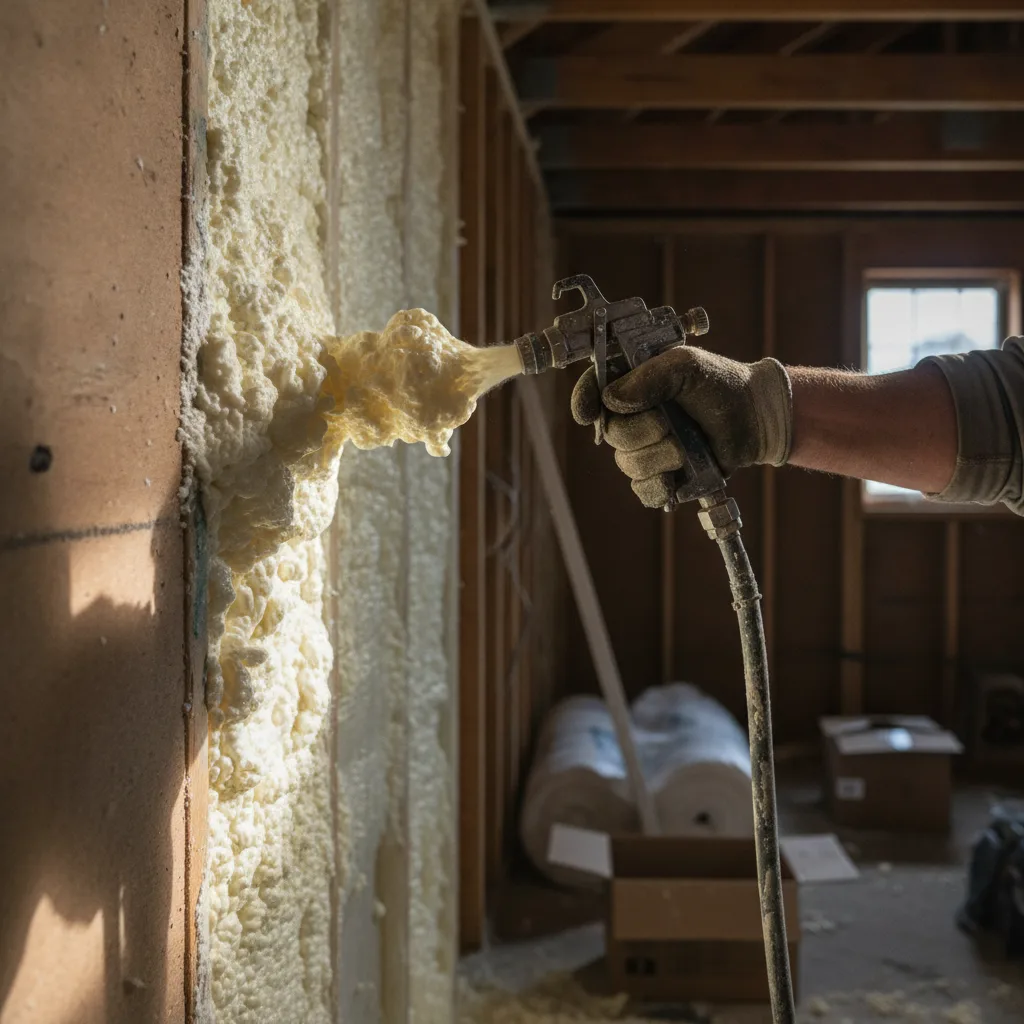
Our team in action — insulation professionals serving Simi Valley
Fiberglass Insulation Methods and Approaches
Blown-In Fiberglass (Loose-Fill)
Blown-in fiberglass is the preferred method for existing Simi Valley attics. Using a truck-mounted or portable blowing machine connected to a flexible hose, technicians deposit loose fiberglass material evenly across attic floors. This method conforms to irregular joist spacing, works around obstacles like HVAC equipment and ducts, and achieves consistent depth without cutting or fitting. It is ideal for homes in established neighborhoods like Devonshire Estates and Wood Ranch where attic access is limited but insulation upgrades are needed. Typical installed depth for R-38 is 10 to 12 inches.
Batt and Roll Installation
Pre-cut fiberglass batts are the standard choice for new construction wall cavities, open basement ceilings, and accessible floor assemblies. In Simi Valley new construction along the northern growth corridors near Alamo Street, batts sized for 2×6 framing deliver R-19 to R-21 in exterior walls. Proper cutting and fitting without gaps or compression is essential — a compressed batt loses significant R-value and can underperform significantly relative to its rated value.
High-Density Fiberglass Batts
For sound control applications — particularly useful for Simi Valley homes within 1,000 feet of the 118 Freeway or near the Metrolink rail corridor — high-density fiberglass batts provide superior acoustic attenuation in addition to thermal performance. These products fit standard stud cavities but deliver R-15 in a 2×4 wall, compared to R-13 for standard batts.
Combination Systems
Many Simi Valley retrofit projects combine blown-in fiberglass with spray foam insulation at critical air sealing points. Closed-cell spray foam is applied to rim joists, top plates, and attic knee wall transitions before blown-in fiberglass covers the field areas. This hybrid approach maximizes both thermal resistance and air infiltration control — particularly valuable during Diablo wind season.
Crawl Space Floor Insulation
Fiberglass batts installed between floor joists above Simi Valley crawl spaces provide a cost-effective thermal barrier for homes on the valley floor with unconditioned crawl spaces. Wire hangers or netting support batts against the subfloor. This method is often recommended alongside crawl space encapsulation for comprehensive moisture and thermal management.
Ready for Fiberglass Insulation? Get Your Free Estimate Today.
Next Level Insulation of Simi Valley serves Simi Valley and the surrounding area — we’ll be on-site within 24 hours.
📞 Call (805) 774-1832Fiberglass Insulation Cost in Simi Valley, CA
Understanding the cost of fiberglass insulation in Simi Valley helps homeowners budget accurately and evaluate competitive quotes. Prices reflect Ventura County labor rates, material costs, and the specific conditions common to Simi Valley properties.
Typical Price Ranges
- Blown-in fiberglass attic insulation (to R-38): $1.50 to $2.50 per square foot installed. For a typical 1,800-square-foot Simi Valley home with an equivalent attic footprint, expect a total project cost of $1,800 to $3,200.
- Blown-in fiberglass attic insulation (to R-49 or R-60): $2.00 to $3.25 per square foot installed.
- Fiberglass batt installation in walls (new construction or open walls): $0.80 to $1.50 per square foot.
- Fiberglass crawl space floor insulation: $1.25 to $2.00 per square foot installed.
- Insulation removal prior to replacement: $1.00 to $2.00 per square foot, depending on depth and contamination level.
Factors That Affect Cost in Simi Valley
- Existing insulation depth: Attics with no existing insulation require more material than those receiving a top-up layer.
- Attic accessibility: Homes in the Oakridge Estates area with low-pitch roof lines and limited access hatches require additional labor.
- Pest or moisture remediation: Rodent-contaminated insulation common near the open space boundaries of Rocky Peak Regional Park requires professional removal and sanitation before replacement.
- Air sealing scope: Older Simi Valley homes with numerous unsealed penetrations add $200 to $600 to project costs but deliver significant energy savings.
California utility rebates through Southern California Edison’s Energy Savings Assistance Program and SoCal Gas rebate programs may reduce out-of-pocket costs for qualifying Simi Valley households. Ask our team about current incentive availability when you call (805) 774-1832.
Simi Valley Neighborhoods We Serve
Wood Ranch
Wood Ranch is a master-planned community in the eastern section of Simi Valley developed primarily between 1988 and 2005. Homes here are generally better insulated than the city’s older stock but often still fall short of current R-38 attic requirements. The elevated terrain and proximity to open space corridors makes pest infiltration into attic insulation a recurring concern for Wood Ranch homeowners.
Devonshire Estates
Located in the central-west portion of Simi Valley, Devonshire Estates features predominantly 1970s and 1980s tract homes with original fiberglass batts that have degraded significantly over 40-plus years. Many properties in this neighborhood have R-11 wall insulation and R-19 attic insulation — prime candidates for a full attic insulation upgrade to current Title 24 standards.
Berylwood and Central Simi Valley
The Berylwood neighborhood and surrounding central Simi Valley tracts along Cochran Street and Erringer Road represent the highest density of pre-1980 housing in the city. These older homes frequently have original insulation that is compressed, moisture-stained, and well below modern performance standards. Blown-in fiberglass over existing degraded batts — or full removal and replacement — is the most common scope of work in this area.
Tapo Canyon Estates
Homes in the Tapo Canyon Estates area experience some of the highest localized temperatures in Simi Valley due to their position in a secondary valley channel with limited afternoon shading. Attic temperatures in this neighborhood routinely exceed 150°F in summer, making high-R-value fiberglass insulation particularly impactful for both comfort and energy cost reduction.
Fiberglass Insulation Maintenance Tips for Simi Valley Homeowners
- Inspect your attic annually, preferably in September: After the peak Simi Valley summer heat season, inspect insulation for signs of compression, rodent activity, or moisture damage before winter rains begin.
- Check attic insulation depth after any significant Diablo wind event: Strong wind-driven air infiltration can shift loose-fill fiberglass near attic vents, creating thin spots at eave areas.
- Seal attic hatch covers with weatherstripping: Uninsulated or poorly sealed attic hatches are among the top energy loss points in Simi Valley homes — verify the seal condition each fall.
- Monitor crawl space insulation after winter rains: Inspect crawl space batts in January and February for sagging or falling material, which indicates moisture infiltration compromising the support system.
- Control rodent access points: Install mesh screening over attic vents and foundation vents — particularly important for homes bordering Simi Valley’s open space areas near Rocky Peak and the Arroyo Simi greenbelt.
- Do not store items directly on top of attic insulation: Compressing loose-fill or batt insulation under stored boxes immediately reduces its effective R-value.
- Schedule a professional insulation check after any wildfire smoke event: Particulate infiltration can contaminate insulation and require professional assessment and potential insulation replacement.
Why Choose Next Level Insulation of Simi Valley
Next Level Insulation of Simi Valley is a locally focused insulation contractor serving Simi Valley and the surrounding Ventura County and San Fernando Valley communities. We bring specialized knowledge of the local building stock, Climate Zone 8 energy code requirements, and the specific challenges posed by Simi Valley’s summer heat extremes, Diablo wind events, and aging residential inventory.
Our team performs every project with attention to the details that matter most in this climate: thorough air sealing before insulation installation, depth verification throughout the attic field, and honest assessments that recommend only the work your property actually needs. We do not upsell unnecessary services.
We serve all of Simi Valley — from Wood Ranch to Devonshire Estates to Tapo Canyon — as well as neighboring communities including Moorpark, Thousand Oaks, Chatsworth, and Calabasas. Our blow-in insulation, spray foam insulation, and crawl space insulation services complement our fiberglass offerings to provide a complete building envelope solution for every property type.
Ready to stop overpaying for energy in Simi Valley’s extreme climate? Call us at (805) 774-1832 to schedule your free assessment today.
Frequently Asked Questions: Fiberglass Insulation in Simi Valley, CA
How much does fiberglass insulation cost in Simi Valley?
Blown-in fiberglass attic insulation in Simi Valley typically costs $1.50 to $2.50 per square foot installed, bringing a 1,800-square-foot home’s attic upgrade to R-38 to approximately $1,800 to $3,200. Wall batt installation runs $0.80 to $1.50 per square foot. Prices vary based on existing insulation depth, accessibility, and whether removal is required. Call us at (805) 774-1832 for a precise, no-obligation quote for your specific property.
What R-value does Simi Valley require for attic insulation?
Simi Valley falls within California’s Climate Zone 8, which requires a minimum of R-38 for attic insulation assemblies under the current Title 24 Energy Code. Many energy consultants recommend R-49 or R-60 for homes in Simi Valley’s hottest neighborhoods, such as Tapo Canyon Estates, where attic temperatures routinely exceed 150°F and the cost of upgraded insulation is recovered through utility savings within 3 to 6 years.
How long does a fiberglass insulation installation take in Simi Valley?
A standard attic blown-in fiberglass installation for a typical Simi Valley home (1,500 to 2,500 square feet) takes approximately 4 to 8 hours including air sealing, installation, and cleanup. Projects requiring existing insulation removal may add 4 to 6 hours and are sometimes scheduled as a separate visit. We work hard to complete most residential projects in a single day with minimal disruption to your household.
Is fiberglass insulation safe for my family in Simi Valley?
Modern fiberglass insulation products are certified by the Greenguard Gold program and do not contain formaldehyde binders. Once installed and enclosed, fiberglass poses no ongoing health risk to building occupants. During installation, our technicians wear appropriate respiratory protection, and we recommend that homeowners and pets remain clear of installation areas during the work period. Fiberglass is also non-combustible, an important consideration in Simi Valley’s wildfire-adjacent environment.
Should I remove old insulation before adding new fiberglass in my Simi Valley attic?
Not always. If existing insulation is dry, free of pest contamination, and has not significantly compressed below its original installed depth, blown-in fiberglass can often be installed over it to achieve the target R-value. However, if insulation is rodent-contaminated, water-damaged, or degraded — common conditions in Simi Valley homes near open space boundaries — removal is strongly recommended before new material is installed. Our free assessment will tell you definitively which approach is appropriate for your property.
How does Simi Valley’s climate affect fiberglass insulation performance?
Simi Valley’s combination of extreme summer heat, low winter humidity, and periodic Diablo wind events creates significant seasonal stress on building envelopes. During heat events, attic temperatures exceeding 150°F accelerate the degradation of older insulation materials. Diablo wind conditions create pressure differentials across the building envelope that bypass insulation at air leakage points. Comprehensive air sealing combined with fiberglass installation specifically addresses these Simi Valley-specific performance challenges.
Do you serve areas near Simi Valley?
Yes. In addition to all Simi Valley neighborhoods, Next Level Insulation serves Moorpark, Thousand Oaks, Chatsworth, Agoura Hills, Westlake Village, Calabasas, Woodland Hills, North Hollywood, Santa Clarita, Camarillo, Oxnard, and other surrounding communities throughout Ventura County and the western San Fernando Valley.
Can new fiberglass insulation reduce my Southern California Edison bills?
Yes, measurably. The California Energy Commission estimates that upgrading attic insulation from R-19 to R-38 in a 1,800-square-foot Simi Valley home reduces annual heating and cooling costs by $200 to $350. Homes with no existing attic insulation may see even greater savings. Combined with available SCE and SoCal Gas rebate programs for qualifying customers, the payback period for a typical Simi Valley fiberglass insulation upgrade ranges from 2 to 5 years.
Get Your Free Fiberglass Insulation Assessment in Simi Valley Today
If your Simi Valley home is uncomfortable during summer heat waves, your energy bills are climbing, or your insulation is more than 15 years old, it is time to take action. Next Level Insulation of Simi Valley provides honest, professional fiberglass insulation installation designed specifically for Simi Valley’s demanding climate, aging housing stock, and Title 24 Energy Code requirements.
Our free on-site assessments include a full inspection of your attic, crawl space, and wall assemblies, a written report of findings, and a detailed project estimate with no pressure and no obligation. We serve all Simi Valley neighborhoods and the surrounding region from Moorpark to Chatsworth to Thousand Oaks.
Call us now at (805) 774-1832 to schedule your free assessment and start saving on your energy bills today.