

Blown-In Insulation Cost in Simi Valley, CA
Transparent Blown-In Insulation Cost Pricing for Simi Valley, CA Homeowners — Free Estimates
Get accurate blown-in insulation cost estimates in Simi Valley, CA. Next Level Insulation serves all Simi Valley neighborhoods. Call (805) 774-1832 today.
- Licensed & Insured
- Locally Owned & Operated
- Free Inspection & Estimate
Request Your
Free EstimateBlown-in insulation is one of the most cost-effective and efficient methods for improving energy performance in homes across Simi Valley, CA. This technique involves using a specialized blowing machine to distribute loose-fill insulating material — typically fiberglass, cellulose, or mineral wool — into attics, walls, and other cavities, creating a continuous thermal barrier without major demolition.
Simi Valley’s unique climate demands more from insulation than many homeowners realize. Positioned in the eastern end of the Simi Hills between two mountain ranges, the city experiences dramatic temperature swings — from scorching summer highs above 100°F in neighborhoods like Wood Ranch and Berylwood to cool, wind-driven nights that pull heat out of under-insulated homes. These conditions make understanding the true blown-in insulation cost in Simi Valley essential before any project begins.
At Next Level Insulation of Simi Valley, we bring deep local expertise to every estimate and installation, helping homeowners across Simi Valley make smart, informed decisions about their insulation investment. Call us today at (805) 774-1832 to get your free assessment.
Understanding Blown-In Insulation Cost in Simi Valley
Blown-in insulation — also called loose-fill insulation — has been a staple of residential and commercial energy efficiency since the mid-20th century, gaining widespread adoption after the 1973 oil embargo prompted American homeowners to rethink energy consumption. The method works by pneumatically conveying lightweight insulating particles through a hose into targeted spaces, filling gaps, voids, and irregular cavities that batt insulation simply cannot reach.
There are three primary materials used in blown-in applications. Cellulose insulation, made from recycled newsprint and treated with borate fire retardants, achieves an R-value of approximately R-3.2 to R-3.8 per inch and is particularly effective in enclosed wall retrofits. Fiberglass loose-fill offers R-2.2 to R-2.7 per inch and excels in open attic installations due to its lightweight, moisture-resistant properties. Mineral wool (rock wool) provides R-3.0 to R-3.3 per inch with exceptional fire resistance, making it a strong candidate in high-fire-risk zones common throughout Ventura County.
In Simi Valley specifically, the housing stock reflects several distinct construction eras that directly influence blown-in insulation needs and pricing. The post-war tract developments of the 1950s and 1960s in areas like Tapo Canyon Estates frequently feature minimal wall cavity insulation or degraded kraft-faced batts that no longer meet California Title 24 energy code minimums. The building boom of the 1970s and 1980s, which transformed agricultural land into suburban neighborhoods across the Santa Susana Knolls and Royal Highland areas, produced homes with attic insulation levels that have since compressed and settled below the current California-recommended minimum of R-38 for Climate Zone 9.
More recently constructed homes in master-planned communities like Wood Ranch (primarily built from the late 1980s through the 2000s) may appear well-insulated on paper but still benefit from blown-in supplementation as original insulation compresses over time — losing up to 20–30% of its R-value over 15 to 25 years. Understanding what drives blown-in insulation costs means understanding the specific age, structure, and climate exposure of your Simi Valley property.
Why Blown-In Insulation Is Needed in Simi Valley, CA
Extreme Temperature Differentials
Simi Valley sits in Climate Zone 9 according to the California Energy Commission, a classification that acknowledges the valley’s unique thermal behavior. During summer months, attic temperatures in uninsulated or under-insulated Simi Valley homes routinely exceed 150°F — nearly 50°F hotter than ambient outdoor temperatures that themselves frequently surpass 100°F during July and August heat events. The National Weather Service recorded temperatures of 108°F in Simi Valley during the September 2022 heat dome event, placing extraordinary demand on home cooling systems that adequate attic insulation could have significantly buffered.
Winter nights bring their own challenge. The Santa Ana wind corridor funnels dry, cold air through the Santa Susana Pass and along the Arroyo Simi, creating rapid nighttime temperature drops of 20–30°F in neighborhoods like Berylwood and Stoneridge. Homes without adequate blown-in attic insulation — particularly those falling below the R-38 minimum for Zone 9 — lose heat rapidly through ceiling planes, driving up gas heating costs through the December–February period.
The 2003 and 2005 Simi Valley Wildfires
The Simi Valley area was impacted by the devastating wildfires of the early 2000s, including fire events across the Ventura County foothills that prompted widespread rebuilding in the northern portions of Simi Valley near the Rocky Peak and Chumash Trail zones. Many of these rebuilt homes incorporated improved insulation standards, but homes adjacent to fire zones that were not rebuilt often retained compromised insulation — damaged by smoke infiltration, heat exposure, and the moisture introduced during firefighting efforts. Cellulose insulation exposed to moisture during these events can compact significantly, reducing effective R-value by 40% or more.
Aging Housing Stock and Code Changes
A significant portion of Simi Valley’s residential properties were constructed between 1965 and 1990 — a period that predates California’s current Title 24 energy standards by decades. Homes in the Sycamore Park, Knolls, and Erringer Road corridor neighborhoods built during this era were permitted with attic insulation as low as R-11 to R-19. California’s current minimum for re-insulation projects in Climate Zone 9 is R-38, meaning many homes in these neighborhoods are operating at less than half the required thermal resistance. Blown-in insulation is the most practical and least disruptive method for bringing these homes into compliance.
Crawl Space and Wall Cavity Degradation
Simi Valley’s sandy loam and clay loam soils — particularly prevalent in the lower valley floor near the Arroyo Simi flood channel — create variable ground moisture conditions that accelerate the degradation of crawl space insulation. The seasonal moisture variation, combined with occasional moderate seismic activity from the nearby Simi-Santa Rosa fault system, can shift foundation elements and dislodge batt insulation from floor joists, leaving thermal gaps that only blown-in or spray solutions can properly address.
Signs You Need Blown-In Insulation in Simi Valley
Energy and Comfort Indicators
- Monthly SoCalGas or Edison bills that have increased 15–25% over the past three years without a change in usage habits
- Rooms in your home that feel noticeably warmer or cooler than others — particularly second-floor rooms directly below the attic in Ranch-style homes throughout Wood Ranch and Bridle Path
- HVAC systems that run continuously during Simi Valley summer heat events without reaching set temperatures
- Drafts or cold spots near exterior walls, especially in older homes along Erringer Road or in the Sycamore Park neighborhood
Visual and Physical Symptoms
- Visible attic insulation that appears flattened, clumped, or settled to a depth of less than 8 inches (indicating R-values well below the Zone 9 minimum of R-38)
- Pest or rodent evidence in attic spaces that may have disturbed or contaminated existing insulation material
- Moisture staining, mold, or musty odors in attic or crawl space areas suggesting water infiltration and insulation saturation
- Insulation that appears grayish-black rather than white or tan — a sign of significant air filtration through degraded material
Urgency Indicators
- A pre-sale home inspection flagging insulation levels below Title 24 minimums — a common finding in Simi Valley homes listed for sale that were built before 1985
- Recent rodent or wildlife intrusion that has physically displaced attic insulation
Our Blown-In Insulation Process in Simi Valley
At Next Level Insulation of Simi Valley, we follow a structured, location-specific installation process designed to deliver maximum performance in Simi Valley’s demanding climate conditions.
Free On-Site Assessment (1–2 Hours)
Our certified technician visits your Simi Valley property to conduct a full thermal assessment, including attic depth measurement, existing R-value evaluation, moisture testing, and identification of air sealing needs. We use a calibrated depth ruler and moisture meter to document current conditions and identify any pre-existing damage from Simi Valley’s dry-season heat or winter moisture events.
Air Sealing Preparation (2–4 Hours)
Before any insulation is installed, we seal all attic bypasses — penetrations around recessed lighting, plumbing chases, and top plates — using fire-rated caulk and foam sealant. In Simi Valley’s high-wind corridor near the Santa Susana Pass, air sealing can account for 20–30% of total energy savings and is a non-negotiable step in our process.
Attic Floor Protection and Ventilation Verification (1 Hour)
We install baffles at all soffit vents to maintain the required 1-inch ventilation channel above the insulation layer, preserving proper attic airflow — critical in Simi Valley’s hot summers to prevent moisture buildup and shingle damage.
Material Staging and Equipment Setup (30–60 Minutes)
Our crew stages the blowing machine and hose access point, typically from a ground-level truck-mounted unit, minimizing disruption to your property. We protect all attic access areas and flooring during setup.
Blown-In Installation (2–6 Hours Depending on Square Footage)
Loose-fill material is distributed evenly across the attic floor to achieve the specified depth — typically 15 to 16 inches of blown cellulose or 18 to 20 inches of blown fiberglass to reach R-38 to R-49 in Zone 9. Depth markers are installed every 10 feet for verification.
Final Depth and Coverage Inspection (30 Minutes)
A post-installation inspection confirms uniform depth, proper coverage around obstructions, and compliance with California Title 24 requirements. We photograph completed work for your records.
Cleanup and Documentation (30 Minutes)
We remove all equipment, debris, and packaging from your property and provide a written installation summary including material type, coverage area, achieved R-value, and a post-installation energy savings estimate specific to your Simi Valley home’s square footage and construction type.
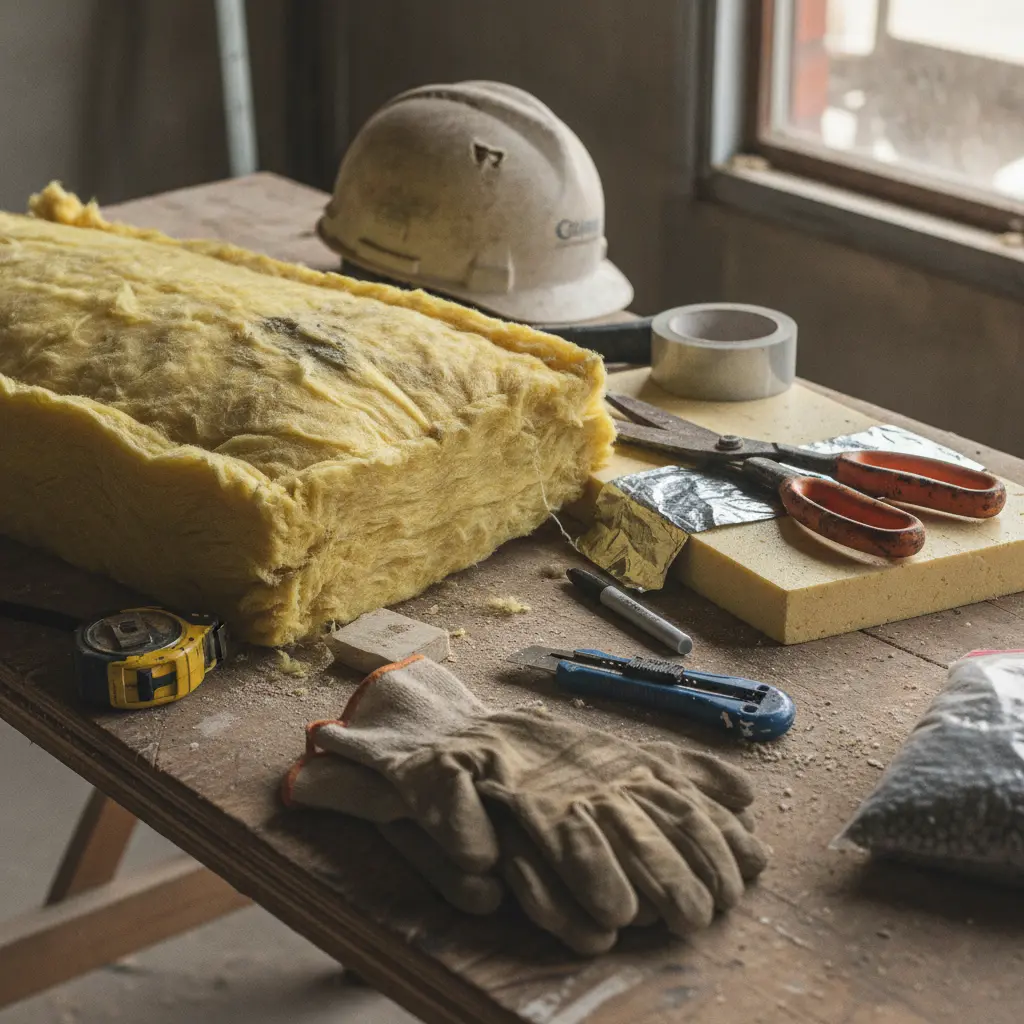
Our team in action — insulation professionals serving Simi Valley
Blown-In Insulation Methods and Approaches for Simi Valley Homes
Open-Blow Attic Installation
The most common application in Simi Valley, open-blow installation deposits loose-fill material directly onto the attic floor between joists. This method is ideal for the large, accessible attic spaces found in the single-story ranch homes and split-level designs predominant in Wood Ranch and Bridle Path. It can be completed in a single day for most homes under 3,000 square feet and offers the fastest return on investment for homeowners dealing with Simi Valley’s extreme summer attic temperatures. Learn more about our attic insulation services
Dense-Pack Wall Cavity Installation
For exterior wall retrofits — particularly relevant in the older 1960s–1970s construction along Tapo Canyon Road and in the Sycamore Park area — dense-pack installation uses high-pressure blowing to fill wall cavities through small access holes drilled in the exterior siding or drywall. Cellulose is the preferred material for this application due to its ability to achieve 3.5 lbs/ft³ density, preventing future settling and providing effective air infiltration control.
Stabilized Blown-In for Sloped Ceilings
Homes with cathedral ceilings or complex roof lines — a frequent design feature in the custom homes of the Santa Susana Knolls and Stratford Court areas — require stabilized blown-in insulation, in which a small amount of water activates an adhesive in the material to prevent settling in non-horizontal cavities. This ensures long-term R-value retention in spaces where conventional batts cannot be applied effectively.
Crawl Space Blown-In Combination
For homes built on raised foundations — common throughout the older residential blocks of central Simi Valley — we combine blown-in floor cavity insulation with crawl space encapsulation for comprehensive below-grade thermal and moisture control. Explore our crawl space insulation options
Ready for Blown-In Insulation Cost? Get Your Free Estimate Today.
Next Level Insulation of Simi Valley serves Simi Valley and the surrounding area — we’ll be on-site within 24 hours.
📞 Call (805) 774-1832Blown-In Insulation Cost in Simi Valley: What to Expect
Understanding the specific cost factors for blown-in insulation in Simi Valley helps homeowners budget accurately and evaluate contractor quotes with confidence.
Typical Price Ranges
- Attic blown-in insulation (open-blow): $1.50–$3.50 per square foot installed, with most Simi Valley homes (1,500–2,500 sq ft attic footprint) falling in the $2,250–$8,750 range depending on current insulation depth and target R-value
- Dense-pack wall cavity insulation: $2.00–$5.00 per square foot, with whole-house exterior wall projects typically ranging from $3,500–$9,000
- Crawl space floor cavity blown-in: $1.75–$3.25 per square foot, typically $1,500–$4,500 for standard Simi Valley raised-foundation homes
- Combined attic air sealing and blown-in package: $2,500–$6,000 for most single-story Simi Valley homes under 2,000 square feet
Key Cost Factors in Simi Valley
- Existing insulation removal: If degraded, pest-contaminated, or fire/smoke-damaged insulation must be removed before installation, expect an additional $1.00–$2.00 per square foot. Learn about our insulation removal services
- Attic accessibility: Homes in the Knolls and Rocky Peak areas with low-pitch rooflines may require additional labor time, adding 10–20% to base installation costs
- Material selection: Cellulose typically costs 10–15% less than premium fiberglass loose-fill at equivalent R-values; mineral wool carries a 20–30% premium
- California rebates: Southern California Gas Company and SoCalEdison offer rebates of up to $400 for qualifying attic insulation upgrades, which can meaningfully reduce net project cost for Simi Valley homeowners
Contact Next Level Insulation of Simi Valley at (805) 774-1832 for a free, itemized quote specific to your home’s square footage, current insulation condition, and target R-value.
Simi Valley Neighborhoods We Serve
Wood Ranch
Developed primarily between 1987 and 2005, Wood Ranch homes represent some of Simi Valley’s newer construction — but original attic insulation in these properties has now aged 20–35 years and commonly tests below R-30. The community’s hillside positioning also exposes rooflines to elevated wind exposure, accelerating thermal loss.
Berylwood and Sycamore Park
These central Simi Valley neighborhoods feature tract homes built predominantly in the late 1960s through 1975, many of which have never had attic insulation upgraded beyond original R-11 levels. Dense-pack wall retrofits are particularly common in this area.
Santa Susana Knolls
Custom homes perched on the elevated terrain of the Knolls face the most extreme temperature differentials in Simi Valley, with summer roof deck temperatures that can exceed 160°F and nighttime wind exposure that magnifies heating losses. High-density blown-in attic installations are the primary service need here.
Tapo Canyon Estates and Stoneridge
Homes in these eastern Simi Valley communities often sit near the Arroyo Simi flood plain, introducing seasonal ground moisture that makes crawl space combination services — blown-in floor insulation plus encapsulation — especially valuable.
We also serve homeowners throughout Chatsworth, Thousand Oaks, Moorpark, Camarillo, and all surrounding communities.
Maintaining Your Blown-In Insulation in Simi Valley
Proper maintenance extends the effective life of your blown-in insulation investment and ensures sustained energy performance through Simi Valley’s demanding climate cycles.
- Annual attic inspection: Check insulation depth with a ruler each fall before the heating season. In Simi Valley’s hot attics, fiberglass loose-fill can compress 10–15% over five years; early detection allows targeted top-up before performance degrades significantly.
- Seal attic penetrations promptly: Any new HVAC, plumbing, or electrical work that opens attic penetrations should be resealed immediately to prevent the air bypass issues that are common in Simi Valley’s windy conditions.
- Monitor for moisture after winter rain events: Simi Valley’s infrequent but intense winter rainstorms can introduce moisture through deteriorated roof flashing — inspect attic insulation for clumping or discoloration after significant rain events.
- Control attic ventilation: Ensure soffit and ridge vents remain unobstructed year-round. Blocked ventilation in Simi Valley’s summer heat can raise attic temperatures enough to accelerate insulation degradation.
- Pest exclusion: Seal exterior entry points for rodents, particularly in wood-framed gable vents common in 1970s Simi Valley construction. Rodent activity is the single most common cause of premature blown-in insulation failure in the area.
- Post-wildfire smoke assessment: Following any significant wildfire event in Ventura County, have attic insulation inspected — smoke infiltration can chemically degrade cellulose fire retardants and create air quality concerns.
- Professional re-inspection every 10 years: Schedule a professional assessment to measure actual R-value and ensure compliance with current California Title 24 requirements, which have been updated multiple times since most Simi Valley homes were built.
Why Choose Next Level Insulation of Simi Valley
Next Level Insulation of Simi Valley is a locally rooted insulation contractor with deep knowledge of the specific building conditions, climate demands, and code requirements that define projects throughout Simi Valley and the broader Ventura County region. We don’t apply a one-size-fits-all approach — every estimate we provide accounts for your home’s specific construction era, its neighborhood’s microclimate exposure, and the California Title 24 compliance requirements that govern insulation in Climate Zone 9.
Our team has hands-on experience across all blown-in insulation material types and installation methods, from open-blow attic projects in Wood Ranch’s newer subdivisions to dense-pack wall retrofits in the aging housing stock of Sycamore Park. We also offer the full spectrum of complementary insulation services — including spray foam insulation, insulation removal and replacement, and crawl space encapsulation — allowing us to address your home’s complete thermal envelope in a single, coordinated engagement.
We serve homeowners throughout Simi Valley and surrounding communities including Thousand Oaks, Moorpark, Camarillo, Chatsworth, and Woodland Hills. Call us at (805) 774-1832 — we’re your local experts for blown-in insulation cost guidance and installation throughout the region.
Frequently Asked Questions About Blown-In Insulation Cost in Simi Valley
What is the average cost of blown-in attic insulation in Simi Valley, CA?
Most Simi Valley homeowners pay between $2,250 and $6,500 for a complete blown-in attic insulation project, with the final cost depending on attic square footage, existing insulation depth, target R-value, and whether air sealing is included. Smaller homes under 1,500 square feet with partial existing insulation may come in closer to $1,800–$2,500, while larger homes in Wood Ranch or the Knolls with zero or degraded existing insulation can reach $6,000–$8,500.
How much insulation do I need to meet California code in Simi Valley?
Simi Valley falls within California Energy Commission Climate Zone 9. The current Title 24 minimum for attic insulation in re-insulation projects in this zone is R-38, which requires approximately 15–16 inches of blown cellulose or 18–20 inches of blown fiberglass. New construction attics in Zone 9 are often specified to R-49, which adds another 3–4 inches and 10–15% to material costs.
How long does blown-in insulation installation take in a typical Simi Valley home?
For a standard 1,500–2,500 square foot single-story home — the most common configuration in Simi Valley neighborhoods like Berylwood or Bridle Path — a complete attic air sealing and blown-in installation can be completed in a single day, typically 4–8 hours of on-site work. Larger homes or projects requiring existing insulation removal may extend to two days.
Is cellulose or fiberglass better for Simi Valley’s climate?
Both materials perform well in Simi Valley, but each has situational advantages. Cellulose is typically the preferred choice for retrofit wall cavities and attics where air sealing performance is the priority — it achieves slightly better air infiltration control at equivalent depths. Fiberglass loose-fill is often preferred for very large open attics in Wood Ranch’s newer construction due to its lighter weight and resistance to moisture from winter rain events. Our technicians will recommend the optimal material for your specific home during the free assessment.
Are there rebates available for blown-in insulation in Simi Valley?
Yes. Southern California Gas Company (SoCalGas) and Southern California Edison (SCE) both offer rebate programs for qualifying attic insulation upgrades in Simi Valley. Rebates typically range from $100 to $400 depending on the total R-value increase and square footage treated. We help our customers identify and document qualifying work to maximize rebate recovery as part of every project.
Does blown-in insulation help with Simi Valley’s wildfire smoke air quality concerns?
Properly installed blown-in insulation combined with comprehensive attic air sealing can meaningfully reduce smoke infiltration during Ventura County wildfire events by eliminating the ceiling plane bypasses and penetrations through which outside air — including smoke-laden air — enters living spaces. While it is not a substitute for HVAC filtration, our air sealing and blown-in package addresses one of the primary infiltration pathways in older Simi Valley homes.
How do I know if my existing blown-in insulation needs to be removed before new insulation is installed?
Existing blown-in insulation typically does not need to be removed unless it is contaminated by rodent activity, saturated with moisture, fire or smoke damaged, or contains asbestos-bearing materials (a concern in pre-1980 Simi Valley homes). Our technicians assess existing insulation condition during the free site visit and will clearly explain whether removal is necessary and the associated cost. Learn more about our insulation removal services
Do you serve areas outside of Simi Valley?
Yes. Next Level Insulation of Simi Valley serves a broad service area across Ventura and Los Angeles counties, including Thousand Oaks, Moorpark, Camarillo, Oxnard, Santa Paula, Fillmore, Chatsworth, Woodland Hills, Calabasas, Agoura Hills, Westlake Village, Oak Park, Santa Clarita, North Hollywood, Beverly Hills, Malibu, San Fernando, and Port Hueneme. View our full service area
Get Your Free Blown-In Insulation Estimate in Simi Valley Today
Don’t let Simi Valley’s extreme summer heat and winter wind chill drain your energy budget month after month. Whether your home is a 1960s ranch in Sycamore Park, a hillside custom in the Santa Susana Knolls, or a newer build in Wood Ranch with aging attic insulation, Next Level Insulation of Simi Valley is ready to provide an honest, detailed, no-obligation cost estimate tailored to your property.
Our team understands the specific climate demands, building conditions, and California Title 24 requirements that define insulation work throughout Simi Valley and the surrounding region. We’ll assess your current insulation depth, identify air sealing opportunities, and give you a clear, itemized quote — with no pressure and no surprises.
Call us now at (805) 774-1832 to schedule your free on-site assessment, or contact us online to request a quote. Serving Simi Valley and all surrounding communities across Ventura and Los Angeles counties.