

Spray Foam Insulation in Santa Clarita, CA
Energy-Saving Spray Foam Insulation for Santa Clarita, CA Homes — Licensed & Insured
Expert spray foam insulation in Santa Clarita, CA. Next Level Insulation serves Canyon Country, Newhall & Stevenson Ranch. Call (661) 582-0187 for a free estimate.
- Licensed & Insured
- Locally Owned & Operated
- Free Inspection & Estimate
Request Your
Free EstimateSpray foam insulation is a high-performance insulating material that expands on contact to seal gaps, cracks, and cavities in walls, attics, crawl spaces, and foundations. Unlike traditional batt insulation, spray foam creates an airtight thermal envelope that dramatically reduces energy loss and moisture infiltration — two critical concerns for homeowners and businesses in the Santa Clarita Valley.
Santa Clarita’s unique geography places it at the meeting point of the San Gabriel Mountains and the high desert, producing wide daily temperature swings, dry Santa Ana wind events, and summer heat that regularly exceeds 100°F. Standard insulation products struggle to perform under these conditions. Spray foam’s closed-cell and open-cell formulations are engineered to handle thermal stress, pressure differentials, and the kind of extreme heat common in Canyon Country and Stevenson Ranch neighborhoods.
At Next Level Insulation of Santa Clarita, our crews are trained and equipped specifically for the climate challenges of the Santa Clarita Valley. Whether you are upgrading a 1980s tract home in Newhall or insulating a new construction in Castaic, we deliver precision installation that lowers utility bills, improves indoor comfort, and protects your structure long-term. Call us today at (661) 582-0187 to schedule a free assessment.
Understanding Spray Foam Insulation
Spray polyurethane foam, commonly known as spray foam insulation, is a two-component chemical system. When the two liquid components — isocyanate and polyol resin — are combined through a specialized spray gun, they react and expand into a rigid or semi-rigid foam that fills every contour of the cavity being insulated. This expansion factor, often 30 to 60 times the original liquid volume, gives spray foam its unmatched air-sealing capability.
Spray foam insulation was developed commercially in the 1940s and saw widespread residential adoption in the United States through the 1970s and 1980s as energy codes tightened following the oil embargo. By the early 2000s, advances in blowing agents and resin formulations made spray foam both more environmentally responsible and more cost-effective for residential use. Today, California’s Title 24 energy efficiency standards — among the strictest in the nation — make high-R-value insulation solutions like spray foam increasingly attractive and, in many new construction scenarios, practically necessary.
In Santa Clarita specifically, the building stock is heavily composed of single-family homes constructed during two major growth waves: the post-Northridge earthquake rebuilding period of the mid-to-late 1990s and the housing boom of 2000 through 2007. Many of these homes were built to the energy codes of their era, which are now significantly outdated relative to current California standards. Retrofitting these homes with spray foam insulation is one of the most cost-effective ways to bring them up to modern performance levels.
There are two primary types of spray foam used in residential and commercial insulation:
- Closed-cell spray foam (ccSPF): A dense, rigid foam with an R-value of approximately R-6 to R-7 per inch. It acts as both an insulator and a vapor barrier, making it ideal for crawl spaces, exterior walls, and areas prone to moisture exposure. Its structural rigidity can also add racking strength to wall assemblies.
- Open-cell spray foam (ocSPF): A softer, sponge-like foam with an R-value of approximately R-3.5 to R-3.8 per inch. It is more economical and excellent for interior applications such as attic decking, interior walls for soundproofing, and large open cavities where vapor permeability is acceptable or desired.
Both types dramatically outperform traditional fiberglass batts (R-2.9 to R-3.8 per inch) and even blown-in cellulose (R-3.2 to R-3.8 per inch) in real-world air-sealing performance, which accounts for a significant portion of a building’s energy loss. Learn more about our attic insulation services
Signs You Need Spray Foam Insulation in Santa Clarita
Energy Performance Indicators
- Monthly SCE or SoCalGas bills that spike dramatically from May through September, often exceeding $350–$500 for a typical 2,000 sq. ft. Santa Clarita home
- HVAC system running nearly continuously during July and August heat events without achieving the thermostat setpoint
- Rooms in Canyon Country or Newhall homes that are consistently 8–12°F hotter than other parts of the house despite normal HVAC operation
Physical and Structural Signs
- Visible gaps around electrical outlets on exterior walls where you can feel air movement during windy days
- Drafts near can lights, attic hatches, or wall penetrations for plumbing or electrical
- Fiberglass batt insulation in the attic that appears flattened, compressed, or discolored from moisture or pest activity
- Ice formation on interior walls during rare winter cold snaps — an indicator of severe thermal bridging
Indoor Air Quality and Comfort Signs
- Persistent musty odors in homes with crawl spaces, particularly in spring and fall when ground moisture levels fluctuate
- Increased dust accumulation in living areas during Santa Ana wind events, indicating uncontrolled air infiltration
- Allergy symptom flare-ups during wildfire smoke season that worsen noticeably indoors
Urgent Warning Signs
- Evidence of pest activity (rodents, insects) entering through insulation gaps — a common issue in homes bordering the Angeles National Forest interface
- Moisture staining or mold visible in crawl spaces or at the base of exterior walls
Our Spray Foam Insulation Process
At Next Level Insulation of Santa Clarita, we follow a structured installation process developed specifically for the climate and construction conditions of the Santa Clarita Valley. We do not cut corners on preparation or cleanup — every step is designed to maximize performance and minimize disruption to your home or business.
Free On-Site Assessment (Day 1 — 60 to 90 minutes)
Our technician visits your property to conduct a visual inspection of the attic, crawl space, walls, and any accessible cavities. We document existing insulation type, coverage, and condition, and identify problem areas such as bypasses, unsealed penetrations, and areas of moisture damage. For older Canyon Country or Newhall homes, we specifically check for knob-and-tube wiring in attics, which requires special handling protocols before spray foam can be applied above it.
Scope and Proposal (1 to 2 business days)
We provide a detailed written proposal specifying foam type, application thickness targets, R-value outcomes, and projected energy savings. We reference current Title 24 requirements and indicate whether our proposed scope will bring your home into compliance.
Area Preparation (Day of Installation — 1 to 2 hours)
Before any foam is applied, we mask and protect all surfaces that should not receive foam, cover HVAC equipment and ductwork, and ensure adequate ventilation for the workspace. During periods of extreme heat — a regular occurrence in Santa Clarita summers — we schedule spray foam application for early morning hours when ambient temperatures are between 50°F and 90°F, the optimal range for proper foam expansion and cure chemistry.
Insulation Removal (If Required — 2 to 4 hours)
If existing degraded insulation must be removed prior to spray foam application, our crew uses HEPA-filtered vacuum equipment to extract blown-in or batt insulation safely. Learn more about our insulation removal services
Spray Foam Application (2 to 6 hours depending on scope)
Our trained applicators apply spray foam in lifts appropriate to the foam type — typically 2-inch lifts for closed-cell foam to prevent heat buildup during exothermic curing. We verify thickness with calibrated probes and adjust in real time to meet target R-values.
Cure and Inspection (1 to 24 hours)
Closed-cell foam is typically tack-free within minutes and fully cured within 8 to 24 hours. We conduct a post-installation inspection including visual checks and, on qualifying projects, a blower door test to document air leakage reduction.
Cleanup and Final Walkthrough (30 to 60 minutes)
We remove all masking materials, clean up overspray, and walk you through the completed work with documentation of achieved R-values and any follow-up recommendations.
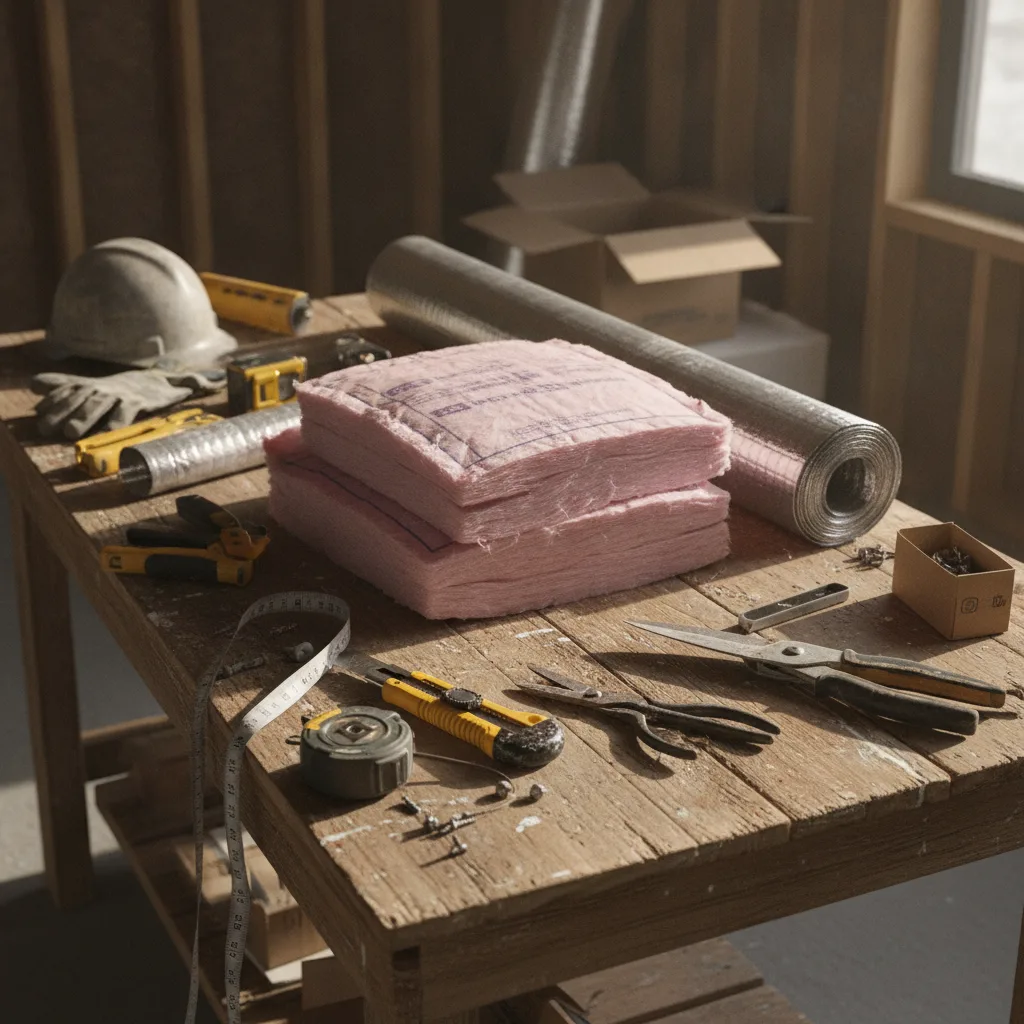
Our team in action — insulation professionals serving Santa Clarita
Spray Foam Methods and Approaches
Closed-Cell Spray Foam (ccSPF) — Premium Air and Vapor Barrier
Closed-cell spray foam is our primary recommendation for Santa Clarita’s exterior wall assemblies, crawl spaces, and roof deck applications. At R-6.5 per inch, achieving California Title 24’s minimum R-19 wall requirement requires only 3 inches of ccSPF — far thinner than the 6-inch fiberglass batt alternative. Closed-cell foam’s vapor impermeability (Class II vapor retarder at 2 inches) is particularly important for homes in Newhall and Canyon Country near seasonal drainages. Explore our crawl space insulation options
Open-Cell Spray Foam (ocSPF) — Cost-Effective Interior Applications
Open-cell spray foam is ideal for interior applications where vapor permeability is acceptable, including attic rafters in conditioned attic conversions, interior partition walls for sound control, and large rim joist areas. At approximately 40–50% lower material cost than closed-cell, it makes conditioned attic upgrades economical for the large volume of 1,990s-era Santa Clarita track homes with complex roof geometries.
Hybrid Foam and Blown-In Systems
For attic floor applications where a vapor barrier base is needed but full-depth coverage requires a more economical approach, we install a 1-inch closed-cell base coat over the attic floor sheathing, then complete the assembly with blown-in insulation to achieve total R-38 or R-49 as required by current Title 24 standards. This hybrid approach delivers the air-sealing benefits of spray foam at a significantly lower total cost than full-depth ccSPF.
Two-Component Spray Foam for Targeted Repairs
For smaller applications — sealing rim joists, penetrations, or isolated gap areas — we use portable two-component spray foam kits that allow precise application without the equipment mobilization cost of full rig systems. This approach is particularly efficient for post-earthquake gap remediation in older Newhall and Canyon Country structures where seismic activity has opened pathways in the building envelope.
Ready for Spray Foam Insulation? Get Your Free Estimate Today.
Next Level Insulation of Santa Clarita serves Santa Clarita and the surrounding area — we’ll be on-site within 24 hours.
📞 Call (661) 582-0187Spray Foam Insulation Cost in Santa Clarita, CA
Spray foam insulation represents a higher upfront investment than traditional insulation types, but delivers superior long-term energy savings and comfort benefits. Understanding the cost factors helps Santa Clarita homeowners budget accurately for this upgrade.
Typical Price Ranges
- Open-cell spray foam: $1.00 to $1.50 per board foot (one square foot at one inch thickness). For a typical 2,000 sq. ft. Santa Clarita home attic treated at 5.5 inches depth, expect $3,500 to $5,500 installed.
- Closed-cell spray foam: $1.75 to $3.00 per board foot. For a full crawl space encapsulation and subfloor treatment in a 1,500 sq. ft. footprint, typical project costs range from $4,000 to $7,500.
- Hybrid attic systems: $2,500 to $4,500 for a 1,500 to 2,000 sq. ft. attic floor, combining 1-inch ccSPF base with blown-in completion to R-38.
- Targeted rim joist and air sealing: $800 to $2,500 depending on linear footage and accessibility.
Factors That Affect Cost in Santa Clarita
- Access difficulty: Homes in hillside areas of Stevenson Ranch or Canyon Country with limited attic access or low crawl spaces under 24 inches add labor cost.
- Existing insulation removal: If degraded fiberglass or rodent-damaged blown-in insulation must be removed first, add $1.00 to $2.00 per square foot for removal and disposal.
- Material price volatility: Polyurethane foam raw material prices track petrochemical markets and can fluctuate 10–20% seasonally. Contact us at (661) 582-0187 for current pricing.
- California utility rebates: SCE and SoCalGas both offer rebates for qualifying insulation upgrades that can offset $200 to $800 of project costs. We assist customers in identifying and applying for available incentives.
Santa Clarita Neighborhoods We Serve
Newhall
Newhall is one of the oldest communities in the Santa Clarita Valley, with a significant stock of homes dating to the 1950s through 1970s that were built before modern insulation codes existed. These older wood-frame homes frequently have minimal or no wall cavity insulation and uninsulated crawl spaces sitting above the seasonally active Santa Clara River floodplain. We frequently combine insulation replacement with spray foam upgrades to modernize these properties significantly.
Canyon Country
Canyon Country sits at higher elevations and further from the coast than other parts of Santa Clarita, making it the hottest submarket in the valley during summer heat events. Many 1980s and 1990s Canyon Country homes have original fiberglass batts that have sagged, shifted, or been damaged by the rodent populations common near the Angeles National Forest interface. Spray foam retrofit is the most effective solution for these compromised assemblies.
Stevenson Ranch
Stevenson Ranch is a master-planned community developed primarily between 1995 and 2005, producing a relatively uniform housing stock of 2,000 to 4,500 sq. ft. two-story homes. While newer than Newhall or Canyon Country, many Stevenson Ranch homes have oversized attic cavities with complex geometries that create thermal bypass pathways. Spray foam at the roofline in conditioned attic configurations is particularly effective here.
Castaic
Castaic’s position at the northern end of the valley near Castaic Lake creates both higher wind exposure and greater temperature extremes. New construction in Castaic’s active residential developments frequently specifies spray foam from the ground up to meet current California energy codes efficiently.
Spray Foam Insulation Maintenance Tips for Santa Clarita Homeowners
Spray foam insulation is exceptionally durable and requires minimal maintenance compared to fiber-based alternatives. However, specific conditions in the Santa Clarita Valley warrant periodic attention to protect your investment.
- Annual attic inspection after fire season: Following each wildfire season (typically October through December), visually inspect accessible attic insulation for smoke particle accumulation or any fire-related damage to foam surfaces.
- Post-Santa Ana wind inspection: After major Santa Ana events exceeding 50 mph gusts, check attic hatches and roof penetrations for any dislodged seals or lifted foam edges that could allow uncontrolled air infiltration.
- Crawl space moisture check each spring: In Newhall and Canyon Country properties near seasonal drainages, inspect crawl spaces after the rainy season (February through April) for any moisture intrusion, which may indicate that vapor barriers need supplemental treatment.
- Pest exclusion monitoring: Inspect foam surfaces annually for tunneling activity by rodents, which occasionally burrow into open-cell foam near forest interface areas. Closed-cell foam is significantly more resistant to pest penetration.
- UV protection for exposed foam: Any spray foam exposed to sunlight — such as in unfinished garage ceilings or under elevated decks — must be coated with a UV-protective paint or coating. Inspect this coating every two years and reapply as needed, as Santa Clarita’s high UV index accelerates degradation.
- HVAC filter monitoring: After spray foam installation dramatically reduces air infiltration, your HVAC system’s filter loads may actually increase slightly as the system handles a higher percentage of recirculated interior air. Increase filter change frequency to every 60 days for the first year post-installation.
Why Choose Next Level Insulation of Santa Clarita
Next Level Insulation of Santa Clarita is a locally operated insulation contractor with deep knowledge of the Santa Clarita Valley’s specific climate challenges, construction history, and regulatory environment. Our team works exclusively in the Santa Clarita Valley and surrounding communities — we are not a national franchise sending out crews unfamiliar with the unique demands of desert-adjacent canyon living at 1,200 feet elevation.
We offer the full range of insulation services Santa Clarita homeowners need, from initial spray foam installation to insulation removal and complete insulation replacement. Our technicians are trained in California Title 24 compliance requirements and can assist you in documenting completed work for permit sign-off and utility rebate applications.
Every project we complete is backed by our direct workmanship commitment. We do not subcontract our spray foam installations — the technicians who quote your project are the technicians who install it. We serve all of Santa Clarita, including Canyon Country, Newhall, Stevenson Ranch, Castaic, and surrounding communities in Chatsworth, Northridge, Porter Ranch, Granada Hills, Sylmar, Mission Hills, San Fernando, Simi Valley, and North Hills.
Call us today at (661) 582-0187 to schedule your free, no-obligation assessment and get a detailed written proposal within 48 hours.
Frequently Asked Questions About Spray Foam Insulation in Santa Clarita
How much does spray foam insulation cost for a typical Santa Clarita home?
For a typical 2,000 to 2,500 sq. ft. single-family home in Santa Clarita — the most common size in communities like Stevenson Ranch and Canyon Country — a complete attic spray foam project using open-cell foam to R-38 typically costs between $3,500 and $6,000 installed. Closed-cell crawl space encapsulation for the same home would add $3,500 to $6,500. We provide itemized written quotes after a free on-site assessment, and we identify applicable SCE or SoCalGas rebates that may reduce your net cost.
How long does spray foam insulation installation take?
Most residential spray foam projects in Santa Clarita are completed in a single day. A standard attic application takes 3 to 5 hours of spray time plus preparation and cleanup. Crawl space projects, which require more confined-space work, may take 4 to 8 hours. Whole-home projects combining attic, crawl space, and wall cavity work may require two days. The foam itself is safe to occupy around within 24 hours of application for most residential formulations.
Is spray foam insulation suitable for the extreme heat in Canyon Country?
Absolutely — in fact, spray foam is particularly well-suited to Canyon Country’s conditions, where summer attic temperatures can exceed 150°F. Unlike fiberglass batts, which lose effective R-value as temperatures rise and as air movement through the fibers increases, closed-cell spray foam maintains its rated R-value across a wide temperature range and provides zero air movement through the insulation layer itself. Homeowners in Canyon Country and Stevenson Ranch who upgrade from fiberglass batts to spray foam often report HVAC runtime reductions of 20% to 30% during peak summer months.
Will spray foam help protect my home from wildfire smoke infiltration?
Yes. One of the underappreciated benefits of spray foam insulation in Santa Clarita is its air-sealing capability during wildfire smoke events like those associated with the 2016 Sand Fire or the October 2019 Saddleridge Fire. A properly air-sealed home with spray foam can reduce smoke particle infiltration by 50% to 80% compared to a leaky building envelope. This is a meaningful benefit for families with asthma, COPD, or other respiratory conditions who live near the Angeles National Forest interface.
Do I need to remove my existing insulation before spray foam is installed?
Not always. If existing insulation is in good condition and free of moisture damage or pest contamination, open-cell spray foam can sometimes be applied over existing blown-in insulation on attic floors. However, if your attic has rodent activity, water damage, or significantly compressed fiberglass batts — common in Canyon Country and Newhall homes over 20 years old — removal is strongly recommended before spray foam application. We assess this during the free initial inspection. Learn about our insulation removal process
Does spray foam insulation qualify for California energy rebates?
Yes. Both Southern California Edison (SCE) and SoCalGas offer rebate programs for qualifying insulation upgrades in their service territories, which include all of Santa Clarita. Rebate amounts change periodically, but homeowners have historically received $0.10 to $0.20 per square foot for attic insulation upgrades meeting minimum R-value thresholds. We assist our Santa Clarita customers in identifying and applying for these rebates as part of our service. Federal energy efficiency tax credits under the Inflation Reduction Act may also apply, providing up to 30% of project cost as a tax credit.
How long does spray foam insulation last in the Santa Clarita climate?
Closed-cell spray foam has a rated service life of 80 to 100 years under normal conditions. Open-cell spray foam is similarly long-lived when protected from UV exposure. In Santa Clarita’s climate — characterized by high UV radiation, low humidity, and occasional seismic activity — spray foam significantly outlasts fiberglass batts (which typically need replacement every 15 to 25 years as they sag and compress) and blown-in cellulose (which can settle 20–30% over its life in the thermal cycling environment of a Santa Clarita attic). For most homeowners, spray foam is a one-time installation for the life of the home.
Can spray foam be used in my home if I have an older HVAC system?
Yes, but we do recommend having your HVAC system evaluated after spray foam installation. When a home’s air leakage is dramatically reduced — sometimes from 10 air changes per hour down to 2 — an oversized or poorly configured HVAC system may short-cycle or create humidity control issues. We typically recommend that customers with HVAC systems older than 15 years schedule an HVAC evaluation within six months of spray foam installation to ensure optimal system performance in the newly tightened envelope.
Get a Free Spray Foam Insulation Assessment in Santa Clarita Today
If you are ready to stop overpaying for energy bills, improve your family’s comfort through Santa Clarita’s brutal summer heat events, and protect your home from wildfire smoke infiltration and moisture damage, Next Level Insulation of Santa Clarita is ready to help.
We serve all of Santa Clarita — including Canyon Country, Newhall, Stevenson Ranch, and Castaic — as well as neighboring communities throughout the Santa Clarita Valley and San Fernando Valley, including Granada Hills, Porter Ranch, Northridge, Chatsworth, Sylmar, Mission Hills, North Hills, Simi Valley, and San Fernando.
Call us now at (661) 582-0187 to schedule your free, no-obligation on-site assessment. We provide detailed written proposals within 48 hours and can typically schedule installation within one to two weeks of project approval. Take the first step toward a cooler, quieter, more energy-efficient home — contact Next Level Insulation of Santa Clarita today.