

Crawl Space Encapsulation Cost in Simi Valley, CA
Transparent Crawl Space Encapsulation Cost Pricing for Simi Valley, CA Homeowners — Free Estimates
Discover crawl space encapsulation cost in Simi Valley, CA. Get local pricing, process details, and a free estimate from Next Level Insulation. Call (805) 774-1832.
- Licensed & Insured
- Locally Owned & Operated
- Free Inspection & Estimate
Request Your
Free EstimateUnderstanding crawl space encapsulation cost in Simi Valley, CA is the first step toward protecting your home from the unique moisture, heat, and pest pressures that define this region of Ventura County. Crawl space encapsulation is the process of sealing a home’s crawl space with heavy-duty vapor barriers, rigid insulation, and conditioned air systems to prevent moisture infiltration, pest entry, and energy loss through the subfloor.
In Simi Valley, homes built across the Reagan Ranch corridor, Wood Ranch, and the older tracts near Tapo Canyon face specific structural and environmental challenges that make encapsulation not just a comfort upgrade but a practical necessity. The valley’s dramatic seasonal temperature swings, periodic Santa Ana wind events, and soil composition along the Simi Hills create conditions that accelerate crawl space deterioration faster than many homeowners realize.
At Next Level Insulation of Simi Valley, our team brings hands-on expertise with local building styles, from post-war ranch homes near Erringer Road to newer construction in the Belwood and Silverthorne developments. Call us today at (805) 774-1832 for a site-specific cost estimate.
Understanding Crawl Space Encapsulation in Simi Valley
Crawl space encapsulation is a comprehensive moisture management system installed beneath a home’s living floor. Unlike basic vapor barriers, which are thin polyethylene sheets laid loosely over the soil, full encapsulation involves sealing every surface — floor, walls, and piers — with reinforced 12- to 20-mil poly barriers, taping all seams, and integrating the crawl space into the home’s thermal envelope. In many installations, a dehumidifier, sump pump, or conditioned air supply completes the system.
The practice evolved from building science research in the late 1990s and early 2000s, particularly studies conducted by the Advanced Energy Corporation and later adopted into California Building Code standards. California’s Title 24 energy regulations have increasingly pushed toward encapsulated crawl spaces as the preferred approach over open vented designs, especially in climate zones like Simi Valley’s Zone 9, where both cooling loads and occasional moisture events create competing demands on the subfloor assembly.
Simi Valley was developed primarily between the 1950s and the 1990s, with a large share of housing stock consisting of single-story wood-frame ranch homes on raised foundations. These homes were largely built with vented crawl spaces, which were standard practice at the time. As building science has advanced, it is now understood that vented crawl spaces in valley climates like Simi Valley’s — where warm, dry air from the interior meets cooler subfloor conditions — can actually draw moisture-laden air inward during transitional seasons, rather than exhausting it outward.
The Santa Susana Mountains and the Simi Hills that flank the valley create localized weather patterns including morning marine layer intrusions from the Conejo Valley side and afternoon heat retention that can push crawl space temperatures above 130°F in summer. These temperature gradients stress vapor barriers, accelerate wood rot, and create ideal conditions for subterranean termite activity, all of which encapsulation is specifically designed to address.
Homeowners in neighborhoods like Bridle Path, Mountain Gate, and the older sections along Cochran Street frequently discover that their original vented crawl spaces have been compromised over decades of these thermal cycles. Full encapsulation resets the baseline for moisture control and energy performance in one durable installation. Learn more about our crawl space encapsulation services
Why Crawl Space Encapsulation Is Needed in Simi Valley, CA
Simi Valley’s geographic position at the eastern end of Ventura County creates a distinct microclimate that is harder on crawl spaces than most homeowners expect. The valley sits in a natural basin surrounded by the Santa Susana Mountains to the north, the Simi Hills to the south, and opens toward the San Fernando Valley to the east. This bowl-like topography traps heat in summer, channels cold air drainage in winter, and funnels Santa Ana wind events that can change humidity levels by 40 to 60 percent within hours.
The October 2003 and October 2007 Simi Valley area fire events, as well as the Tick Fire near Canyon Country in October 2019 and the Easy Fire that threatened Wood Ranch in October 2019, demonstrated how extreme fire weather conditions correspond with the lowest recorded relative humidity in the valley — sometimes dropping below 5 percent. These rapid desiccation events cause wood framing in crawl spaces to shrink and crack, opening gaps that allow pests and moisture to enter when conditions reverse. Without encapsulation, homes in neighborhoods like Wood Ranch Estates and the Oakridge development along Madera Road are especially vulnerable to this repeated expansion-contraction cycle.
Soil composition is another critical factor. Much of the developed land in Simi Valley sits on expansive silty clay soils classified as Botella loam and Sorrento clay loam by the USDA Web Soil Survey. These soil types retain moisture and swell when wet, then crack deeply when dry. Homes along the lower-elevation tracts near the Arroyo Simi flood channel, including areas off Stearns Street and near Madera Road, experience soil movement that can deposit ground moisture directly under pier foundations — moisture that migrates upward into unprotected crawl spaces.
The Arroyo Simi itself, a seasonal waterway running roughly east-west through the valley, raises the water table in adjacent properties during wet years. The winter of 2022–2023 brought record rainfall to Ventura County, with Simi Valley recording more than 28 inches of precipitation between October 2022 and March 2023, well above the historical annual average of approximately 12 to 14 inches. Homeowners near Sequoia Avenue, Tapo Street, and the flats near Kuehner Drive reported standing water or elevated soil moisture in crawl spaces that had never experienced problems before that season.
Pest pressure in Simi Valley also drives encapsulation demand. The combination of warm winters, wooden construction, and the disturbed soils of the Simi Hills hillside developments creates one of the higher subterranean termite pressure zones in Ventura County. According to UC Cooperative Extension data for the region, Reticulitermes hesperus — the Western subterranean termite — is active year-round in valley climates above 1,500 feet below the frost line, which includes virtually all of Simi Valley’s residential zones. An encapsulated crawl space removes the primary entry conditions these insects exploit: soil contact, moisture accumulation, and exposed wood grain. Explore our crawl space insulation options for added protection
Signs You Need Crawl Space Encapsulation in Simi Valley
Moisture and Mold Indicators
- Musty odors rising through hardwood or carpet floors, particularly in morning hours after overnight temperature drops
- Visible white efflorescence or dark mold staining on crawl space piers or floor joists
- Condensation on cold-water pipes running through the crawl space during summer
- Existing vapor barrier that is torn, pooled with standing water, or covered with soil displacement from expansive clay movement
Structural and Pest Warning Signs
- Soft spots, springiness, or squeaking in floors over the crawl space area
- Mud tubes — thin pencil-sized tunnels of soil — on piers, sill plates, or foundation walls, indicating active termite activity
- Visible wood decay or darkening on rim joists visible through the crawl space access hatch
Energy and Comfort Indicators
- Floors that feel noticeably cold in winter despite heating system operation, a common complaint in Simi Valley homes with uninsulated crawl spaces during December and January nights when temperatures can drop to the mid-30s°F
- Elevated utility bills during summer cooling season without a clear explanation
- Allergy symptoms that worsen indoors, potentially linked to mold spore migration from below the floor
Urgency Note: If you observe standing water, active termite mud tubes, or floor softness, treat these as immediate-action items. Delay accelerates structural repair costs significantly. Learn about our insulation removal services when damaged material must be replaced
Our Crawl Space Encapsulation Process in Simi Valley
Initial Inspection and Moisture Assessment (Day 1 — 1 to 2 Hours)
We begin with a comprehensive crawl space inspection using moisture meters calibrated for the silty clay soils common in Simi Valley’s lower-elevation tracts. We photograph existing vapor barrier condition, measure crawl space height (which in many Simi Valley ranch homes ranges from 18 to 36 inches), document pest evidence, and assess ventilation configuration. We also review your home’s orientation relative to prevailing wind patterns from the Santa Ana corridor.
Debris Removal and Old Vapor Barrier Extraction (Day 1 — 1 to 4 Hours)
Existing deteriorated vapor barriers, damaged insulation batts, and any debris are removed and bagged for disposal. This step frequently reveals the full extent of moisture damage in older Simi Valley homes where original materials have been in place since the 1960s or 1970s.
Pest Treatment Coordination (Day 1 to Day 3)
If termite activity or rodent evidence is found, we coordinate with licensed pest control partners before encapsulation proceeds. Encapsulating over active infestations traps problems under the barrier. This step is particularly relevant for homes on the hillside pads of Mountain Gate and the older Wood Ranch tracts.
Ground Surface Preparation and Drainage (Day 2)
We level and compact the crawl space floor where needed and install interior drainage channels if standing water risk exists, particularly relevant for properties within 500 feet of the Arroyo Simi flood channel.
Vapor Barrier Installation (Day 2 to Day 3)
We install a minimum 12-mil reinforced polyethylene barrier across the floor and up all foundation walls, overlapping seams by 12 inches and sealing every joint with approved crawl space tape. Penetrations for pipes and piers receive custom-cut boots and tape seals.
Wall Insulation and Air Sealing (Day 3)
Foundation walls receive rigid foam insulation board or closed-cell spray foam to complete the thermal boundary. Vents are sealed per current California energy code guidance for conditioned crawl spaces. Learn about spray foam insulation for crawl space wall applications
Final Inspection and Moisture Baseline Reading (Day 3 to Day 4)
We take final moisture readings, photograph the completed installation, and provide the homeowner with a written condition report documenting pre- and post-installation measurements.
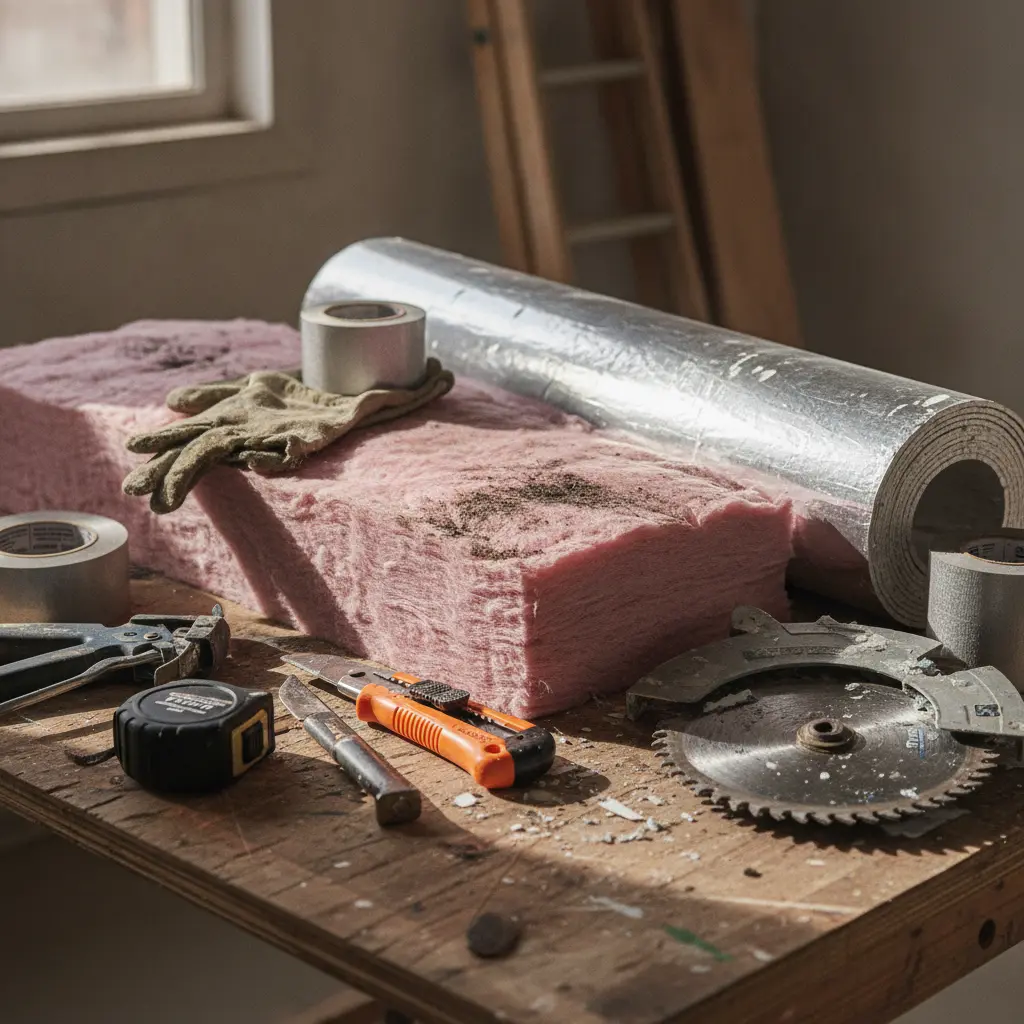
Our team in action — insulation professionals serving Simi Valley
Crawl Space Encapsulation Methods Used in Simi Valley
Full Perimeter Encapsulation with Conditioned Air
The most comprehensive approach, recommended for homes near the Arroyo Simi floodplain and any property with documented moisture history. A dehumidifier or conditioned air supply is added to maintain relative humidity below 60 percent year-round. This method is best suited for homes in Simi Valley’s lower-elevation neighborhoods where seasonal ground moisture is a recurring issue.
Sealed Crawl Space with Passive Venting Conversion
Appropriate for mid-elevation Simi Valley homes in areas like Bridle Path and Oakridge where moisture risk is moderate. Existing foundation vents are sealed with foam-backed vent covers, the floor barrier is installed, and wall insulation is added. No mechanical dehumidification is required in these drier conditions.
Vapor Barrier Upgrade Only
For recently constructed homes or properties where a partial barrier already exists but has been damaged, a targeted barrier upgrade replaces compromised sections with new 20-mil material. Often used in newer Wood Ranch developments built post-2000 where the existing barrier is less than 10 years old but has suffered storm damage.
Spray Foam Rim Joist and Wall Encapsulation
Closed-cell spray foam applied to rim joists and foundation walls creates a seamless air and moisture barrier particularly effective in the earthquake-prone Santa Susana zone, where foundation wall cracking creates persistent penetration points. Combine crawl space encapsulation with attic insulation for whole-home efficiency
Combined Encapsulation and Insulation Replacement
Many older Simi Valley homes have deteriorated fiberglass batts stapled to the subfloor. We remove these, encapsulate, and install new blow-in or spray foam insulation for maximum thermal and moisture performance. Learn about blow-in insulation options for floor assemblies
Ready for Crawl Space Encapsulation Cost? Get Your Free Estimate Today.
Next Level Insulation of Simi Valley serves Simi Valley and the surrounding area — we’ll be on-site within 24 hours.
📞 Call (805) 774-1832Crawl Space Encapsulation Cost in Simi Valley, CA
The crawl space encapsulation cost in Simi Valley typically ranges from $3,500 to $15,000 for a complete installation, with most single-family homes falling between $5,000 and $9,000. The wide range reflects significant variation in crawl space size, access difficulty, existing conditions, and the scope of work required.
Key Cost Factors
- Square footage: Most Simi Valley ranch homes range from 1,000 to 2,500 square feet of crawl space floor area. At a typical installed rate of $3.50 to $7.00 per square foot for full encapsulation, this is the dominant cost driver.
- Barrier thickness: Standard 12-mil barrier costs less than premium 20-mil reinforced products. Homes near the Arroyo Simi or on expansive clay soils benefit from the heavier grade despite the added cost of $0.50 to $1.00 per square foot.
- Crawl space height: Many Simi Valley homes built in the 1960s have low-clearance crawl spaces under 24 inches. This increases labor time by 20 to 40 percent due to limited worker mobility.
- Dehumidifier addition: Adding a crawl space dehumidifier adds $800 to $2,000 to the project cost depending on unit capacity and electrical access.
- Debris and old insulation removal: If existing fiberglass batts must be removed before encapsulation, expect an additional $500 to $2,500 depending on volume. See our insulation removal and replacement services
- Pest remediation coordination: If termite treatment is required before encapsulation, this is typically a separate contract with a licensed pest control operator, ranging from $500 to $3,000.
Simi Valley pricing reflects Ventura County labor rates, which run approximately 10 to 15 percent above the California statewide average for specialty insulation work. Call (805) 774-1832 for a detailed written estimate based on your specific home.
Crawl Space Encapsulation Service Areas Within Simi Valley
Wood Ranch
Developed primarily between 1987 and the early 2000s, Wood Ranch homes along Tierra Rejada Road and Flanagan Drive tend to have well-sized crawl spaces but are highly exposed to Santa Ana wind events and wildfire smoke infiltration. The Easy Fire of October 2019 highlighted how quickly air quality and moisture conditions can shift in this neighborhood. Many Wood Ranch homeowners are upgrading to full encapsulation as part of post-fire home hardening projects.
Bridle Path and Mountain Gate
These hillside developments from the 1980s and 1990s sit on graded pad foundations with variable soil compaction. Crawl space access can be restricted by the hillside grading, and pest pressure from the adjacent open space is elevated. Encapsulation here typically includes enhanced wall barrier work along the uphill foundation walls.
Central Simi Valley — Tapo Canyon and Cochran Corridor
Older ranch homes from the 1950s through 1970s built along Tapo Street, Cochran Street, and near Katherine Road feature the lowest crawl space heights in the valley and the most deteriorated original vapor barriers. These homes see the highest rate of encapsulation upgrades due to decades of deferred maintenance. Explore insulation replacement services for older Simi Valley homes
Crawl Space Maintenance Tips for Simi Valley Homeowners
- Inspect the access hatch annually before rainy season — typically in October before Ventura County’s wet season begins — to confirm the door seal is intact and the hatch is rodent-proof.
- Check the vapor barrier after major rain events, particularly storms that exceed 1 inch of rainfall in 24 hours, which occur three to five times per year in Simi Valley during average winters.
- Monitor your dehumidifier’s reservoir or drainage every 60 days and replace the filter annually. Simi Valley’s high-dust Santa Ana wind periods clog filters faster than coastal locations.
- Keep crawl space vents sealed if your system has been converted to a conditioned crawl space. Reopening vents during summer with the intention of “airing out” the space undermines the encapsulation system.
- Trim vegetation within 18 inches of foundation vents and vent covers. Simi Valley’s landscaping commonly includes drought-tolerant plants that, once established, grow close to foundations and trap soil moisture against the stem wall.
- Look for termite mud tubes each spring, particularly after wet winters when subterranean termite colony expansion accelerates in the valley’s silty clay soils.
- Schedule a professional moisture reading every three years to confirm the encapsulation system is maintaining relative humidity below 60 percent under the barrier surface.
Why Choose Next Level Insulation of Simi Valley
Next Level Insulation of Simi Valley specializes exclusively in insulation and crawl space services for homes throughout Ventura County and the greater Los Angeles foothills. Our team works daily in the specific home types, soil conditions, and climate patterns that define Simi Valley — from the low-clearance crawl spaces under 1960s ranch homes near Stearns Street to the hillside pad foundations in Mountain Gate and Wood Ranch.
We bring deep familiarity with California Title 24 energy code requirements for crawl space assemblies and work only with commercial-grade vapor barrier materials rated for the thermal cycling conditions found in Climate Zone 9. Our installation process includes pre- and post-installation moisture readings documented in writing, so you have a verifiable record of the improvement.
We serve homeowners not only throughout Simi Valley but across our full service territory including Thousand Oaks, Moorpark, Camarillo, Santa Clarita, Woodland Hills, Calabasas, and surrounding communities. When you call our team, you speak directly with people who understand your neighborhood’s specific challenges — not a call center. Reach us at (805) 774-1832 to schedule your inspection.
View our full range of insulation installation services
Frequently Asked Questions About Crawl Space Encapsulation Cost in Simi Valley
How much does crawl space encapsulation cost in Simi Valley, CA?
Most Simi Valley single-family homes pay between $5,000 and $9,000 for full crawl space encapsulation. Smaller homes under 1,200 square feet may see costs closer to $3,500, while larger homes or those requiring significant remediation work before installation can reach $12,000 to $15,000. Specific pricing depends on crawl space square footage, barrier grade, height and access, and whether dehumidification equipment is included.
Is crawl space encapsulation worth the cost in Simi Valley’s dry climate?
Yes. While Simi Valley averages only 12 to 14 inches of annual rainfall, the combination of clay soils, Arroyo Simi proximity, seasonal Santa Ana events, and high summer heat cycling creates crawl space stress year-round. Homeowners typically recover encapsulation costs through energy savings of 10 to 20 percent on heating and cooling bills, reduced pest control expenditures, and avoided structural repair costs over a 10- to 15-year period.
How long does crawl space encapsulation take to complete in Simi Valley?
Most residential encapsulation projects in Simi Valley are completed in two to three days. Larger homes, those requiring extensive debris removal, or projects combined with insulation replacement may take three to four days. Low-clearance crawl spaces common in older Tapo Canyon and Cochran corridor homes add time due to reduced worker mobility.
Do I need a permit for crawl space encapsulation in Simi Valley?
In most cases, a standard vapor barrier installation does not require a building permit from the City of Simi Valley. However, if the project involves converting a vented crawl space to a conditioned space — which requires modifying the HVAC system or permanently sealing foundation vents — a permit may be required under California Residential Code. We advise clients on permit requirements during the inspection phase.
What is the difference between a vapor barrier and full encapsulation?
A vapor barrier is simply a sheet of polyethylene laid on the crawl space floor. Full encapsulation seals the floor, all foundation walls, piers, and penetrations with a continuous reinforced barrier, and typically includes wall insulation and mechanical moisture control. In Simi Valley’s variable climate, full encapsulation significantly outperforms a basic vapor barrier in long-term moisture management and energy performance.
Can crawl space encapsulation help with the musty smells common in older Simi Valley homes?
Yes. Musty odors in older Simi Valley ranch homes are most frequently caused by mold growth on floor joists and subfloor decking within damp crawl spaces. Encapsulation eliminates the moisture source that sustains mold growth. In cases where mold is already established, professional remediation before encapsulation is recommended. Most homeowners report complete elimination of crawl space odors within 30 to 60 days of encapsulation completion.
Does crawl space encapsulation help with high energy bills in Simi Valley summers?
Significantly. Simi Valley regularly records summer temperatures above 100°F, and uninsulated crawl spaces allow radiant heat to transfer directly into the home’s living space. Encapsulation combined with crawl space wall insulation creates a thermal break between the hot exterior ground and the conditioned floor assembly, reducing cooling loads measurably. Pair crawl space encapsulation with attic insulation for maximum energy savings
Do you serve areas near Simi Valley such as Moorpark, Thousand Oaks, and Chatsworth?
Yes. Next Level Insulation of Simi Valley serves a broad territory throughout Ventura County and the surrounding Los Angeles foothills, including Moorpark, Thousand Oaks, Camarillo, Chatsworth, Woodland Hills, Calabasas, Santa Clarita, Agoura Hills, Westlake Village, Oak Park, North Hollywood, Beverly Hills, Malibu, San Fernando, Fillmore, Oxnard, Port Hueneme, and Santa Paula. Call (805) 774-1832 to confirm service availability at your address.
Get Your Crawl Space Encapsulation Cost Estimate in Simi Valley Today
If you own a home in Simi Valley and have concerns about crawl space moisture, energy efficiency, pest exposure, or the condition of an aging vapor barrier, the next step is a professional on-site assessment. Crawl space problems visible from inside the home — soft floors, musty odors, elevated utility bills — are always more advanced than they appear, and early encapsulation consistently outperforms reactive repair in total cost over time.
Next Level Insulation of Simi Valley provides detailed written estimates with no obligation. Our inspections include moisture readings, photographic documentation, and a clear explanation of all options so you can make a confident decision for your home and your budget.
Call us today at (805) 774-1832 to schedule your Simi Valley crawl space encapsulation assessment. We serve homeowners throughout Ventura County and the surrounding region and are ready to put our local expertise to work for your home.
Contact Next Level Insulation of Simi Valley to request your free estimate