

Cellulose Insulation in Simi Valley, CA
Energy-Saving Cellulose Insulation for Simi Valley, CA Homes — Licensed & Insured
Need cellulose insulation in Simi Valley, CA? Next Level Insulation installs R-49 attic and wall cellulose for Simi Valley homes. Call (805) 774-1832 for a free estimate.
- Licensed & Insured
- Locally Owned & Operated
- Free Inspection & Estimate
Request Your
Free EstimateCellulose insulation is one of the most effective, eco-friendly insulation solutions available for homeowners in Simi Valley, CA. Made primarily from recycled paper fiber treated with fire-retardant compounds, cellulose delivers superior thermal and acoustic performance that fits the unique demands of Simi Valley’s climate — from scorching summer heat pushing past 100°F in the Santa Susana Pass area to cool, dry winter nights that drop well below 40°F in the hills above Cochran Street.
At Next Level Insulation of Simi Valley, we specialize in professional cellulose insulation installation tailored to the building types, microclimates, and energy demands specific to this community. Whether you own a tract home in Wood Ranch, a hillside property near Rocky Peak, or a commercial building along Tapo Canyon Road, our team delivers precise, efficient cellulose insulation services designed to lower your energy bills, improve indoor comfort, and reduce your environmental footprint. Call us today at (805) 774-1832 to schedule a free assessment.
Understanding Cellulose Insulation
Cellulose insulation has been used in North American homes since the early 1900s, but it experienced a significant resurgence during the 1970s energy crisis when homeowners began prioritizing thermal efficiency. Today, it is one of the most widely installed insulation types in California, particularly in older homes built before modern energy codes were enforced — a category that describes a large portion of Simi Valley’s housing stock, which includes tracts developed rapidly during the 1960s, 1970s, and 1980s to accommodate the region’s growing suburban population.
Cellulose is composed of approximately 82–85% recycled newsprint and cardboard, treated with borate compounds that provide fire resistance, pest deterrence, and mold inhibition. It achieves an R-value of approximately R-3.2 to R-3.8 per inch, making it competitive with fiberglass batts and significantly more effective at reducing air infiltration due to its dense-pack characteristics.
There are three primary forms of cellulose insulation used in residential and commercial applications:
- Loose-fill cellulose: Blown into open attic spaces using specialized equipment, providing consistent coverage across irregular surfaces and around obstructions such as recessed lighting boxes and HVAC ducts common in Simi Valley-era tract homes.
- Dense-pack cellulose: Injected at high density into enclosed wall cavities, rim joists, and cathedral ceilings. This method is especially effective in older Simi Valley homes where original fiberglass batts have degraded or settled.
- Wet-spray cellulose: Applied with a moisture activator to new wall assemblies before drywall installation, creating a monolithic thermal barrier that conforms tightly to framing members.
In Simi Valley’s Mediterranean-adjacent climate — classified as a hot-dry BSk/Csa hybrid under the Köppen system — cellulose performs exceptionally well because its density slows radiant heat transfer during long summer days, and its hygroscopic properties help buffer minor humidity fluctuations during the wet season without absorbing damaging amounts of moisture. For ranch-style single-story homes with large unconditioned attic volumes, which are extremely common across neighborhoods like Berylwood and Sycamore Park, cellulose loose-fill installation delivers rapid, measurable improvements in both summer cooling and winter heating efficiency.
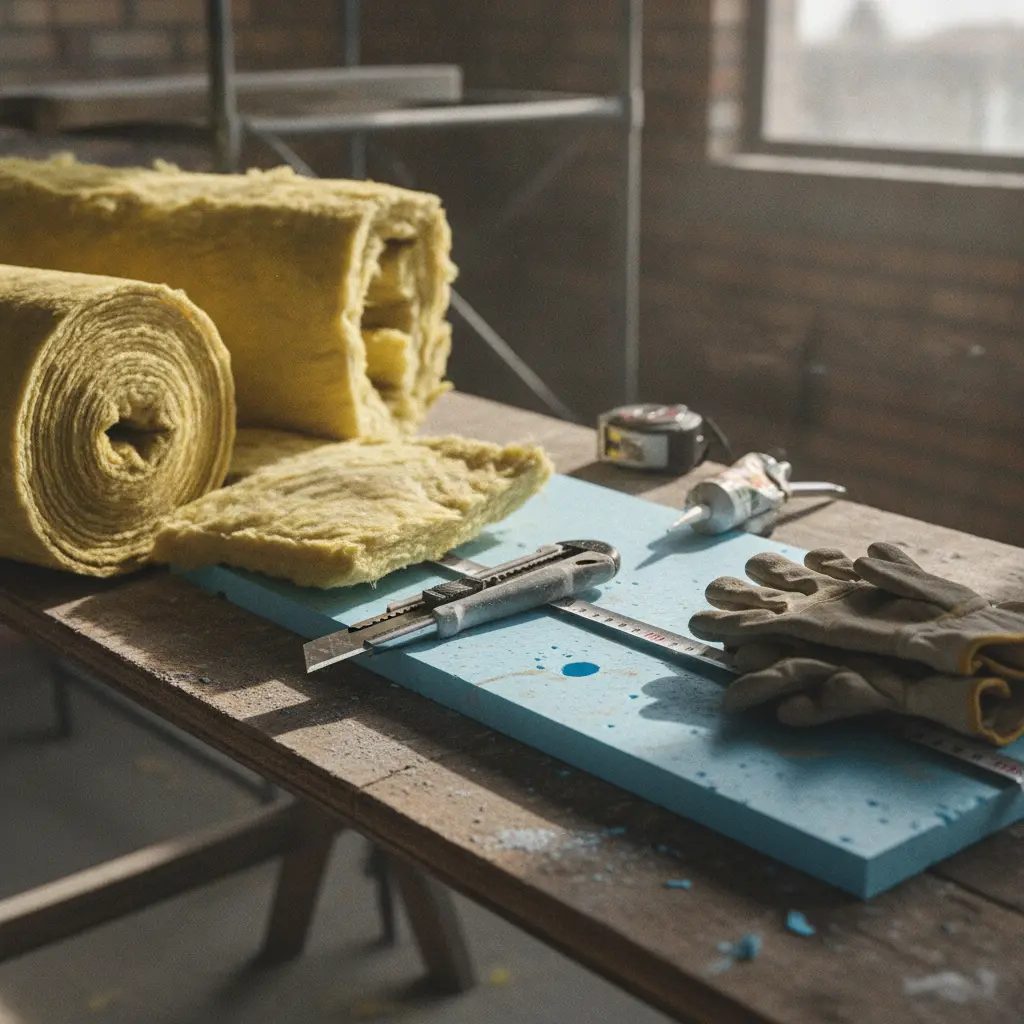
Our team in action — insulation professionals serving Simi Valley
Why Cellulose Insulation Is Needed in Simi Valley, CA
Extreme Temperature Swings Unique to the Simi Valley Basin
Simi Valley sits in an inland valley surrounded by the Santa Susana Mountains to the south, the Simi Hills to the west, and the Rocketdyne Hills to the east. This bowl-shaped topography traps heat during summer, producing frequent heat events where daytime temperatures exceed 105°F — a phenomenon that struck the valley with particular severity during the August 2020 heat dome that pushed Simi Valley temperatures to 111°F at Ronald Reagan Presidential Library weather stations. Meanwhile, nighttime radiative cooling during winter can drop temperatures to 32–35°F in lower-lying areas near the Arroyo Simi. This 70–80°F daily swing in extreme seasons places enormous thermal stress on building envelopes, and homes with under-insulated attics — many of which have only 3–4 inches of original blown fiberglass from the 1970s — are losing significant conditioned air year-round.
The Legacy of Rapid Tract Development in the 1960s–1980s
Simi Valley grew from approximately 16,000 residents in 1960 to over 77,000 by 1980, driven by suburban expansion and the establishment of major employers along the 118 Freeway corridor. This rapid growth produced thousands of tract homes built quickly to minimum code standards. Neighborhoods like Knollwood, Alamo, and Stargaze were developed primarily between 1965 and 1985, and many of these homes were originally insulated with only R-11 to R-13 fiberglass batts in walls and minimal attic coverage — far below today’s California Title 24 standards, which require R-38 to R-49 for attic assemblies in Climate Zone 9, where Simi Valley is classified.
Santa Ana Wind Events and Air Infiltration
Simi Valley is directly in the path of Santa Ana wind events that funnel through the Santa Susana Pass and through Rocky Peak gaps. Recorded gusts during events like the October 2019 Easy Fire exceeded 65 mph in hillside neighborhoods above Yosemite Avenue. These wind events dramatically increase air infiltration through gaps in poorly insulated building envelopes. Dense-pack cellulose, when installed in wall cavities, reduces air changes per hour (ACH) by filling micro-gaps that batts cannot address, making it a critical defensive layer for homes in Oakdale Acres, Big Sky, and other elevated Simi Valley subdivisions.
Fire Exposure History and Borate-Treated Cellulose Benefits
The proximity of Simi Valley to the wildland-urban interface — including the 2003 Simi Fire that burned over 108,000 acres in neighboring Ventura County and threatened properties along Kuehner Drive — makes fire-rated building materials a meaningful consideration. Cellulose insulation’s borate treatment provides a Class 1 fire-resistance rating, offering an additional layer of passive fire protection relative to untreated organic insulation materials.
Signs You Need Cellulose Insulation in Simi Valley
Energy Performance Indicators
- Monthly SCE or SoCalGas bills that spike more than 40% between mild and peak seasons
- Central AC cycling on more than once every 15 minutes during July and August afternoons
- Rooms above the garage or beneath the roof line remaining 8–12°F warmer than living spaces below
Physical Inspection Red Flags
- Visible attic insulation depth below 10 inches (indicating R-values significantly below Title 24 requirements)
- Yellowed, matted, or settled fiberglass batts visible through the attic access hatch
- Cold interior wall surfaces during winter months, particularly on north-facing exterior walls
- Drafts noticeable near electrical outlets on exterior walls — a sign of missing or degraded wall cavity insulation
Moisture and Pest Indicators
- Staining or soft spots on drywall ceilings indicating moisture infiltration through an under-insulated attic plane
- Evidence of rodent activity or nesting in existing loose-fill insulation, which can compress and degrade material to near-zero R-value
Urgency Indicators
If your home was built before 1985 and has never had a professional insulation assessment, the likelihood of having below-code insulation in both attic and wall cavities is extremely high. With Simi Valley summer temperatures routinely exceeding 100°F, delaying insulation upgrades directly translates to preventable energy expenditure every billing cycle.
Cellulose Insulation Methods and Approaches
Loose-Fill Attic Installation
The most common application in Simi Valley’s single-story ranch homes, loose-fill cellulose is machine-blown to uniform depth across the attic floor. This method is ideal for homes in Wood Ranch and Berylwood where attic access is straightforward but existing insulation is severely degraded. Installation is completed in a single visit with minimal disruption.
Dense-Pack Wall Cavity Retrofit
For older homes in neighborhoods like Knollwood and Alamo where walls were framed with 2×4 studs and original R-11 batts have settled or were never fully installed, dense-pack cellulose is injected at 3.5 lbs per cubic foot density. This method completely fills the cavity, eliminates convective looping within the wall, and dramatically reduces air infiltration — critical during Santa Ana wind events.
Cathedral Ceiling and Sloped Rafter Cavity Fill
Many mid-century and 1970s Simi Valley homes feature cathedral or vaulted ceilings where standard blow-in methods are insufficient. We use specialty tubes to inject dense-pack cellulose into individual rafter bays, achieving R-20 to R-26 performance within existing roof assemblies without requiring full roof removal.
Combination Cellulose and Spray Foam Systems
For maximum performance in properties near the Rocky Peak wildland interface or for homeowners seeking the highest thermal and air-sealing performance, we combine spray foam insulation as a flash coat on the roof deck with cellulose blown over the attic floor, achieving effective R-50+ assemblies that exceed Title 24 requirements by 25–30%.
Ready for Cellulose Insulation? Get Your Free Estimate Today.
Next Level Insulation of Simi Valley serves Simi Valley and the surrounding area — we’ll be on-site within 24 hours.
📞 Call (805) 774-1832Cellulose Insulation Cost in Simi Valley, CA
Understanding the realistic cost of cellulose insulation in Simi Valley helps homeowners budget accurately and evaluate contractor proposals. The following ranges reflect current material and labor costs in the Ventura County and Los Angeles County markets as of 2024.
Typical Price Ranges
- Attic loose-fill cellulose (1,000–1,500 sq ft): $800–$1,800 depending on existing conditions and target R-value
- Attic loose-fill cellulose (1,500–2,500 sq ft): $1,500–$3,200
- Dense-pack wall cavity retrofit (whole house, 1,500 sq ft): $3,500–$6,500
- Cathedral ceiling dense-pack (per 500 sq ft): $1,200–$2,400
- Combined attic insulation removal and replacement: $2,500–$5,000 for a typical 1,800 sq ft Simi Valley ranch home
Factors That Affect Your Cost
- Existing insulation depth and condition — contaminated or rodent-damaged material requires insulation removal at $1.50–$3.00 per sq ft before reinstallation
- Attic accessibility — low-clearance attics common in 1970s Simi Valley tract designs increase labor hours
- Target R-value — R-38 vs R-49 installations differ by approximately $0.25–$0.50 per sq ft in material costs
- Number of penetrations requiring air sealing prior to insulation
Available Incentives
Southern California Edison and SoCalGas both offer rebates for qualifying insulation upgrades, often ranging from $150–$500 for whole-home attic insulation projects meeting Title 24 standards. The federal Energy Efficient Home Improvement Credit (25C) allows homeowners to claim up to 30% of insulation costs, capped at $1,200 annually. Our team provides the documentation required for all applicable programs.
For an accurate quote specific to your Simi Valley home, call (805) 774-1832.
Simi Valley Neighborhoods We Serve
Wood Ranch
Developed primarily in the 1980s and 1990s, Wood Ranch features two-story homes with complex rooflines and finished bonus rooms that create challenging insulation assemblies. Many properties have bypasses around framed knee walls that allow significant thermal leakage during summer heat events. Dense-pack cellulose in knee wall cavities combined with attic loose-fill upgrades delivers significant comfort improvements for this neighborhood.
Berylwood and Sycamore Park
Among Simi Valley’s oldest tracts, these neighborhoods feature single-story ranch homes built between 1960 and 1975 with original 3.5-inch fiberglass batts in attic floors that have settled to R-8 or less. Loose-fill cellulose upgrades to R-49 depth are the highest-priority and most cost-effective improvement available to these homeowners.
Knollwood and Alamo
Mid-1970s to early-1980s development featuring larger floor plans with more exterior wall exposure. Dense-pack cellulose wall retrofits are particularly valuable here given the large wall surface areas and documented performance gaps in the original insulation.
Big Sky and Rocky Peak Adjacencies
Hillside properties in these areas face elevated wildfire risk and intense Santa Ana wind exposure, making borate-treated cellulose with robust air sealing a priority for both thermal and fire-resistance performance. Crawl space insulation is also commonly needed in these elevated properties.
Cellulose Insulation Maintenance Tips for Simi Valley Homeowners
- Inspect attic depth annually: Check insulation depth at your attic hatch every fall before the heating season. Settled depth below 12 inches indicates the need for a top-up to maintain R-49 performance.
- Monitor for rodent activity after Santa Ana wind season: Wind events can displace roof tiles and create new pest entry points. Check for droppings or nesting material in the attic each November.
- Keep attic ventilation clear: Ensure soffit vents along eaves are not blocked by settled cellulose, which can occur without properly installed baffles. Blocked ventilation accelerates moisture buildup in Simi Valley’s cooler months.
- Check for roof leaks after winter rain events: Even minor roof leaks can saturate cellulose and reduce R-value by 50% or more. Inspect ceiling drywall for staining after any rainfall exceeding 1 inch.
- Avoid compressing cellulose with stored items: Many Simi Valley homeowners use attic space for seasonal storage. Any weight placed directly on loose-fill cellulose compresses the material and reduces its thermal resistance.
- Reseal attic access hatches every 3–5 years: Weatherstripping on access hatches degrades in Simi Valley’s dry heat. A poorly sealed hatch bypasses the entire attic insulation system.
- Schedule a professional inspection every 10 years: Cellulose can settle 10–20% over a decade under normal conditions, and a professional depth-and-density check ensures continued Title 24 compliance.
Why Choose Next Level Insulation of Simi Valley
Next Level Insulation of Simi Valley is a locally focused insulation contractor with deep knowledge of the building types, microclimates, and energy code requirements specific to Simi Valley and the surrounding communities of Moorpark, Thousand Oaks, and Camarillo. We are not a national franchise applying generic solutions — we understand that a 1972 ranch home on Erringer Road has different needs than a 1995 two-story in Wood Ranch, and we tailor every cellulose installation accordingly.
Our team is trained in California Title 24 residential insulation compliance documentation, ensuring every project qualifies for available utility rebates and tax credits. We carry full liability insurance and workers’ compensation coverage required for all work performed on Simi Valley residential and commercial properties.
Beyond cellulose, we offer a complete range of insulation services including spray foam insulation, blow-in insulation, crawl space encapsulation, insulation removal, and insulation replacement — giving you a single trusted contractor for all your building envelope needs.
Call us at (805) 774-1832 to speak directly with a Simi Valley insulation specialist.
Frequently Asked Questions About Cellulose Insulation in Simi Valley
How much does cellulose insulation cost in Simi Valley, CA?
For a typical 1,500–2,000 sq ft single-story Simi Valley home receiving attic loose-fill cellulose to R-49 depth, expect to invest $1,500–$2,800 before rebates. Dense-pack wall cavity work adds $3,500–$6,000 for a whole-house retrofit. After factoring in SCE rebates and the federal 25C tax credit, net costs are often 30–40% lower than sticker price.
How long does cellulose insulation installation take?
A standard attic loose-fill installation for a Simi Valley ranch home is typically completed in a single day — usually 4–6 hours including setup, air sealing, installation, verification, and cleanup. Dense-pack wall cavity retrofits for a full house take 1–2 days depending on home size and accessibility.
Is cellulose insulation safe for my family?
Yes. Cellulose is treated with borate compounds that are naturally occurring minerals with very low toxicity to humans and pets. The material meets all California Air Resources Board (CARB) standards for indoor air quality. Installed cellulose generates no ongoing off-gassing, making it safe for families with respiratory sensitivities — a relevant concern given Simi Valley’s periodic poor air quality days driven by wildfire smoke and San Fernando Valley smog.
Will cellulose insulation help with Simi Valley’s heat?
Absolutely. In Climate Zone 9, where Simi Valley is classified, attic temperatures on a 105°F summer day can reach 150–160°F. Properly installed R-49 cellulose slows heat transfer through the ceiling plane dramatically, reducing the load on your air conditioning system and improving indoor comfort even during sustained heat events like those recorded in August 2020.
How does cellulose compare to spray foam insulation in Simi Valley?
Cellulose offers a lower upfront cost, excellent thermal mass, and strong sustainability credentials. Spray foam insulation provides a higher R-value per inch and superior air sealing in a single material. For most Simi Valley attic applications, cellulose is the more cost-effective solution. Spray foam is preferred for unvented roof assemblies, rim joists, and areas with known moisture exposure such as crawl spaces.
Does cellulose insulation attract pests in Simi Valley?
No. The borate treatment in professional-grade cellulose is an effective deterrent against termites, cockroaches, and silverfish — all of which are active in Simi Valley’s climate. Unlike some organic insulation materials, properly installed cellulose does not provide food or nesting material that attracts rodents. However, if rodents have already compromised existing insulation, remediation must be performed before installation.
Can I install cellulose insulation myself?
While DIY cellulose blower rentals are available at some home improvement stores, professional installation is strongly recommended for Simi Valley homeowners. Achieving accurate and uniform depth for Title 24 compliance, properly air-sealing attic bypasses around recessed lights and plumbing chases, and installing baffles at eave soffits all require specialized equipment and training. Improperly installed cellulose can block attic ventilation, void rebate eligibility, and deliver a fraction of the expected thermal performance.
How do I qualify for utility rebates on cellulose insulation in Simi Valley?
SCE and SoCalGas rebate programs require that insulation is installed by a licensed contractor, achieves specified R-value targets, and is documented with a Certificate of Installation. Next Level Insulation of Simi Valley provides all required documentation as a standard part of every project. Rebate amounts vary by program year; we recommend confirming current figures at the time of your project. Call us at (805) 774-1832 for current rebate guidance.
Get a Free Cellulose Insulation Estimate in Simi Valley Today
If your Simi Valley home is uncomfortable during summer heat events, your energy bills are climbing every season, or your insulation hasn’t been evaluated since the home was built, now is the time to act. Next Level Insulation of Simi Valley provides free, no-obligation in-home assessments for homeowners throughout Simi Valley and surrounding communities including Moorpark, Thousand Oaks, Camarillo, Chatsworth, and Woodland Hills.
Our team will measure your existing insulation, identify air sealing opportunities, calculate your potential energy savings, and provide a transparent, itemized quote with all available rebates applied. We serve the entire Simi Valley area including Wood Ranch, Berylwood, Knollwood, Big Sky, and all neighborhoods in between.
Call us now at (805) 774-1832 or contact us online to schedule your free assessment. Experience the Next Level difference for your Simi Valley home.