
Crawl Space Encapsulation in Chula Vista, CA
Professional Crawl Space Encapsulation in Chula Vista, CA in Chula Vista, CA — Licensed, Insured & Locally Owned
Expert crawl space encapsulation in Chula Vista, CA. Next Level Insulation seals moisture, mold & pests. Free inspections. Call 619-789-4273 today.
- Licensed & Insured
- Locally Owned & Operated
- Free Inspection & Estimate
Request Your
Free EstimateCrawl space encapsulation is the process of sealing your home’s crawl space with heavy-duty vapor barriers, insulation, and moisture control systems to prevent humidity, mold, pests, and energy loss from infiltrating your living space. In Chula Vista, CA — a coastal city where marine layer moisture rolls in from the San Diego Bay and Pacific Ocean — unprotected crawl spaces face year-round exposure to humidity levels that routinely climb above 70 percent.
At Next Level Insulation of Chula Vista, we bring specialized expertise to every encapsulation project. Our team understands the unique climate pressures that affect homes throughout South Bay San Diego, from the older bungalows near Third Avenue to the newer developments in Eastlake Greens. We design customized encapsulation systems that keep your crawl space dry, your floors comfortable, and your energy bills under control — delivering clean, professional results that stand up to Chula Vista’s demanding conditions. Call us today at 619-789-4273 to schedule your free inspection.
Understanding Crawl Space Encapsulation
Crawl space encapsulation is a building science practice that evolved significantly over the past three decades as researchers and contractors came to understand the “stack effect” — the process by which air and moisture rise from a home’s lowest point upward through the living areas and into the attic. Prior to the 1990s, building codes across California and the rest of the United States commonly required vented crawl spaces, operating under the assumption that outside air circulation would naturally dry out the underfloor environment. Studies conducted by the Building Science Corporation and the Advanced Energy Corporation in the early 2000s demonstrated that vented crawl spaces in humid and mixed-humid climates actually introduced more moisture than they expelled, leading to widespread mold growth, structural rot, and degraded insulation.
Today, encapsulation replaces the failed vented-crawl-space model with a fully conditioned or semi-conditioned approach. The process typically involves removing existing debris and damaged insulation, applying a thick polyethylene vapor barrier — usually 12 to 20 mil in thickness — across the entire floor and up the foundation walls, sealing all vents and penetrations, installing rigid foam or spray foam insulation on the interior foundation walls, and adding a dehumidifier or conditioning system to maintain relative humidity below 55 percent.
In Chula Vista, the majority of residential construction falls into two broad categories: pre-1980 single-family homes built on raised foundations with pier-and-beam or cripple-wall construction, and post-1990 tract homes that were built on slab foundations. However, a significant portion of the city’s housing stock — particularly in western neighborhoods like Castle Park, Woodlawn Park, and along Broadway — still features raised foundations with crawl spaces that were designed under the now-outdated ventilated model. Multi-family buildings and older commercial structures near the Third Avenue Village corridor also commonly rely on crawl-space construction that benefits enormously from modern encapsulation techniques.
The encapsulation approach is especially well-suited to Southern California’s Mediterranean climate, where dry summers and wet winters create cyclical moisture loading that slowly degrades unprotected crawl spaces over time. Understanding this climate context is essential to designing a system that performs correctly in Chula Vista rather than a one-size-fits-all solution designed for wetter regions.
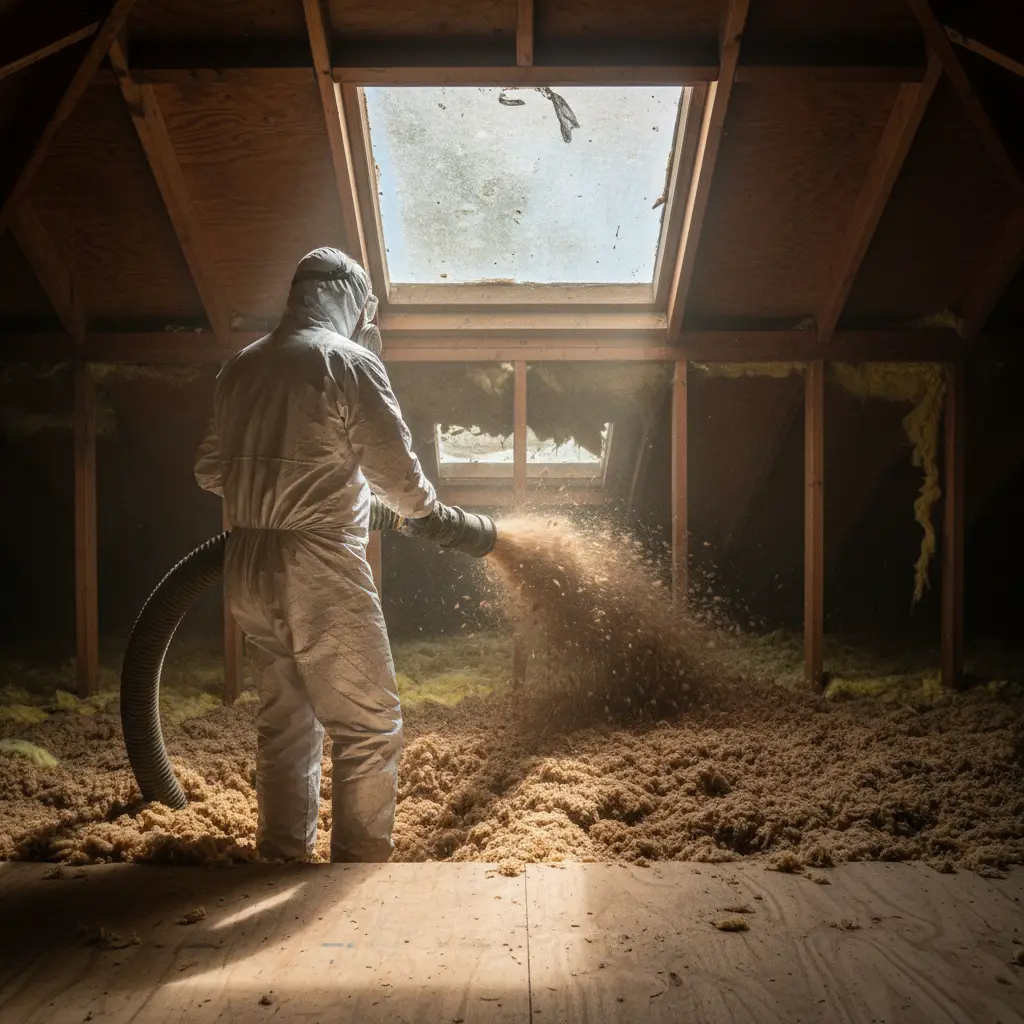
Our team in action — insulation professionals serving Chula Vista
Why Crawl Space Encapsulation Is Needed in Chula Vista, CA
Marine Layer Moisture
The marine layer that settles over western Chula Vista neighborhoods like Otay Ranch adjacent communities, Harborside, and the areas near Palomar Street between May and September delivers dense morning fog that raises ground-level moisture content significantly. This moisture permeates through soil and into unencapsulated crawl spaces, depositing humidity directly onto wood floor joists, sub-flooring, and any existing fiberglass batt insulation. Over one to two seasons, this cycle causes fiberglass batts — which have no moisture resistance — to sag, compress, and lose R-value. A properly installed encapsulation system with a 20-mil vapor barrier eliminates this infiltration pathway entirely.
El Niño Rainfall Events
Chula Vista experiences periodic intense rainfall associated with El Niño Southern Oscillation cycles. The 2022–2023 El Niño season brought record precipitation to San Diego County, with some areas of Chula Vista recording over 11 inches of rainfall between December 2022 and March 2023 — more than double the annual average of approximately 10.4 inches. During these events, crawl spaces in neighborhoods like Bonita Road corridor homes, the older sections of National City adjacent to Chula Vista’s northern boundary, and homes near the Sweetwater River flood plain experienced significant groundwater intrusion. Unencapsulated crawl spaces in these areas routinely showed standing water depths of one to three inches following heavy rain events.
Clay-Heavy Soils and Poor Drainage
Much of Chula Vista’s western terrain contains Dieguito clay loam and Lodo clay soils — soil types classified by the USDA Natural Resources Conservation Service as having slow permeability and high shrink-swell potential. These soils retain moisture for extended periods after rainfall, keeping the ground surrounding crawl space foundations saturated for weeks at a time. This prolonged soil saturation drives vapor transmission through concrete stem walls and floor-level soil into the crawl space, creating persistent humidity even during dry months.
Aging Housing Stock
The neighborhoods of Woodlawn Park, Castle Park, and the western grid streets near Broadway and Third Avenue contain a substantial number of homes built between 1940 and 1975. These properties were constructed before modern vapor barrier requirements and frequently feature deteriorated or absent ground covers, inadequate clearances between soil and floor joists, and corroded or disconnected vent screens that allow both moisture and pest entry. Without encapsulation, these homes face escalating repair costs from wood rot, mold remediation, and structural repairs that far exceed the cost of proactive encapsulation.
Signs You Need Crawl Space Encapsulation
Moisture and Humidity Indicators
- Condensation forming on floor joists, pipes, or ductwork beneath your home
- Standing water or wet soil visible in the crawl space after rain
- Relative humidity readings above 60 percent inside the crawl space
- Efflorescence (white mineral deposits) on foundation walls
Structural Warning Signs
- Soft, spongy, or bouncy floors that flex underfoot — a common complaint in older Castle Park homes
- Visible wood rot or dark staining on floor joists or the sub-floor
- Sagging, discolored, or fallen fiberglass batt insulation hanging from the floor cavity
- Cracked or bowing crawl space walls
Indoor Air Quality and Comfort Signs
- Musty or earthy odors in the home, particularly on the ground floor
- Increased allergy or respiratory symptoms among household members
- Visible mold growth on baseboards, lower walls, or flooring
Energy and Pest Urgency Indicators
- Unusually high heating or cooling bills despite normal usage patterns
- Drafts or cold spots on the ground floor during Chula Vista’s winter nights
- Evidence of rodent or insect activity — droppings, gnawed wood, or insect frass — beneath the floor
If you identify two or more of these signs, contact Next Level Insulation of Chula Vista at 619-789-4273 for an immediate assessment.
Crawl Space Encapsulation Methods and Approaches
Full Encapsulation with Conditioned Air Supply
The most comprehensive approach, this method seals the crawl space completely and connects it to the home’s HVAC system with a small supply register. This is best suited for larger homes in Eastlake Greens or Otay Ranch where the crawl space volume exceeds 1,500 square feet and year-round moisture control is a priority. The conditioned air keeps the space within 5 to 10 degrees of interior temperatures, eliminating the thermal differential that causes condensation.
Full Encapsulation with Standalone Dehumidifier
The most commonly recommended solution for Chula Vista’s mid-sized single-family homes, this approach seals the crawl space completely and relies on a dedicated crawl space dehumidifier rather than the home’s HVAC system. It is well-suited to homes in Castle Park and Woodlawn Park where existing HVAC systems may not have capacity for additional supply runs.
Partial Encapsulation with Enhanced Vapor Barrier
Where budget constraints or structural limitations prevent full encapsulation, we install a heavy-duty 12-mil vapor barrier with sealed perimeter edges and upgrade foundation vents with automatic humidity-sensing vent covers. This approach reduces moisture infiltration by approximately 60 to 70 percent and is appropriate as an interim solution for homes awaiting more comprehensive renovation.
Hybrid Spray Foam and Barrier Systems
For homes with irregular foundation geometry — a common characteristic of pre-1960 construction along Broadway and Third Avenue — we combine spray foam application at transitions, penetrations, and irregular surfaces with sheet vapor barrier on accessible flat areas. This approach ensures complete coverage regardless of foundation complexity.
Ready for Crawl Space Encapsulation? Get Your Free Estimate Today.
Next Level Insulation of Chula Vista serves Chula Vista and the surrounding area — we’ll be on-site within 24 hours.
📞 Call 619-789-4273Crawl Space Encapsulation Cost in Chula Vista, CA
Understanding the cost of crawl space encapsulation in Chula Vista helps homeowners plan and compare proposals accurately. Pricing varies based on crawl space size, existing conditions, and the scope of work required.
Typical Price Ranges
- Basic vapor barrier installation only (12-mil): $1,500 – $3,000 for a standard 800–1,200 sq ft crawl space
- Full encapsulation with 20-mil barrier and wall insulation: $4,500 – $8,500 for a standard Chula Vista single-family home
- Full encapsulation with dehumidifier included: $6,000 – $12,000 depending on square footage and dehumidifier capacity
- Mold remediation add-on (if required): $500 – $2,500 depending on extent of contamination
- Complete system for larger homes (1,800+ sq ft crawl space): $10,000 – $18,000
Factors That Affect Your Chula Vista Cost
- Crawl space height: Spaces below 18 inches require specialized equipment and add labor costs
- Soil conditions: Homes near the Sweetwater River with saturated clay soils may require additional drainage solutions
- Existing damage: Failed insulation removal, wood rot treatment, and mold remediation add to base costs
- Access difficulty: Older western Chula Vista homes with limited access points increase labor time
- Local permit requirements: Chula Vista Building Division may require permits for certain scopes of work, adding $150–$400
Many homeowners in Chula Vista recover encapsulation costs through energy savings of 15 to 25 percent on heating and cooling bills within two to four years. Call 619-789-4273 for a free, detailed estimate. Request a Free Quote
Neighborhoods We Serve in and Around Chula Vista
Castle Park and Woodlawn Park
These western Chula Vista communities contain a high concentration of homes built between 1945 and 1970 on raised foundations. Many feature original wood-framed crawl spaces with no existing vapor barriers and vent screens that have deteriorated over 50-plus years. Proximity to the Otay River valley floor increases groundwater influence significantly.
Eastlake Greens and Otay Ranch
These master-planned communities developed primarily in the 1990s and 2000s include a mix of slab and raised-foundation homes. Where crawl spaces exist, they tend to be in better structural condition but still experience moisture issues driven by the marine layer and irrigation from HOA-maintained landscaping systems.
Bonita and Spring Valley
These unincorporated communities adjacent to Chula Vista’s eastern boundary feature hillside homes built on irregular terrain with pier-and-beam construction that creates large, challenging crawl spaces. Oak woodland soil types in these areas retain moisture effectively and require robust encapsulation approaches.
National City and La Presa
Located just north of Chula Vista, these communities share similar housing stock characteristics with heavy pre-1970 construction. Our team serves clients throughout these areas with the same Chula Vista-calibrated encapsulation systems. View All Service Areas
Crawl Space Maintenance Tips for Chula Vista Homeowners
- Inspect annually after the rainy season (March–April): Chula Vista’s El Niño-influenced wet seasons can stress encapsulation systems. Check for barrier tears, water intrusion, or dehumidifier performance issues each spring.
- Monitor dehumidifier drainage monthly: Ensure the condensate drain line is clear and flowing freely, particularly during the June–September marine layer season when the dehumidifier works hardest.
- Check and clear foundation vent seals: Even sealed vents can be disturbed by pest activity or settlement. Inspect annually and re-seal any compromised areas.
- Maintain positive drainage around your foundation: Grade soil away from your home’s foundation at a slope of at least 1 inch per foot for 6 feet to redirect surface runoff — especially important near Sweetwater River-adjacent properties.
- Trim vegetation away from foundation walls: Dense landscaping against the foundation retains moisture and can compromise vapor barrier integrity. Maintain a minimum 6-inch clearance.
- Address plumbing leaks immediately: Any supply or drain line leaks beneath the floor bypass the encapsulation system. Repair leaks within 24–48 hours to prevent secondary mold growth.
- Keep access doors latched and sealed: Particularly during Santa Ana wind events in fall, positive pressure can dislodge poorly sealed access doors, introducing warm dry air that creates condensation cycles.
Why Choose Next Level Insulation of Chula Vista
Next Level Insulation of Chula Vista is a locally focused insulation and encapsulation contractor with deep expertise in the specific conditions that affect South Bay San Diego homes. We don’t apply generic solutions — every crawl space we encapsulate is assessed for Chula Vista’s unique combination of marine layer humidity, clay soil moisture transmission, and aging housing stock challenges.
Our team specializes in spray foam insulation, blown-in insulation, attic upgrades, and garage insulation in addition to crawl space encapsulation, giving us a whole-home perspective on your building envelope. When we encapsulate your crawl space, we identify how it interacts with your attic and wall assemblies to ensure your total energy performance improves — not just one isolated component. Explore All Our Services
We serve Chula Vista and surrounding communities including Bonita, National City, La Mesa, Imperial Beach, Spring Valley, La Presa, Lemon Grove, and San Diego neighborhoods such as Encanto, Hillcrest, North Park, University Heights, and South Park. Every project receives our full professional attention from the first inspection call through final documentation. Call us today at 619-789-4273 — we answer every call personally.
Frequently Asked Questions About Crawl Space Encapsulation in Chula Vista
How much does crawl space encapsulation cost in Chula Vista, CA?
Most Chula Vista homeowners pay between $4,500 and $12,000 for a complete crawl space encapsulation, depending on square footage, existing conditions, and whether a dehumidifier is included. Homes in flood-prone areas near the Sweetwater River or with significant existing mold or rot may see costs toward the higher end of this range. We provide free, itemized estimates so you know exactly what you’re paying for before any work begins.
How long does the encapsulation process take?
A standard Chula Vista single-family home with an 800–1,200 square foot crawl space typically takes one to two full days to complete, including removal of existing materials, barrier installation, wall insulation, and vent sealing. Larger or more complex projects — such as the older pier-and-beam homes in Castle Park — may require two to three days.
Do I need a permit for crawl space encapsulation in Chula Vista?
Permit requirements depend on the scope of work. Simple vapor barrier replacement generally does not require a permit from the Chula Vista Building Division. However, projects that involve sealing foundation vents or modifying HVAC connections may require a permit. We handle permit research and application as part of our project planning process.
Will encapsulation eliminate the mold smell in my home?
In most cases, yes. The musty odor common in older Chula Vista homes is caused by mold spores and volatile organic compounds rising from the crawl space through the stack effect. Our process includes antimicrobial treatment of affected wood surfaces, full vapor barrier installation, and dehumidification — all three of which work together to eliminate the moisture source that feeds mold. Most homeowners report a noticeable odor improvement within one to two weeks of project completion.
Is crawl space encapsulation worth it in Southern California’s dry climate?
Absolutely — and Chula Vista’s coastal location makes it even more valuable than in inland Southern California cities. The marine layer delivers consistent overnight humidity that keeps Chula Vista’s ground-level moisture levels elevated year-round. Encapsulation protects your home’s structure, improves indoor air quality, and typically reduces heating and cooling costs by 15 to 25 percent, paying back the investment within two to five years.
What is the difference between a vapor barrier and full encapsulation?
A vapor barrier is a single layer of plastic sheeting placed on the crawl space floor. Full encapsulation includes the vapor barrier plus sealed foundation walls, sealed vents, an insulated access door, and active moisture control via dehumidifier. For Chula Vista homes with significant moisture exposure, a vapor barrier alone is rarely sufficient — full encapsulation is the standard we recommend for lasting results.
Can crawl space encapsulation help with pest problems?
Yes. Sealing foundation vents and the crawl space perimeter removes the primary entry points used by rats, mice, and insects. The dry, inhospitable environment created by encapsulation also makes the crawl space far less attractive to pests than a humid, organic-debris-filled unencapsulated space. Many Chula Vista homeowners report significant reductions in pest activity following encapsulation.
Do you serve areas outside of Chula Vista?
Yes. We serve a broad service area throughout South Bay San Diego and beyond, including Bonita, National City, Imperial Beach, La Mesa, La Presa, Lemon Grove, Spring Valley, and multiple San Diego city neighborhoods including Encanto, Hillcrest, North Park, University Heights, and South Park. See our full service area
Schedule Your Free Crawl Space Inspection Today
If your Chula Vista home has a crawl space, moisture damage, musty odors, high energy bills, or sagging floors, the time to act is now — before another marine layer season or El Niño rainfall event causes more damage. Next Level Insulation of Chula Vista provides free, no-obligation crawl space inspections for homeowners throughout Chula Vista and South Bay San Diego.
Our team is ready to assess your crawl space, explain your options clearly, and deliver a written estimate with no pressure. We bring Chula Vista-specific expertise to every project and stand behind our work.
Call us now at 619-789-4273 or submit your information online and a member of our team will contact you within one business day. Protect your home from the ground up — starting today.